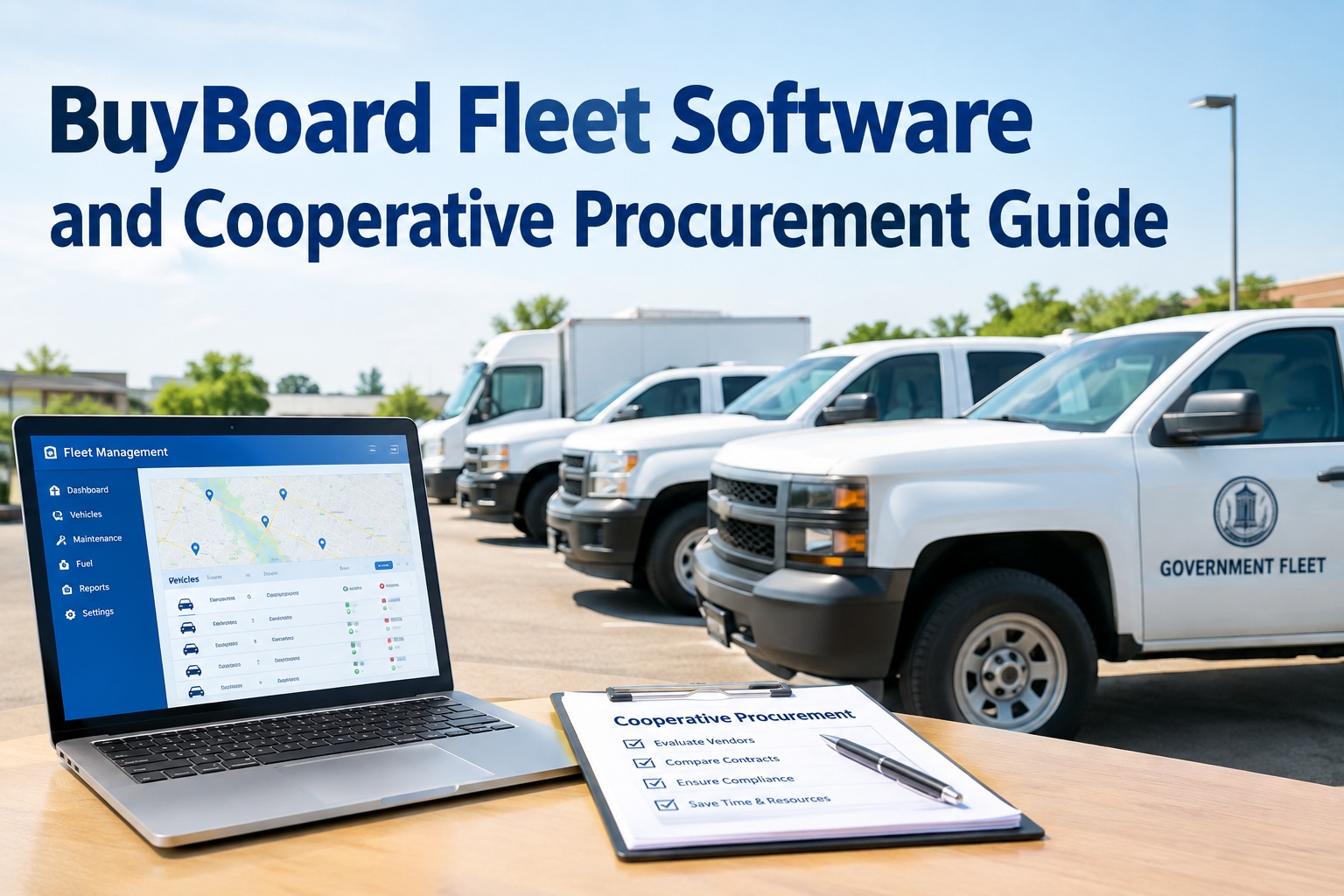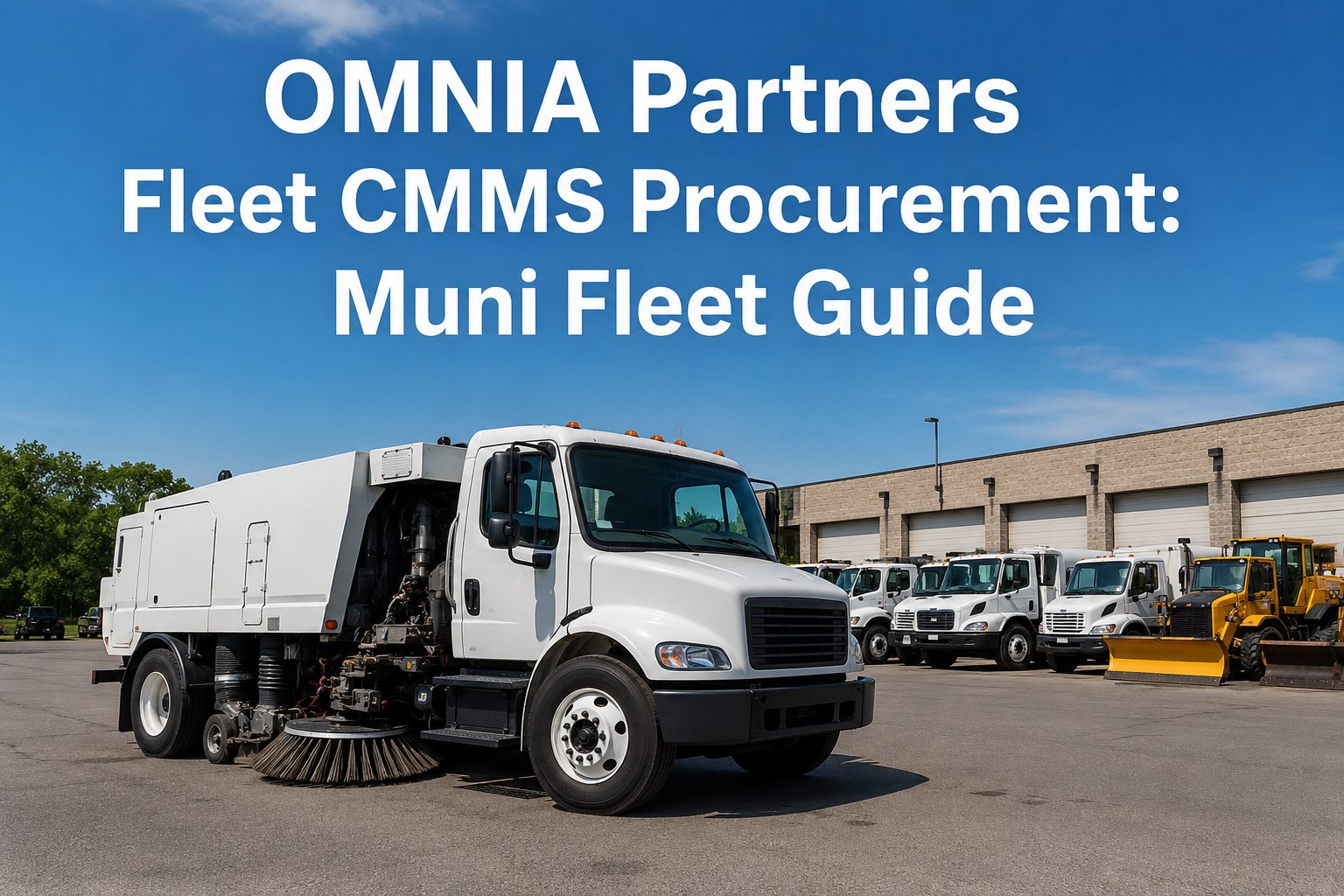
You've been here: the budget line for fleet maintenance software finally gets approved, and then procurement tells you the solicitation process will take six to nine months before you can sign anything. Meanwhile your technicians are still chasing paper DVIRs and your PM schedule lives in a spreadsheet. OMNIA Partners fleet procurement exists precisely to kill that wait — it's the largest cooperative purchasing organization in US public sector, connecting more than 90,000 agencies to pre-solicited contracts, and fleet software is an active category. HVI is available through an OMNIA lead agency contract, which means your city, county, school district or utility can buy a full CMMS without running your own RFP. This guide walks through how the cooperative path works, what it saves, and how to book a demo scoped to your agency's fleet before you ever touch a procurement form.
Skip the 9-Month RFP. Your Fleet Software Is Already Solicited.
OMNIA Partners has already run the competitive solicitation through lead agencies like Region 4 ESC and the County of Fairfax. You piggyback on that work, keep full compliance, and go live in weeks instead of fiscal years.
- 6–9 months of spec writing, advertising, scoring and award protests
- Staff hours burned on evaluations instead of wrenches and uptime
- Another year of paper DVIRs, missed PMs and audit exposure
- Solicitation already completed by a lead public agency
- Purchase in weeks with pre-negotiated public-sector pricing
- Fully compliant for cities, counties, schools, utilities and transit
OMNIA Partners Fleet Procurement by the Numbers
How Do You Buy Fleet CMMS Software Through OMNIA Partners?
The mechanics are simpler than most buyers expect. A lead public agency runs a full competitive solicitation, awards a national contract, and your agency purchases off it. Here is the actual sequence for a municipal fleet CMMS purchase.
Register your agency — free, same day
Any public agency — city, county, state, K-12, higher ed, special district, transit authority — registers with OMNIA Partners at no cost. Nonprofits and some quasi-public entities qualify too. Registration gives you access to the full contract portfolio and pricing documentation.
Confirm the lead agency contract covers your purchase
OMNIA contracts are solicited and awarded by lead public agencies such as Region 4 ESC in Texas and the County of Fairfax in Virginia. Because those agencies ran a competitive process satisfying public procurement law, your agency satisfies its own solicitation requirement by using the award. Your procurement office reviews the lead agency documentation — usually a one-meeting decision, not a nine-month project.
Scope the software to your fleet before you commit
This is where most agencies save the real time. Instead of writing a 40-page spec and hoping vendors respond, you evaluate the actual product. With HVI you can walk a live demo loaded with your own unit types — refuse trucks, dump bodies, transit vans, mowers, generators — and confirm the DVIR forms, PM triggers and work order flow fit your shop before a purchase order exists.
Issue your purchase order against the contract
Your purchasing department references the OMNIA contract number on the PO. Pricing is pre-negotiated for the public sector, terms are already vetted, and most agencies move from decision to signed order in two to six weeks — not two to three quarters.
Roll out to drivers and technicians
HVI runs on any phone or tablet, so there is no hardware procurement to layer on top. Most municipal fleets train drivers on digital pre-trips in a single shift meeting and have technicians closing work orders in the app within the first week.
What Does the OMNIA Route Actually Save a Municipal Fleet?
The savings are not just administrative. Every month your fleet waits on procurement is a month of unplanned downtime, paper inspection gaps and PMs tracked in someone's inbox. Here is the honest comparison.
| Factor | Agency-Run RFP | OMNIA Cooperative Contract |
|---|---|---|
| Time to contract | 6–9 months, often longer with protests or re-bids | 2–6 weeks from decision to purchase order |
| Staff effort | Spec writing, vendor Q&A, evaluation committees, legal review — hundreds of combined hours | Contract review and PO issuance; lead agency already did the evaluation |
| Pricing | Single-agency volume; vendor prices to your size | Pre-negotiated against national public-sector volume |
| Compliance | Your counsel validates the whole process | Competitive solicitation already satisfied by the lead agency award |
| Product validation | Paper proposals and scripted demos scored on a rubric | You test the live product on your own units before buying |
| Cost of waiting | Another 2–3 quarters of paper DVIRs and reactive repairs | Digital inspections and PM alerts running this quarter |
A county fleet of 180 mixed units loses an average of eight unit-days per month to breakdowns that a caught-early defect would have prevented — a cracked air line flagged on a pre-trip, a coolant weep caught at PM. At a conservative $450 per unit-day in rental coverage, crew idle time and towing, that is $3,600 a month. A nine-month solicitation delay costs roughly $32,000 in avoidable downtime alone — before counting a single audit finding or out-of-service citation. The cooperative route is not a procurement shortcut; it is nine months of uptime you get back.
Which Public Fleets Buy Through OMNIA Cooperative Contracts?
Cities and counties
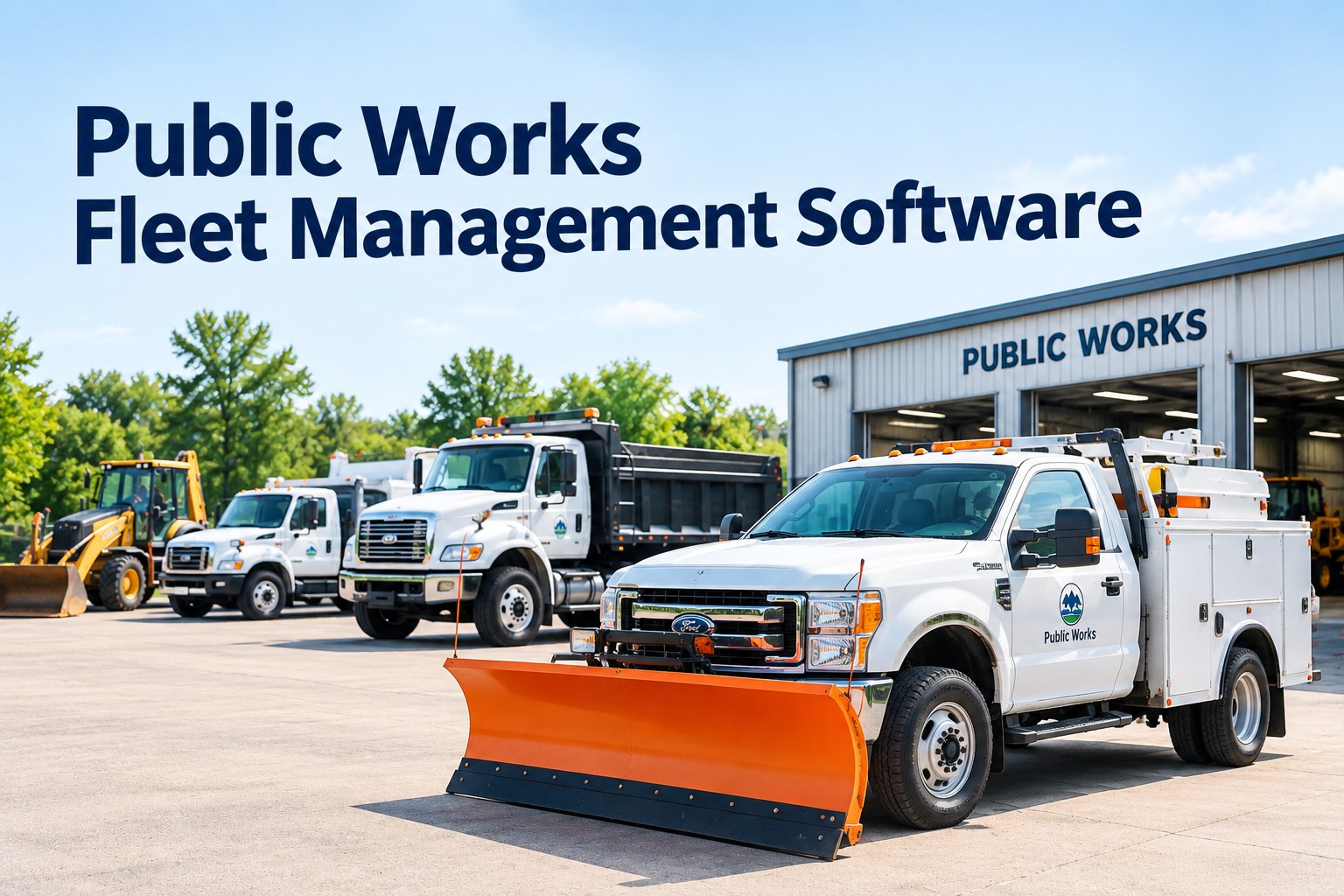
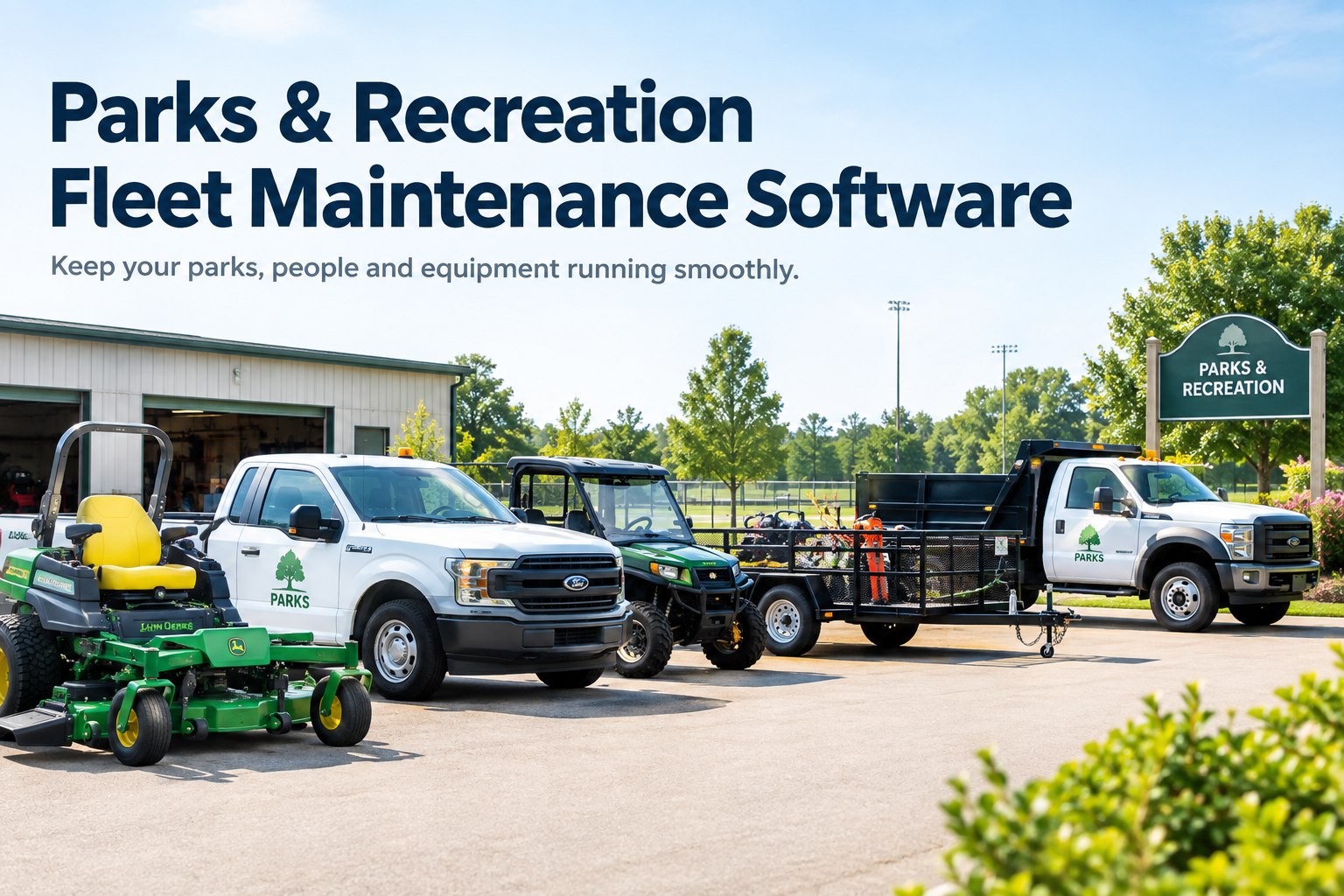
Public works, sanitation, parks and streets departments running mixed fleets of dump trucks, refuse packers, pickups and mowers. The OMNIA path lets a public works director move without waiting for a city-wide IT solicitation.
School districts
Bus fleets with strict daily inspection requirements and state reporting. Digital DVIRs with photo-backed defect capture give transportation directors proof every bus was checked before the first stop, every morning.
Utilities and special districts
Water, power and sewer districts with service trucks, trailers, generators and off-road plant spread across yards and remote sites. One platform covers on-road and off-road assets, with PMs triggered by date, mileage or engine hours.
Transit and public safety support fleets
Smaller transit agencies and the support fleets behind fire and police — shop trucks, trailers, generators. Audit-ready, timestamped records stand up to state DOT reviews and insurance audits without a records clerk digging through binders.
See the Contract-Ready CMMS Before You Write a Single Spec
Book a 30-minute demo and we will load HVI with your unit types, your inspection forms and your PM intervals — so your evaluation is done before procurement even starts.
What Your Agency Actually Gets: HVI Through the OMNIA Contract
HVI is cloud plus mobile Vehicle Inspection and Maintenance Work Order CMMS software, built for heavy mixed fleets and available to public agencies through an OMNIA lead agency contract. Four capabilities matter most on day one.
Digital inspections and DVIR
Drivers complete pre-trips on any phone with photo and defect capture. A failed item becomes a work order instantly — no paper form sitting in a cab for three days. Fleets typically cut defect-to-repair lag from days to same-shift.
Preventive maintenance scheduling
PMs trigger by date, mileage or engine hours with due and overdue alerts. No more oil services discovered 2,000 miles late during a breakdown diagnosis — the schedule enforces itself across every unit.
Work orders, parts and inventory
Technicians close work orders from the shop floor with labor and parts attached. Inventory tracks across multiple shops and yards, so the filter you need is on the shelf — or flagged before the truck is already down.
Audit-ready records and analytics
Every inspection is timestamped, photo-backed and retrievable in seconds for DOT, state, client or insurance audits. Uptime, cost per asset and compliance rate dashboards give your director the numbers council asks for. You can start logging inspections free and see the records build before your PO is even issued.
Your OMNIA Fleet Software Checklist: 8 Things to Confirm Before the PO
Cooperative purchasing removes the solicitation burden — it does not remove your duty to buy the right tool. Run this checklist during evaluation and your procurement file writes itself.
Lead agency documentation. Confirm the contract was competitively solicited by a named lead agency — Region 4 ESC or County of Fairfax, for example — and keep the award documents in your procurement file.
Your state's piggybacking rules. Most states and provinces permit cooperative purchasing, but some require a board resolution or a participating addendum. A five-minute call to your procurement office settles it.
Mixed-fleet coverage. Your CMMS must handle trucks, trailers, buses, off-road plant and shop equipment in one system — not just on-road vehicles. Test a grader and a generator in the demo, not only a dump truck.
Field usability. If a driver needs a manual to do a pre-trip, adoption dies in week two. HVI runs on any phone or tablet in the yard, on the roadside or at a remote pump station — see it on a live unit walkthrough before deciding.
PM trigger flexibility. Municipal fleets mix mileage-driven units (patrol, refuse) with hour-driven plant (loaders, generators). Confirm the software schedules by date, mileage and engine hours natively.
Audit retrieval speed. Ask the vendor to pull a specific unit's inspection history live in the demo. If it takes more than a minute, imagine that delay during a state DOT review with an auditor at your counter.
Integrations. GPS and telematics feeds, fuel cards and accounting systems should connect without custom development. HVI integrates with common telematics, fuel and accounting platforms so mileage and hours flow into PM schedules automatically.
Rollout effort. Ask exactly how training works. The honest answer for a well-built mobile CMMS is one shift meeting for drivers and a week of habit for technicians — anything longer is a red flag.
The Bottom Line on OMNIA Partners Fleet Procurement
OMNIA Partners is the largest cooperative purchasing organization in US public sector, serving 90,000+ agencies with contracts competitively solicited by lead agencies like Region 4 ESC and the County of Fairfax. Fleet software is an active category, and HVI is available through an OMNIA lead agency contract.
Buying through the cooperative replaces a 6–9 month solicitation with a 2–6 week purchase — and every month saved is a month of avoided breakdowns, caught defects and enforced PM intervals. For a mid-size county fleet, that delay is easily worth $30,000 or more in downtime alone.
The smart sequence is evaluate first, purchase second. Book a demo with your own fleet profile, confirm fit against the checklist above, then have procurement reference the OMNIA contract on the PO. You keep full compliance and lose none of the diligence — only the waiting.
"Our city attorney wanted a competitive process and my shop needed software before winter. I tracked it on a whiteboard: 214 days was the estimate for our own RFP. We went the cooperative route instead and had drivers doing digital pre-trips in five weeks. The number I watch now is defect-to-repair lag — it was four days on paper, and it's under one now. That's the whole argument."
Marcus Delaney — Fleet Services Manager, mid-size municipal public works fleet
OMNIA Partners Fleet CMMS: Frequently Asked Questions
What is OMNIA Partners and how does cooperative purchasing work for fleet software?
Is HVI really available through an OMNIA Partners contract?
How much time does buying through OMNIA actually save compared to an RFP?
Does cooperative purchasing meet my state's procurement rules?
Can we test HVI before committing to a purchase order?
Your Fleet Could Be Inspected Digitally Before the Next Budget Cycle
The solicitation is already done. The contract is already awarded. All that's left is seeing HVI run on your own units — book the demo, or start free today and build your case with real data.
Free to start — Works on any phone or tablet — No card needed