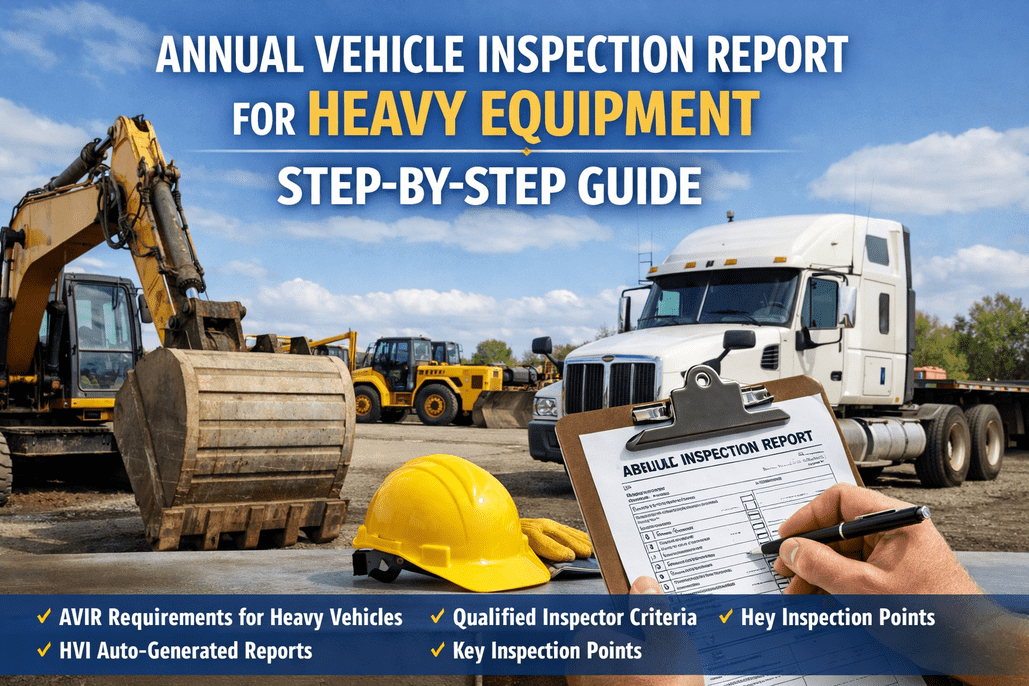
Is your fleet due for its annual vehicle inspection? Don't let confusion over paperwork put your compliance at risk. Follow this comprehensive guide to properly fill out your Annual Vehicle Inspection Report and keep your trucks rolling legally. This guide covers why inspections matter, every section of the report step by step, how to complete the inspection label, an example report, best practices, and the questions fleet managers ask most. Track your inspection schedules digitally with HVI or get expert guidance on inspection compliance.
One annual inspection report, filled out right, keeps every truck legal — and your CSA score clean.
HVI tracks inspection dates, stores digital reports securely, sends automated reminders before deadlines expire, and shows your entire fleet's compliance status at a glance — so you never miss a deadline again.
Why annual vehicle inspections matter
Annual vehicle inspections are crucial for maintaining the safety and compliance of your commercial fleet. These inspections help identify potential issues before they become major problems, ensuring your vehicles are roadworthy and meet all Department of Transportation (DOT) requirements.
Inspection deadline approaching? Track all your fleet's annual inspections in one place and get automated reminders before they expire. sign up for a free HVI account to start tracking inspection schedules digitally, or book a live demo to see automated reminders in action.
Understanding the Annual Vehicle Inspection Report
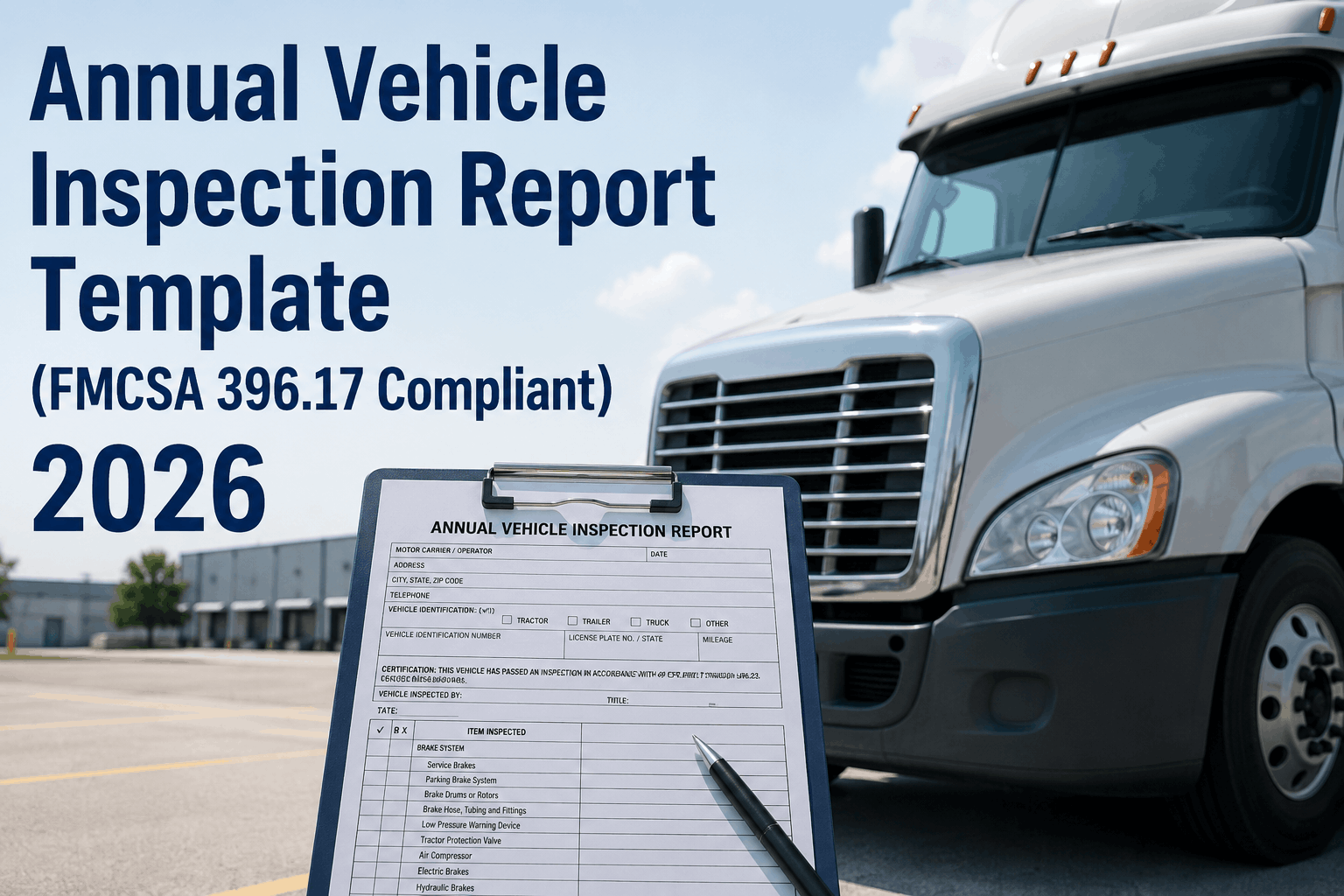
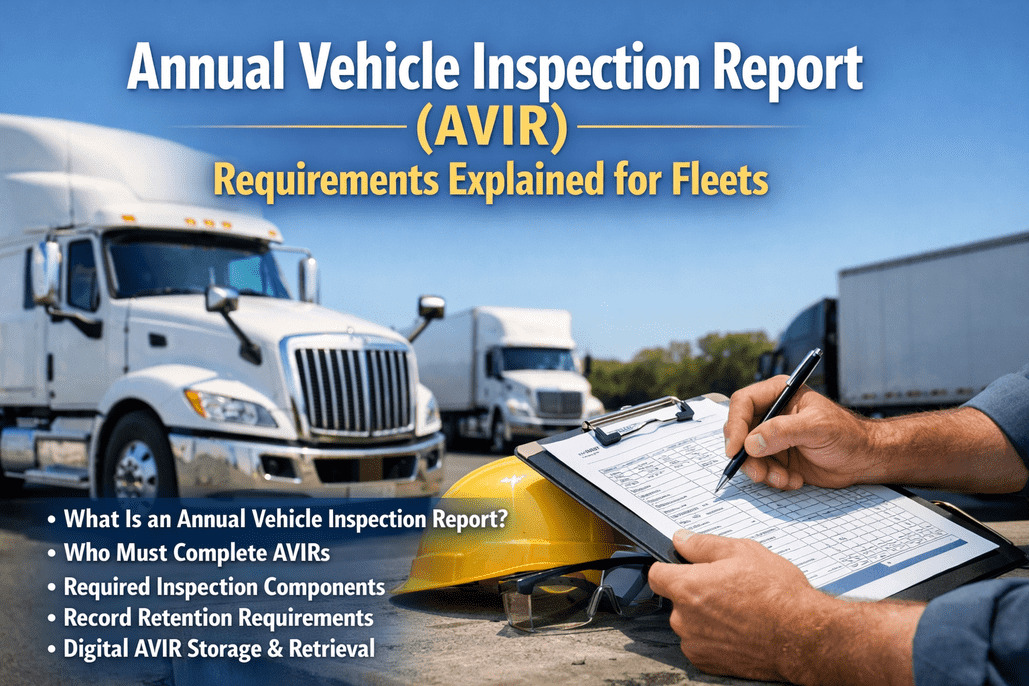
The Annual Vehicle Inspection Report is a document that certifies your vehicle has passed a thorough inspection and meets all safety standards. Here's a breakdown of the five key components and how to fill them out correctly.
Vehicle information
Start with the basic vehicle details: Vehicle Identification Number (VIN), vehicle make, model, and year, license plate number and state, and fleet unit number (if applicable).
Pro tip: Double-check the VIN against the vehicle's registration to ensure accuracy.
Inspection details
Provide information about the inspection itself: date of inspection, location where the inspection was performed, and odometer reading at the time of inspection.
Important: The inspection date on your report must be within the last 12 months to be valid. Set up automatic alerts for upcoming inspections to stay compliant year-round.
Inspector information
This section requires details about the person who performed the inspection: inspector's name, inspector's qualification or certification number, and the name and address of the motor carrier or other entity where the inspector is employed.
Note: Ensure the inspector is qualified according to DOT regulations.
Vehicle components inspection
This is the heart of the report. The inspector must check and certify the condition of various vehicle components — the brake system, coupling devices, exhaust system, frame, fuel system, lighting devices, steering mechanism, suspension, tires, wheels and rims, and windshield wipers. For each component, mark whether it passes inspection or needs repair.
Certification
The final step is the certification. The inspector must sign and date the report, certifying that the vehicle has passed all required inspection points. If any repairs were needed, note the date they were completed and who performed them.
Fleet manager tip: Maintain a database of qualified inspectors in your area to streamline the inspection process when deadlines approach.
How to fill out the Annual Vehicle Inspection label
Once your vehicle passes inspection, you'll need to fill out and display an Annual Vehicle Inspection label. Follow these four steps.
Pro tip: Use weather-resistant materials for your label to ensure it remains legible throughout the year.
Annual Vehicle Inspection Report example
To help you visualize a properly completed report, here's an example of the key sections filled out.
Vehicle information
VIN1FUJA6CV57LW91589
MakeFreightliner
Year2023
License plateABC1234 (CA)
Inspection details
Date of inspection05/15/2023
Location123 Truck Lane, Anytown, USA
Odometer50,000 miles
Inspector information
NameJohn Smith
Certification #DOT-12345
EmployerSafe Fleet Inspections Inc.
Fillable PDF option
For convenience, many carriers use a fillable PDF version of the Annual Vehicle Inspection Report. This digital format allows for easy completion and storage of inspection records. You can typically find fillable PDFs on DOT websites or through reputable fleet management software providers. Go fully digital with our inspection management platform for easier record keeping and compliance tracking.
Best practices for annual vehicle inspections
Beyond filling out the report correctly, four practices keep your whole inspection program running smoothly.
Simplify your annual inspection process
The right digital platform turns inspection compliance from a paperwork burden into an automated background process — across four capabilities.
Digital records
Store all inspection reports securely in the cloud.
Automated alerts
Never miss an inspection deadline with smart reminders.
Inspector network
Access qualified inspectors in your area quickly.
Compliance dashboard
Track your entire fleet's inspection status at a glance.
Track inspection dates, store digital reports, and never miss a compliance deadline again. start a free trial and simplify your annual inspection process, or book a demo to see how it works.
The bottom line
Properly completing your Annual Vehicle Inspection Report is crucial for maintaining compliance and ensuring the safety of your fleet. By following this step-by-step guide, you can confidently navigate the inspection process and keep your vehicles on the road legally and safely. With digital records, automated alerts, an inspector network, and a compliance dashboard in one platform, HVI helps you manage your logs, simplify inspection management, and keep your fleet running smoothly. Remember, a well-maintained fleet is a profitable fleet — stay compliant, stay safe, and keep on trucking.
Annual Vehicle Inspection Report: essential FAQs
How often are commercial vehicle inspections required?
Commercial vehicles must undergo a comprehensive inspection at least once every 12 months. This annual inspection is mandated by the Department of Transportation (DOT) to ensure vehicles meet all safety standards. The resulting Annual Vehicle Inspection Report must be kept on file, and vehicles must display a valid inspection label. Some states may require additional periodic inspections, so it's important to check local regulations for complete compliance. Track all your inspection requirements in one place.
Who is qualified to perform DOT annual inspections?
A DOT annual inspection must be performed by a qualified inspector who meets specific requirements under federal regulations. Qualified inspectors include individuals who have completed state or federal training programs, mechanics with certifications in commercial vehicle inspection, persons with at least one year of experience inspecting commercial vehicles, and individuals who have passed knowledge and hands-on tests for commercial vehicle inspections. The inspector's certification number and employer information must be documented on the inspection report.
What documentation is required for annual vehicle inspections?
For DOT compliance, carriers must maintain a completed Annual Vehicle Inspection Report showing all inspected components, proof of inspector qualification, documentation of any repairs performed following the inspection, a visible inspection label on the vehicle showing the inspection date, and records of these inspections for at least 14 months. Digital or paper copies are acceptable as long as they can be produced during a DOT audit. Learn how to digitize your inspection records for easier compliance management.
What components are checked during an annual vehicle inspection?
A DOT annual inspection covers numerous critical safety systems including brake systems (service, parking, and emergency), coupling devices and fifth wheel, exhaust and fuel systems, frame, suspension, and steering mechanisms, lights and reflectors, tires, wheels, and rims, windshield wipers and washers, emergency equipment (fire extinguishers, reflective triangles), and electrical systems and wiring. Each component must pass inspection for the vehicle to receive certification.
What happens if my vehicle fails the annual inspection?
If a vehicle fails its annual inspection, you must document all deficiencies on the inspection report, complete necessary repairs before putting the vehicle back in service, have the repairs verified and documented by a qualified inspector, obtain a new inspection certification after all issues are resolved, and update the vehicle's inspection label with the new date. Operating a commercial vehicle that has failed inspection or with an expired inspection can result in significant fines, out-of-service orders, and negative impacts on your CSA scores.
Never miss another inspection deadline.
Join thousands of fleet managers who trust HVI to keep their vehicles compliant and on the road. Track inspection dates, store digital reports, get automated reminders, and protect your fleet from DOT violations — all in one platform. Let's keep your fleet running smoothly together.
No credit card required · Set up in minutes · Digital records + automated alerts + inspector network + compliance dashboard in one platform