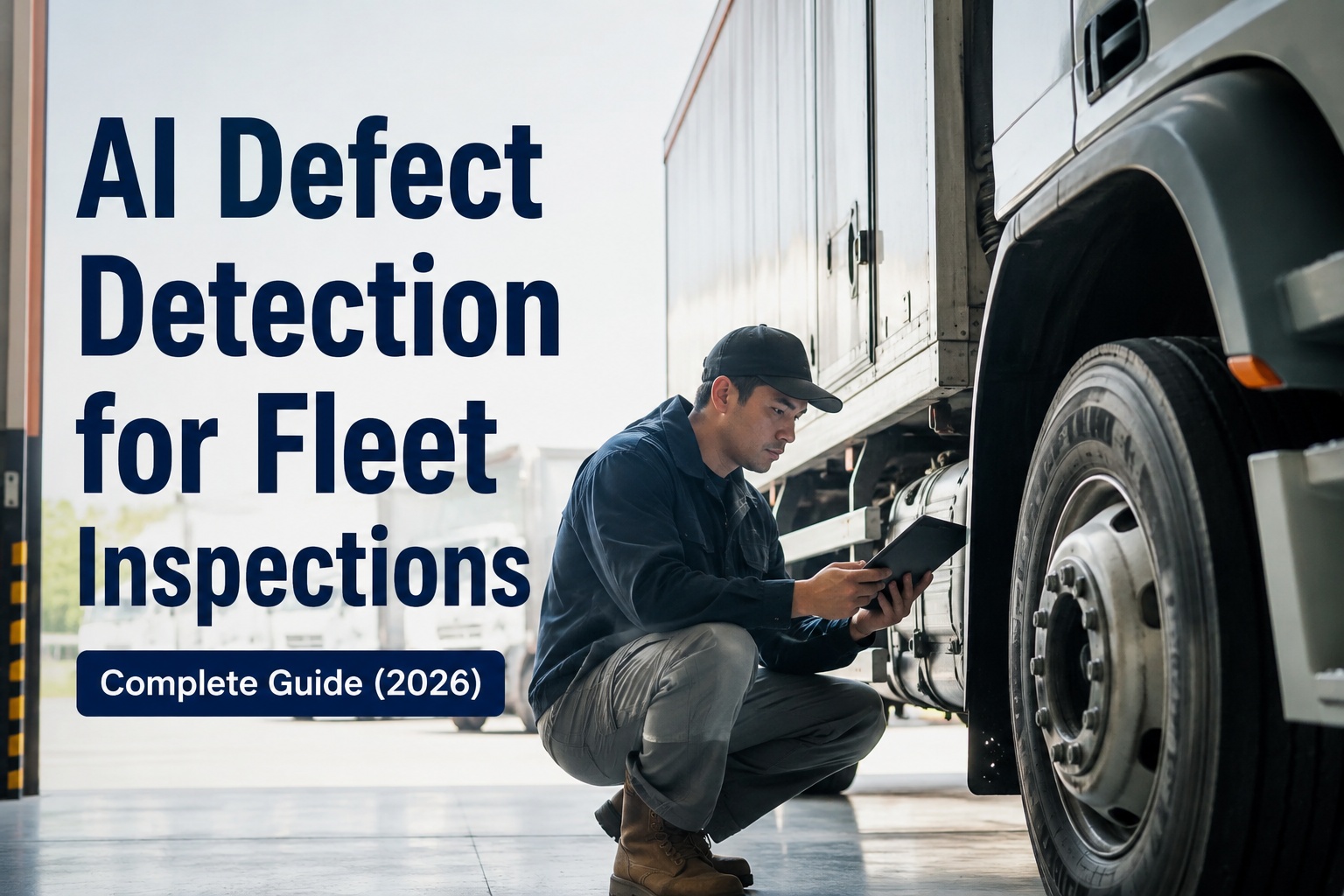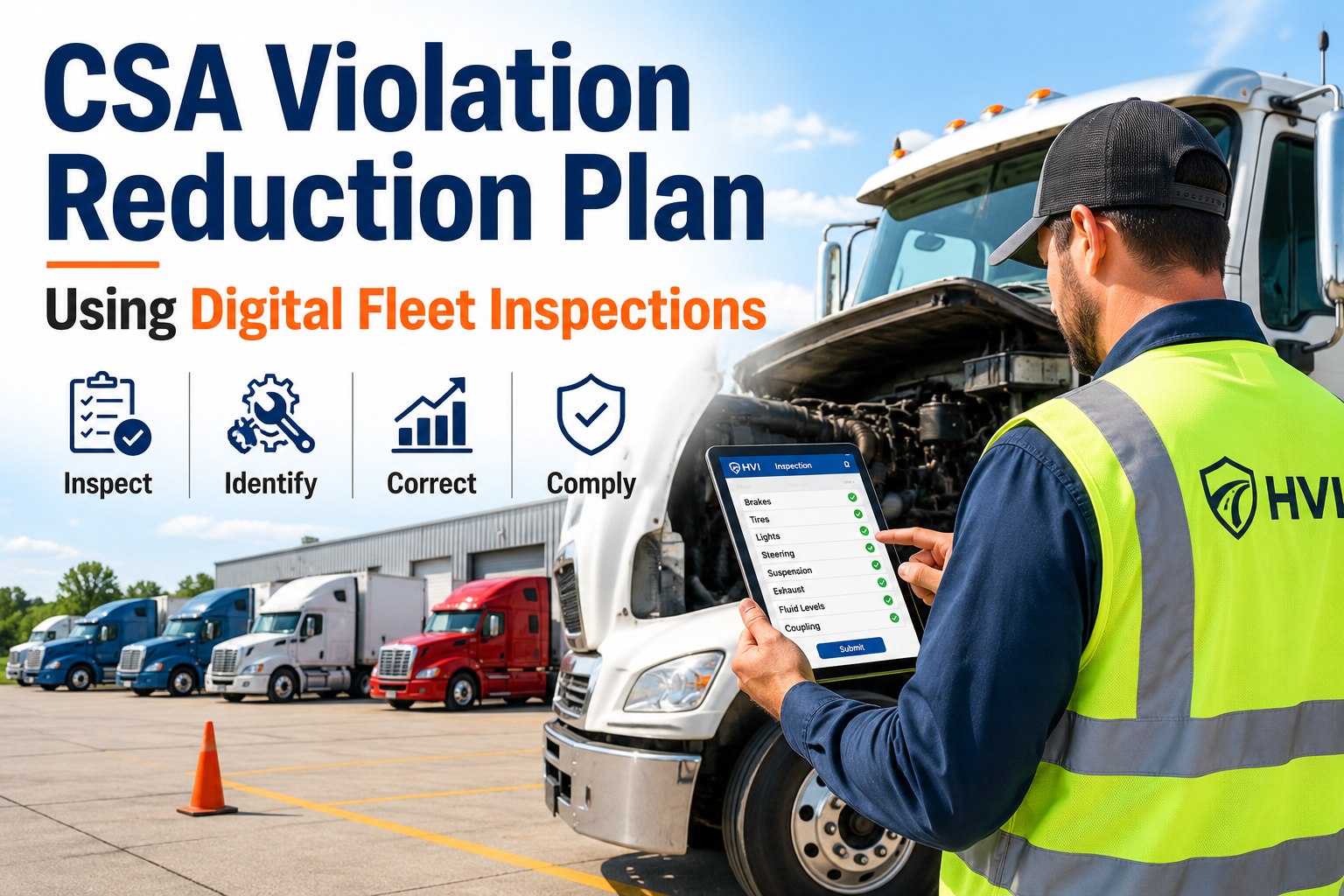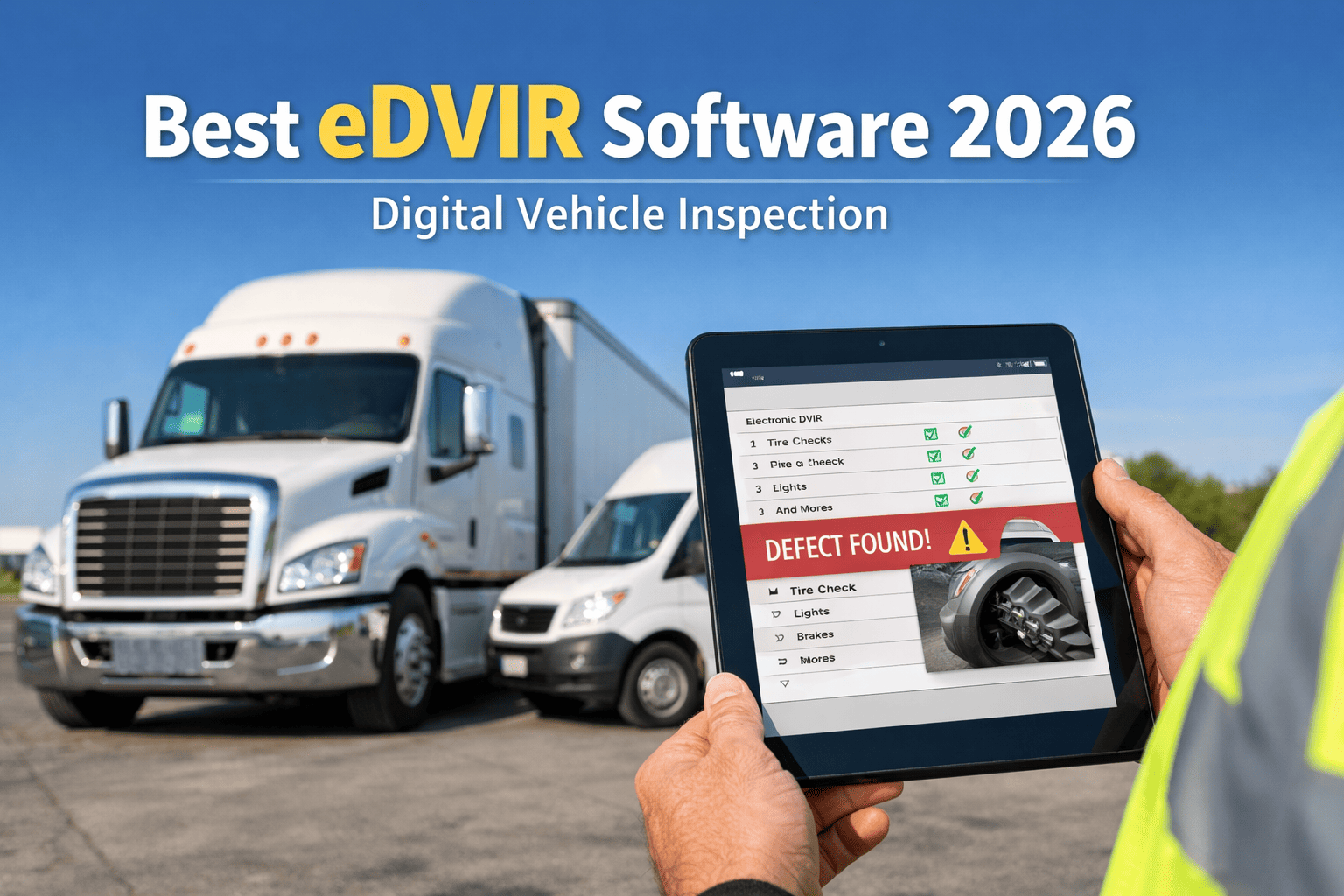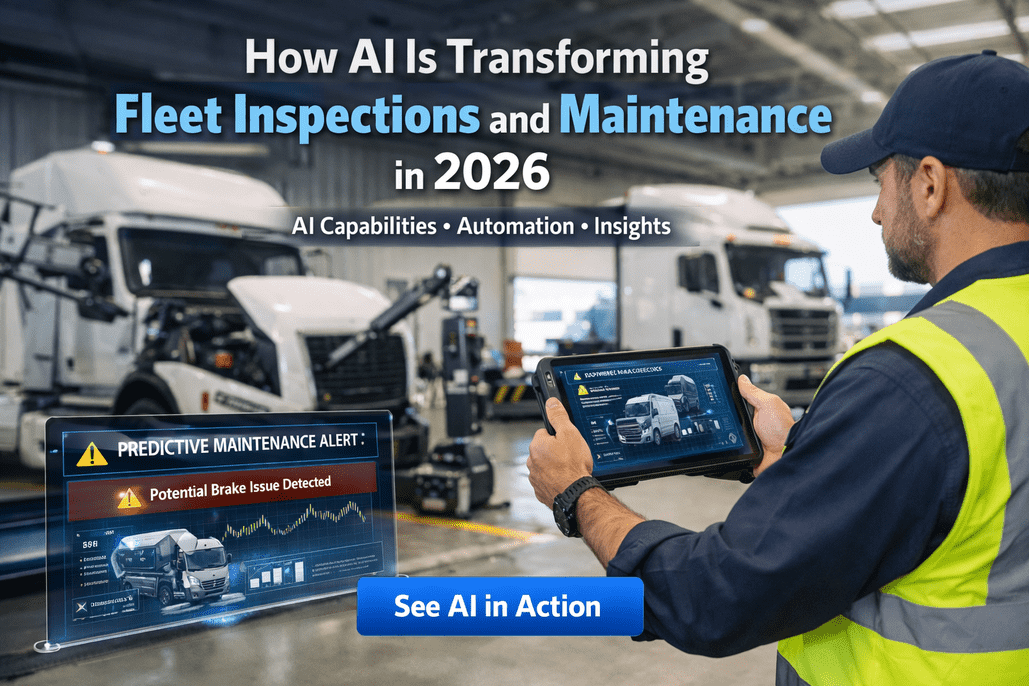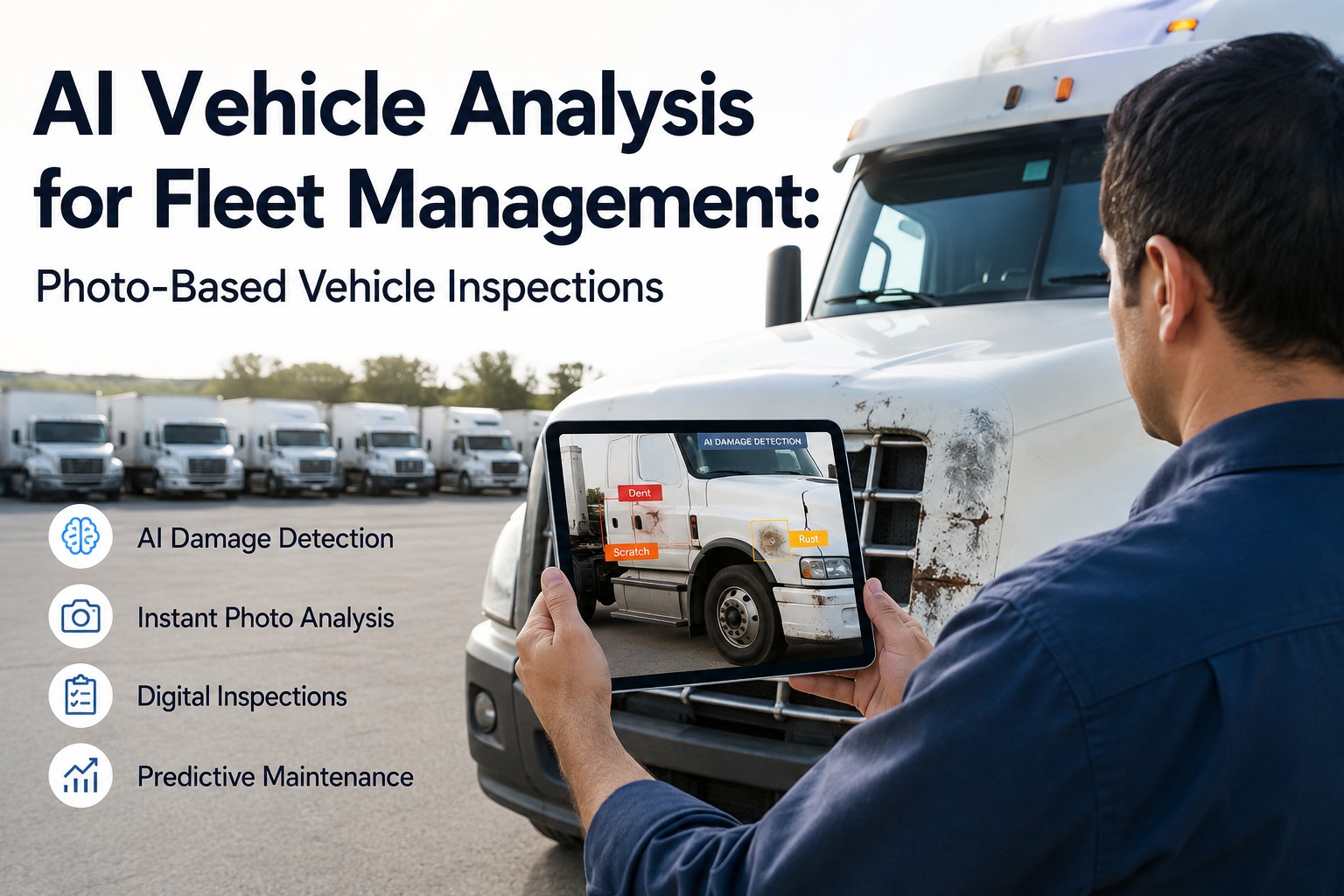
A driver snaps a photo of a tire during a pre-trip walkaround. Within seconds, the system flags a hairline sidewall crack invisible to the naked eye — the kind that becomes a blowout 200 miles down the highway. That single photo just prevented a tow bill, a cargo delay, and an emergency repair. This is AI vehicle analysis, and in 2026 it's quietly rewriting what a fleet inspection is: not a clipboard and a signature, but a smartphone camera backed by computer vision trained on tens of millions of real-world vehicle images. The gap it closes is human inconsistency — trained inspectors catch 70 to 80% of defects, while AI photo analysis reaches 95 to 99%, applying the same rigor to inspection number 200 as to number one, in low light, under time pressure, at 5 a.m. This article explains how photo-based AI analysis actually works, what it detects across the vehicle, how it turns a photo into a work order and a prediction, and what it means for downtime, cost, and DOT compliance. HVI's AI-powered inspection & maintenance software runs all of it on the phones your drivers already carry. Book a 30-minute walkthrough to see it on your fleet.
Upload a photo. In seconds, AI finds the defect a tired inspector at 5 a.m. would walk right past.
AI vehicle analysis uses computer vision to detect damage, tire wear, fluid leaks, and body defects from ordinary smartphone photos — no special hardware. HVI's AI inspection & maintenance software analyzes every photo your drivers take, flags defects across 163+ components, auto-generates work orders, predicts failures weeks ahead, and produces audit-ready eDVIRs — all offline-capable, on existing phones.
Why photos beat the clipboard
Manual inspection has one unfixable flaw: humans are inconsistent. Fatigue, time pressure, poor lighting, and subjective judgment mean the same vehicle gets a different inspection every day. AI removes the variable.
The point isn't that AI is smart and people aren't — it's that AI is consistent and people can't be. It doesn't get tired, doesn't rush to make a departure time, and doesn't have a bad day. Every image gets the same standard, which is exactly what a fatigued 5 a.m. walkaround can never guarantee.
How a photo becomes a diagnosis
AI vehicle analysis isn't magic — it's a pipeline. Each photo moves through the same five stages, turning pixels into a part, a defect, a severity, and an action.
Capture
A guided app tells the driver exactly what to photograph and from which angle. It won't accept a blurry, dark, or badly framed shot — first-time-right, no skipped steps.
Identify the part
The model first recognizes what it's looking at — one of 163+ components. Correct part identification is what prevents the misdiagnosis that causes wrong, costly repairs.
Analyze at pixel level
Segmentation models map the component pixel by pixel — the exact area of tread wear, the length of a crack — detecting 21+ damage types, including micro-damage the eye misses.
Classify severity
Every defect is rated by type, severity, and urgency — from "monitor at next inspection" to "out of service, do not operate" — so the fleet fixes what actually matters first.
Act & document
A work order generates automatically with the photo, severity, and vehicle ID and routes to a mechanic — while a timestamped, GPS-tagged eDVIR is filed for compliance.
Five stages, zero clipboards, and no gap between finding a defect and dispatching the repair. sign up free and run a photo through HVI's AI analysis on your own vehicle, or book a demo to watch a defect become a routed work order in seconds.
What AI actually detects from a photo
Trained on tens of millions of images, the AI recognizes the defect categories behind most breakdowns and roadside out-of-service orders — often before a human could see them at all.
Tire condition
Tread-depth estimation, sidewall cracks, bulges, uneven wear patterns, and tires approaching DOT minimums — all from a single photo, with wear direction hinting at alignment issues.
Brake components
Worn pads, cracked drums, damaged air lines, and slack-adjuster issues — flagged before they trigger an out-of-service order at a roadside inspection.
Fluid leaks
Oil saturation, coolant residue, power-steering seepage, and differential traces — slow leaks that are invisible during a brief, poorly-lit pre-trip stop.
Body & structure
Dents, scratches, cracks, corrosion, tears, and weld defects across the body and frame — including micro-cracks that are invisible under poor lighting.
Lighting & electrical
Burned-out lamps, damaged lenses, and lighting failures that pedestrians and other drivers rely on — a frequent and easily-missed roadside violation.
Cargo & securement
Securement issues and load problems captured in the same guided walkaround, so a shifting or under-secured load is caught before the vehicle leaves the yard.
From detection to prediction
The real leap isn't spotting today's damage — it's forecasting tomorrow's. Because every photo is stored, the AI compares each inspection against a baseline and every prior scan, turning single images into trends.
A photo-verified baseline
The AI learns what "normal" looks like for each specific vehicle at its mileage and routes. That reference state is what lets it say not just "this is damaged" but "this is getting worse."
Measurable growth rates
A crack that was 2 mm last month and 3.5 mm this month has a growth rate. Corrosion spreading 2 mm a week signals accelerating failure. The system tracks change no human can.
Fleet-wide patterns
Front-left tires wearing 15% faster across three vehicles points to a fleet alignment issue. AI correlates degradation across vehicles, routes, drivers, and conditions.
Failure, weeks early
By reading those trends, the AI flags components trending toward failure 2–4 weeks out — "this alternator shows early wear, replace within 14 days" — so repairs get planned, not sprung.
This is the shift from reactive to predictive: inspections stop being a compliance checkbox and become fleet intelligence. Instead of learning a part failed when a vehicle strands a driver, you learn it's going to fail while there's still time to schedule the fix in a maintenance window.
Compliance built in: the 2026 eDVIR shift
The regulatory ground moved in 2026, and it moved toward exactly this kind of inspection. Photo-verified digital records aren't just convenient now — they're an audit advantage.
As of March 23, 2026, FMCSA's final rule explicitly authorizes electronic DVIRs under 49 CFR 396.11 and 396.13, with digital signatures fully replacing wet ink. AI-generated DVIRs with photo verification exceed the minimum compliance standard.
Every inspection auto-generates a DOT-compliant eDVIR — timestamped photos, GPS location, digital signature, full component checklist, and a three-signature driver-reviewer-mechanic chain that can't be skipped.
Only a small fraction of carriers pass DOT audits without violations. Photo-verified digital records are retrievable in seconds — not hours of filing-cabinet searches — which is exactly what auditors want to see.
AI also guards the record's integrity: it validates photo quality and flags digitally altered images, duplicates, and "photo of a photo" fraud — so the proof you present is proof you can trust.
What it's worth to a fleet
The accuracy and speed translate into numbers fleets can put on a page — faster inspections, fewer breakdowns, lower repair bills, and a compliance record that protects the CSA score.
And none of it needs new hardware. AI photo analysis runs on the smartphones drivers already carry — most become proficient in under 30 minutes of guided use, because capturing a photo is faster and easier than filling out a paper form. The barrier to starting is a login, not a purchase order.
Frequently asked questions
What is AI vehicle analysis and how does it work?
AI vehicle analysis uses computer vision — the same class of technology behind autonomous driving — to inspect a vehicle from ordinary photos. When a driver photographs the vehicle during a walkaround, deep-learning models trained on tens of millions of real-world vehicle images analyze each image in real time, comparing what they see against learned patterns of normal versus defective conditions. The process runs as a pipeline: a guided app captures a quality photo, the model identifies which of 163+ components it's looking at, segmentation maps the part at the pixel level to find and measure damage across 21+ defect types, each defect is classified by severity and urgency, and a work order plus a compliant eDVIR are generated automatically. It reaches 95–99% detection accuracy versus 70–80% for trained human inspectors, and it does it in under a minute per photo. HVI runs this entire pipeline on standard smartphones.
What can AI detect from a vehicle photo?
A great deal, across the whole vehicle. On tires: tread depth estimated from the image, sidewall cracks, bulges, uneven wear, and tires approaching DOT minimums. On brakes: worn pads, cracked drums, damaged air lines, and slack-adjuster problems before they cause an out-of-service order. Fluid leaks the eye misses in a quick stop — oil saturation, coolant residue, power-steering seepage, differential traces. Body and structural damage — dents, scratches, cracks, corrosion, tears, and weld defects, including micro-cracks invisible under poor lighting. Plus lighting and electrical failures and cargo-securement issues. Modern systems recognize 21+ damage types across 163+ components, and because the models are trained on tens of millions of images, they routinely spot micro-damage and subtle wear patterns that even seasoned mechanics struggle to catch during a fast walkaround. HVI flags each finding with a photo, a severity rating, and a recommended action.
Do I need special cameras or hardware?
No. AI photo analysis works with any modern smartphone camera — the devices your drivers already carry. There's no fixed inspection lane, no camera array, no installation. The mobile app guides the driver through exactly what to photograph and from which angles with on-screen prompts, and the AI handles all the analysis; the driver just captures images and doesn't need to interpret results or make judgment calls. Setup for a fleet typically takes minutes rather than weeks, and drivers become proficient in about 25–30 minutes of guided use. Most actually prefer it to paper because it's faster — a full guided walkaround drops from 30–45 minutes to around 5. For fleets that also want live sensor data, inexpensive OBD-II devices can add telematics, but they're optional; the core AI analysis needs nothing beyond a phone. HVI is smartphone-native and offline-capable.
How does AI predict failures before they happen?
By comparing every inspection against a photo-verified baseline and all prior scans. When the AI first inspects a vehicle, it learns what "normal" looks like for that specific vehicle at its mileage and on its routes — a reference state per component. From then on, each new set of photos is compared against that baseline and every earlier inspection, so the system doesn't just see that something is damaged; it sees that something is getting worse, and how fast. A crack measured at 2 mm last month and 3.5 mm this month has a growth rate; corrosion spreading 2 mm a week signals accelerating failure. It also correlates patterns across the fleet — if front-left tires wear faster on several vehicles, that points to a shared alignment issue. From those trends it flags components trending toward failure roughly 2–4 weeks ahead, turning inspections from a record of the past into a forecast. HVI surfaces those predictions as prioritized alerts with recommended timing.
Is AI photo inspection DOT-compliant?
Yes, and the rules recently moved in its favor. On March 23, 2026, FMCSA's final rule explicitly authorized electronic DVIRs under 49 CFR 396.11 and 396.13, with digital signatures fully replacing the old wet-ink requirement. An AI-generated DVIR with photo verification exceeds the minimum compliance standard: every inspection produces a DOT-compliant electronic report with timestamped photographs, GPS-verified location, a digital driver signature, a full component checklist covering the required FMCSA categories, and a three-signature driver-reviewer-mechanic chain that can't be bypassed. Because only a small share of carriers pass DOT audits cleanly, the ability to retrieve complete, photo-verified records in seconds — rather than searching filing cabinets — is a real audit advantage. The AI also validates photo quality and detects altered, duplicate, or "photo of a photo" submissions, protecting the integrity of the record. HVI generates compliant eDVIRs automatically from every inspection.
How does HVI's AI inspection & maintenance software work?
HVI puts the full AI analysis pipeline on the smartphones your drivers already carry. A guided app walks each driver through the walkaround, showing exactly what to photograph and refusing incomplete or poor-quality submissions, so there's no pencil-whipping. Computer vision analyzes every photo in real time — identifying defects across 163+ components and 21+ damage types with 95–99% accuracy, and classifying each by severity from "monitor" to "do not dispatch." Any defect auto-generates a prioritized work order with the photo, severity, and vehicle ID and routes it to a mechanic in seconds, closing the defect-to-repair gap. Behind that, the system builds a per-vehicle baseline, trends wear over time to predict failures 2–4 weeks out, and generates a DOT-compliant eDVIR for every inspection — timestamped, GPS-tagged, and audit-ready. It works offline in the field and syncs when back in range, and setup takes minutes. The result is faster inspections, more defects caught, fewer breakdowns, and a compliance record that protects your CSA score. book a demo and we'll set it up around your specific fleet on the call.
Turn every driver's phone into your best inspector.
HVI's AI inspection & maintenance software analyzes the photos your drivers already take — catching defects human eyes miss, auto-generating work orders and eDVIRs, and predicting failures weeks before they strand a vehicle, all offline on existing smartphones. Stop inspecting the old way while your defects, downtime, and audit risk pile up.
No credit card required · Setup in minutes · AI photo analysis + auto work orders + predictive alerts + audit-ready eDVIRs, fully offline