Workplace safety isn't just a regulatory requirement; it's a moral imperative and a business advantage. According to the International Labour Organization, there are over 2.78 million work-related deaths each year — incidents that lead to immense suffering, lost productivity, and financial burdens. Technology is leading the charge in proactive safety management, and HVI empowers organizations to move beyond reactive measures to create safer environments by providing real-time, data-driven insights that identify and mitigate hazards before they cause harm. This guide covers how HVI works, its game-changing features, when and how to conduct assessments, and how to measure ROI. Start with a free HVI account or book a 30-minute walkthrough with our team to see it set up for your facility.
2.78 million work-related deaths a year. Proactive safety management is how you get ahead of them.
HVI combines advanced sensors, AI, and data analytics into a comprehensive safety management system — detecting hazards in real time, predicting incidents before they occur, and giving your team the insights to act first.
Why HVI matters: a pressing need
Workplace injuries and fatalities remain a global concern. According to the International Labour Organization (ILO), there are over 2.78 million work-related deaths each year. These incidents lead to immense suffering, lost productivity, and financial burdens. HVI addresses this challenge by providing real-time, data-driven insights to identify and mitigate hazards before they cause harm.
What HVI is and how it works
HVI combines advanced sensors, artificial intelligence (AI), and data analytics to create a comprehensive safety management system. Here's a simplified breakdown of the four stages that turn raw facility data into prevented incidents.
Hazard detection
Sensors strategically placed throughout a facility detect potential dangers like spills, equipment malfunctions, or unsafe worker behavior.
Data collection
This information is transmitted to a central platform, where it's processed and analyzed.
Real-time alerts
If a hazard is detected, the system triggers immediate alerts to relevant personnel.
Predictive analytics
HVI goes further by analyzing historical data and patterns to predict potential incidents before they occur.
A safety system is only as good as the action it drives — and that depends on every alert reaching the right person, every time. sign up for a free HVI account and route real-time hazard alerts to your team automatically, or schedule a live demo to see detection-to-alert in action.
6 game-changing HVI features
The latest HVI models extend well beyond basic hazard detection. These six capabilities are what move an organization from reactive incident response to genuine prevention.
Advanced hazard recognition
The latest HVI models can now identify a wider range of hazards, including ergonomic risks, fatigue-related issues, and even potential violence in the workplace.
Predictive maintenance
HVI can analyze equipment performance data to predict potential failures, allowing for timely maintenance and preventing costly breakdowns or safety incidents.
Behavioral safety analytics
By monitoring worker behavior patterns, HVI can identify unsafe practices and provide targeted training to improve overall safety culture.
Mobile incident reporting
Employees can quickly report hazards or near misses using their mobile devices, facilitating swift action and enhancing hazard awareness.
Augmented reality (AR) guidance
HVI can overlay real-time safety instructions onto workers' field of vision, guiding them through complex tasks and ensuring compliance with safety protocols.
Integration with wearable technology
By integrating with smartwatches and other wearables, HVI can track vital signs and environmental conditions to prevent heat stress, overexertion, and other health-related hazards.
Conducting HVI assessments: when and how
HVI assessments aren't a one-time event — they form a continuous cycle from baseline through ongoing monitoring to post-incident learning. Each stage feeds the next.
Initial assessment
An initial HVI assessment should be conducted to establish a baseline and identify existing hazards.
Ongoing monitoring
Continuous monitoring is crucial to detect new or emerging risks as conditions and operations change.
Post-incident analysis
HVI data can be invaluable in analyzing incidents, determining root causes, and preventing future recurrences.
The ideal tools for conducting HVI assessments fall into three groups: sensor technology suited to your specific hazards (gas detectors, thermal imaging, motion sensors); an HVI software platform that offers robust data analytics, real-time alerts, and customization options; and wearable devices for enhanced worker safety monitoring.
Overcoming challenges and measuring ROI
Implementing HVI can present challenges, such as initial costs, data privacy concerns, and change management. However, the long-term benefits outweigh the short-term hurdles — and the returns show up across four measurable dimensions.
Reduced incident rates
Track the decrease in workplace accidents and injuries over time as the primary measure of program success.
Lower insurance premiums
Safer workplaces often lead to reduced insurance costs, directly offsetting implementation spend.
Increased productivity
A safer workforce is a more productive workforce, with fewer disruptions from incidents and downtime.
Enhanced reputation
A strong safety record attracts top talent and builds customer trust over the long term.
Implementing HVI does involve initial costs and change management — but adopters report meaningful, measurable returns. sign up free and start tracking incident reduction and ROI from day one.
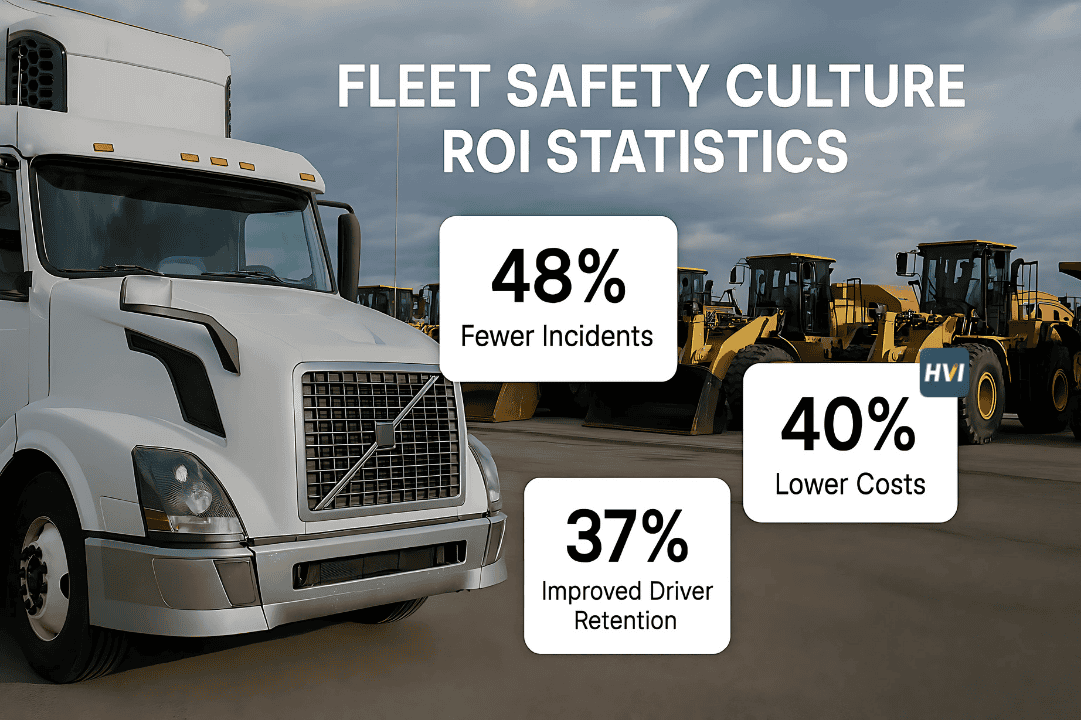
incident-rate reduction — some companies report a 20–30% drop in incident rates after adopting HVI. ROI varies by organization but can be significant, driven by fewer accidents, lower insurance premiums, higher productivity, and a stronger safety reputation. HVI turns reactive safety spend into proactive prevention.
The future of HVI
The future of HVI is incredibly promising. As AI and machine learning continue to evolve, we can expect even more sophisticated hazard detection, more accurate predictive analytics, and greater personalization of safety measures. HVI will become an indispensable tool for creating safer, more efficient, and more resilient workplaces.
Frequently asked questions
Is HVI only suitable for large organizations?
No, HVI solutions are scalable and can be tailored to the needs of businesses of all sizes. Whether you run a single facility or a multi-site operation, the system can be sized to your specific hazards and budget, so smaller organizations get the same proactive protection without overcommitting on cost or complexity.
Does HVI replace traditional safety practices?
HVI complements existing safety measures by providing an additional layer of protection and data-driven insights. It doesn't replace your safety team, training programs, or established protocols — it strengthens them with real-time hazard detection, predictive analytics, and a continuous record of what's happening across your facility.
How does HVI protect worker privacy?
HVI systems prioritize data anonymization and adhere to strict privacy regulations. The focus is on detecting hazards and unsafe conditions rather than surveilling individuals, and data handling is designed around compliance with applicable privacy standards so that worker monitoring stays proportionate and protective.
What is the typical ROI for HVI implementation?
ROI varies by organization but can be significant, with some companies reporting a 20–30% reduction in incident rates. Beyond fewer accidents, the returns come from lower insurance premiums, increased productivity from a safer workforce, and an enhanced reputation that helps attract talent and build customer trust — together offsetting the initial implementation cost.
How can I get started with HVI?
Contact an HVI provider for a consultation and assessment of your specific safety needs. The usual path is an initial assessment to establish a baseline and identify existing hazards, followed by selecting the right sensors, software platform, and any wearable devices for your environment. schedule a demo and we will walk through an assessment of your facility on the call.
Ready to revolutionize your safety management?
HVI combines sensors, AI, and analytics to detect hazards in real time, predict incidents before they occur, and measure the ROI of a safer workplace. Move beyond reactive measures and take the first step toward a safer, more productive, more resilient operation. Sign up free and protect your people.
No credit card required · Scalable to any size · Real-time alerts + predictive analytics + mobile reporting in one platform