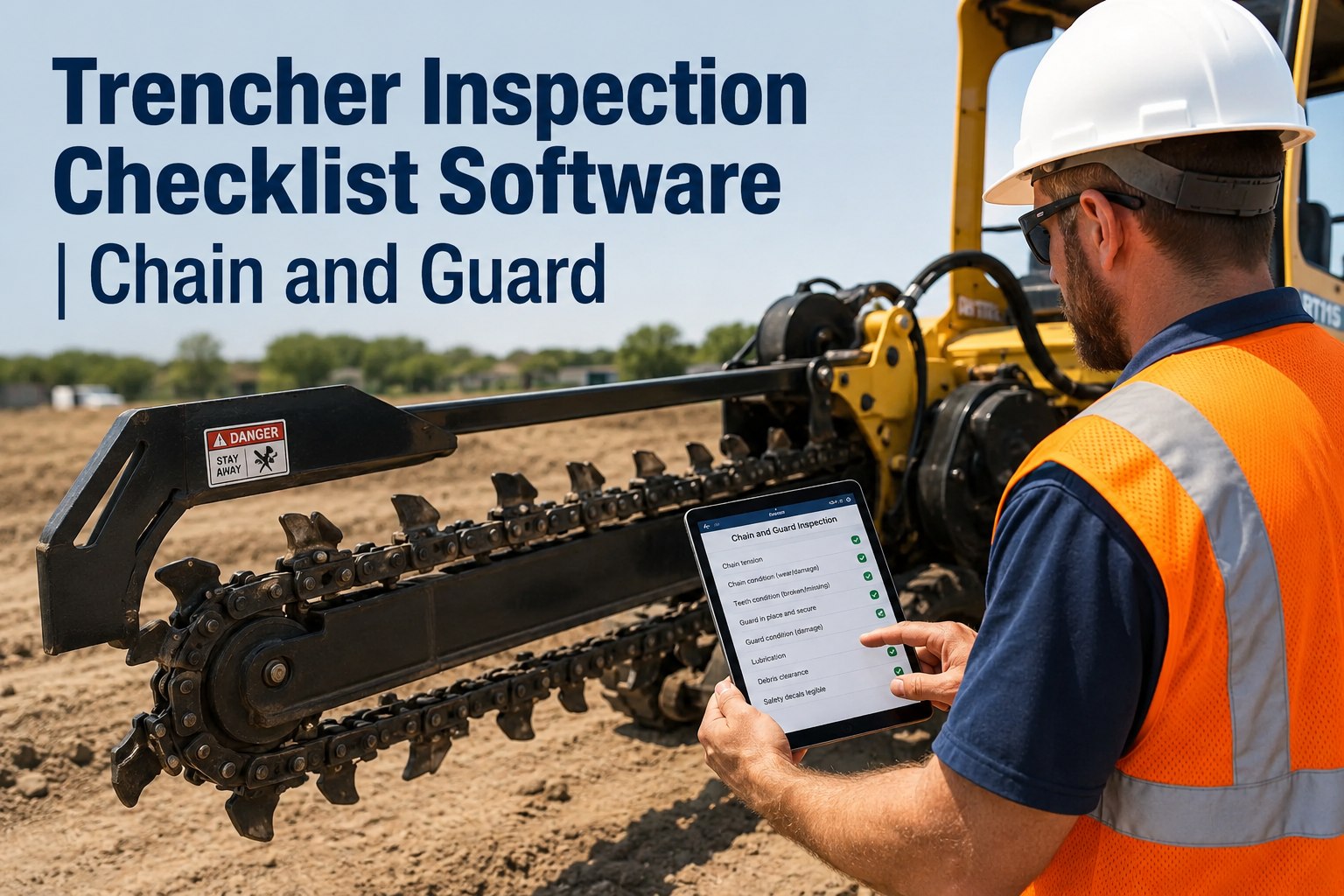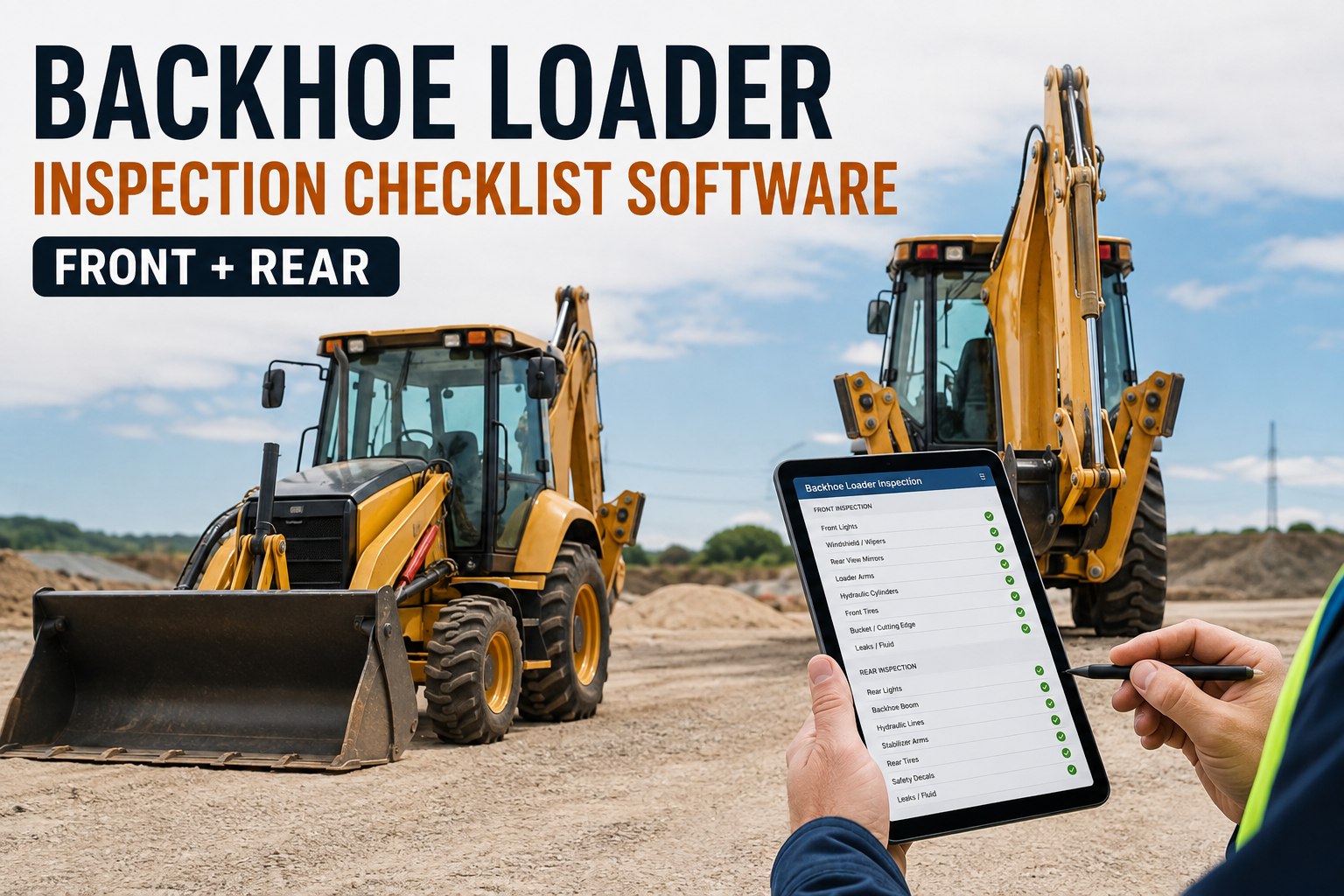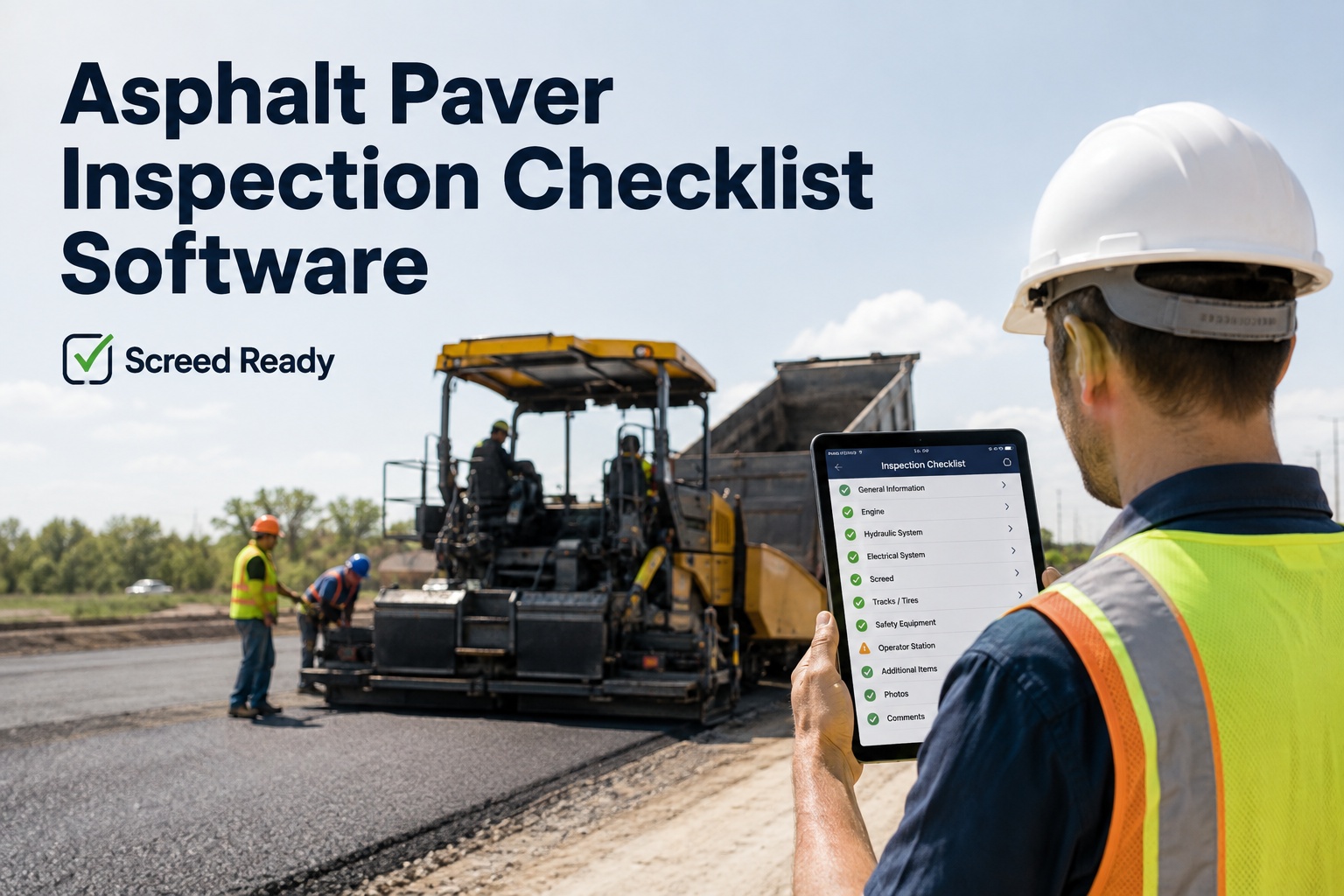
You know the sound a final drive makes when it's been running dry for two shifts. The operator knew something was off on Monday morning, but the paper checklist in the cab had a coffee ring over the undercarriage section, so he ticked every box and pushed dirt for another week. By Friday you were pricing a final drive instead of a seal. A proper bulldozer inspection checklist catches that seal weep on day one, when it's a two-hour fix instead of a five-figure rebuild. The undercarriage alone eats roughly half of everything you'll ever spend maintaining a crawler dozer, which makes the five-minute pre-shift walkaround the highest-return habit on any earthmoving job. This guide breaks down the eight inspection zones your operators should hit every shift, what to actually look for on tracks, blade, ripper and ROPS, and how a digital dozer daily inspection turns a greasy clipboard into work orders that close themselves. If you'd rather see it running on your own machines, you can book a 30-minute walkthrough with the HVI team and bring your toughest unit.
The 30+ point dozer walkaround your operators will actually finish
HVI's crawler dozer template covers engine, tracks and undercarriage, hydraulics, steering clutch, blade and ripper, ROPS/FOPS, final drive and electrical — with photo evidence, offline capture and automatic work orders on every defect.
- Track sag measured and logged against spec, not eyeballed
- Cutting edge and ripper shank wear photographed against indicators
- ROPS/FOPS damage flags the unit out of service instantly
- Works offline in the pit, syncs when the truck hits coverage
What a skipped dozer daily inspection really costs you
The 8 zones of a crawler dozer inspection — and what fails in each
A good dozer operator checklist follows the machine, not the clipboard. Start at the engine, work down to the tracks, around the blade and ripper, up into the cab and back to the finals. Here's what each zone hides when it gets skipped.
Engine & fluids
Oil, coolant, hydraulic and fuel levels before start. Belts for glazing and cracks. Air restriction indicator — a dusted filter on a dry cut job kills turbo life fast. Look for fresh weeps around the water pump and valve cover that weren't there yesterday.
Tracks & undercarriage
Track sag measured against spec, roller and idler flange wear, loose or missing shoe bolts, sprocket teeth going pointed, and packed debris around the carrier rollers. This zone is half your lifetime maintenance bill — treat it that way.
Hydraulics
Cylinder rods for scoring and pitting, hose chafing at the blade lift points, wet fittings, and blade drift with the engine off. A rod scar becomes a blown seal becomes contamination through the whole circuit.
Steering clutch & brakes
Lever feel and travel, equal response left and right, no grabbing or fading on a slope test. A dozer that pulls one way under load is telling you a clutch is slipping — log it before it becomes a steering failure on a bench.
Blade & cutting edge
Cutting edge wear against the moldboard, end bit bolts, trunnion pins and bushings for play, and cracks at the push-arm welds. Run an edge past its wear line and you're grinding moldboard — a far more expensive conversation.
Ripper
Shank wear against the guard, tooth retention pins, frame cracks at the pivot bosses, and hydraulic function through full travel. A thrown shank in rock bends the pocket — check retention every shift, not every service.
ROPS / FOPS & cab
Structural cracks, bent sections, drilled or welded repairs that were never certified, mounting bolt torque marks, seat belt condition, and glass. Any structural damage to ROPS or FOPS parks the machine — full stop.
Final drive & electrical
Final drive oil level and seepage at the sprocket hub, battery hold-downs, corroded terminals, working lights and backup alarm, and any harness rubbed through at the articulation points. Finals don't warn you twice.
Dozer track inspection: sag, tension and the bushing math
Track tension is the single most abused adjustment on a crawler dozer. Operators crank it tight because a tight track "looks right" — and quietly halve bushing life doing it. Here's the practical version your crew can use tomorrow morning.
Correct sag
With the machine on level ground, measure the droop between the carrier roller and the front idler against the OEM spec for that model — typically in the range of a couple of inches, checked in the material the machine works in. Mud packing in the chain adds effective tension, so a track set perfect in the shop runs over-tight in wet clay.
- Measure after moving forward, not after reversing
- Re-check when ground conditions change season to season
- Log the number, not just a tick — trends catch adjuster seal leaks
Over-tensioned
A track run too tight puts constant extra load on every pin and bushing in the chain, accelerates sprocket and idler wear, and makes the final drives work harder on every turn. On a big dozer, a premature bushing turn or chain replacement is a five-figure job with days of downtime attached.
- Bushing wear accelerates well beyond the tension increase
- Sprocket teeth hook and point faster under load
- Track adjuster seals blow trying to hold over-pressure
Worked example: a mid-size dozer chain and bushing job runs into the tens of thousands with parts, labour and lost production. If logging sag numbers daily stretches undercarriage life by even 15%, that one habit pays for your entire inspection software subscription many times over — see the math on a demo with your own fleet numbers.
ROPS, FOPS and the defects that park the machine
Most checklist items are judgement calls. A handful are not. These are the findings where the only correct answer is keys out of the ignition until a qualified person signs off.
| Finding on the walkaround | Why it's serious | Correct action |
|---|---|---|
| Crack, bend or uncertified weld on ROPS/FOPS structure | The structure is engineered as a system — any modification or damage voids its rated protection in a rollover or falling-object event | Out of service immediately. Repair or replace per OEM and recertify before the machine works again |
| Steering clutch fading or grabbing on one side | Loss of directional control on slopes and benches is a struck-by and rollover scenario | Out of service on grades. Diagnose clutch pack and linkage before further production work |
| Final drive oil low with active seepage at the hub | Running dry destroys gears and bearings — and a locked final on a slope is a safety event, not just a repair bill | Top up only to move to flat ground, then repair the seal before the next shift |
| Seat belt cut, frayed or retractor failed | The belt is what keeps the operator inside the ROPS envelope during a rollover | Replace before operation — it's a fast, cheap fix with zero excuse |
| Backup alarm or travel lights dead | Ground crews work behind dozers constantly; a silent reverse is how struck-by incidents happen | Fix before working around personnel; flag for same-shift repair otherwise |
In HVI, any of these findings can be configured as a critical defect: the moment the operator taps it, the unit is flagged out of service, a work order opens, and the supervisor gets notified — no radio calls, no lost notes. You can set that workflow up free and test it on one dozer this week.
See the 30+ point dozer template on your own fleet
Bring your worst machine to a 30-minute demo. We'll load the bulldozer checklist, fail a few items, and show you the work order that appears before the operator reaches the coffee truck.
Why the clipboard version of a bulldozer safety inspection fails
The paper walkaround
- Checklist lives in the cab, soaked, with last Tuesday's boxes pre-ticked
- "Track loose" written in pencil tells the shop nothing — which side, how much, since when?
- Defects surface at the end of shift, after the damage is already done
- No photos, so the worn cutting edge argument happens from memory
- History lives in a binder nobody opens until the rebuild-vs-replace meeting
The HVI walkaround
- Checklist on the operator's own phone, offline-capable, 30+ items in about five minutes
- Every defect forces a photo and a note — "track loose" becomes a measured sag reading
- Critical defects open work orders and notify the supervisor in real time
- Timestamped, photo-backed records satisfy client, safety and insurance audits in seconds
- Full per-asset history shows exactly what each dozer has cost you, year over year
The difference isn't the list — it's what happens after the tick. When a defect on a digital dozer inspection flows straight into a work order, nothing gets forgotten between the cab and the shop.
Built for earthmoving fleets, not office fleets
Four capabilities that turn a daily dozer inspection from paperwork into uptime.
30+ point dozer template
Engine, tracks and undercarriage, hydraulics, steering clutch, blade and ripper, ROPS/FOPS, final drive and electrical — pre-built for Cat, Komatsu, Deere and mixed fleets, editable per model. Outcome: every operator checks the same things the same way, every shift.
Offline photo capture
Pits, quarries and remote pads have no signal — HVI caches the full inspection offline and syncs when coverage returns. Outcome: no more "I'll do it back at the yard," which is where checklists go to die.
Defect-to-work-order automation
A failed item opens a work order with the photo, reading and asset hours already attached, routed to the right shop. Outcome: the seal weep gets fixed this week, not after the final drive lets go — cutting unplanned downtime where it starts.
Per-asset cost history
Every inspection, work order and part rolls up under the serial number, alongside PM schedules by engine hours. Outcome: when you're deciding rebuild versus replace on a tired D6-class machine, you're looking at its real numbers, not a guess.
The bulldozer inspection checklist that pays for itself
Everything on this page comes down to four habits worth building into every shift:
Respect the undercarriage
It's roughly half your lifetime maintenance spend. Measure track sag, log the number, and never let an operator run a chain over-tight because it looks cleaner.
Photograph wear, don't describe it
Cutting edges, ripper shanks and sprocket teeth all have wear indicators. A dated photo against that indicator ends every argument about timing.
Treat ROPS damage as a stop-work event
Cracked, bent or uncertified-welded ROPS/FOPS means the machine is parked until certified repair. No exceptions, no "just finish the pad."
Close the loop on every defect
A finding without a work order is a future breakdown. A digital bulldozer inspection checklist that auto-creates the work order is the difference between a seal and a final drive.
If your walkaround still lives on paper, the fastest next step is to start logging inspections free on one machine and compare a month of records against your binder.
I used to find out about track problems when the operator radioed that a shoe bolt let go in the cut. Now my phone buzzes the second someone logs loose hardware, with the photo attached. The number I watch is undercarriage hours between repairs — since we started measuring sag daily instead of guessing, that number is up by a fifth across our six dozers. Five minutes a shift. That's the whole program.
Dale Merrick — Maintenance Manager, civil earthworks and site development contractor
Bulldozer inspection checklist FAQs
What should a daily bulldozer inspection checklist include?
How do you check track tension on a crawler dozer?
Does a damaged ROPS really take the dozer out of service?
How often should dozer undercarriage wear be measured?
Can dozer inspections be done offline at remote sites?
Put the 30+ point dozer checklist in every cab by Friday
Book a 30-minute demo and we'll configure the bulldozer template on your actual fleet — tracks, blade, ripper, ROPS and all — so you can watch a defect become a work order in real time.
Free to start — Works on any phone, offline — No card needed