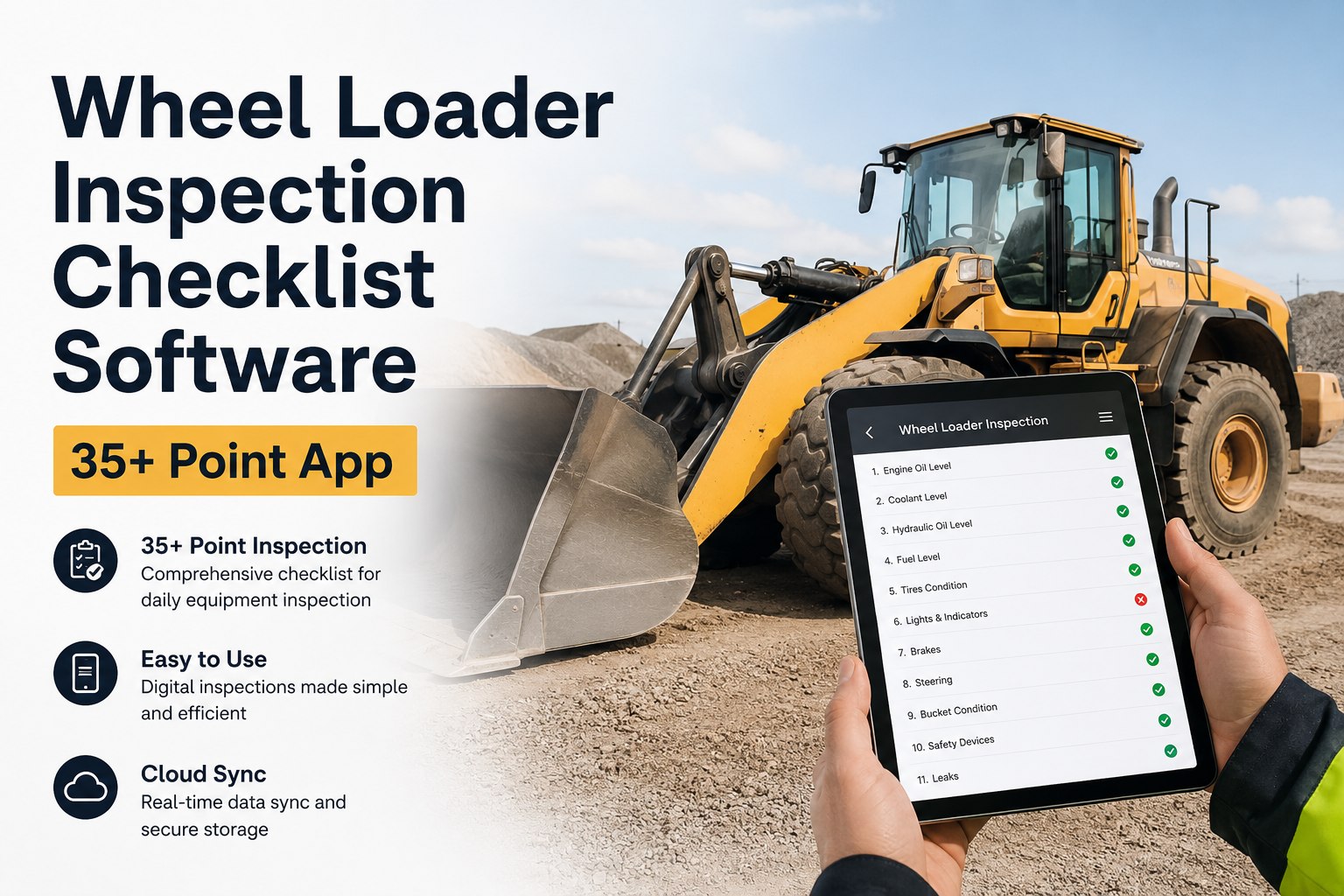
Three operators, two attachment swaps, one loader — and by 2 PM nobody remembers who checked what. A wheel loader digital inspection checklist only works if it survives a shift change, not just a single operator's morning. Book a demo to see a checklist that actually holds up across shifts.
A Wheel Loader Digital Inspection Checklist That Gets Used, Shift to Shift
Most wheel loaders don't belong to one operator — they get handed off two or three times a day, swap attachments mid-shift, and still need a real walkaround every time. HVI builds the checklist around that reality instead of ignoring it.
A loader isn't like a machine that goes home with one operator. It sits in the yard, gets picked up by whoever's running that zone, swaps a bucket for forks at lunch, and gets handed to a second shift before the first operator even clocks out. A checklist built for a single-owner machine breaks the moment any of that happens — which is most days.
Why loader checklists slip more than mostthe machine doesn't change, but who's running it does
This isn't about operators being careless — it's that the paper sheet from the morning shift is sitting in a cab nobody's in anymore by the time the afternoon operator takes over. HVI keeps the same checklist and the same defect history following the machine, not the operator.
For the deeper breakdown of articulation joint wear points and engine-hour PM tiers specific to wheel loaders, see our full wheel loader inspection and maintenance guide.
Built around how a loader actually gets usednot a generic equipment checklist with the name changed
Book a demo to see these features on a real loader checklist, not a slide.
Switch between bucket, forks, or a snow pusher and the checklist updates to the right attachment-specific items automatically.
A defect flagged at 6 AM is visible to the 2 PM operator the moment they open the checklist — no verbal handoff required.
Photo, severity, and location captured in seconds — fast enough that a rushed yard turnaround doesn't skip it.
Every shift's inspection lands on the same asset record, so a supervisor sees the whole day, not three disconnected forms.
What's actually on the checklista quick pre-shift pass, not a maintenance deep-dive
This is the fast, every-shift version — tires, lights, fluids, attachment lock. For articulation joint pin play and PM-tier service intervals, that detail lives in the wheel loader maintenance guide linked above.
What a real shift handoff looks like on HVIsame loader, three operators, one continuous record
Pre-shift complete, mirror crack flagged with a photo.
No verbal handoff needed — the mirror defect is already on screen before they start.
The shop picked up the flag hours earlier — by the time Operator B notices it, a mirror's already on order.
Verbal handoff vs. a shared digital recordthe same information, very different odds it survives the shift change
- Defect notes depend on operators crossing paths or a note on the seat
- A flagged item from the morning can go unmentioned by afternoon
- Supervisor only hears about it if someone remembers to say something
- No record of which shift actually caught the issue
- Every flag is attached to the machine, visible to whoever logs in next
- Work order starts the moment it's flagged, independent of the handoff
- Supervisor sees the full day across every operator from one dashboard
- Exportable history shows exactly who caught what, and when
From a yard supervisor running a 12-loader rotation
We used to lose half our flagged defects somewhere between the morning crew and the afternoon crew. Nobody was hiding anything — the note was just on a clipboard in a cab the next operator never sat in.
Now whoever's in the seat sees exactly what the last person flagged before they even back out of the parking spot. It sounds small, but it's the difference between catching a cracked mirror and catching nothing until someone backs into a trailer.
Frequently asked questions
How is a wheel loader digital checklist different from a generic equipment checklist?
It follows the machine across operators and shifts, adapts to whichever attachment is on, and keeps every flagged defect visible to the next person in the seat, not buried in a cab.
Can the checklist change based on the attachment the loader is running?
Yes. HVI lets you build attachment-specific checklist sections, so switching from a bucket to forks or a snow pusher shows the right inspection points for that attachment.
How does a defect get passed from one shift to the next?
A flagged defect stays attached to the loader's record, so the next operator sees it the moment they open the checklist, and a work order can already be in progress before the handoff happens.
Does this cover articulation joint wear and PM scheduling too?
This checklist covers the fast daily walkaround. For articulation joint pin play, grease intervals, and engine-hour PM tiers, see our dedicated wheel loader inspection and maintenance guide.
How long does it take to get a loader fleet running on this?
Most yards have the checklist built and assigned within days, with operators completing it from day one since it's attached to the machine, not a new habit each person has to learn.
Give every operator who climbs into the seat the same defect history
Attachment-aware checklists, instant shift handoff visibility, and defects that route to a work order before the next operator even asks. No credit card, no hardware to install.
- Attachment-aware checklist, built and assigned
- Shift-to-shift defect visibility turned on
- Defect-to-work-order routing turned on
- One continuous history per loader, every operator