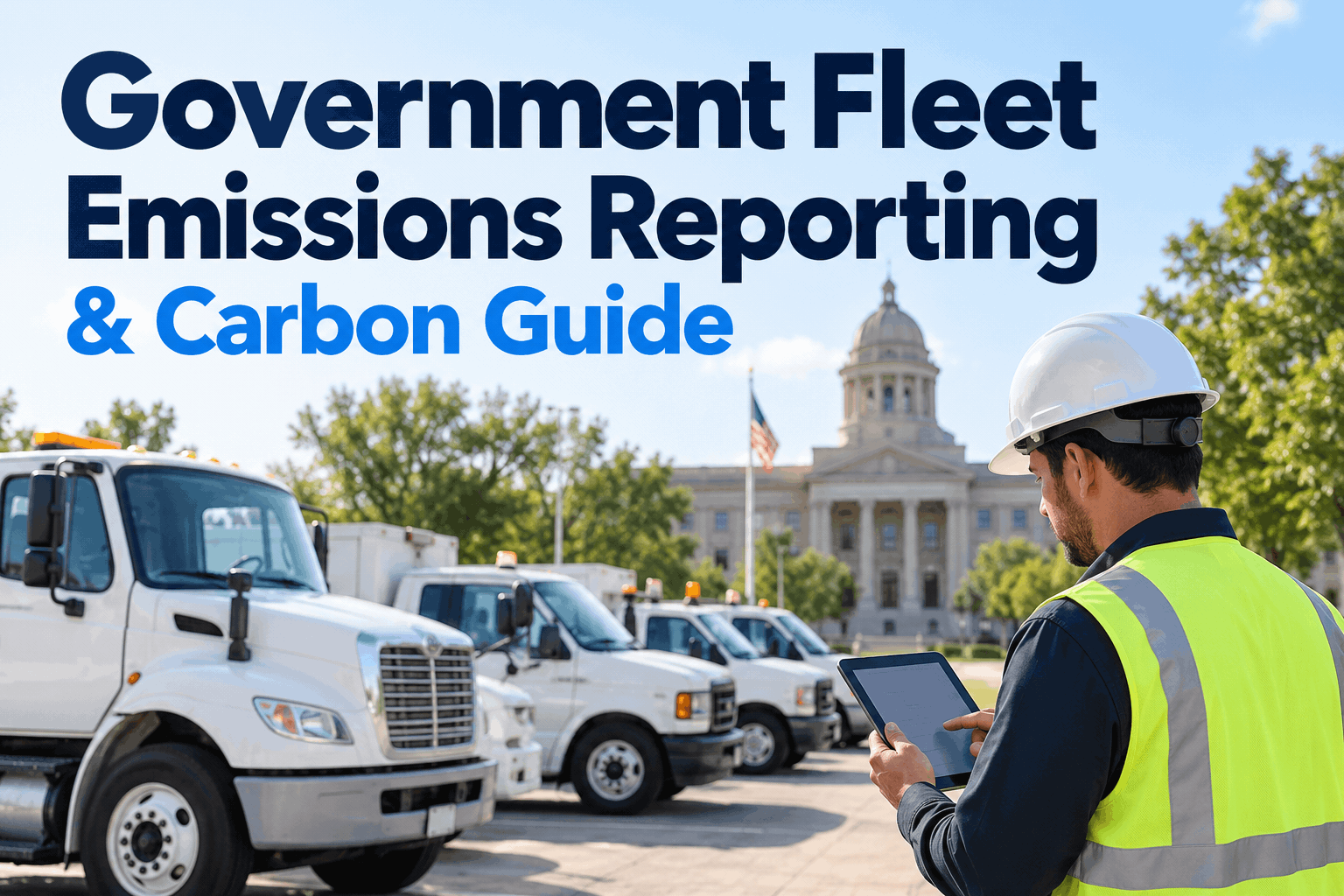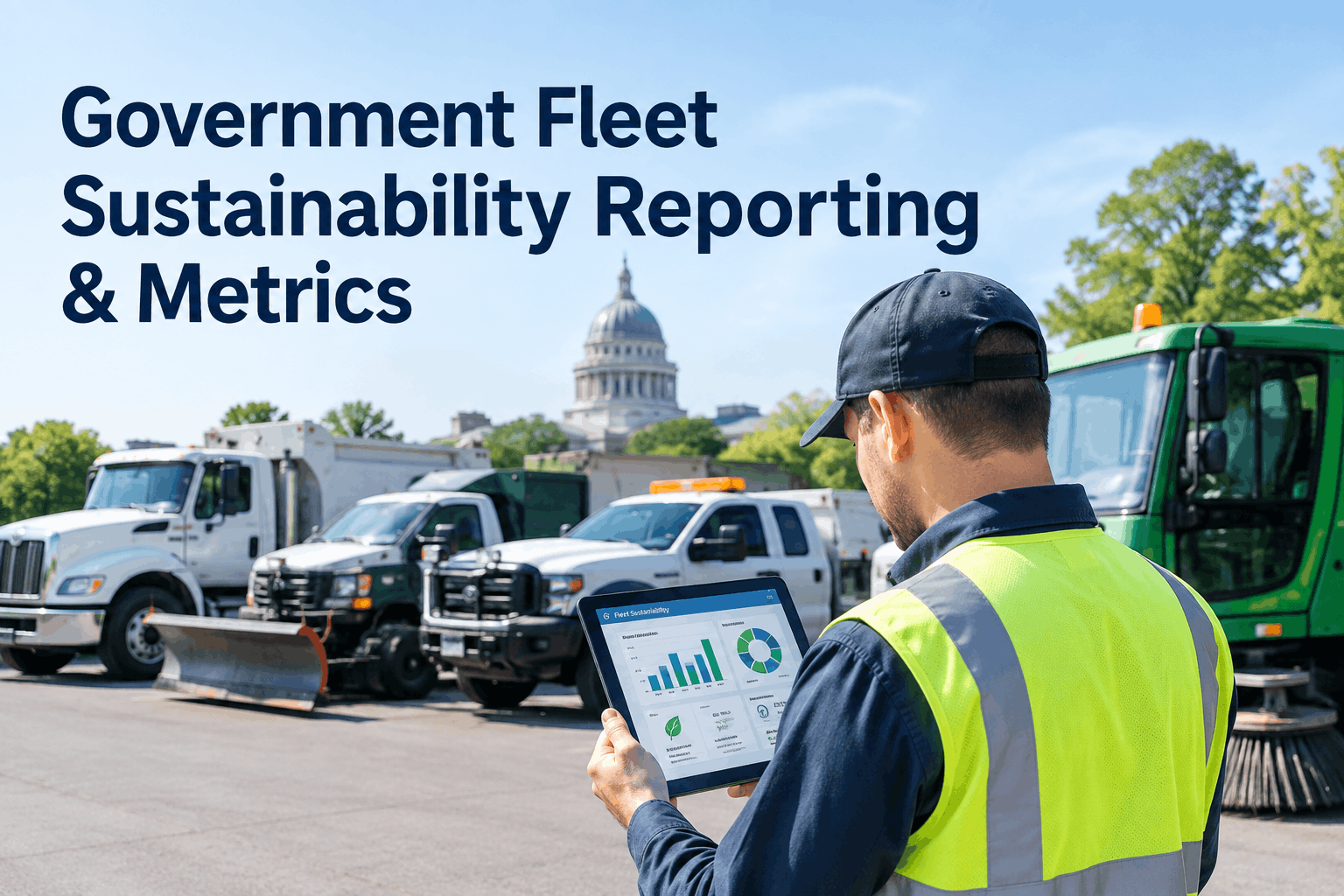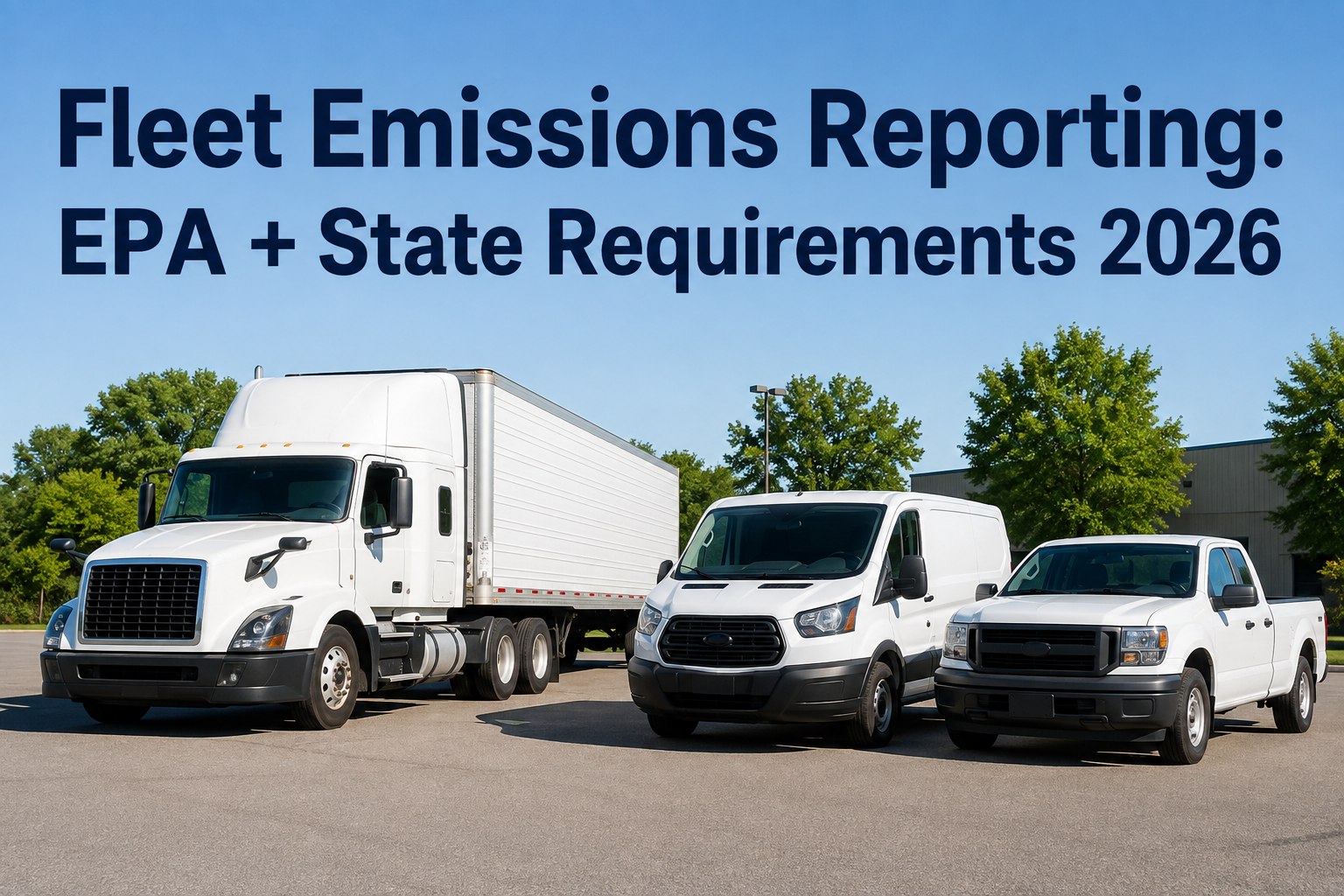
A compliance reviewer doesn't usually ask whether your fleet knows the regulation — they ask for the records behind it. Government fleet emissions compliance quietly fails at exactly that handoff: the policy is understood, the ZEV targets are known, and the vehicle-composition and fuel data behind the numbers is scattered across three systems nobody fully trusts. Here's what a review actually requests, and where that data most often falls apart.
Which Milestone Group Is This Vehicle In?
Pick a vehicle type. See which ZEV compliance group it typically falls into — because misclassifying one vehicle can misstate a whole department's percentage.
Light-duty and package/administrative vehicles are usually first in line for ZEV percentage requirements — often the earliest and steepest ramp under a milestone-based compliance path.
A service truck's classification hinges on its exact gross vehicle weight rating — a unit just over or under a threshold can land in a completely different group with a different timeline.
Heavy tractors, specialty and off-road-adjacent units generally sit in the last milestone group, with lower early-year ZEV percentages and later full-compliance dates.
Why an Emissions Compliance Review Isn't About the Regulation Text
Federal, state and California-specific ZEV and emissions frameworks — from federal fleet GHG inventories to CARB's Advanced Clean Fleets milestone structure to state and municipal climate-plan reporting — all eventually reduce to the same question: what does the fleet actually contain, what did it actually burn, and can that be proven with a record instead of an estimate. Knowing the regulation is rarely where fleets stumble. The gap is almost always downstream, in whether the underlying vehicle and fuel data is complete, current and retrievable when a review asks for it.
The Four Records a Government Fleet Emissions Compliance Review Actually Requests
Vehicle Composition
A current, accurate inventory by VIN, GVWR, fuel type and milestone or compliance group — not a spreadsheet last updated when the fleet was smaller.
Fuel Consumption by Unit
Gallons or kWh consumed per vehicle, not a blended department total — the level of detail most reviews actually ask for and most fleets can't easily produce.
Maintenance & Inspection History
Records showing a vehicle's operational status over time — useful evidence that a ZEV is actually in active service, not idle in a lot counted toward a percentage it isn't earning.
Exemption & Extension Documentation
Utility-delay certifications, site-specific extensions, or other approved deviations — each with its own renewal date that's easy to lose track of.
Missing any one of these doesn't just weaken a report — it's typically the exact item a reviewer asks for first, because it's the one most fleets assume they have until asked to produce it. Book a demo to see all four record types pulled from the same asset-level system, instead of reconstructed from separate fuel, maintenance and procurement records under deadline.
Vehicle Composition: The Data Most Fleets Get Wrong
Milestone-based ZEV compliance paths group vehicles by weight class and use, and the percentage a fleet owes in a given year depends entirely on which group each vehicle sits in. A service truck near a GVWR threshold, a vehicle repurposed between departments without an inventory update, or a retired unit still counted in an old spreadsheet can each quietly shift a fleet's reported compliance percentage in the wrong direction — not because the fleet is out of compliance, but because the record describing it is out of date. Composition accuracy isn't a one-time inventory exercise; it needs to move whenever a vehicle is acquired, reassigned, or retired, or the report built on top of it inherits the gap.
Qualification Alerts: Catching a Milestone Before You Miss It
Most ZEV and emissions compliance obligations aren't single deadlines — they're a series of moving qualification points: a milestone group's required percentage stepping up in a given year, a utility-delay extension certification approaching its renewal date, or a vehicle class crossing a threshold that changes which rules apply to it. Tracking those manually across a mixed fleet means someone has to remember every date, for every group, every year. A qualification alert flags the moving target before it's missed — a milestone percentage approaching its step-up year, an extension certification nearing expiration, a vehicle reclassified into a group with a nearer deadline — instead of surfacing the gap only when a report is already late. Book a demo to see milestone and extension deadlines tracked across every vehicle automatically, instead of on a calendar reminder someone has to maintain by hand.
The Signed PDF: What a Government Fleet Emissions Compliance Package Needs
A defensible emissions compliance package isn't a single report — it's a set of records that each answer a specific question a reviewer will ask, packaged so nobody has to reconstruct it from memory. That means a signed, dated export rather than a live spreadsheet someone could have edited since the reporting period closed, a clear trail from raw fuel and composition data to the summary figures being reported, and documentation retained long enough to cover the review cycles that actually apply — not just the most recent quarter. Fleets that keep this package current year-round spend a fraction of the time producing it that fleets do who start assembling it only once a request arrives. Sign up free to generate a signed compliance package on demand, current as of whatever date a reviewer actually asks for.
What a Sustainability Manager Actually Has to Defend Internally
We passed our first ZEV compliance review, barely, because I happened to catch a milestone group reclassification two weeks before the report was due — pure luck, not process. The second year, we had every vehicle's classification, fuel data and extension status tracked continuously, with alerts before anything approached a deadline. The report took an afternoon instead of three stressful weeks, and I wasn't relying on catching something by accident.
The Takeaway
Government fleet emissions compliance rarely fails on regulatory understanding — it fails on whether the vehicle composition, fuel, maintenance and exemption records behind a report are current, accurate and retrievable the moment a reviewer asks. Milestone groups shift, extensions expire, and a fleet's real classification changes constantly as vehicles are acquired, reassigned or retired. The fleets that stop scrambling at every review cycle are the ones tracking that data continuously, with alerts ahead of every moving deadline. Sign up free and build that record before your next compliance cycle opens.
Frequently Asked Questions
What records does a government fleet emissions compliance review typically request?
Most reviews ask for four categories of evidence: a current vehicle composition inventory by VIN, GVWR, fuel type and compliance or milestone group; fuel consumption data broken out per unit rather than a blended total; maintenance and inspection history supporting a vehicle's operational status; and documentation for any approved exemptions or extensions, each with its own renewal timeline.
Why does vehicle composition data cause the most compliance problems?
Milestone-based ZEV compliance depends on correctly classifying each vehicle by weight class and use, and that classification changes whenever a vehicle is acquired, reassigned between departments, retired, or found to sit near a GVWR threshold. An outdated inventory can misstate a fleet's reported compliance percentage even when the fleet's actual composition is fine, simply because the record describing it hasn't kept pace.
What is a qualification alert in the context of emissions compliance?
A qualification alert flags an approaching compliance deadline before it's missed — a milestone group's required ZEV percentage stepping up in a coming year, a utility-delay extension certification nearing its renewal date, or a vehicle being reclassified into a group with a nearer deadline. Without this kind of ongoing tracking, these moving targets are typically caught manually, if at all, often close to or after a reporting deadline.
Why does fuel data need to be tracked per vehicle rather than as a fleet total?
Compliance reviews and emissions calculations generally require fuel consumption attributed to a specific vehicle or unit, since that level of detail supports both per-vehicle emissions calculations and cross-checks against a vehicle's compliance group and operational status. A single blended fuel total for a department or fleet can't answer the more specific questions a reviewer typically asks, and rebuilding per-unit detail retroactively from receipts or fuel card statements is time-consuming and error-prone.
What makes an emissions compliance record package audit-ready?
An audit-ready package includes a signed, dated export rather than a live, editable spreadsheet; a clear trail connecting raw fuel and vehicle composition data to the summary figures being reported; and documentation retained for as long as the applicable review cycle requires. Building this package continuously, rather than assembling it only when a request arrives, significantly reduces both the time required and the risk of a gap surfacing during the review itself.
Keep Every Emissions Compliance Record Current and Retrievable
HVI tracks vehicle composition, per-unit fuel data, maintenance history and exemption documentation continuously, flags approaching milestones and renewals automatically, and exports a signed, audit-ready package on demand.
No credit card · No hardware required · Live before your next compliance review