A drive pulley never warns you politely. The pulley lagging wears thin, the belt begins to slip against the drum, and in a wet or clay-heavy stream that slip quietly grinds away both the lagging and the belt's bottom cover until a sensor trips and drops the whole conveyor. By then a cheap relag has become a belt replacement. The entire job of pulley lagging maintenance is to catch that wear while it's still a two-hour fix. Book a demo to see lagging wear flagged before the belt pays.
Inspect lagging condition, flag belt slip early, and schedule conveyor drive maintenance before worn lagging scores a belt cover and shortens a gearbox — every pulley tracked in one record.
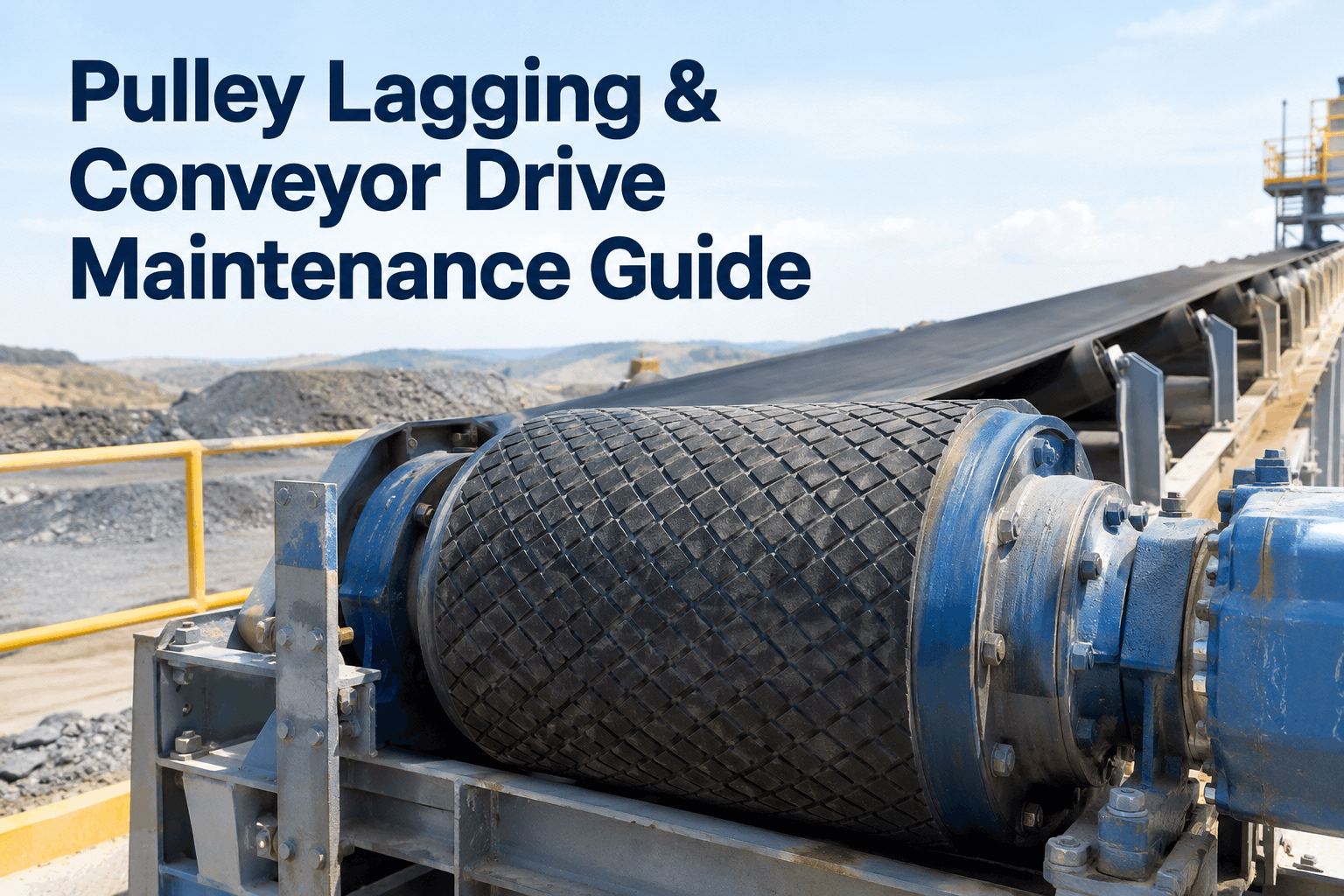
Pulley lagging is the sacrificial grip surface bonded to the pulley shell — the layer that lets a drive pulley pull the belt instead of spinning under it. It costs a fraction of what it protects, which is exactly why it gets ignored until it's gone. This guide shows how lagging wears, how rubber and ceramic really compare, and the inspection routine that keeps a conveyor drive honest.
What a worn drive pulley really costssmall part, outsized bill when it fails
The reason lagging matters out of all proportion to its price is that its failure doesn't stay contained — it climbs straight into the belt and the drive. Here's the gap between catching it early and catching it late.
Scheduled inspection is what keeps the bill at the left of that chart. See how HVI's preventive maintenance scheduling keeps the catch early.
How worn pulley lagging escalatesfour stages from thin grip to a conveyor on the floor
Lagging failure runs a predictable path. Each stage is cheaper to fix than the next — and the whole point of an inspection routine is to intercept it at the top of the ladder.
-
1Lagging wears thinCheap fix
The grip surface wears down — faster in wet, clay or high-tension duty. Wear indicators begin to show. This is the moment to act.
-
2Belt starts to slipGrip lost
Traction drops and the belt slips against the drum. Even brief, repeated slip adds up fast, and belt covers get slicker with age.
-
3Belt cover scoresBelt at risk
Slip grinds material off the lagging and the belt's bottom cover. Slip stuck in one spot can burn clean through the belting.
-
4Drive damage & downtimeFull stop
Slip sensors trip and drop the conveyor, and the slip shortens motor and reducer life. The relag is now a belt replacement.
Intercept it at Stage 1 and it's a line item; let it reach Stage 4 and it's a shutdown. Book a demo to see wear flagged at Stage 1.
Rubber vs ceramic pulley laggingthe grip surface decides how often you're back at that pulley
Rubber is the workhorse; ceramic buys grip and life in hard service. Neither wins everywhere — the trick is matching the surface to the duty, then tracking how it actually wears on your line.
- Good grip at medium belt tension
- Gentle on the belt's bottom cover
- Loses grip as the wet and clay build up
- Wears faster in abrasive, high-tension duty
- Dimpled tiles give roughly twice rubber's traction
- Holds grip where water and clay defeat rubber
- Much longer life in high-wear service
- Over-specced rigid tile can wear the belt cover
Ceramic isn't the fix for every wear problem — it's a spec decision, not a default. Book a demo to track lagging life by pulley and settle the next spec with data.
Drive vs non-drive: different lagging jobsgrip where it pulls, wear life where it doesn't
Not every pulley needs grip — some just need to survive. Getting this split right is half of lagging maintenance, because the wrong surface in the wrong spot wears out early or chews the belt.
- Dimpled ceramic or grippy rubber — grip is everything
- Highest wear and tension, so inspect it first
- Slip analysis worth running where traction is marginal
- Smooth tiles or polyurethane — wear life over grip
- Polyurethane resists build-up on wet, sticky material
- Avoid rigid full-ceramic with wet or sticky streams
This is the belt-drive side of the conveyor; it's separate from belt-scale accuracy on the same line — if you also run weightometers, see our weightometer calibration guide for the measurement side.
Pulley lagging inspection checklistwhat to look for before worn lagging becomes a belt bill
A lagging inspection takes minutes and saves belts. Build it once as a checklist in HVI and every technician walks the drive the same way, with a photo-backed record at the end.
Run every drive this way and lagging wear never surprises you. Start free and build this as a reusable inspection checklist.
Why lagging wear history changes the planfrom reacting to slip to predicting the relag
One inspection tells you today's condition. A history of them tells you how fast this pulley eats lagging — and that's what lets you plan the relag into a shutdown instead of chasing it.
That's the maintenance-records payoff — every inspection and relag logged against the pulley it belongs to. Explore how HVI keeps maintenance records for every conveyor asset, or book a demo to see a pulley's wear history build up.
A maintenance tech on conveyor drive maintenancewhy catching lagging early changed the game
We lost a primary belt once to a drive pulley nobody had looked at closely — the rubber lagging was down to nothing, the belt had been slipping for who knows how long, and it burned a line right through the bottom cover. That belt was a six-figure replacement and two days down. Now the drive pulleys get a proper lagging inspection on a set interval, photos and all, and we moved the worst one to ceramic. I'd rather relag ten pulleys early than replace one belt late.
Pulley lagging FAQswhat plant maintenance teams ask most
What is pulley lagging and what does it do?
Pulley lagging is a wear layer bonded to the pulley shell. On a drive pulley it provides the grip that pulls the belt instead of slipping under it; elsewhere it protects the shell and helps belt tracking. It's a sacrificial surface meant to wear before the pulley or belt does.
How do I know when pulley lagging needs replacing?
Watch for wear indicators reaching their depth, cracked or missing ceramic tiles, debonding at the edges, and signs of belt slip like scoring or heat glaze on the drum. Catching these at inspection lets you plan a relag before slip damages the belt cover.
Is ceramic lagging always better than rubber?
No. Ceramic gives far more grip and life in wet, high-tension drive duty, but it isn't the answer to every wear problem, and a rigid over-specced tile can wear the belt's bottom cover. Match the lagging to the pulley's job rather than defaulting to ceramic everywhere.
What causes belt slip on a drive pulley?
Mostly lost grip from worn lagging, made worse by wet or clay-heavy material and belt covers that harden and slicken with age. Even brief, repeated slip wears lagging and belt together, so slip is both a symptom of worn lagging and a cause of faster wear.
How does HVI help with conveyor drive maintenance?
HVI schedules lagging inspections and drive PMs, standardises the inspection as a checklist, and keeps a wear history per pulley. That turns lagging from a reactive failure into a planned relag booked into a shutdown, with records to back every spec decision.
Keep conveyor drives running on planned lagging maintenance
Stop finding worn lagging after the belt's already scored. Let HVI schedule the inspections, flag the wear, and hold the history per pulley — so every relag is a planned job, not an emergency on a primary line.
- Scheduled lagging & drive inspections
- Standardised inspection checklists
- Wear history & relag planning per pulley
- Photo-backed records for every check