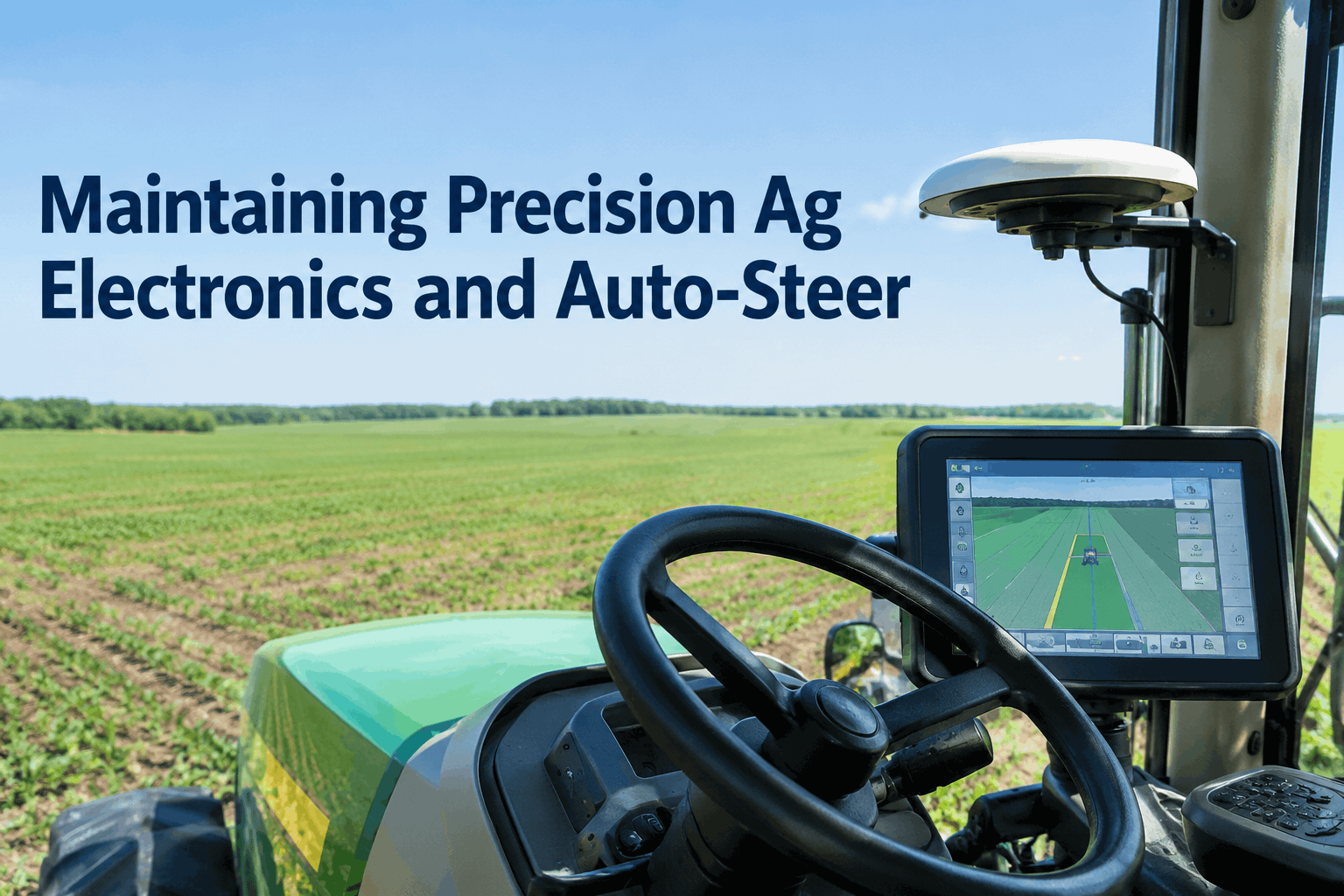
The planter monitor blanks out in row 14, and nobody notices until the headland turn — by then three rows are planted blind. It's rarely the tractor. It's a corroded connector, a chafed GPS cable or a sensor nobody checked before the season started.
The Five Points Where a Precision Ag Rig Actually Fails
A GPS-guided planter is really two machines stacked together: the mechanical tractor underneath, and a second, more fragile one made of cable, sensors, and code riding on top. A worn clutch gives you noise and a smell first. A bad seed sensor gives you nothing — until the yield map shows a gap you can't replant. The diagram below marks the five spots on that second machine worth knowing by name, not just by the trouble code they eventually throw.
- 1GPS Antenna & Base Station Link
Cracked cable jacket, loose mast, dropped RTK correction
- 2Wiring Harness & Connectors
Corroded pins, chafe points, rodent damage from storage
- 3Planter Monitor & Seed Sensors
Dust-fouled optics, false counts, cracked in-cab display
- 4Variable-Rate & Section Controllers
Stuck valves, outdated prescription files, as-applied gaps
- 5ISOBUS & CAN Bus Network
One bad termination resistor and the whole stack goes dark
More than half your acres already depend on this stack, and parts cost more every year to replace. A short walkthrough puts your own exposure in dollars in about fifteen minutes.
The Pre-Season & Pre-Shift Electronics Checklist
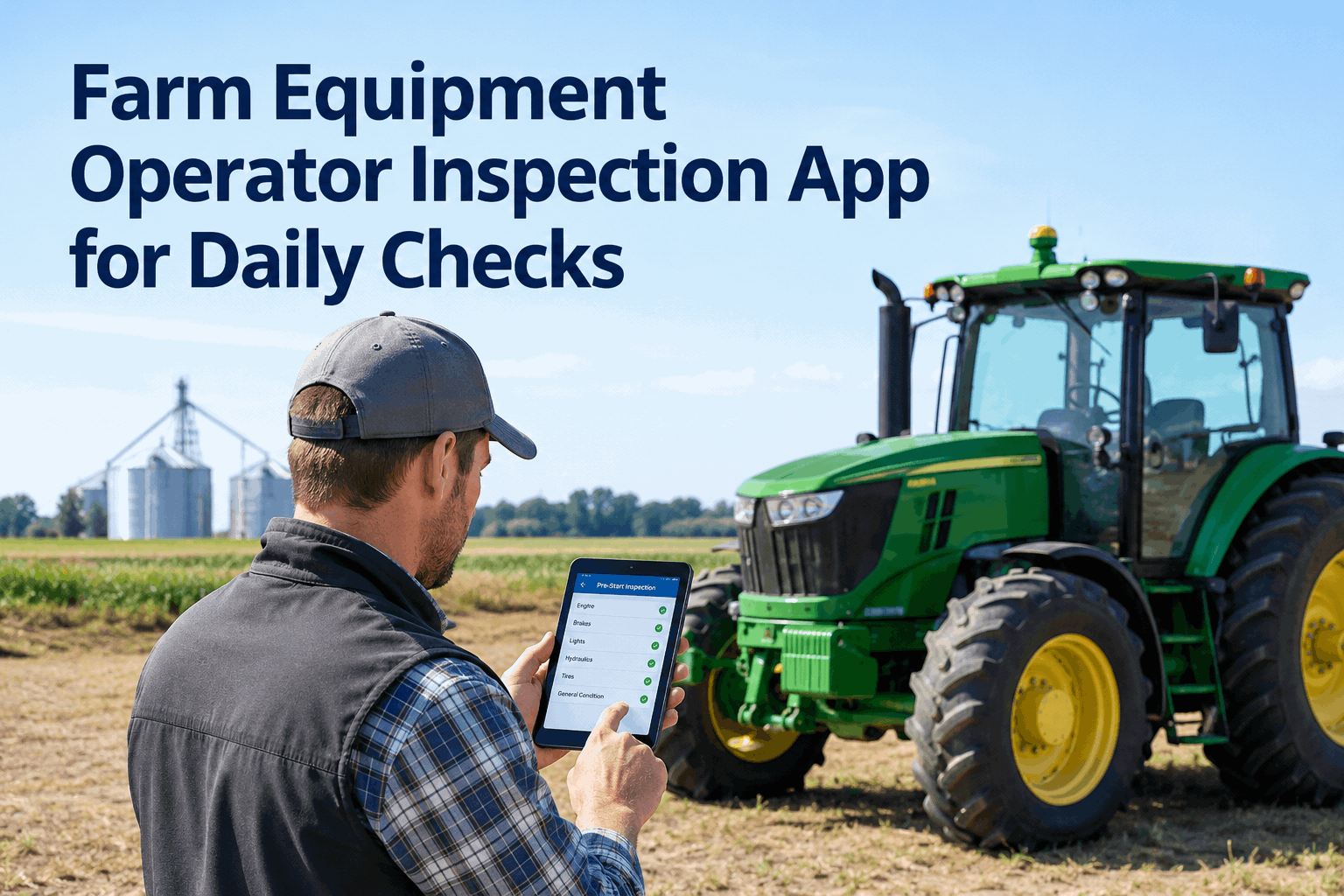
None of the five points above show up on a visual walkaround — they show up when someone actually powers the system on and runs it through a defined sequence. Run this before the first planter hits the field, then again at the start of every shift. Under ten minutes, once it's a phone checklist instead of a morning habit someone has to remember during the one stretch of the year when a delay actually costs acres.
- GPS antenna mount & cable run — cracked jacketing, chafe points near hydraulic hoses, a secure mast.
- RTK signal & pass-to-pass accuracy — a short straight-line test before a full field pass.
- Harness connectors, cab & hitch — corrosion, loose pins, storage damage.
- Seed sensors & planter monitor — false doubles, skips, a cracked display.
- Section-control & VRT response — verified against a known file in the yard, not the field.
- Firmware & logged defects — updated off-season, flagged with a note and photo.
A Full-Season Maintenance Cycle, Not a One-Time Check
Precision ag electronics run on the same clock as the crop — four checkpoints, repeating every year, each one building on the last. Skip the off-season step and the pre-season test catches more than it should; skip that and the in-season checklist is the only thing standing between a bad connector and a lost pass.
Book a Demo Walk through where your fleet sits on this cycle right now- Off-Season — firmware updates, dielectric grease, a full powered-on test
- Pre-Season — straight-line accuracy test, seed-count check against a known standard
- In-Season — daily pre-shift check, defects routed straight to the shop
- Post-Season — pull every logged defect, look for repeats on the same machine
A defect pattern across three tractors is a design flaw worth raising with the dealer. One-off? Bad luck. Fleet analytics is what tells the two apart instead of guessing.
From a Farm Operations Manager Who's Lived This
Checklists and cycles read fine on paper. Here's what changed for one operation after the first bad season made the cost impossible to ignore.
We lost half a day of planting two seasons back because a seed sensor connector had corroded over winter and nobody checked it until row counts looked off at the headland. Now every planter runs a five-minute electronics check before it leaves the shed, and if something's flagged, it doesn't roll until the shop signs off.
The part that actually changed things wasn't the checklist itself — it's that a flagged connector now shows up as a work order on someone's phone instead of a note that gets forgotten by lunch.
If that defect is living in a text thread right now, a short call shows you what it looks like as a tracked work order instead.
Frequently Asked Questions
How often should auto-steer and GPS components be inspected?
Run a full powered-on check pre-season and a shortened version before every shift during planting and harvest. A daily glance catches a corroded connector before it causes a mid-field failure.
What causes most planter monitor and seed sensor failures?
Dust-fouled optical sensors, cracked row-unit cables, and corroded connectors behind the cab account for most failures. Nearly all give a warning sign — a flickering count — before they fail outright.
Can GPS guidance accuracy drift without an error showing on the display?
Yes. A weak RTK correction link or a loosened antenna mount can degrade accuracy gradually without a hard fault, which is why a straight-line verification pass matters more than the on-screen status alone.
How does HVI help track precision ag electronics maintenance?
HVI runs custom digital checklists for GPS, auto-steer, and planter electronics, timestamps and GPS-tags every check, and turns a flagged defect into a work order automatically — no sticky-note shop list.
Is precision ag maintenance worth tracking separately from general tractor maintenance?
Yes. Mechanical wear gives warning signs; electronics usually fail silently and the cost shows up as a yield gap months later. A separate checklist category makes patterns visible instead of buried in general repair logs.
Precision ag electronics fail silently — no noise, no smell, nothing to see, until the yield map tells you weeks later. Map the five failure points above onto a checklist, run the four-stage cycle every year, and log every flag with a photo. That's the whole difference between a surprise in the field and a routine the shop was already expecting.
Get every tractor and planter's electronics history in one place before next planting
A custom pre-season and daily checklist for GPS, auto-steer, and planter electronics, automatic work orders the moment something's flagged, and a full defect history per machine so patterns stop repeating.
No credit card · No hardware swap · Works alongside your existing GPS and telematics