Tractor transmission maintenance is easiest to manage before a shifting complaint becomes a field breakdown. Fluid condition, filter restrictions, axle leaks and service-hour records often tell the story earlier than the operator can. This guide shows farm teams how to inspect powershift, CVT and hydrostatic drivetrains, plan service by the correct machine specification and document repairs with HVI.
The tractor starts. Will the drivetrain finish the field?
One overlooked filter, contaminated oil sample or front-axle leak can turn a planned field day into an expensive stop. Build a service record around hours, operating symptoms and verified repairs—not guesswork.
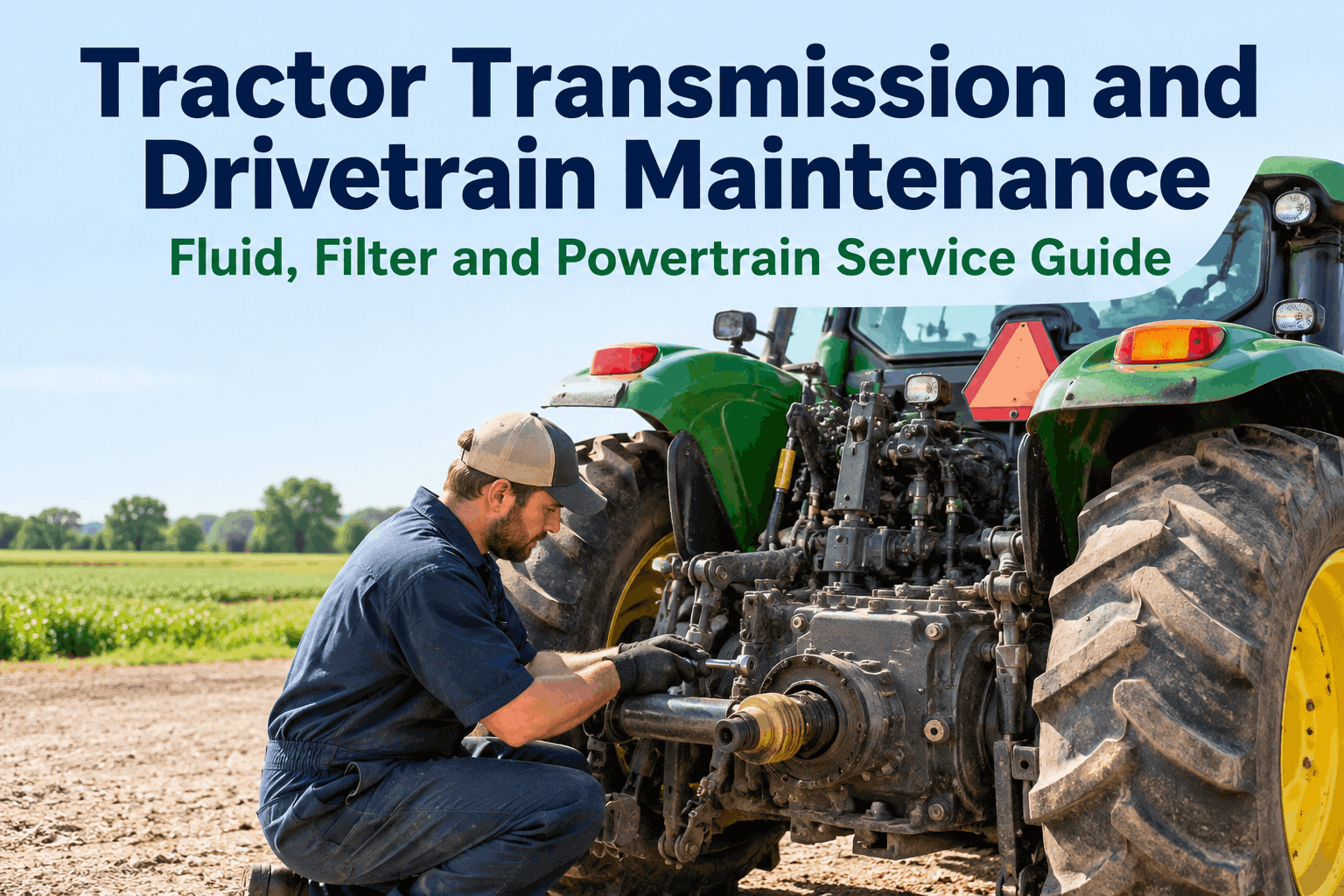
Illustrative service-point map · Always use the tractor manufacturer's service procedure.
Different transmissions need different service decisions
“Change the transmission oil” is not a universal tractor maintenance plan. Start by identifying the transmission architecture, approved fluid and service instructions for each machine.
Powershift
Watch shift quality, clutch engagement, pressure-related warnings and filter condition. Record when symptoms appear—cold start, heavy draft or transport.
Service focus: approved oil, filters and diagnostic follow-upCVT / IVT
Track operating warnings, drive response, cooling-system condition and oil cleanliness. Follow model-specific diagnostics rather than treating every hesitation as a fluid problem.
Service focus: correct fluid, cooling and specialist diagnosticsHydrostatic
Check for unusual noise, sluggish response, excessive heat and external leaks. Filters and fluid specifications are especially important to hydraulic-drive components.
Service focus: contamination control and approved service intervalsCreate an inspection template for each tractor type instead of forcing one checklist onto every powertrain. Sign Up Free to Organize Tractor Inspections.
A practical tractor transmission inspection checklist
Run safe external checks before work and escalate unusual symptoms. Internal transmission diagnosis and pressure testing belong with trained technicians using manufacturer procedures.
Keep the service history with the tractor—not in a notebook
Use HVI to organize equipment inspections, maintenance schedules, defects and completed service records so the next technician can see what happened last time.
Make every fluid change traceable
Incorrect fluid or a missed filter can undo an otherwise good maintenance program. Treat each service as a documented sequence rather than a simple “done” checkbox.
Confirm specification
Verify the exact model, fluid approval, fill quantity and filter part numbers.
Prepare & service
Use clean handling practices and follow the manufacturer’s safe drain, fill and filter procedure.
Record evidence
Capture hours, oil grade, filter IDs, technician, observations and optional analysis report.
Verify & schedule
Complete required checks, document any follow-up and set the next approved interval.
Schedule by engine hours, exposure and manufacturer guidance
There is no safe universal oil-change interval across tractor brands or transmission types. Use each OEM schedule as the baseline and account for documented severe-service conditions.
Progress bars represent illustrative portions of each machine's separately configured service cycle.
What should trigger a review?
- Hour-meter threshold from the service manual
- Repeated heavy-load or dusty work when the OEM defines severe service
- New leak, shift concern or critical fault
- Fluid analysis or repair findings requiring follow-up
Turn symptoms into repair decisions—with an audit trail
Recording exactly when a fault happens helps a technician narrow the diagnosis. The aim is not to diagnose a transmission from a dashboard; it is to prevent vague complaints from disappearing between shifts.
Stop unsafe operation; request qualified diagnosis rather than assuming a fluid change will solve it.
Hours, operating conditions, warnings, technician findingsProtect the machine from further damage; investigate the contamination source and follow OEM guidance.
Sample results, photos, fluid specification, corrective workAssess severity and restrict use as needed; inspect seals, lubrication and related components.
Inspection photos, parts used, labor, verificationCompare repeat defects, parts spend and repair hours by tractor to identify equipment that needs deeper investigation. Sign Up Free to Keep Tractor Repair History.
Tractor transmission maintenance FAQs
Common questions from farm operators and equipment maintenance teams.
How often should tractor transmission fluid be changed?
Follow the service interval and fluid specification for the exact tractor model and transmission. Engine hours, duty cycle and manufacturer-defined severe-service conditions may change the schedule. Do not use a generic interval across a mixed fleet.
What belongs on a tractor transmission maintenance checklist?
Include the approved fluid-level check, visible leaks, filter indicators, warning messages, shift or drive symptoms, axle and differential observations, current hours and outstanding defects. Follow the OEM procedure for safe access and testing.
Is powershift transmission service the same as CVT tractor maintenance?
No. Both require correct fluids and clean service practices, but their components, diagnostics and service procedures differ. Use transmission-specific checklists and manufacturer guidance.
When should a tractor transmission oil sample be taken?
Use the sampling interval and method recommended by the equipment maker or your oil-analysis program. Consistent sampling technique and trend comparisons make results more useful than isolated readings.
How does HVI help with tractor drivetrain maintenance?
HVI can help organize tractor inspection checklists, preventive maintenance tasks, defects, maintenance records and related service documentation. It does not replace mechanical diagnosis, laboratory oil analysis or the tractor manufacturer's service manual.
Give every tractor a maintenance history your team can act on
Start with one inspection checklist and one hour-based service schedule, then build a consistent record of fluid changes, defects and completed repairs across the farm.