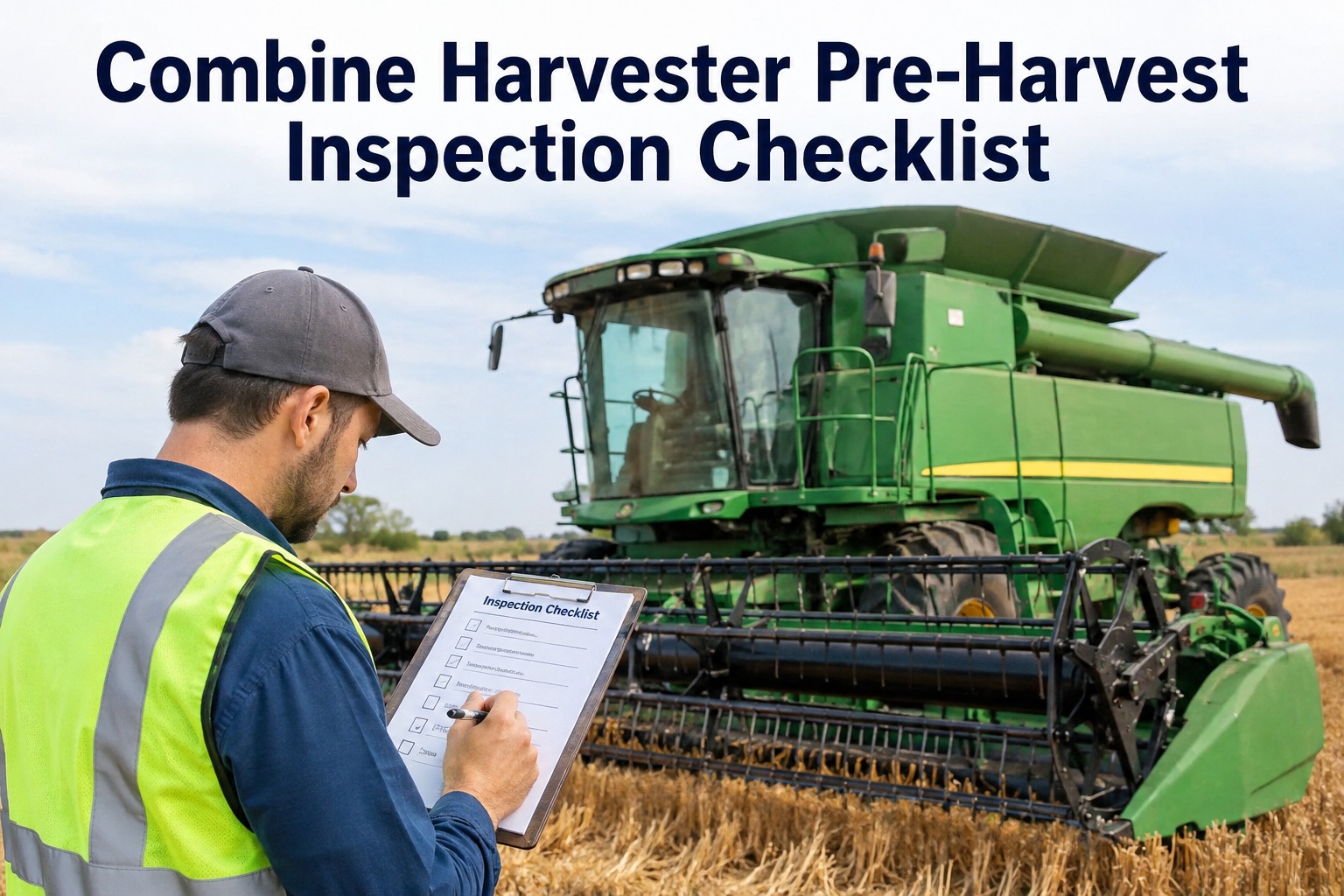
Combines run sixteen to eighteen hour days during harvest, which means a calendar-only preventive maintenance schedule is useless by the second week of October. Engine hour PM for farm equipment has to be triggered by actual usage, because a tractor logs steady hours all season while a combine compresses a year of wear into about six weeks of long days. If you are still walking out to machines with a clipboard to copy hour readings, you are already behind on the 500-hour oil change. The interval clock does not pause because nobody collected the reading, and the cost of a mid-season breakdown is measured in lost acres, not just a parts invoice — which is exactly why farms are booking a walkthrough of HVI before harvest starts.
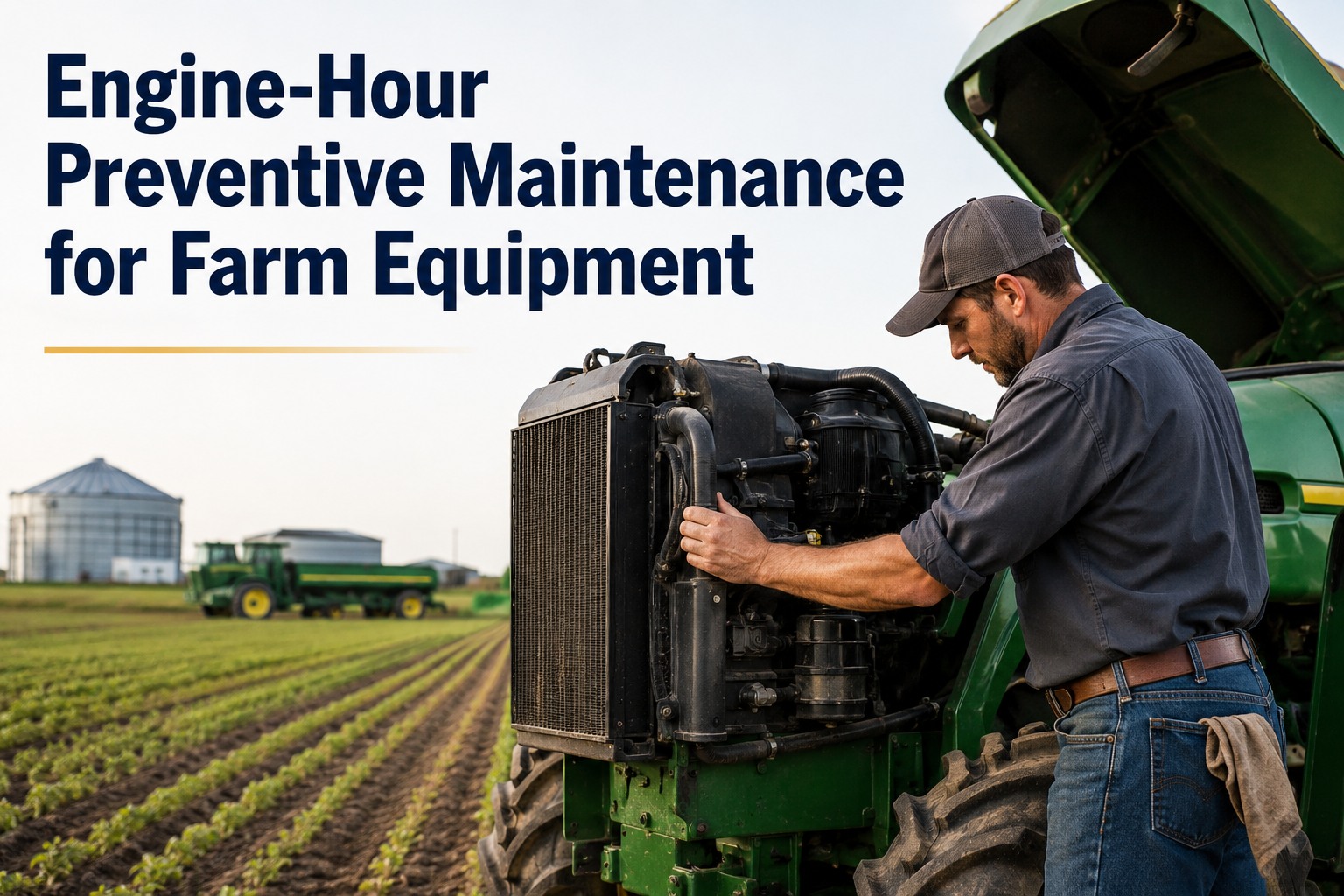
Engine-Hour Preventive Maintenance for Farm Equipment
The combine crossed 500 hours last night. Did anyone open a work order?
Hour-based triggers fire the moment the interval hits — not next Monday, not when someone remembers, not after the bearing fails in the middle of a 1,200-acre cut. HVI watches engine hours and builds the work order automatically.
Why calendar-only PM fails farm equipment
Farm equipment hours accumulate unevenly. A sprayer might log 40 hours in a single spraying window and then sit idle for three weeks. A tractor doing tillage puts on steady, predictable hours all season. A combine compresses a year of use into roughly six weeks of sixteen-hour days. No calendar schedule can keep up with that spread, and the numbers below show what that mismatch actually costs you.
The 100 / 500 / annual farm PM schedule that keeps machines running
Most mixed fleets run a three-tier hour-based maintenance structure. The intervals below are the backbone of tractor service intervals and combine PM schedules. The problem is not the structure — it is capturing the hours and firing the work order on time. HVI lets you set hour or calendar triggers per machine, so each unit gets the right service at the right interval without anyone copying readings off a dash.
Grease & fluid checks
- Grease all pivot points and U-joints
- Check hydraulic fluid level
- Check coolant level and condition
- Inspect tire pressure and wear
- Visual check for leaks and belt wear
Filters & oil changes
- Engine oil and filter change
- Fuel filters — both primary and secondary
- Air filter inspection or replacement
- Hydraulic filter change
- Transmission fluid check
Pre-season overhaul
- Belts, bearings and chain tension
- Header and rotor clearance settings
- Battery and charging system load test
- Full undercarriage and linkage inspection
- Calibrate monitors and GPS receivers
Readings live on the machine — and nobody collects them
The biggest gap in agricultural service triggers is not the interval chart. It is the fact that engine hours live on a dash display in a cab that might be two miles from the shop, running in a field with no cell service. Here is how the information actually flows on most farms today — and where it breaks.
Operator finishes the shift
The combine shuts down at 11pm with 512 hours on the clock. The operator is tired and the reading stays on the dash. Nobody writes it down.
Shop checks the board
Next morning the shop foreman looks at the grease board. It still says the combine is at 430 hours from last week. The 500-hour oil change is already 82 hours overdue.
Failure during the cut
The machine runs another day and a half before the fuel filter plugs. You lose half a day of combining during the only dry window of the week. If you want to stop this loop, see how HVI captures hours automatically before the next season.
Stop chasing hour readings
See HVI fire work orders the moment an interval hits
Book a 30-minute demo on your own machines and watch a 500-hour oil change trigger automatically.
Two service intervals in a fortnight — how harvest breaks PM schedules
A combine does not accumulate hours the way a truck accumulates miles. During harvest it runs sixteen to eighteen hour days, every day, for weeks. At that rate a machine can pass the 100-hour grease interval and the 500-hour oil change inside a single fortnight. The bar below shows how a calendar-only schedule and an hour-based schedule diverge over a two-week harvest run.
The math is simple. If a combine starts the fortnight at 395 hours and runs 16 hours a day for 14 days, it crosses 400 hours on day one and 500 hours by day seven. A calendar schedule misses both. An hour-based trigger catches both. That is the difference between greasing a pivot point on time and replacing a seized bearing in the field. You can walk through the trigger setup on your own units in about thirty minutes.
How HVI Helps
Automatic work orders the second engine hours cross the line
HVI is cloud and mobile CMMS software built for fleet-heavy operations. It watches engine hours on every machine and creates the work order when service is due — with a full app notification containing every task detail the technician needs. No clipboard, no spreadsheet, no group chat. You can start logging inspections and PM triggers free and have it running before the next season starts.
Hour and calendar triggers per machine
Set a 100-hour grease interval on the tractor, a 500-hour oil change on the combine, and an annual pre-season overhaul on the sprayer. HVI fires the work order when the threshold is crossed, not when someone remembers.
App notifications with full task details
When a PM triggers, the assigned technician gets a notification with the task list, parts required and machine location. No second trip to the office to figure out what the service includes.
Automatic work order creation
HVI watches the hours and builds the work order automatically. The shop foreman sees it in the queue before the machine even returns to the yard, so parts can be pulled and the bay prepped.
Works on any phone or tablet in the field
The operator logs the inspection or defect on their phone right in the cab. No signal, no problem — it syncs when they get back to the yard. Paper DVIRs and text-message photos are gone.
What a missed 500-hour oil change really costs you
The invoice for an oil change is the cheap part. The real cost of a missed interval is the downtime during the only window you have to get the crop off. Below is a worked example for a single combine missing its 500-hour service during harvest. The numbers are illustrative but grounded in what farms actually lose when a machine goes down mid-cut.
Cost of the service itself
Oil + filters + labour
~$380
This is what you would have spent if the PM fired on time.
Cost of the breakdown
Field service call + tow + parts rush
~$2,400
Roughly six times the cost of the original service, before you count lost acres.
Cost of lost acres
Half a day at 40 acres/hr x $650 margin
~$5,200
The real number. One missed interval costs more than thirteen on-time oil changes.
Add it up and one missed 500-hour trigger costs roughly $7,600 on a single combine — and that assumes the weather holds while you wait for the mechanic. If you want to stop doing this math, book a demo and set up the triggers before the next harvest window.
Manual hour tracking vs HVI automatic triggers
Most farms know their intervals. The problem is the capture and trigger mechanism. The table below maps the difference between running PM off a grease board and spreadsheet versus running it through HVI's hour-based triggers. If you want to see this side-by-side on your own fleet, you can walk through it on your own units with one of our team.
| What happens when... | Grease board & spreadsheet | HVI hour-based triggers |
|---|---|---|
| Hour interval is crossed | Nobody knows until someone walks to the machine and reads the dash | Work order is created automatically the same hour |
| Technician needs the task list | Finds the binder, hopes it is the latest version | Full task details arrive in an app notification |
| Parts need to be pulled | Shop foreman checks the shelf, finds it is out of stock | Parts are listed on the work order and reserved from inventory |
| Audit or insurance review | Dig through paper files and hope the signatures are there | Timestamped, photo-backed record pulled up in seconds |
| Multiple machines cross intervals same week | Chaos — something gets missed during harvest | Each machine triggers its own work order in sequence |
What changes when PM fires on hours, not memory
Farms that move from clipboard-and-spreadbook PM to automatic hour-based triggers see the change in three places: fewer field breakdowns, faster shop turnaround, and audit-ready records without the scramble. The two cards below summarise the shift.
Chasing readings across the farm
- Hour readings copied by hand from the dash once a week — if someone remembers
- 500-hour oil change discovered 80 hours late because the board was not updated
- Technician walks to the machine with no task list, comes back twice for parts
- No photo record of the grease points actually being serviced
- Breakdown during harvest costs a half-day and a rush service call
Work orders fire the moment the hour hits
- Engine hours captured through the app or telematics feed — no clipboard
- 500-hour work order created at 500 hours, not at the next Monday meeting
- Technician gets the full task list and parts list on their phone before the machine returns
- Photo evidence of each completed task, timestamped and stored
- PM compliance rate climbs, harvest breakdowns drop, and audit prep takes minutes
Engine-hour PM for farm equipment comes down to three things
Capture the hours
If the hour reading lives on the machine and nobody collects it, every interval on the chart is a guess. Automatic capture through the app or a telematics feed is the foundation of reliable farm PM scheduling.
Fire the work order automatically
The 100-hour grease, 500-hour oil change and annual overhaul only protect the machine if they happen on time. HVI creates the work order the moment the interval is crossed, with full task details in the notification.
Prove it during the audit
Insurance, client and safety audits all want proof the PM happened. Timestamped, photo-backed records in HVI mean you pull it up in seconds instead of digging through a paper file.
"We had a combine cross 500 hours on a Tuesday night and nobody caught it until Thursday morning when the fuel filter plugged in the field. That one breakdown cost us more in lost acres than the whole year of oil changes. Now HVI fires the work order the second the hour hits — I don't even have to think about it."
— Darren Welke, Maintenance Manager, mixed grain & cattle operation, Saskatchewan
Engine-hour PM for farm equipment — common questions
How does engine-hour PM work for farm equipment?
What are the standard tractor service intervals?
Why does calendar-based PM fail during harvest?
How does HVI capture engine hours if the machine is in a remote field?
Can HVI handle different intervals for different machines?
Ready for harvest?
Book a demo and set up hour-based PM on your own fleet
See HVI fire a work order the moment your combine crosses 500 hours — before it costs you lost acres.
Free to start — Works on any phone — No card needed