It's 6:40 in the morning, the planter is hooked up, and the tractor that ran fine yesterday won't build hydraulic pressure. Three hours later you find the cause: a suction hose that had been weeping for a week, pulling air into the system until the pump finally gave up. A two-minute look at that hose during a pre-start check would have saved the morning, the planting window, and a $900 pump. That is what a tractor inspection checklist is actually for — not paperwork, but catching the small, familiar problems that get normalised on the machine everyone depends on most and inspects least formally. This guide covers the daily pre-start zones, the 100-hour and 500-hour service structure, ballast and tire setup, and the implement interface — and how farms and mixed fleets are replacing the grease-pencil notebook with a guided digital checklist. If you want to see how that works on your own units, you can walk through a live tractor inspection flow in a 30-minute demo.
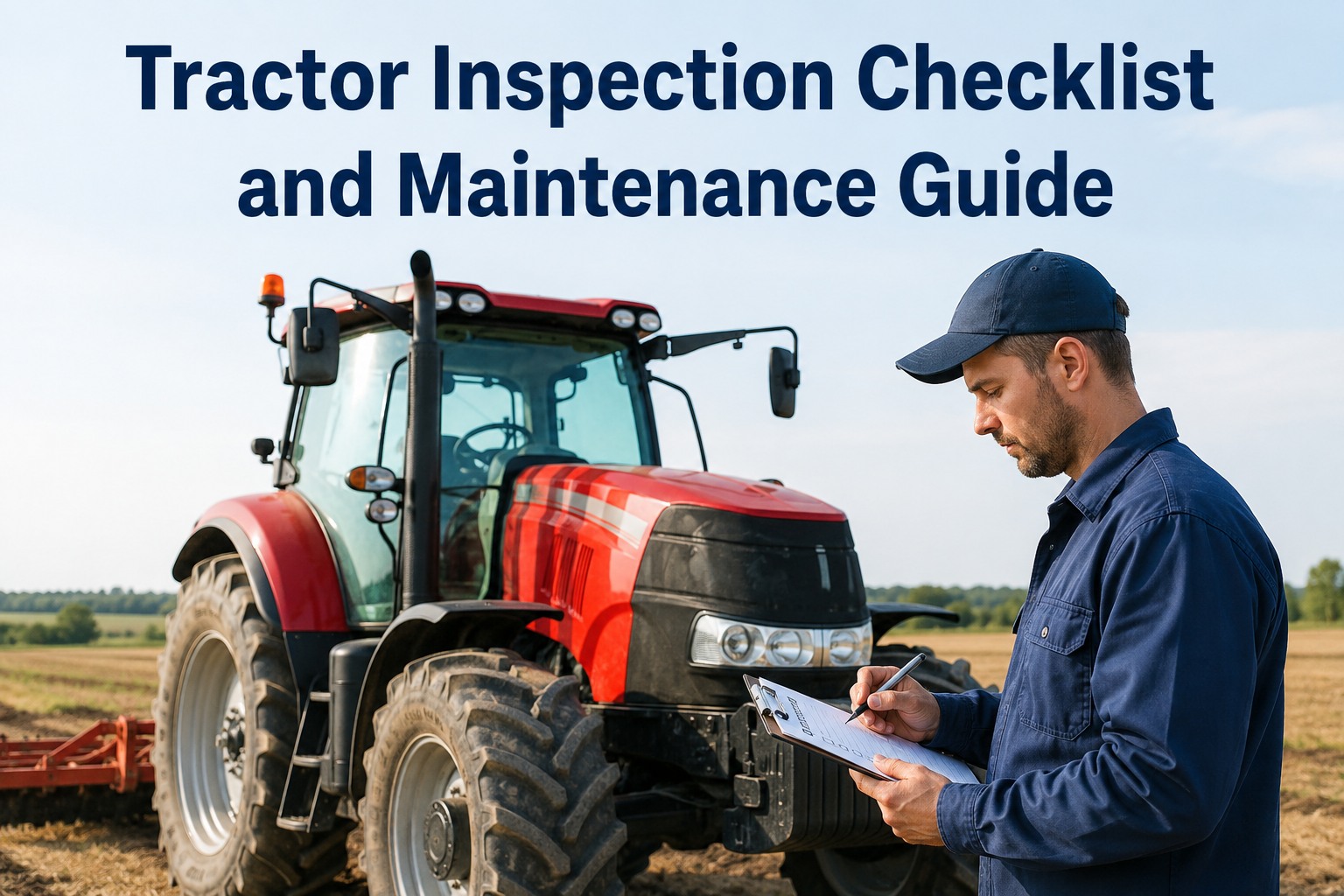
Tractor inspection checklist
Five minutes before start-up beats five days waiting on a pump
A guided pre-start that walks the operator through engine, hydraulics, tires, PTO and cab safety — with a photo and a timestamp on every item, so nothing gets pencil-whipped from the cab seat.
What skipped checks actually cost
The numbers behind a daily tractor inspection
5 min
A guided pre-start on a phone — the full cost of catching a weeping hose before it becomes a pump failure
$400+
A conservative daily rate for a mid-size tractor sitting idle during a planting or harvest window
10–15%
Extra fuel burn and accelerated tire wear from running under-inflated or badly ballasted tires
2×
How much a reactive hydraulic repair typically costs versus the planned fix caught at inspection
Daily pre-start
The five-zone tractor pre-start check
Walk the machine in the same order every morning. Each zone below is a handful of checkpoints that take under a minute each — and each one maps to a failure mode that strands tractors in the field every season.
Engine and fluids
- Engine oil on the dipstick, between marks, no milkiness
- Coolant level in the overflow bottle, cap seal intact
- Fuel level and water separator drained if the bowl shows haze
- Fan and alternator belts — tension, glazing, frayed edges
- Air filter restriction indicator not tripped
Why it matters: a slipping belt overheats a tractor in one afternoon of heavy PTO work. Milky oil means coolant in the sump — catch it here or buy an engine.
Hydraulics
- Reservoir level on the sight glass with implements lowered
- Hoses along the full run — weeping, chafe points, cracked outer skin
- Couplers clean, seated and not dripping under pressure
- Cylinder rods clean, no scoring or wet film of oil
- Three-point hitch lifts and holds without drifting down
Why it matters: a weeping suction hose pulls air into the system. The pump runs aerated oil for days, scores itself, and fails at the worst moment of the season.
Tires and ballast
- Pressure checked against the load and the job, not habit
- Sidewalls free of stubble damage, cracks and bulges
- Wheel nuts torqued — especially after any tire work
- Tread depth even across both sides of the axle
- Ballast and wheel weights secure and correct for the implement
Why it matters: tire pressure is traction and fuel economy. Over-inflated tires spin and compact soil; under-inflated ones overheat the sidewall and burn fuel for no gain.
PTO and driveline
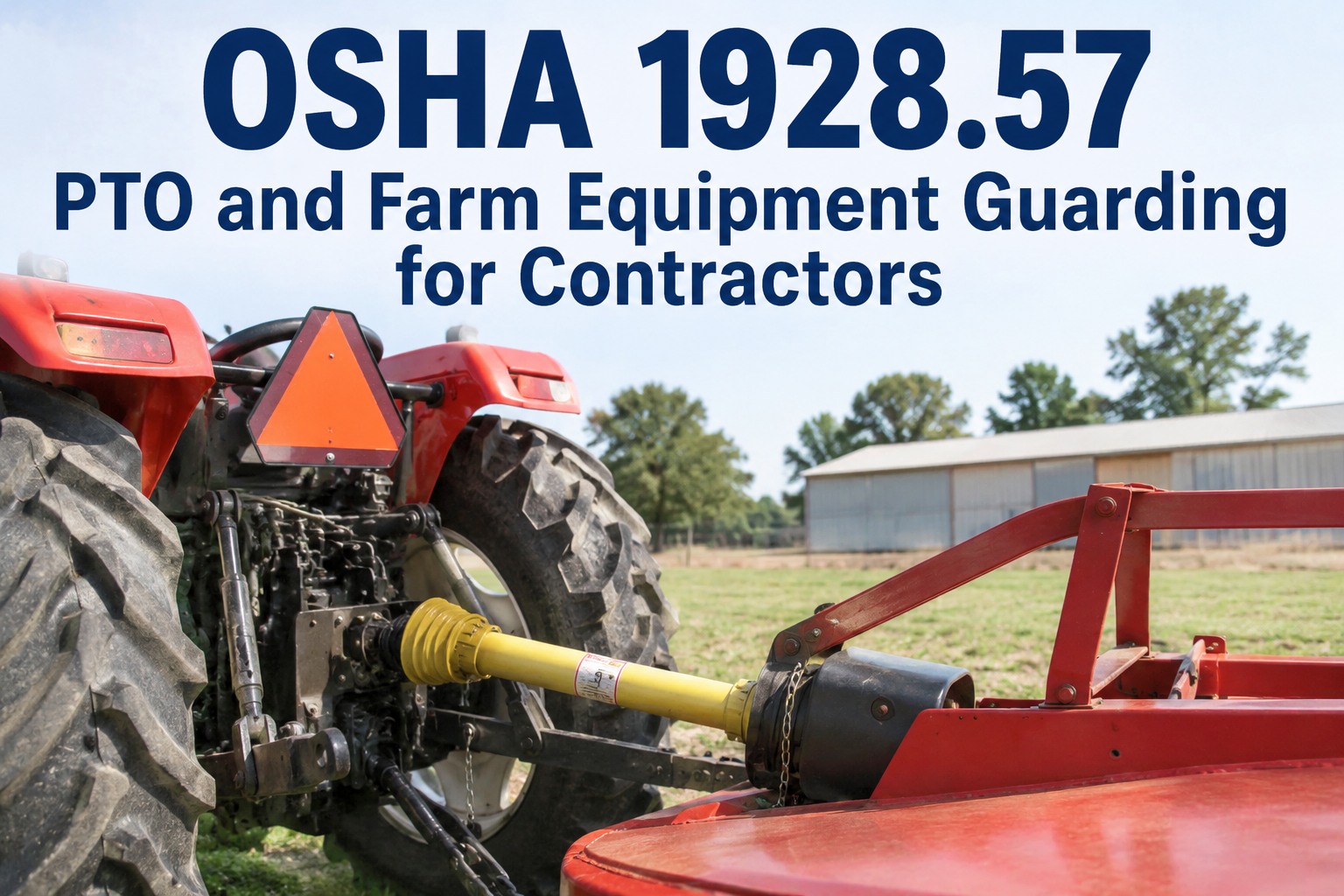
- Master shield in place, undamaged, rotating freely on its bearings
- Guard retaining chains attached so shields don't spin with the shaft
- Shaft telescopes and collapses smoothly through its travel
- Universal joints greased, no play or rust dust at the caps
- Shear bolt or slip clutch correct for the implement
Why it matters: an unshielded PTO shaft grabs clothing in a fraction of a second. This is the single most lethal checkpoint on the list — never a formality.
Cab and ROPS
- ROPS frame or cab structure undamaged, mounting bolts tight
- Seat belt latches, retracts and is not frayed or sun-rotted
- Lights, flashers, wipers and the slow-moving-vehicle sign working
- Steps and handholds clean, no mud or oil film
- Fire extinguisher charged and pinned where you can reach it
Why it matters: ROPS and the seat belt are one system — the frame only protects you if the belt keeps you inside it. These are compliance items, not optional extras.
Implement interface
- Hitch pins and lynch pins correct size, not bent or wire-substituted
- Hydraulic remote couplers paired, clean and leak-free
- Drawbar and clevis wear within limits, retaining pin secure
- Electrical connector seated, implement lights responding
- Safety chain on towed equipment, rated and hooked
Why it matters: the interface is where the tractor meets the implement, and where a missing lynch pin turns into a dropped implement on the road.
Running this as a paper checklist? The failure mode is always the same: boxes ticked from the seat, no photo, no timestamp, no record when an insurer or auditor asks. A guided digital pre-start with photo capture per item closes that gap without adding time — most operators finish faster because the app walks the zones in order.
Tractor maintenance schedule
The 100-hour and 500-hour service structure
Daily checks catch what's about to fail; hour-based service stops it developing. Most agricultural and utility tractors follow the same backbone — a light 100-hour touch and a deeper 500-hour service — whether it's a John Deere row-crop unit, a compact utility tractor or a mixed-fleet yard machine.
| Interval | Service items | What it prevents |
|---|---|---|
| Daily | Five-zone pre-start: fluids, hydraulics, tires, PTO, cab and ROPS, implement interface | Field breakdowns, pump failures, PTO incidents, roadside stops |
| 100 hours | Grease all pivot points and zerks — loader pins, three-point linkage, PTO shaft, steering joints. Check hydraulic level, coolant strength, belt tension and battery terminals | Premature pin and bushing wear, overheating, charging failures |
| 250 hours | Engine oil and filter on many utility tractors (check your OEM schedule), fuel filter check, air filter service in dusty conditions | Abrasive engine wear, injector damage from dirty fuel |
| 500 hours | Engine oil and filter, fuel filters, hydraulic and transmission filters, hydraulic oil sample or change, valve clearance check where specified | Hydraulic system contamination, transmission wear, lost compression |
| 1,000 hours / annual | Coolant change, front axle and hub oil, cab filter, full torque check on wheel hardware and ROPS mounts, battery load test | Corrosion in the cooling system, structural looseness, winter no-starts |
The hard part is not the work — it's tracking engine hours across a fleet where the hour meter lives in the cab and the service log lives in the office. HVI schedules preventive maintenance by engine hours, so the 100-hour grease and the 500-hour filters trigger themselves as hours accumulate. You can set up engine-hour PM schedules free and see the first due-alerts within a week.
Setup that pays for itself
Ballast, weight distribution and tire wear
Get the weight split wrong and you pay for it twice — once in fuel, once in tires. A tractor pulling a heavy drawbar load generally wants roughly 25–30% of its weight on the front axle and 70–75% on the rear; too little front weight and the steering goes light, too much and you're compacting soil and overloading the front tires.
Target weight split for heavy drawbar work — enough front weight to steer, enough rear weight for traction without wheel slip.
Under-ballasted
Wheel slip climbs past 15%, fuel burn rises, lugs polish and wear fast, and the job takes longer per acre. The fix is weight or lower tire pressure — not more throttle.
Over-ballasted
Excess weight compacts the soil you're trying to crop, overloads tire sidewalls, and costs fuel hauling iron you don't need for the implement on the hitch.
Correctly set
Wheel slip in the 8–12% band, even lug wear, steering with feel, and measurable fuel savings across a season. Log the setup per implement so next year starts right.
See the tractor checklist running on a phone in your yard
Thirty minutes, your machines, your checklist zones — we'll show you the pre-start flow, photo capture and engine-hour PM on a real unit.
How HVI helps
From grease-pencil notebook to a tractor inspection app
HVI is a cloud and mobile inspection and maintenance platform built for fleet-heavy operations — farms, contractors, municipalities and mixed fleets running tractors alongside trucks and plant. Four capabilities do the heavy lifting for tractor maintenance specifically.
Guided 5-minute pre-start
The five zones above become a step-by-step phone checklist — engine, hydraulics, tires, PTO, cab safety. Operators can't skip ahead, and every check lands with a timestamp and the operator's name.
Photo and voice note per item
A weeping hose gets photographed, not described in a text message. The defect attaches to the asset, and a work order can be raised from it in one tap — no group-chat archaeology at the end of the day.
Engine-hour PM scheduling
Enter hours at inspection or pull them from a telematics feed, and the 100-hour grease, 250-hour oil and 500-hour filter services trigger automatically with due and overdue alerts. Nothing lives in anyone's head.
Audit-ready history per unit
Every inspection, defect, work order and part sits on the asset's record. When an insurer, client or safety auditor asks for proof, you pull a timestamped, photo-backed history in seconds — not a binder hunt.
Because HVI runs on any phone or tablet, it works in the machine shed, the field edge or a remote block with no office nearby — and the same platform covers your trucks, trailers and other equipment. If you run a mixed fleet, book a walkthrough and see every asset type on one screen.
Worked example
What one caught defect is worth
Run that across a season and a fleet: five tractors, one caught defect each, and the inspection routine has paid for itself several times over before you count the fuel saved on correct tire pressure or the resale value of a documented service history. Fleets that start logging inspections free typically see the first avoided breakdown inside the first month, because the defects were always there — they just weren't being recorded.
Key takeaways
The short version of a tractor inspection checklist
Walk the same five zones every morning — engine and fluids, hydraulics, tires and ballast, PTO, cab and ROPS — plus the implement interface before you hook up. Five minutes, in order, every day.
ROPS and the seat belt are one system and a compliance item, not a courtesy check. A damaged frame or a belt that won't retract takes the tractor out of service until it's fixed.
Structure service by engine hours: grease and fluid checks at 100, oil and filters through 250–500, coolant and torque checks annually. Let the hours trigger the work, not someone's memory.
Tire pressure and ballast are fuel and tire money. Set them per implement, log the setup, and check pressure against the job — not against habit.
A checklist only works if it's provable. Photo-backed, timestamped records turn a daily walk-around into evidence for insurers, auditors and your own maintenance planning — and a quick demo of the digital version shows how little time it actually adds.
"My gripe was never the inspections — it was that I couldn't prove them. We had a tractor go down at harvest and the insurer asked for the service history, and I'm standing there with a notebook that has three months of grease-pencil ticks and no dates. Now every pre-start lands on my screen with a photo, and I track one number: defects caught in the yard versus breakdowns in the field. Last season it was eleven to two. That's the whole argument."
Dale Merrick — Maintenance Manager, mixed cropping and contracting operation
Common questions
Tractor inspection and maintenance FAQs
What should a daily tractor inspection checklist include?
How often should a farm tractor be serviced?
Are ROPS and seat belts actually a compliance requirement?
How does tire pressure affect tractor fuel use and tire life?
Can I run tractor inspections and hour-based PM from a phone?
Put the checklist on the tractor, not in the drawer
Guided five-minute pre-starts, photo proof on every item, and engine-hour service that schedules itself — for tractors and every other asset in your fleet.
Free to start · Works on any phone · No card needed