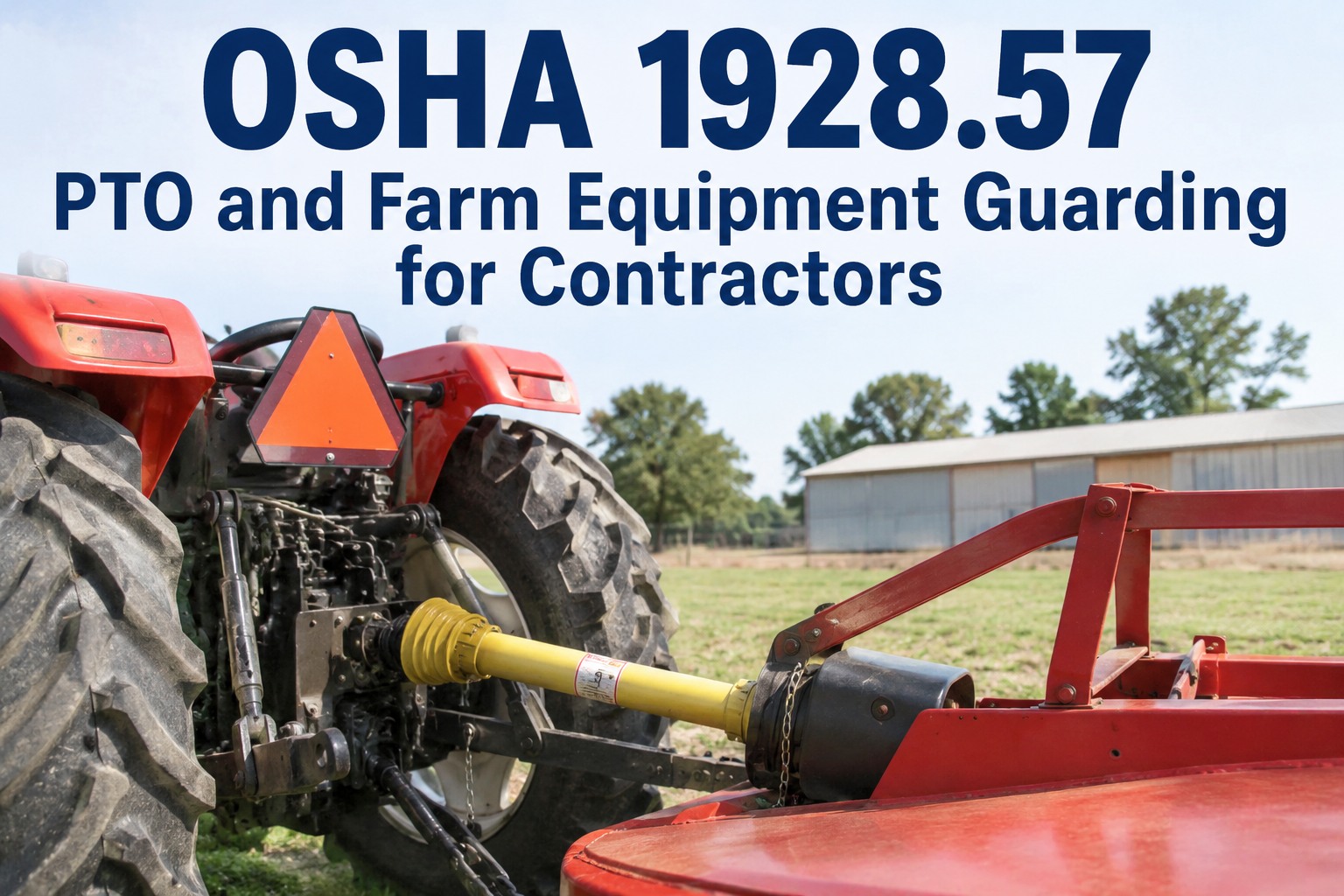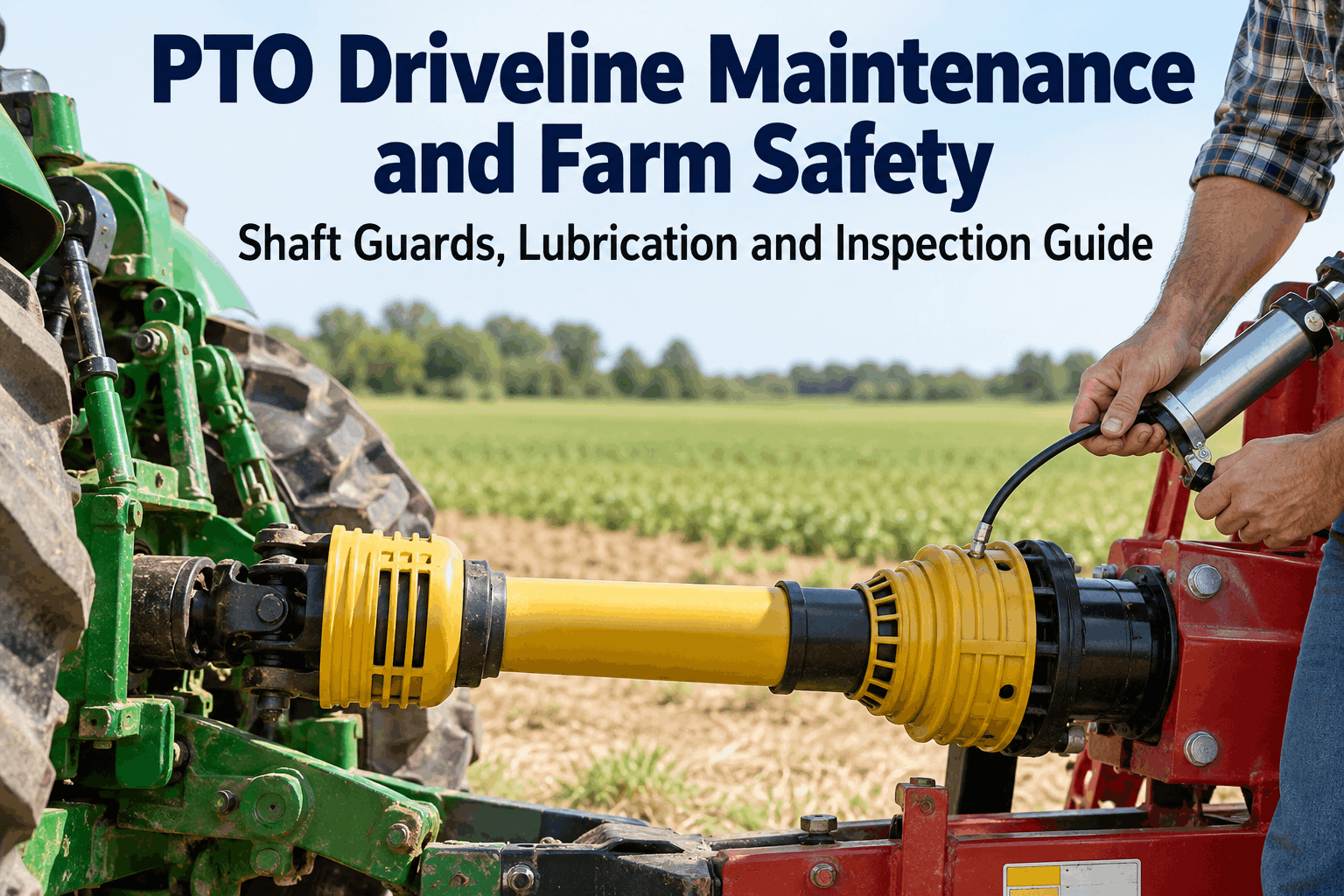
PTO driveline maintenance is a small task with serious consequences when it is missed. A cracked shaft guard, dry universal joint or poorly maintained slip clutch can turn routine fieldwork into an equipment failure or severe entanglement hazard. This guide explains what farm crews should inspect, how to plan lubrication and repairs, and how to keep a usable record of every tractor–implement driveline.
A turning shaft needs a complete guard — and a documented check.
Before the implement runs, confirm that the PTO driveline is guarded, connected correctly and maintained to the manufacturer’s instructions. Turn the checks into repeatable inspections instead of relying on memory.
Four places where PTO problems begin
Most preventable issues show up as visible damage, abnormal movement, inadequate lubrication or a safety device that is missing or not functioning. Inspect the entire driveline, not just the shaft center.
Guards & shields
Look for missing, split or seized protective guards, damaged retainers and absent tractor or implement shielding.
Universal joints
Check for looseness, binding, damaged seals, unusual noise and lubrication needs specified by the manufacturer.
Telescoping sections
Inspect for deformation, corrosion, inadequate overlap or restricted movement, using the equipment maker’s specifications.
Clutch & protection
Check slip clutches, shear bolts and couplings for damage and correct approved components; never defeat protection devices.
A PTO driveline can entangle clothing or a person in moments. Never approach, step over, reach across or service a rotating shaft. Stop the tractor, disengage PTO, shut down, secure against restart and wait for all movement to cease before inspection.
A practical PTO shaft inspection checklist
Use this as a starting template and adapt it to each tractor–implement combination, the manufacturer's manual and your site's safe-work procedures.
Before connecting or starting
- Confirm tractor master shield and implement input shielding are present and secure.
- Inspect driveline guard for cracks, missing sections and proper retention.
- Check that guards can function as designed, with the machine fully stopped.
- Verify yokes, locking mechanisms and connections are properly seated.
- Check shaft length, clearance and articulation against manufacturer guidance.
- Inspect U-joints, telescoping members and driveline supports for wear.
- Confirm lubrication and protective-device service is current.
- Record defects and keep unsafe equipment out of service until corrected.
Build the maintenance schedule around the driveline
There is no safe universal greasing interval for every PTO shaft. Duty cycle, joint design, contamination and the manufacturer's schedule determine when work is due.
Pre-use: inspect condition
Check shields, attachment points, visible damage and signs of binding or leaks before engaging the PTO.
Scheduled: lubricate approved points
Use the specified lubricant and service procedure for U-joints, telescoping members and other designated points.
After impact or abnormal vibration: inspect again
Stop operation and assess joints, shaft straightness, couplings and guards before returning equipment to service.
Seasonal: review replacement history
Compare recurring defects, part usage and service records before the next intensive fieldwork window.
HVI's preventive maintenance scheduling and maintenance history can help teams document the tasks completed for each asset. Book an HVI Demo to Review PTO Service Scheduling →
From a damaged guard to a verified repair
A defect note is useful only when someone acts on it. Give each issue an owner and retain the evidence that the implement was checked before reuse.
Identify
Operator records damage and affected asset.
Hold
Prevent unsafe PTO use pending review.
Repair
Competent technician fits approved parts.
Verify
Check guards, connections and close record.
Disc mower · PTO guard cracked
Inspection photo attached · Machine held from use · Replacement guard ordered · Technician inspection required before release
Keep the operator's observation, replacement details and verification together instead of spreading them across messages. Sign Up Free to Organize Equipment Defect Records →
Track each PTO-equipped implement as its own maintenance asset
A tractor may run several attachments in one week, each with different driveline dimensions, guards and service needs. Keep the implement record separate so the right checklist follows the right equipment.
For every implement, retain the model, driveline specifications, service instructions, inspection photos, defects and replacement records. Book an HVI Demo for Farm Equipment Maintenance Records →
PTO driveline maintenance FAQs
Answers to the questions farm operators and maintenance supervisors ask most often.
How often should a PTO driveline be inspected?
Inspect guarding, connections and visible condition before use, and follow the tractor, implement and driveline manufacturers' inspection requirements. Additional checks are appropriate after impact, unusual vibration or suspected damage.
What should be included in a PTO shaft inspection checklist?
Include tractor and implement shields, rotating shaft guards, yokes and locks, U-joints, telescoping members, shaft clearance, lubrication status, protective devices and unresolved defects. Tailor the checklist to the specific equipment.
How often should PTO universal joints be greased?
Use the interval, grease specification and method provided by the driveline manufacturer. Greasing intervals vary significantly by equipment design and operating conditions; avoid substituting a generic interval.
Can a tractor be operated with a damaged PTO shield?
No. A damaged or missing guard creates a serious entanglement risk. Keep the PTO out of operation until a competent person has assessed and corrected the issue and the assembly is safe for use.
How can HVI help with PTO driveline maintenance?
HVI can support configurable equipment inspection checklists, photo documentation, defect records, preventive maintenance schedules and maintenance history. It does not physically detect shaft defects or replace the equipment manufacturer's instructions or qualified inspection.
Give every PTO-equipped implement a consistent inspection routine
Start with a guard and driveline checklist, then keep lubrication tasks, repair photos and maintenance history linked to the equipment that needs them.