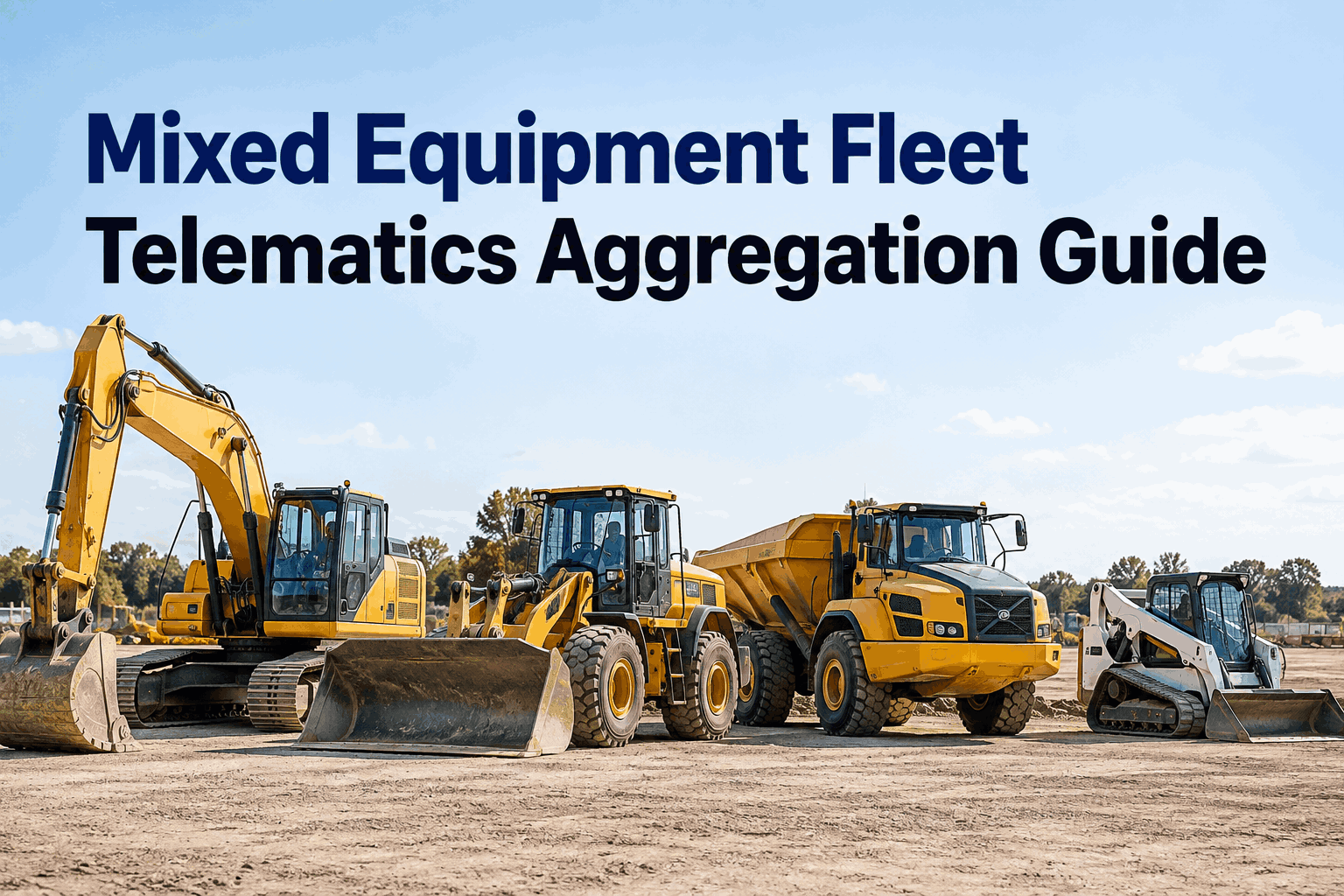
Mixed fleet telematics becomes difficult when every equipment brand sends data through a different portal, field structure and service. Aggregating machine hours, utilization, location and available fault information gives construction teams a more consistent fleet view and creates a practical path from multi-OEM equipment data into preventive maintenance and everyday service decisions.
Stop Managing Equipment Data Brand by Brand
CAT, Volvo, Komatsu, Deere and other equipment can generate valuable telematics data. HVI helps bring supported multi-OEM data into a more consistent maintenance workflow so teams spend less time moving between portals and more time acting on fleet information.
The challenge with mixed equipment fleet telematics is not simply collecting more data. The harder problem is making information from different OEM systems comparable enough to support one operational process. Asset identity, meter definitions, timestamps, supported fields and data freshness all need to be controlled before aggregated telematics becomes reliable maintenance information.
Why Mixed Fleet Telematics Becomes Fragmented
A construction fleet can include excavators, loaders, dozers, compact equipment and support assets from several manufacturers. Each OEM may provide its own telematics environment, credentials and available data. Fleet managers can therefore have excellent machine connectivity while still lacking a practical fleet-wide workflow.
The maintenance team has to reconstruct the fleet picture from separate equipment systems.
This fragmentation can make simple questions harder than they should be: Which machines are approaching service? Which assets are heavily utilized? Which readings are current? Which connected machines have stopped reporting? See how HVI can bring supported multi-OEM equipment data into one maintenance-focused fleet workflow.
Telematics Aggregation Starts by Normalizing the Data You Can Actually Compare
Aggregation should not pretend every OEM provides identical information. A better approach is to identify common fleet fields, preserve richer OEM-specific information where available and clearly expose gaps where a source does not provide the same data.
Standards can reduce integration complexity for common equipment status data, but OEM-specific APIs may still provide additional information beyond the shared data model.
HVI's fleet integration workflows can provide a destination for supported equipment data after the correct machines and fields are mapped. Review how your OEM telematics sources could be normalized for maintenance use in HVI.
A Unified Telematics View Should Show Data Coverage, Not Fake Uniformity
One of the biggest mistakes in equipment telematics aggregation is assuming that every connected machine will provide every field. Data availability can vary by manufacturer, model, hardware, subscription, API and machine configuration. Fleet teams need to see those differences rather than having missing data quietly disappear.
A valid field can still mislead the team if its last update is old.
Do not interpret an unsupported field as a zero-value condition.
Serial numbers and source identifiers should map consistently.
This coverage layer is especially useful as fleets add rental equipment, acquisitions or new OEMs. The goal is not to force every source to look identical; it is to make the differences understandable enough that teams can trust the unified fleet view. See how HVI can organize multi-OEM data without hiding important source differences.
Move Mixed Fleet Telematics From Visibility Into Maintenance
A unified dashboard is useful, but maintenance teams need more than visibility. The strongest integration connects incoming equipment information to specific workflows: meter readings should support PM timing, supported fault information should enter a review process, and utilization should help managers understand maintenance demand and equipment activity.
Aggregation answers, “What is happening across the fleet?” Maintenance integration adds, “What should our team review, schedule or document because of it?”
For example, an updated meter reading can support HVI's preventive maintenance planning, while supported machine events can remain attached to the asset as maintenance work is reviewed and completed. See how HVI turns aggregated equipment data into maintenance-ready fleet information.
Mixed Fleet Telematics Needs Data Health as Well as Machine Health
Once maintenance decisions depend on connected data, teams also need confidence that the integration itself is working. A machine that silently stops reporting can look normal if the system only displays its last known reading without showing how old that reading is.
Confirm source identity matches the correct fleet record.
Track the age of the most recent useful machine data.
Review unexpected meter changes and other obvious anomalies.
Make integration problems visible before they affect maintenance planning.
This makes telematics aggregation more dependable as the fleet grows. Instead of assuming “connected” means “current,” managers can treat data quality as part of the operating process.
Your Equipment Can Stay Multi-Brand. Your Maintenance Data Does Not Have to Stay Fragmented.
Mixed fleet telematics aggregation creates value when it removes unnecessary separation between equipment brands without hiding meaningful differences in the underlying data. Normalize common fields, preserve useful OEM information, watch data freshness and connect the result to the maintenance work your team performs every day.
HVI brings supported equipment integrations, preventive maintenance, work orders and fleet records together so construction teams can use multi-OEM data inside a more consistent equipment-management process.
Mixed Fleet Telematics FAQs
What is mixed fleet telematics aggregation?
Mixed fleet telematics aggregation brings supported equipment information from multiple OEM or telematics systems into a more consistent data environment. Common information such as machine identity, operating hours, location and utilization can then be viewed or used across the fleet without relying on a separate daily workflow for every manufacturer.
Can telematics data from different equipment brands be standardized?
Common fields can often be normalized, particularly where providers support standards such as ISO 15143-3 or compatible APIs. However, not every OEM, machine or subscription exposes identical information. A good aggregation strategy standardizes comparable fields while preserving source-specific data and clearly identifying fields that are unavailable.
What mixed equipment fleet telematics data is most useful for maintenance?
Machine hours are particularly useful for hour-based preventive maintenance. Utilization can add workload context, location can help teams understand where equipment is operating, and supported fault or alarm information can provide additional maintenance context. The exact data available depends on the connected equipment and telematics source.
Does mixed fleet telematics eliminate the need for OEM portals?
Not necessarily. Aggregation can reduce the need to visit multiple OEM systems for routine fleet and maintenance visibility, but OEM platforms may still contain manufacturer-specific diagnostics, configuration tools, service information or specialized features that are not exposed through a common API. The goal is a more efficient everyday workflow rather than pretending every OEM system is identical.
How can HVI use aggregated multi-OEM telematics data?
HVI can bring supported equipment data into fleet and maintenance workflows so useful machine information can sit alongside preventive maintenance, work orders and asset history. The integration should first confirm available source fields, equipment mapping and data rules so teams know which information is current and appropriate for each maintenance workflow.