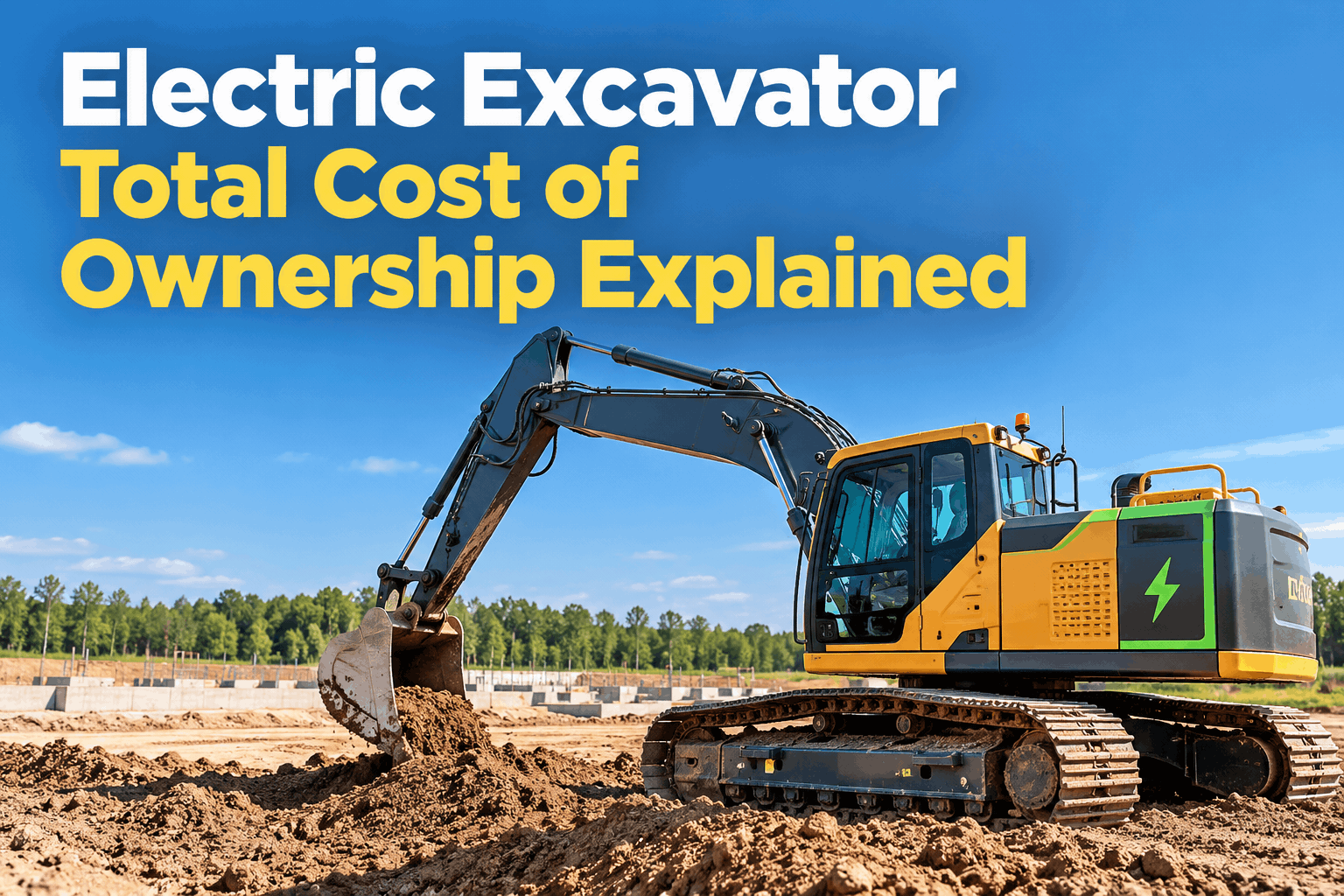
Electric excavator total cost of ownership decides whether going electric is a smart investment or an expensive statement. The sticker price runs 40 to 60% higher than diesel — but that's only the first line of the ledger. Charging, battery replacement and the maintenance you stop paying all move the lifetime math, and whether electric actually wins depends almost entirely on how hard you run the machine. The honest answer isn't "electric is cheaper" — it's "it depends, and here's on what." Book a demo of equipment cost tracking.
Electric Excavator Total Cost of Ownership Isn't About the Sticker Price
The purchase premium is real — but so are the fuel and maintenance you stop paying. Whether an electric excavator wins over its life comes down to the whole ledger, not the showroom tag.
The electric excavator conversation is full of confident numbers that don't survive contact with a real jobsite. A vendor's payback math assumes high utilization, cheap electricity and a battery that lasts the whole life of the machine; a skeptic's math assumes the opposite. The truth is that total cost of ownership for an electric excavator is genuinely close to diesel — sometimes ahead, sometimes behind — and the deciding factors are specific and knowable. Get them right and electric can be the cheaper machine over ten years. Get them wrong and you've paid a premium for a machine that sits on a charger half the day.
The real mathwhat makes up electric excavator total cost of ownership
TCO is a stack, not a single number. Electric and diesel load that stack differently — electric piles cost into the purchase and battery, diesel into fuel and maintenance over the years. Here's how the two stacks compare across a machine's life.
Notice what this means: electric's advantage grows with every hour you run, because that's when the low energy and maintenance cost pays back the high purchase. A machine that works hard every day closes the gap fast; a machine that works occasionally never does. That's why utilization — not the sticker price — is the real swing factor. See the broader electric-vs-diesel equipment comparison, and book a demo of cost-per-hour tracking.
When electric winsthe duty-cycle decision that makes or breaks the TCO
An electric excavator's total cost of ownership isn't fixed — it swings on how you use the machine. The same unit can be the cheaper choice on one job and the wrong call on another. Here's the honest split.
- High daily utilization — the machine runs hard
- Single-shift work that fits a charge cycle
- Urban, indoor or low-noise sites (demolition, utilities)
- Zero-emission zones or tender requirements
- Cheap electricity and charging access on site
- Multi-shift or near-continuous operation
- Remote sites with no practical charging
- Low utilization — the premium never pays back
- Peak-power, heavy-dig duty for long stretches
- Expensive power or no infrastructure budget
The pattern is clear: electric rewards high, predictable, single-shift use near power; diesel still owns remote, continuous, heavy-duty work. The only way to know which bucket a given machine falls in is to look at how it's actually used — your utilization and duty-cycle data, not an assumption. Explore utilization tracking per machine.
Before you buythe electric excavator TCO readiness checklist
Before committing to an electric excavator, these are the questions that decide whether the TCO works for you. Run your own numbers against the list — any "no" is a place the payback could quietly fall apart.
- You know the machine's real hours per day
- Utilization is high enough to pay back the premium
- The duty cycle fits a single-shift charge
- Your sites have practical charging access
- Charger and electrical upgrade cost is counted
- Charging downtime won't stall production
- You know the battery's expected cycle life
- Replacement cost is in the TCO if it lands in-term
- Warranty terms on the battery are understood
- You can track actual maintenance and energy cost
- Incentives and grants are factored in
- You'll compare electric vs diesel on real data
Twelve confident "yes" answers mean the TCO is a decision you can defend — not a leap of faith on a vendor's spreadsheet. Book a demo to model it on your fleet.
The number that matterswhy cost per hour settles the electric excavator question
All the TCO lines resolve into one figure a fleet manager can actually act on: cost per operating hour. It folds the purchase, energy, maintenance and battery into the thing you compare job to job — and it's where electric's case lives or dies.
- High fixed cost spread over hours run
- Low energy and maintenance per hour
- Falls sharply the more you run it
- Lower fixed cost, higher running cost
- Fuel and maintenance dominate per hour
- Flatter — less sensitive to hours run
This is exactly why a generic TCO estimate misleads: it assumes an hours figure. Your real cost per hour comes from your real utilization and your real maintenance spend — which is precisely what tracking gives you, and what turns the electric-vs-diesel debate into a settled number. Explore cost-per-hour reporting.
The TCO on recordelectric vs diesel, tracked on your actual costs
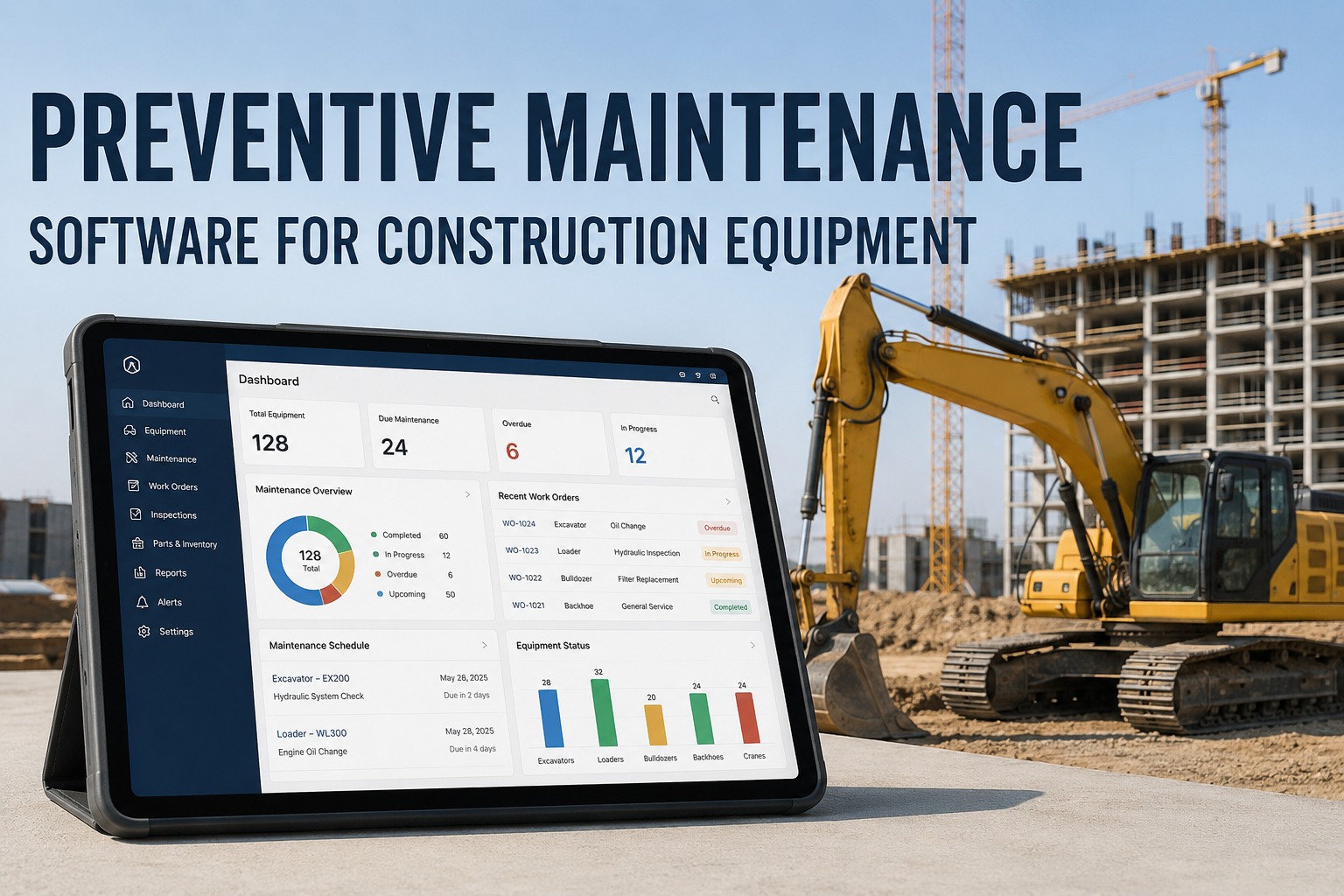
A TCO you can trust is one measured, not assumed. When maintenance, energy and downtime run against each machine, the real electric-vs-diesel comparison reads off one view. Here's the record that replaces the vendor's spreadsheet.
That view turns a purchase debate into a tracked fact — and it keeps working after the buy, flagging when an electric machine isn't getting the hours its payback needs. It's built from the records HVI already keeps for maintenance, energy and utilization. Compare with the renewable diesel path to lower emissions.
From a construction fleet manager who ran the electric numbers
We nearly bought two electric excavators on a vendor's payback slide that looked fantastic. Then I pulled our own utilization data and realized those machines would've sat idle too much to ever earn back the premium — the payback math assumed hours we don't actually run. So we put the electric unit on our highest-utilization urban job instead, where it fit a single shift and the site had power, and there it's genuinely cheaper per hour than the diesel it replaced. The lesson was that electric TCO isn't one answer — it's a different answer for every machine, and you can't know yours without tracking your real cost per hour. The spreadsheet lied; our own data didn't.
Electric excavator total cost of ownership — FAQs
Is an electric excavator cheaper than diesel over its life?
It can be, but only at high utilization. Electric trades a 40–60% higher purchase price for lower energy and maintenance cost, so the more hours you run it, the better it pays. At low utilization the premium never earns back and diesel stays cheaper.
What goes into electric excavator total cost of ownership?
Purchase price, energy (charging), maintenance, battery replacement if it lands in your ownership, charging infrastructure, and resale. Electric front-loads cost into the purchase and battery; diesel spreads it across fuel and maintenance over the years.
How much does an electric excavator battery cost to replace?
It's a major line, though battery prices are falling fast, so figures vary widely by size and date. Whether it hits you at all depends on cycle life versus your hours and how long you keep the machine — a conservative TCO assumes it might.
When does an electric excavator not make sense?
For multi-shift or near-continuous work, remote sites without charging, low-utilization machines, and heavy continuous digging. In those cases the premium doesn't pay back or the charging logistics don't work, and diesel remains the better TCO.
How does HVI help with electric excavator TCO?
HVI doesn't sell equipment or model purchases — it tracks the real operating cost. By logging maintenance, energy and utilization per machine, it lets you compare electric and diesel on actual data, verify the maintenance savings, and catch when an electric unit isn't getting the hours its payback needs.
Settle the electric excavator question with real cost data
Electric excavator TCO is a different answer for every machine, and the deciding numbers — utilization, maintenance savings, cost per hour — only become real once you track them. HVI logs actual cost per machine so you compare electric and diesel on your fleet, verify the payback, and catch a machine that isn't earning its premium. Book a demo and run the real math.
No credit card · No hardware · Compare electric and diesel cost per machine from day one