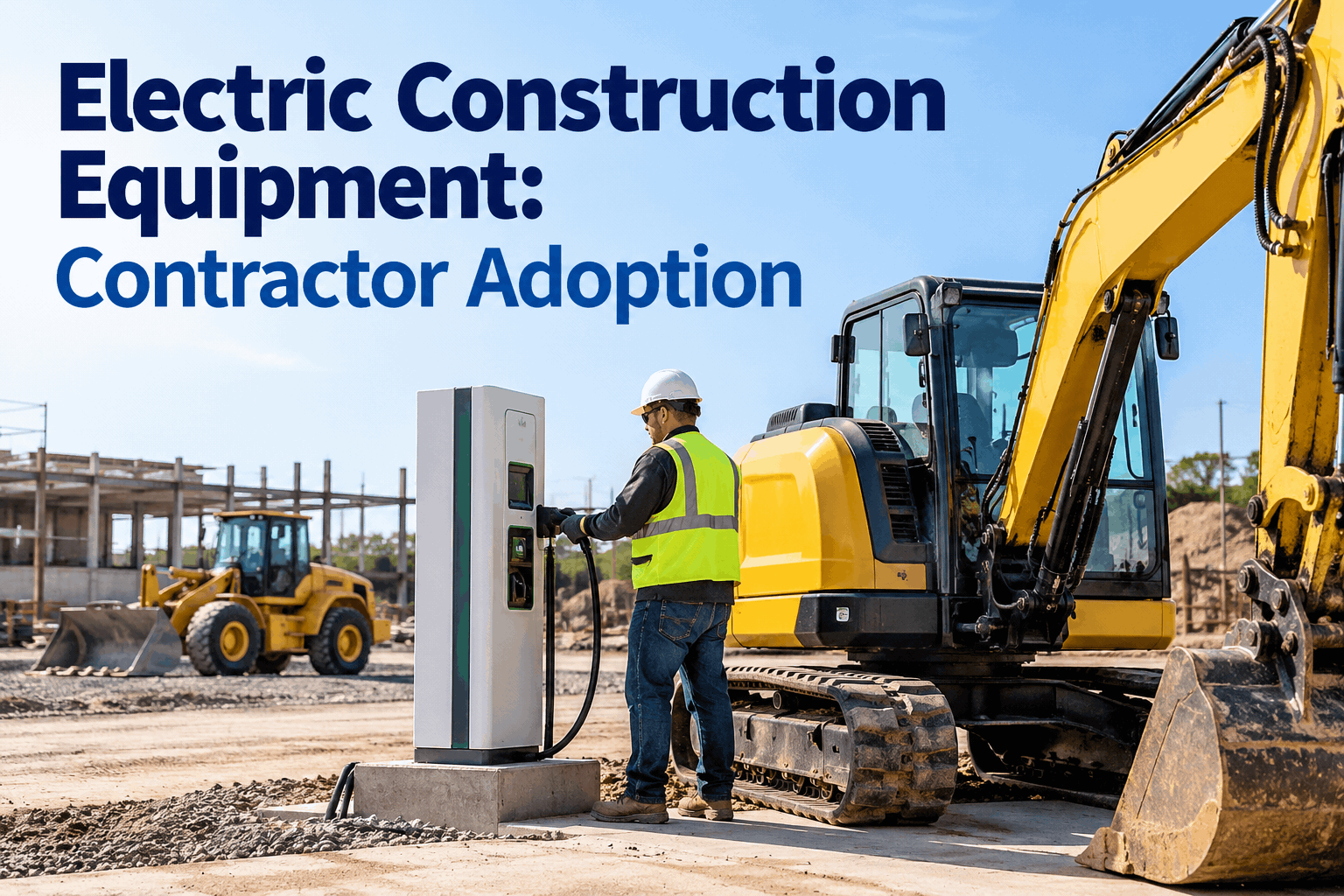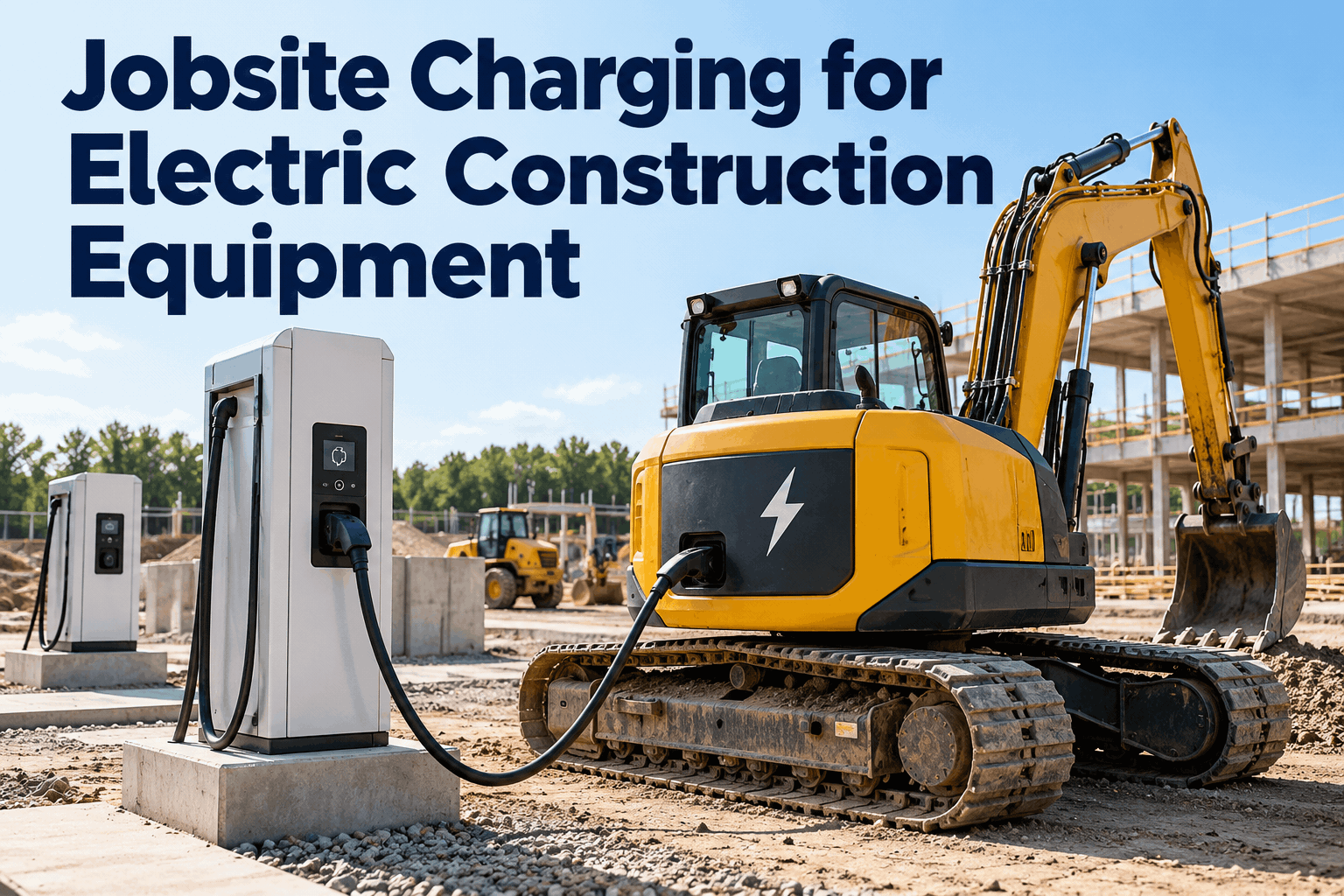
Jobsite charging infrastructure decides whether electric construction equipment actually works on your site — or sits on a charger while the crew waits. The machines are ready; the question is the power. A downtown job with grid access is one problem, a remote site with no power line for miles is another, and both need a charging plan before the first electric machine arrives. Get it right and electric runs all day; get it wrong and an expensive asset sits next to an empty socket. Book a demo of equipment readiness tracking.
Jobsite Charging Infrastructure Is the Real Barrier to Electric
The excavator is ready to go electric. The jobsite often isn't. Powering the machines on a live, shifting site is the problem that decides whether electrification works — and it's solvable with a plan.
Electric construction equipment has quietly become genuinely good — the machines have the power and the runtime for a lot of real work. What's held electrification back isn't the iron, it's the infrastructure: you can't plug a 20-tonne excavator into a wall socket, and most jobsites weren't built with charging in mind. A permanent depot can be wired once and forgotten, but a jobsite is temporary, moves as the work moves, and may sit at the edge of the grid or beyond it. Planning charging for that reality — the power supply, the schedule, and the fallback when there's no grid — is the whole game, and it's very doable once you treat it as a plan instead of an afterthought.
Where the power comes fromthe jobsite charging supply options, best to off-grid
Jobsite charging isn't one solution — it's a spectrum, from a clean grid connection down to fully off-grid options for sites with no power at all. The right choice depends on what the site can give you. Here's the range.
- 1Grid connectionA permanent utility tap — cheapest power and simplest once installed. Ideal for longer jobs with grid access nearby.
- 2Temporary utility supplyA temp service drop from the utility for the life of the job — common on urban sites, needs lead time to arrange.
- 3Generator or hybrid powerA genset or battery-hybrid unit charges the fleet where grid is weak — bridges the gap, but watch the fuel it burns.
- 4Mobile battery / swapBattery units charged off-site and brought in, or spare packs swapped — the off-grid answer for remote sites.
Most real jobs end up using a mix — a grid or temp supply where it exists, a mobile unit for the far corners of a big site. The further you slide down the spectrum, the higher the cost and complexity, which is exactly why the on-site charging line looms so large in any electric equipment decision. See how charging cost factors into electric excavator TCO, and book a demo of electric fleet readiness.
Assess the site firstwhat to check before you commit electric equipment to a job
Every jobsite charging plan starts with a hard look at what the site can actually deliver. These are the factors that decide which supply option you need — and whether electric even makes sense on this job.
Get these answered and the right supply option is usually obvious — and so is whether a given job is electric-ready or better left to diesel for now. The machines then need keeping inspected and maintained like any other, charged status included. Start free and track your electric fleet's readiness.
Charging around the workscheduling so machines charge when they're not needed
The best jobsite charging plan fails if machines charge during the shift instead of around it. The trick is matching the charge window to the gaps the work already has — so a machine is full when the crew needs it, not plugged in while they wait.
The simplest win: charge fully between shifts when the machine is parked anyway. Enough for most single-shift jobs, and uses off-peak power.
Top up during the natural breaks — lunch, crew changeovers, loading waits. Small charges that keep a machine going through a longer day.
Put the hardest-working machines on the fastest charging or the spare battery, and lighter-duty units on slower overnight charge.
Don't charge everything at once — stagger it so you stay under the site's power peak and avoid demand charges where they apply.
Done well, charging becomes invisible — it happens in the time the work wasn't using the machine anyway. Done badly, it becomes the bottleneck that makes people swear off electric. The difference is knowing each machine's real duty cycle and charge state, which is a tracking job. Explore tracking machine availability and status.
Is your site readythe jobsite charging readiness checklist
Before you send electric equipment to a job, run the site through this list. Any "no" is a gap that could leave a machine stranded on a charger — fix it in the plan, not on site.
- The site has a confirmed power source or plan
- Capacity covers peak simultaneous charging
- Any upgrade or temp service is arranged with lead time
- Charge windows fit the machines' duty cycles
- Overnight or opportunity charging is planned
- The fleet is staggered to stay under the power peak
- Remote or no-grid areas have a mobile or generator plan
- The charging setup can move as the site moves
- You know which jobs are simply not electric-ready yet
- Each machine's charge and service status is visible
- Inspections and PM are kept up on electric units
- You can see which machines are ready to work
Twelve confident "yes" answers mean electric shows up to the job and works the shift — not a surprise that strands a machine on day one. Book a demo to see fleet readiness.
The remote-site problemwhere jobsite charging is hardest — and the honest answer
Most charging challenges are solvable. The genuinely hard one is the remote site at the edge of the grid or beyond it — and it's worth being honest about where the technology is.
A site with no power line can't just plug in. The options — mobile battery units, battery swap, generator charging — all work, but each adds cost, logistics or the very fuel you were trying to avoid.
Off-grid charging means someone manages the power: towing in charged battery units, rotating packs, trucking fuel for a genset. That logistics load is real and belongs in the plan from the start.
For a truly remote, continuous job, diesel or renewable diesel may still be the practical answer today. Electrifying the sites that can support it, and keeping the rest on cleaner fuel, is a reasonable plan.
The sensible approach is to electrify where the site supports it and not force it where it doesn't — yet. For the sites that aren't charging-ready, a cleaner liquid fuel bridges the gap without new infrastructure. See the renewable diesel path for sites that can't charge, and book a demo of mixed-fleet tracking.
Readiness on recordkeeping electric machines charged, checked and available
Charging is only half of getting an electric machine to work — it still needs inspecting and servicing. When charge status, inspections and maintenance live against each machine, your electric fleet's readiness reads off one view. Here's that record.
That view is the difference between an electric fleet that works and one that surprises you — a machine held for a missed inspection is as idle as one with a flat battery. It's built from the records HVI already keeps for inspections and maintenance. Read about managing permanent depot charging.
From a construction project manager rolling out electric equipment
The first electric excavator we brought to a site, we treated charging as an afterthought — and it bit us. There wasn't enough temporary power to charge it and run the site trailers, so it kept running low mid-afternoon and the operator lost faith in it fast. On the next job we planned the power first: confirmed the temp service capacity, set it to charge overnight and top up at lunch, and staged a mobile battery unit for the far end of the site. Night and day. The machine just worked, and the crew stopped treating it like a science experiment. The lesson was simple — plan the jobsite charging infrastructure before the machine arrives, not after it strands you.
Jobsite charging infrastructure — FAQs
What does jobsite charging infrastructure involve?
It's the power supply and charging setup that keeps electric construction equipment running on a live site — from a grid or temporary utility connection to generators, mobile battery units or battery swapping. The right mix depends on the site's power access and how the work is scheduled.
How do you charge electric equipment on a site with no grid?
Off-grid options include generator or hybrid power units, mobile battery units charged off-site and towed in, and battery swapping with spare packs. All work, but each adds cost or logistics — and for truly remote continuous jobs, diesel may still be the practical choice today.
How do you plan charging around the work schedule?
Match the charge window to the gaps the work already has — overnight between shifts, opportunity top-ups at breaks — and stagger the fleet so you stay under the site's power peak. Done well, charging happens when machines aren't needed, not during the shift.
What should you check before bringing electric equipment to a jobsite?
Available power capacity for peak charging, distance to the supply, whether the charge window fits the duty cycle, site layout and moves, permit and lead time for temporary service, and total charging cost. These decide the right supply option — and whether the job is electric-ready.
How does HVI help with electric equipment on site?
HVI doesn't install chargers or supply power — it keeps electric machines ready to work. It tracks inspections, maintenance and status per machine, so your electric fleet shows up charged, checked and serviced, and nothing sits idle for a missed service.
Make electric work on the jobsite, not just on paper
The machines are ready — the site is the challenge. Plan the power supply, schedule charging around the work, and keep every electric unit inspected and serviced so it shows up ready. HVI tracks the readiness side — inspections, maintenance and status per machine — so your electric fleet works the shift instead of stranding you. Book a demo to see it.
No credit card · No hardware · Keep every electric machine inspected and ready from day one