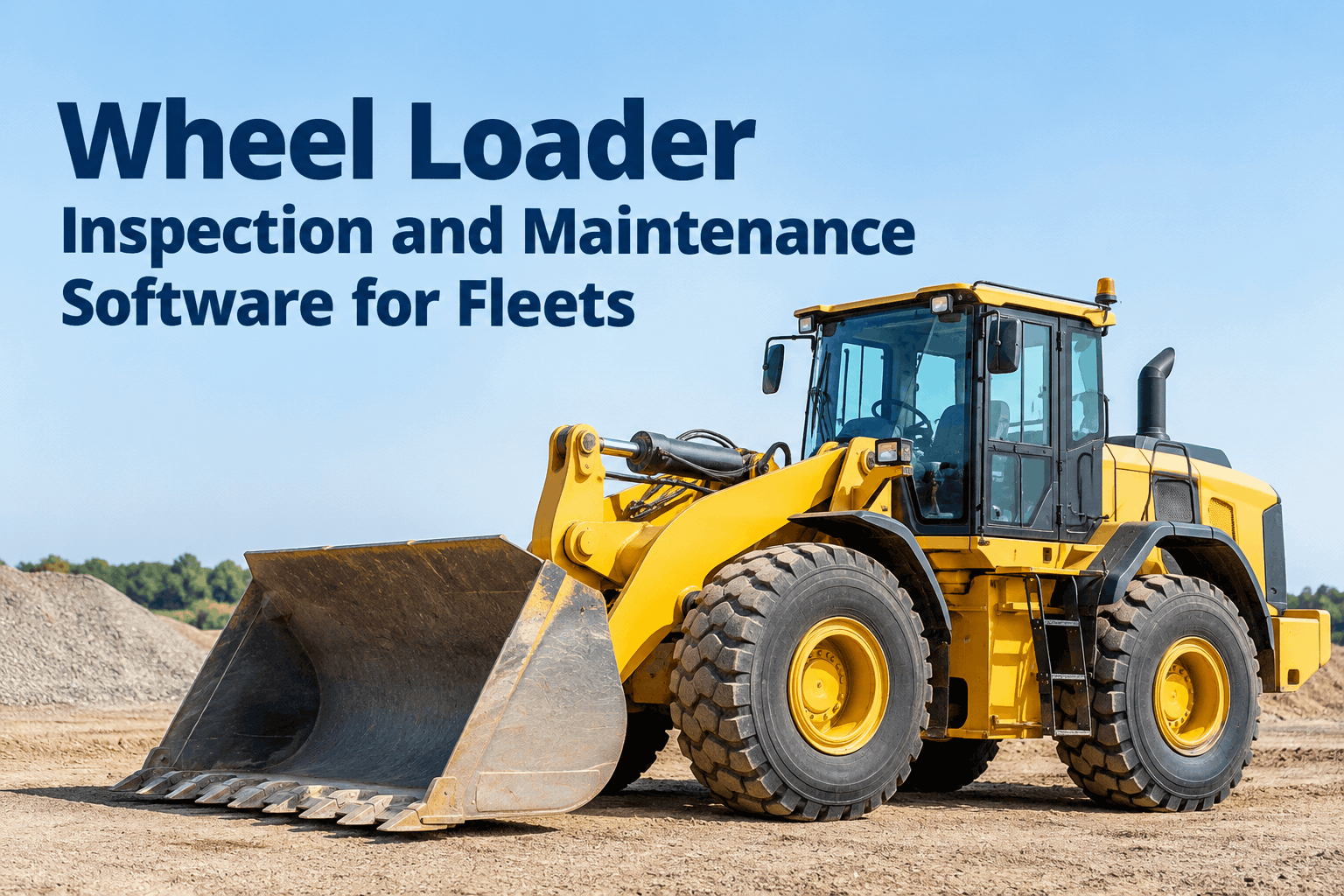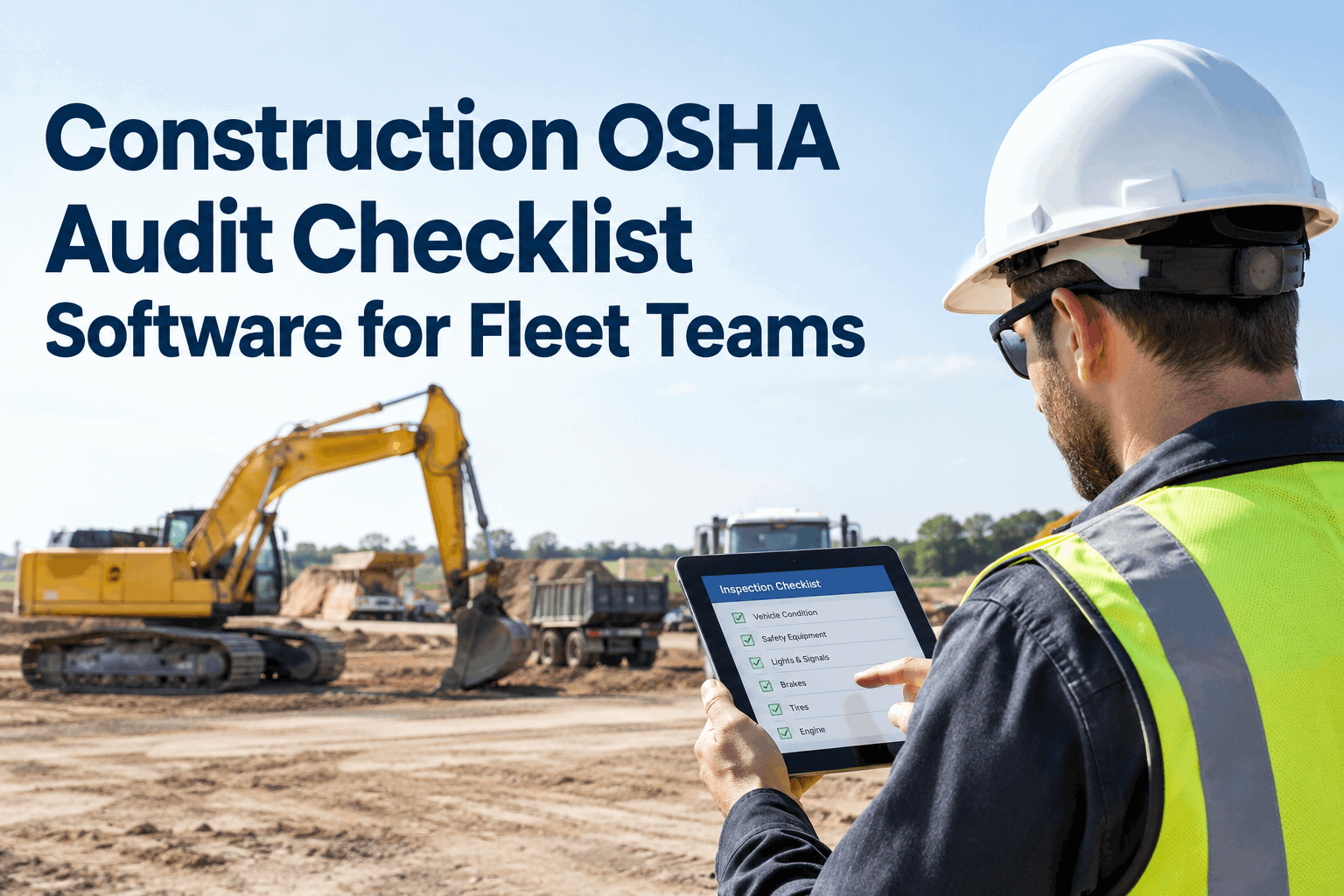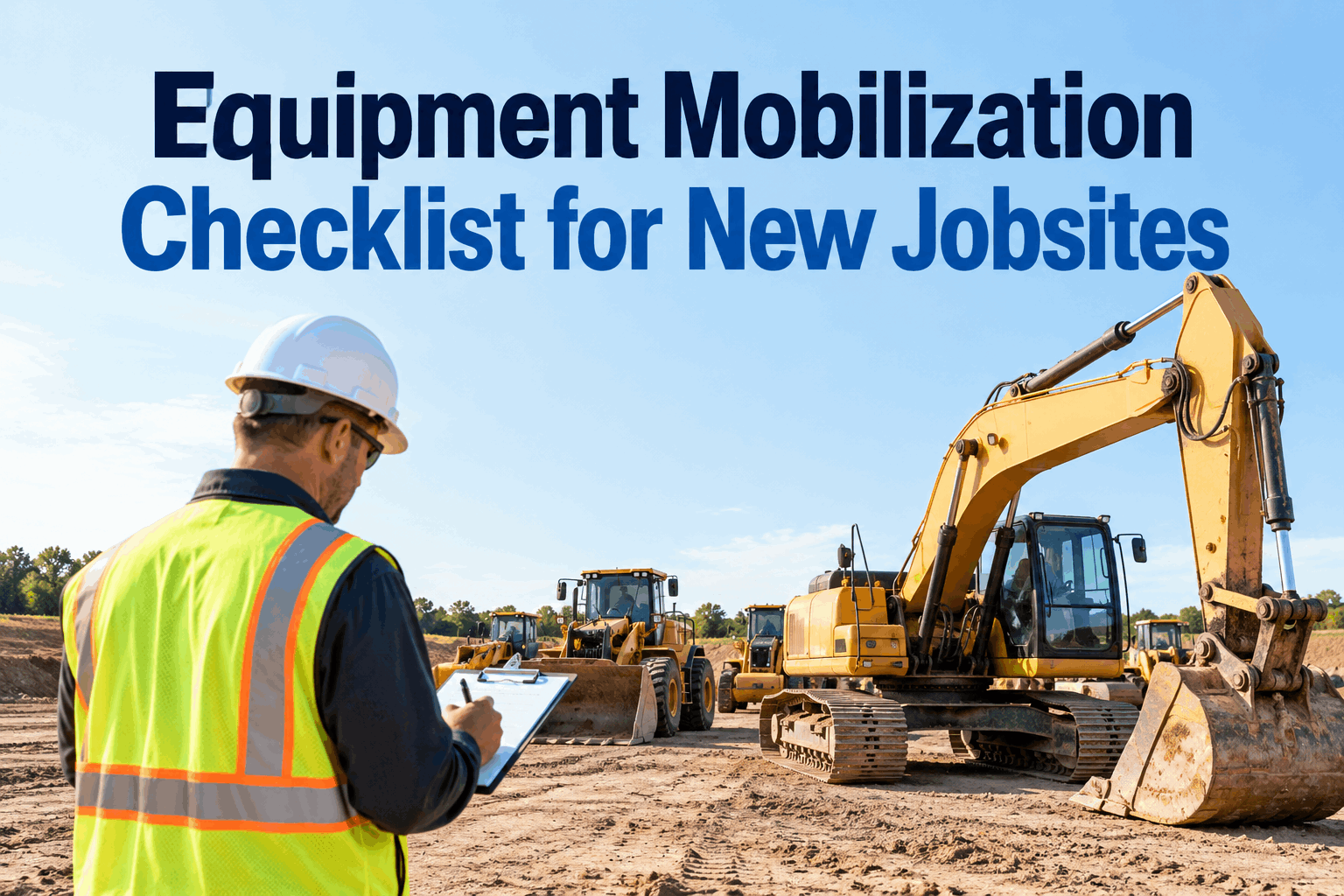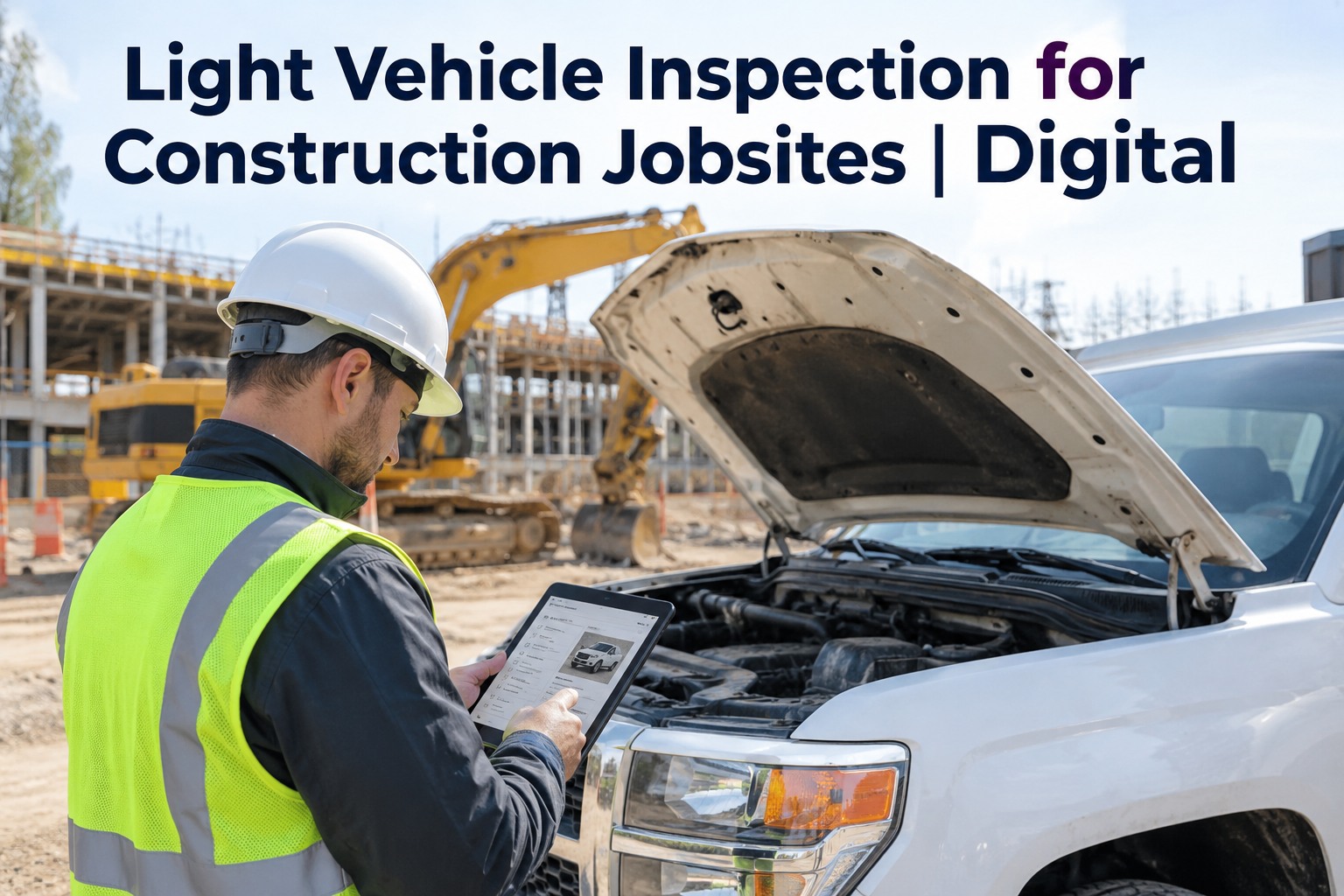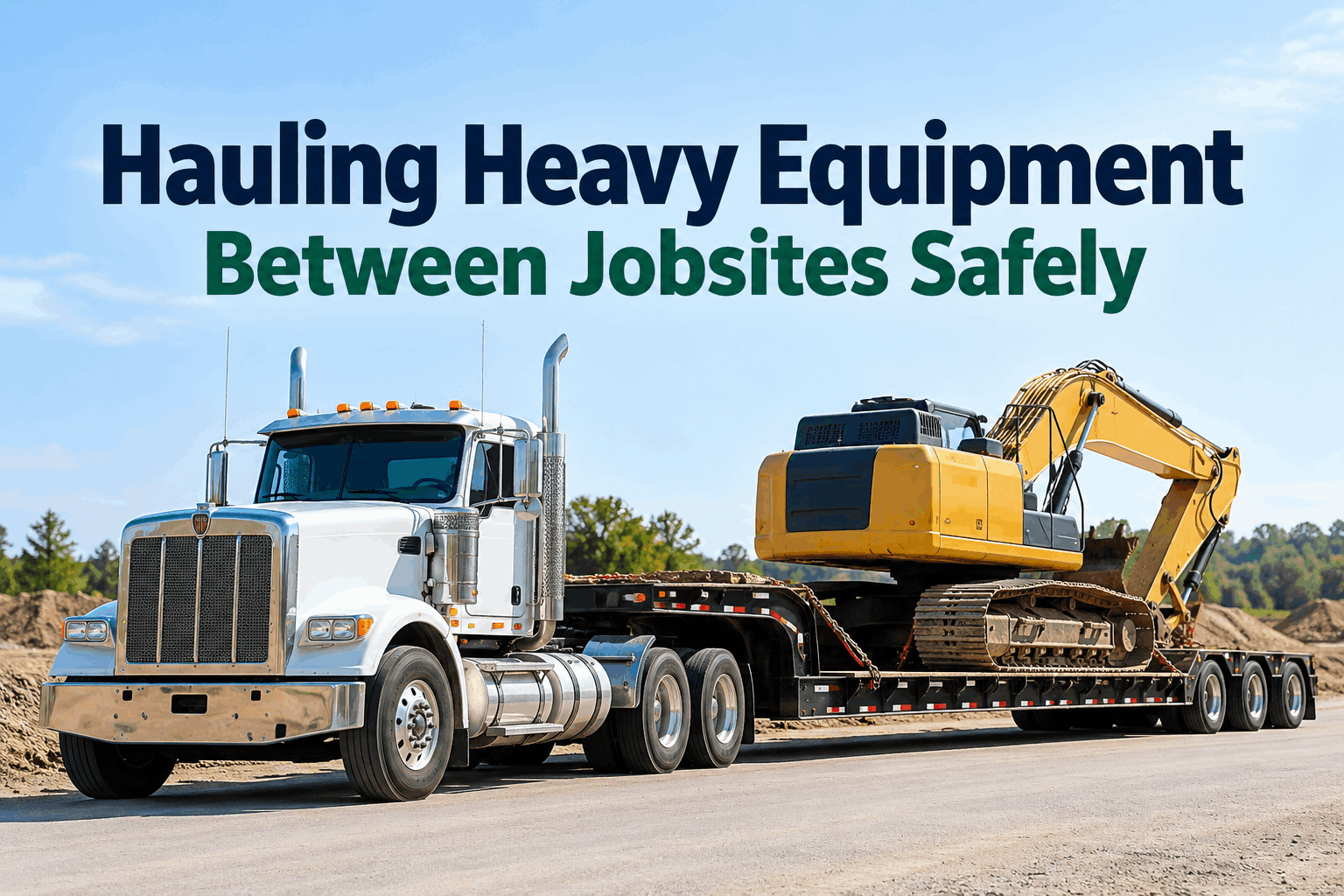
Getting a loader from one jobsite to the next looks simple until a chain backs off on the highway and 40,000 pounds shifts on the trailer. Hauling heavy equipment safely is a chain of skippable steps — load it square, secure it to the rules, inspect the rig before you roll — and the step that gets rushed is the one that ends up in an incident report. Here's how to haul safely, step by step — book a demo to see it in HVI.
Four tie-downs, one pre-trip, zero lost loads.
Safe hauling comes down to securing the machine to the rules and inspecting the rig before every move. HVI turns the securement check and the trailer pre-trip into a logged DVIR, with maintenance records that prove the rig was roadworthy.
Equipment mobilization is one of the highest-risk things a construction fleet does routinely, because it moves the machine off the controlled jobsite and onto public roads at highway speed. A loader that's loaded crooked, an under-rated chain, a trailer with a soft tire or a dragging brake — any one of them turns a routine move into a lost load, a rollover, or a roadside out-of-service order with CSA points attached. The good news is that safe hauling is almost entirely procedure: do the same steps the same way every move, and verify them — which is exactly what a quick walkthrough shows end to end. Here's the sequence, the rules that drive it, and how to make sure it happens.
The four stages of a safe haulload, secure, inspect, haul — in order, every time
Every safe move runs the same four stages. Skip or rush one and the risk moves downstream to the highway, so each stage has to be done and confirmed before the next.
Load
Center the machine, distribute weight across the axles, set the brake and lower attachments onto the deck.
Secure
Chain it to the rules — enough rated tie-downs, front and rear, with attachments secured independently.
Inspect
Pre-trip the trailer, the tow vehicle and the tie-down gear — brakes, tires, lights, chains, binders.
Haul
Roll out, then re-check securement after the first stretch — chains settle and need a second pass.
The two stages that go wrong most are securing and inspecting — and they're the two that leave a paper trail when they're done right. That's exactly where a digital equipment inspection replaces the clipboard nobody can find later. Book a demo to see the haul sequence as a logged workflow →
Load securement: what the rules actually requireheavy equipment tie-down requirements under FMCSA 49 CFR 393
Securement isn't a judgment call — it's a federal standard, and roadside inspectors check it against the number. For heavy machinery, four rules carry most of the weight.
Minimum tie-downs
Equipment over 10,000 lb needs at least four direct tie-downs, each rated to a working load limit of 5,000 lb or more.
Aggregate working load limit
The combined WLL of all tie-downs must be at least half the weight of the load — the baseline rule behind the count.
Front & rear
Tie-downs must restrain movement forward, backward and sideways — secured at both the front and the rear of the machine.
Lower & secure attachments
Booms, buckets, blades and rippers must be lowered to the deck and secured independently so they can't swing or bounce.
Those are the headline rules; the full method — anchor-point ratings, chain condition, articulation locks — is in HVI's cargo securement inspection checklist and the flatbed DVIR and 393 securement guide. Build the securement step into the inspection and it gets verified, not assumed. Start free and add a securement check to every haul →
The pre-trip inspection behind every haulthe trailer, tow vehicle and tie-down gear checks that keep the load on the deck
A perfect chain job on a trailer with worn brakes still ends badly. The pre-trip covers the whole rig — and because it's a DVIR on a commercial move, it has to be done and recorded anyway. Three groups cover it.
Tires and wheels, brakes, lights and markers, the deck and ramps, kingpin or coupler, suspension and the anchor points themselves.
Brakes and air system, tires, lights, the hitch or fifth wheel, fluid levels and anything flagged on the last trip's report.
Chains and binders for wear, nicks, stretch or bent hooks — a damaged chain loses its rating, so gear condition is part of the check.
Every pre-trip and securement check is a signed DVIR on the record, a worn chain or soft tire becomes a defect and a work order, and the trailer's own preventive maintenance runs on the same system — the way HVI handles the lowboy trailer inspection end to end. Book a demo to see pre-trips and defects tracked per rig →
Heavy equipment hauling checklistload, secure and roll — the routine that keeps the move boring
Here's a baseline heavy equipment transport checklist, grouped the way HVI loads it — each item logged on the DVIR for the move.
- Machine centered, weight across the axles
- Axle weights within trailer & legal limits
- Parking brake set, articulation locked
- Attachments lowered to the deck
- At least 4 rated tie-downs, front & rear
- Aggregate WLL at least 50% of load weight
- Attachments tied down independently
- Chains & binders undamaged, properly rated
- Trailer tires, brakes, lights, coupler checked
- Tow vehicle pre-trip & load height confirmed
- DVIR signed before departure
- Securement re-checked after the first miles
On paper the securement count gets eyeballed and the pre-trip signed from the cab; in HVI each item is logged, a damaged chain becomes a work order, and the DVIR is on record if a roadside inspection ever asks. It runs with the rest of your construction fleet maintenance. Start free and load your haul checklist →
From a construction transport manager
We got pulled into a roadside inspection with a skid steer on a tag trailer and came within one chain of an out-of-service order — the driver had used three tie-downs because "it wasn't going anywhere." It was going somewhere: to the scale house for a violation and a CSA hit.
Now the securement count and the pre-trip are a DVIR the driver completes before the wheels turn, with the four tie-downs verified on the record. A worn chain gets swapped and logged instead of run one more trip. Our roadside inspections got boring, which is exactly what you want.
Hauling heavy equipment — FAQs
How many tie-downs does heavy equipment need?
Under FMCSA rules, equipment over 10,000 lb needs a minimum of four direct tie-downs, each rated to a working load limit of at least 5,000 lb, secured at the front and rear to restrain the load in every direction. The combined working load limit of all tie-downs must also be at least half the weight of the load. Attachments like booms and buckets are lowered and secured separately.
What's the biggest mistake when hauling heavy equipment?
Under-securing — using too few tie-downs, or ones that aren't rated for the load — followed by skipping the trailer pre-trip. Both feel like time savers and both are exactly what roadside inspections and incident investigations catch. A chain that's worn or bent has lost its rating even if it looks fine, which is why gear condition is part of the check.
Do I need a pre-trip inspection to haul equipment?
Yes. A commercial move requires a driver vehicle inspection report (DVIR) covering the tow vehicle and trailer, and good practice extends it to the securement and tie-down gear. The pre-trip catches the soft tire, dragging brake or worn chain before the highway does, and the signed record is what you show if you're inspected.
How does hauling relate to oversize or overweight permits?
They're two sides of the same move. Permits handle the legal dimensions and weight on the route; safe hauling handles loading, securement and the roadworthiness of the rig. A move can be fully permitted and still be unsafe or out of service if the securement or pre-trip is wrong — so a complete mobilization covers both the paperwork and the physical haul.
How does HVI help with hauling heavy equipment safely?
HVI turns the securement check and the trailer and tow-vehicle pre-trip into a digital DVIR completed before every move, flags a worn chain or a brake issue as a defect and work order, runs preventive maintenance on the trailers, and keeps every record on file. That means loads leave secured and legal, and you can prove the rig was roadworthy if a roadside inspection or incident ever asks.
Make the move the boring part of the job
HVI puts hauling heavy equipment on one system — the securement check and the pre-trip as a signed DVIR, worn gear flagged as defects, trailer PM on schedule, and every record ready for a roadside inspection. So loads leave secured, legal and documented, every single move. Live on your fleet in under two weeks.
See it on your own rigs · Works offline in the yard · DVIR records from day one