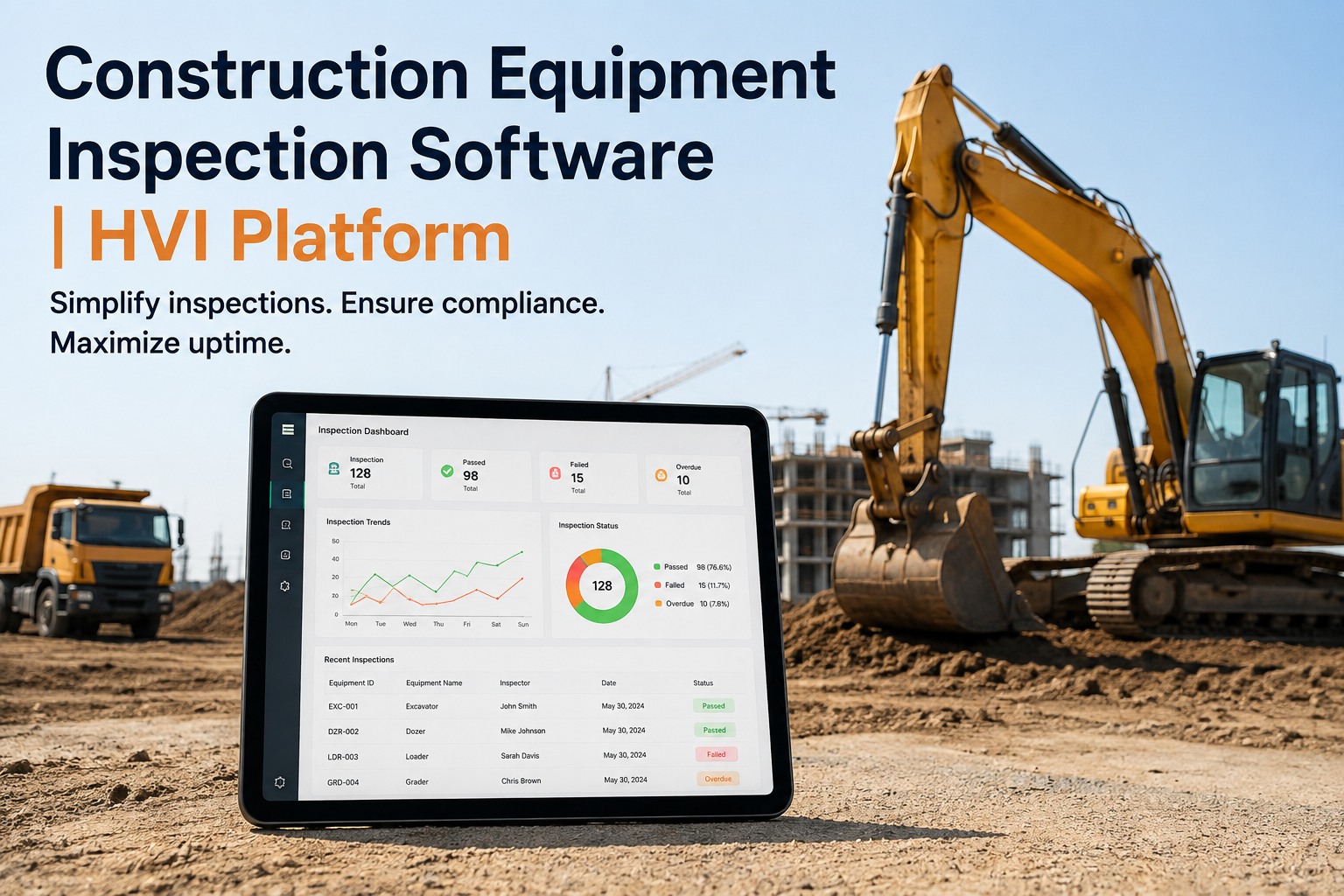
A crew foreman parks a wheel loader at the bottom of a stripped excavation at 6:40 a.m. He opens the inspection app on his phone, and the spinner freezes. No signal, no form, no record. Within two weeks the crew is back on paper binders because the rollout died in a dead zone. This is the hidden killer of digital inspection adoption, and it is exactly the problem a genuine construction equipment inspection app must solve. HVI runs full offline inspections on iOS and Android, captures photos, GPS coordinates and digital signatures with zero cell signal, and auto-syncs the moment the device reconnects. If you want to see how that works on your own jobsites, you can book a 30-minute walkthrough and we will run it on a real unit.
The Construction Equipment Inspection App That Finishes the Job With No Signal
Inspectors and operators complete full walkarounds with photos, GPS pins and signed evidence inside a dead zone. HVI stores everything locally and auto-syncs when the truck climbs back into range. Zero lost inspections. Zero duplicated paperwork. No more fallback to clipboards.
- Full offline inspection capture on iOS and Android
- Photos, GPS coordinates and digital signatures
- Auto-sync on reconnection with zero data loss
- Built for construction sites, mines and remote yards
What Dead Zones Actually Cost Your Fleet
Most shops underestimate the bleed from paper inspection forms and half-online apps. Here are the numbers we see across mixed fleets running trucks, trailers and off-road plant.
Time a mechanic or operator spends handwriting a single heavy equipment form, including the photocopy and filing.
Time the same walkaround takes in HVI using smart workflows, photo capture and voice-to-text defect notes.
Typical shelf life of a field inspection app that fails in a dead zone before the crew quietly returns to paper.
Completed records with photos, GPS and signatures held on the device and pushed to the cloud on reconnection.
Why Most Mobile Inspection Apps Fail on a Remote Jobsite
An app that merely caches a form is not an offline inspection app. The moment a mechanic tries to attach a photo or sign the report, the spinner returns. Real offline capability means the entire workflow survives the dead zone.
| Requirement | Apps That Merely Cache | HVI Genuine Offline |
|---|---|---|
| Form load with no signal | Loads last cached template, often stale | Loads the current asset-specific template instantly |
| Photo capture at the defect | Camera often fails or photo will not attach | Photo attaches to the exact defect line item |
| GPS coordinate stamping | Location services drop without network assist | Device GPS pins the inspection coordinates |
| Digital signature capture | Signature pad hangs on submission | Operator and mechanic sign on screen locally |
| Voice-to-text defect notes | Cloud-based dictation unavailable offline | On-device transcription records the note |
| Submission and storage | Form is lost or must stay open in memory | Saved to local encrypted queue, auto-syncs later |
If your current field inspection app for construction cannot do all six of those things inside a dead zone, your crew will work around it. See a live offline test on your own equipment before you roll anything out.
Photo Evidence, GPS Pins and Digital Signatures at the Point of Defect
A checkbox that says "frayed sling" is forgettable. A timestamped photo of that sling, pinned to a GPS coordinate and signed by the operator, is defensible. That is the standard a heavy equipment mobile inspection app must meet.
Photo Capture at the Failure Point
A mechanic snaps a photo of a leaking final drive or a cracked rim right at the asset. That image binds to the defect line and follows it straight into the work order management queue, so the shop sees the problem before the machine rolls in.
GPS Coordinates on Every Record
Every inspection carries the latitude and longitude of where it was completed. When a contractor dispute arises over whether a machine was actually checked at the remote pad, the GPS stamp is the answer.
Digital Signatures for a Defensible Chain
The operator signs the walkaround on screen. If a defect is flagged, the mechanic signs off on the repair. That creates an audit-ready, timestamped chain that holds up for DOT, client and insurance reviews.
Voice-to-Text Defect Notes
A mechanic holding a grease gun can speak the defect note instead of thumb-typing it. HVI transcribes the note on-device, which is why a digital walkaround takes 5-8 minutes instead of 30-45.
When a client or auditor asks for proof, you do not need to dig through a glovebox. You can pull up the photo, the GPS pin and the signature in seconds. If you want to test that workflow on a real machine, walk through it with us on a live demo.
One Platform for the Yard, the Roadside and the Pit
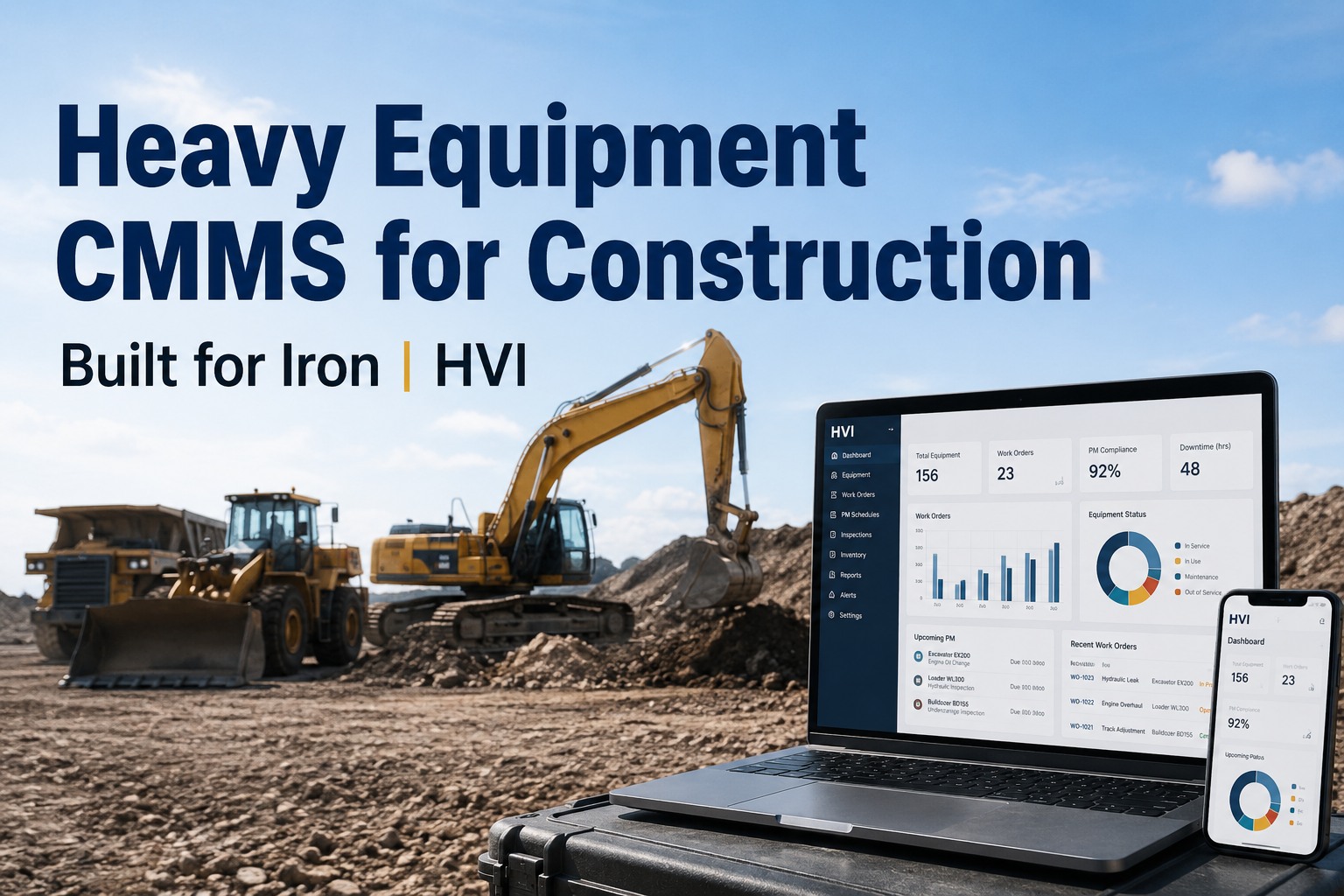
HVI is cloud and mobile CMMS software for fleet-heavy businesses. These are the specific capabilities that kill paper DVIRs and prove every inspection during an audit.
Defect-to-Work-Order in One Tap
A flagged defect on the walkaround instantly generates a work order. No texting the shop, no re-entering the note. The mechanic sees the photo and the priority before the machine arrives.
Preventive Maintenance by Engine Hours
Schedule PM by date, mileage or engine hours. HVI sends due and overdue alerts so a loader working a remote strip does not miss a 250-hour service interval while it is off-grid.
Audit-Ready Records in Seconds
Every inspection is timestamped, photo-backed and GPS-pinned. Pull a full compliance history for any asset for any date range during a DOT, OSHA or client audit without opening a binder.
One App Across Mixed Fleets
Run the same inspection app on trucks, trailers, buses, off-road plant and shop equipment. Standardise your fleet compliance process across every asset class your business owns.
The 30-Minute Gap: Why Paper Bleeds Hours Every Shift
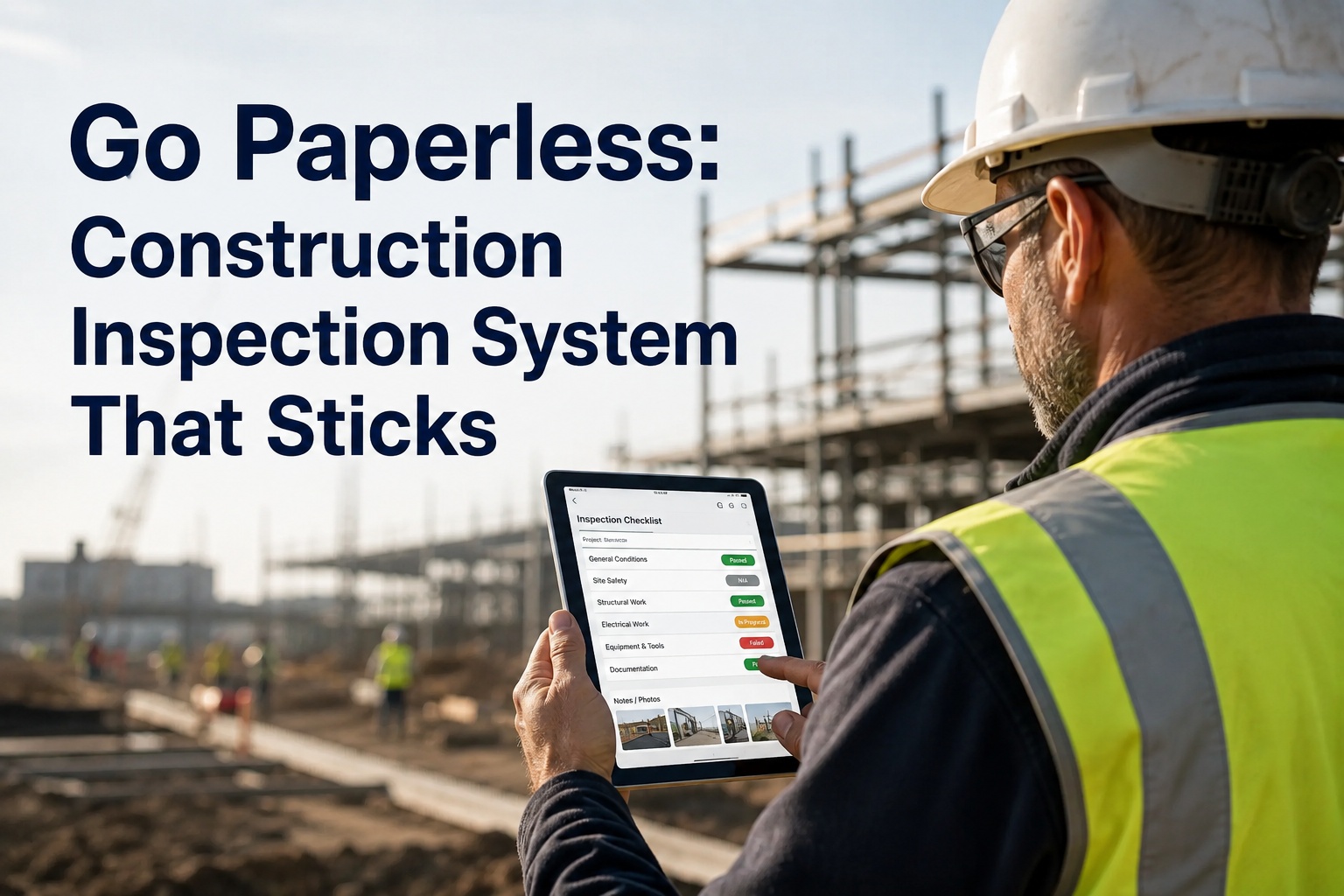
A paper walkaround takes 30 to 45 minutes. A digital walkaround in HVI takes 5 to 8 minutes. On a 40-machine jobsite running two shifts, that gap is the difference between a crew that inspects everything and a crew that skips the paperwork.
Paper Walkaround
30-45 minutes per machine- Handwriting defect descriptions in the rain
- Illegible notes causing rework at the shop
- No photo evidence for client disputes
- Forms lost in the cab or never filed
HVI Digital Walkaround
5-8 minutes per machine- Tap-to-flag failure modes on a smart form
- Photo and voice note attached instantly
- GPS and signature captured on device
- Auto-syncs to the cloud on reconnection
Take a 40-truck mixed fleet running one inspection per day. Saving 30 minutes per walkaround is 20 hours of labour back every single day. If you want to start logging inspections free and measure that gap on your own assets, the signup takes a few minutes.
See HVI Running on Your Own Fleet
Watch a full offline inspection complete with photos, GPS and signatures on one of your own machines, then auto-sync when it reconnects. Book a 30-minute demo and we will set it up.
From Dead Zone to Cloud Sync: The Offline Inspection Workflow
This is the exact path an inspection takes when an operator is working a remote site with no cell signal. No spinners, no lost data, no paper fallback.
Open the App in the Dead Zone
The operator selects the asset from the locally cached list. HVI loads the correct walkaround template for that specific machine, whether it is an excavator, a grader or a service truck.
Complete the Walkaround with Smart Workflows
Tap-to-flag checks take seconds. If a defect is found, the operator snaps a photo, drops a voice-to-text note, and moves on. The GPS coordinate is stamped automatically in the background.
Capture the Digital Signature
The operator signs the screen to confirm the walkaround is complete. If a defect was flagged, the record is queued to generate a work order the moment a connection returns.
Auto-Sync on Reconnection
The truck climbs out of the pit and gets a bar of signal. HVI pushes the encrypted inspection, with all photos and signatures, to the cloud. The shop foreman sees it instantly and the work order is created.
This is the workflow that keeps crews off paper. To see it run end-to-end on an iPhone or Android device, schedule a live field demo with our team.
Where an Offline Equipment Inspection App Is Non-Negotiable
If your assets work where the map goes grey, a cloud-only app is a liability. These are the environments where HVI offline capability is essential, not optional.
Construction Sites
New builds and earthworks strips are notorious dead zones. Inspectors need to log walkarounds on dozers, loaders and cranes without driving to the site office for a Wi-Fi signal.
Mines and Quarries
Pit operations run haul trucks and excavators deep in terrain with no cellular coverage. The inspection app must hold the record locally until the machine returns to the workshop.
Remote Yards
Trucking yards and bus depots on the edge of town often have weak indoor signal. Drivers completing pre-trip DVIRs need an app that does not depend on a perfect connection.
Underground Facilities
Tunnels, basements and underground plant rooms kill radio signal entirely. Any inspection done below grade must be captured, signed and stored entirely on the device.
If your fleet operates in any of these environments, let us show you the offline test on a device running your actual inspection forms.
Why a Construction Equipment Inspection App Must Work Offline
Connectivity Kills Rollouts
An app that fails in a dead zone will be abandoned for paper within two weeks. Genuine offline capability is the only defence.
Evidence Beats Checkboxes
Photos, GPS coordinates and digital signatures create a defensible chain of custody that holds up in any audit or dispute.
Time Savings Are Measurable
Moving from paper to a digital inspection app with smart workflows cuts walkaround time from 30-45 minutes down to 5-8 minutes.
HVI Closes the Loop
From offline capture to defect-to-work-order and auto-sync, HVI is the complete construction equipment inspection app for mixed fleets.
We tried two different inspection apps before HVI. Both died at the bottom of the quarry and the guys went straight back to the paper binders. Now they complete the walkaround on the phone, snap the photo of the worn track pad, sign it and it syncs when the truck gets back to the yard. I track defect-to-repair time, and we cut it from three days to about four hours.
Construction Equipment Inspection App FAQs
What makes a construction equipment inspection app truly offline?
How long does a digital equipment walkaround take compared to paper?
Does HVI work on both iOS and Android devices in the field?
How does the app handle defects found during a walkaround?
Can inspection records be used for DOT and client audits?
Run Your First Offline Inspection in Minutes
Book a 30-minute demo and watch HVI complete a full walkaround with photos, GPS and signatures on one of your own machines, or sign up free and try it on the yard today.
Free to start - Works on any phone - No card needed