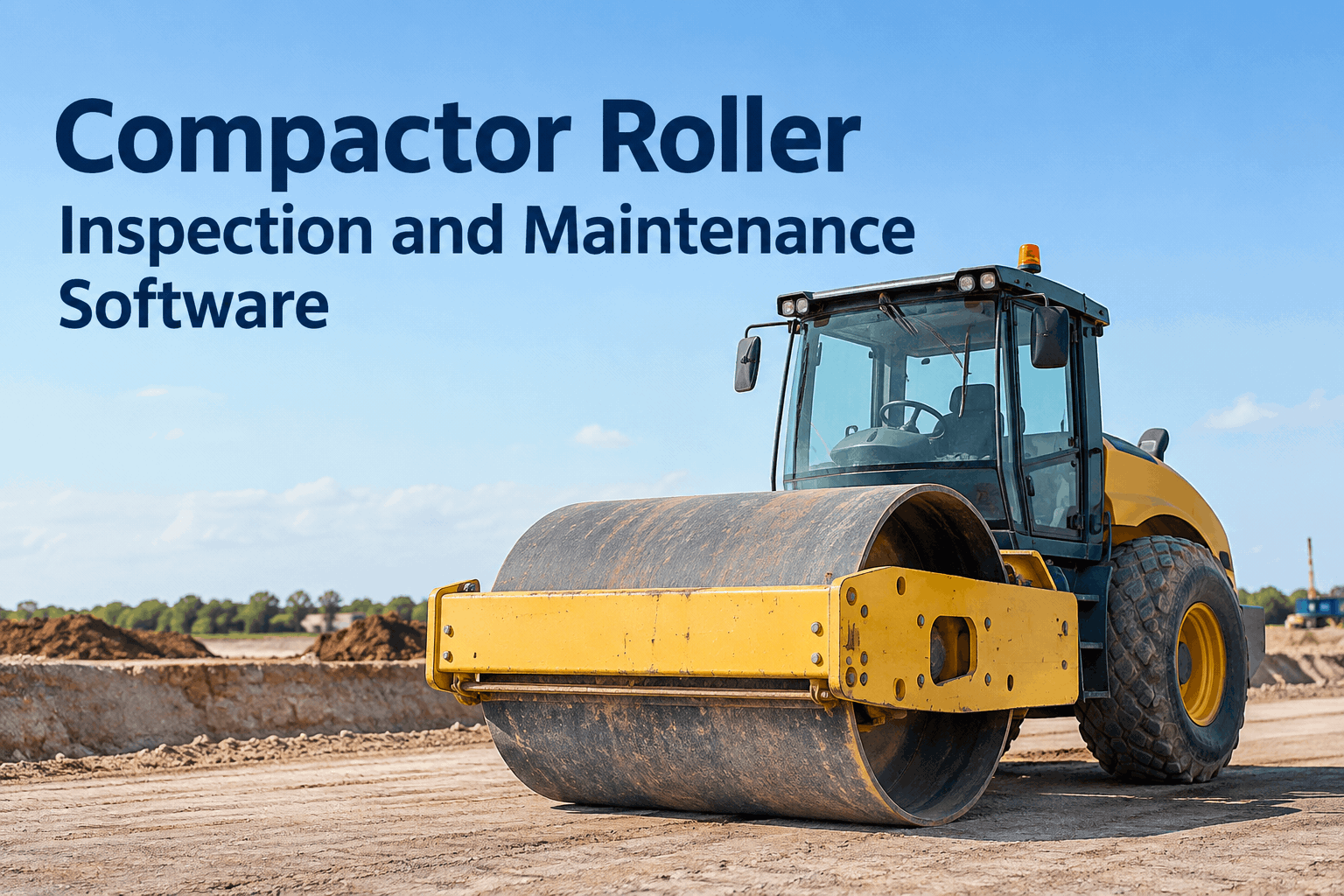
A roller doesn't limp before it fails — the exciter bearing runs fine right up until the drum starts shaking the cab apart mid-shift, on a fresh mat you can't un-pave. Compactor roller inspection and maintenance tracking software catches that wear on the walkaround, while it's still a $150 bearing and not a $6,000 drum rebuild. Book a roller demo to see it running against your own fleet.
Compactor Roller Inspection and Maintenance Tracking Software, Built Around the Drum and Vibration System
Standardize roller inspections across every type in your fleet, catch vibration and hydraulic wear before it reaches the mat, and track PM by engine hours instead of a date nobody updates.
- 1 Drum & scraper bar
- 2 Vibration system (exciter & bearings)
- 3 Engine, cab & controls
- 4 Hydraulic drive system
- 5 Water spray system
Rollers give almost no warning before the vibration system fails — a worn exciter bearing produces a faint noise change for hours before it goes, and by the time it's obvious the drum has already warped. Three roller types run on most compaction fleets, and each one has its own watch points underneath a shared maintenance core.
One maintenance core, three different watch pointsa mixed roller fleet needs one checklist per type, not one checklist total
Every roller shares the same engine, hydraulics, and vibration fundamentals — but the inspection points that actually catch a failure early change by roller type. HVI lets you build a separate checklist per roller type and still see all of them on one fleet dashboard.
Watch the exciter, drum bearings and vibration frequency — the classic hour-based clock that keeps the drum from warping.
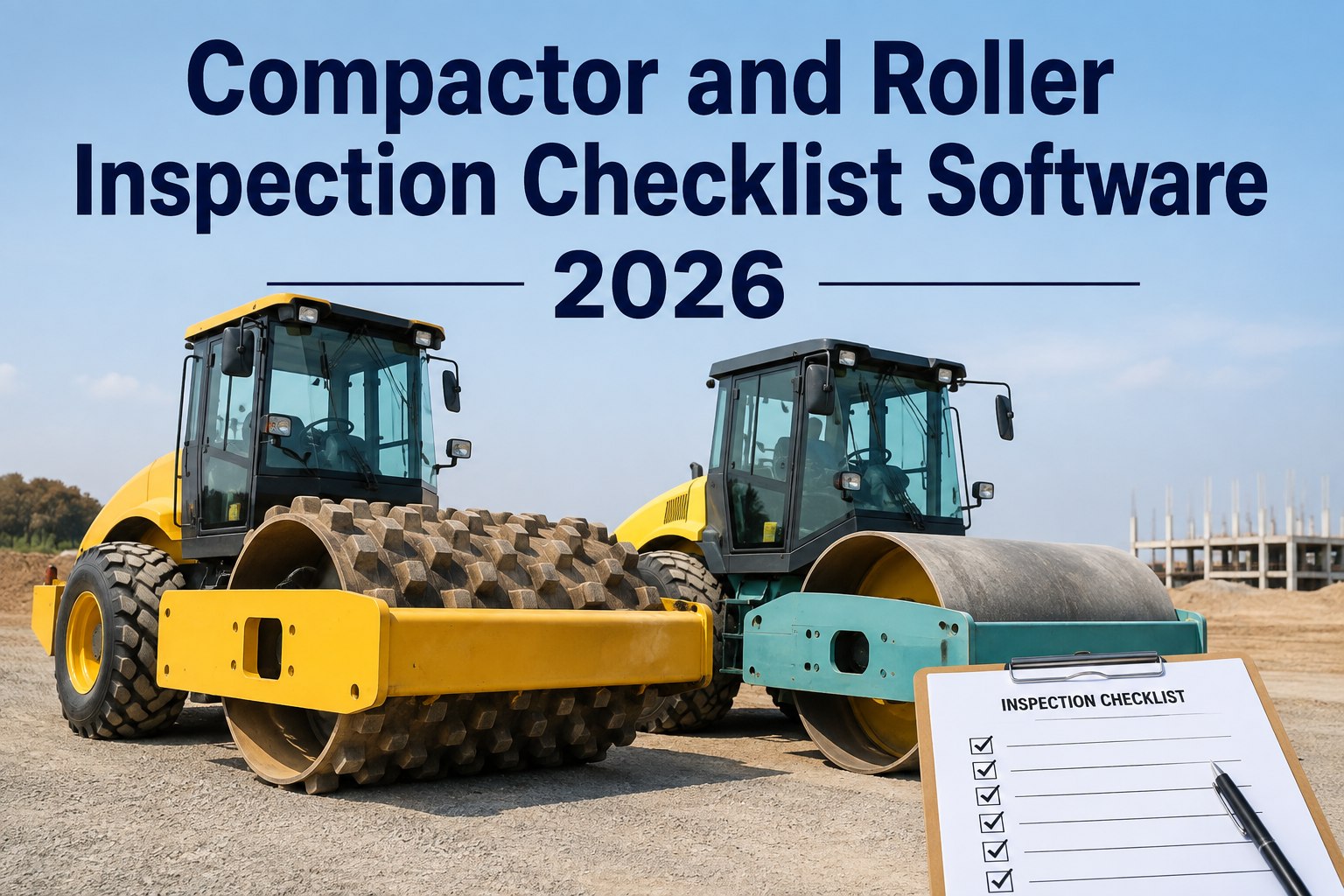
Same vibratory core, plus pad wear and packing — clogged pads lose compaction depth on cohesive soils long before anyone notices on the surface.
No drum or vibration system to track, but tire pressure and wear directly drive mat finish — an uneven tire is an uneven lift.
What goes on a compactor roller inspection checklistfive zones, tagged by how often they need a look
These five zones cover the shared maintenance core across roller types. Book a demo to see this checklist built for your specific roller models.
Scraper bar wear and tension, drum surface damage, debris buildup that throws off balance.
Exciter oil level, abnormal noise under vibration, bearing play, isolation mount condition.
Hose chafing at pressure fittings, fluid level, drive motor leaks, steering response.
Nozzle clogging, spray pattern coverage, tank level — a clogged nozzle damages the mat before anyone notices.
Fluid levels, air filter condition, control response, alarms and warning lights.
Tire pressure and wear on pneumatic units, or isolator mount condition on drum units.
An engine-hour PM clock the vibration system actually needsmiss the window and a bearing problem becomes a drum problem
A roller that's been running a full paving season logs far more vibration hours than one pulled out for occasional patch work — HVI's preventive maintenance scheduling tracks intervals against actual engine hours, not a shared calendar date. For a deeper breakdown of vibratory service intervals by component, see our roller service log reference guide.
Treat these as a starting clock — every manufacturer publishes its own exciter and bearing intervals, and HVI lets you load the actual OEM schedule per roller rather than one generic clock across the fleet.
From a flagged vibration defect to a closed work orderno second system, no re-typing the finding
Book a demo to walk through this flow on a roller from your own fleet.
Walkaround completed on a phone, noise or wear flagged with a photo.
Tied to that roller's history, not a loose note on a clipboard.
No re-entry — the finding becomes the job the shop sees on their board.
Parts and hours recorded, feeding fleet-wide PM trends.
Paper checklist vs. HVI, side by sidesame inspection, very different odds the bearing gets caught in time
Sign up free and move your roller fleet off paper this week.
From a paving crew foreman running a mixed roller fleet
We lost a drum two seasons back because a noise complaint sat on a sticky note for a week during a busy stretch. By the time it got to the shop, the bearing had already chewed up the drum shell.
Now every operator flags it from their phone the same shift, and it's on the mechanic's board before the roller's even back on the trailer. We haven't lost a drum since we started tracking vibration system hours instead of guessing.
Frequently asked questions
What does compactor roller inspection and maintenance tracking software do?
It replaces paper walkaround sheets with a mobile checklist that flags defects against the right roller, turns findings into work orders, and tracks PM by engine hours instead of a fixed date.
Why is the vibration system the most important thing to inspect on a roller?
The exciter and drum bearings wear gradually and quietly, then fail suddenly — by the time vibration feels wrong to an operator, the drum itself is often already damaged, which is why early exciter and bearing checks matter most.
Can one checklist cover smooth-drum, pad-foot, and pneumatic-tire rollers?
They share a maintenance core, but HVI lets you build a separate checklist per roller type so pad wear, tire condition, and vibration points are each checked correctly, all visible on one fleet dashboard.
Can preventive maintenance be scheduled by engine hours instead of calendar dates?
Yes. HVI tracks service intervals against meter readings or engine hours from each roller, so a unit running a full paving season hits its PM window earlier than one used occasionally.
Does this work for a mixed fleet of rollers and other heavy equipment?
Yes. HVI runs inspections, PM schedules, and work orders across rollers alongside excavators, drill rigs, dozers and other assets, each with its own checklist and intervals.
Put your roller inspections and vibration-system tracking in one place
Drum, vibration system, hydraulics, water spray, and engine — one checklist per roller type, defects routed straight to the shop, PM tracked by engine hours. No credit card, no hardware to install.
- Roller checklist per type, built and assigned
- Engine-hour PM intervals loaded per asset
- Defect-to-work-order routing turned on
- Signed inspection history for every roller