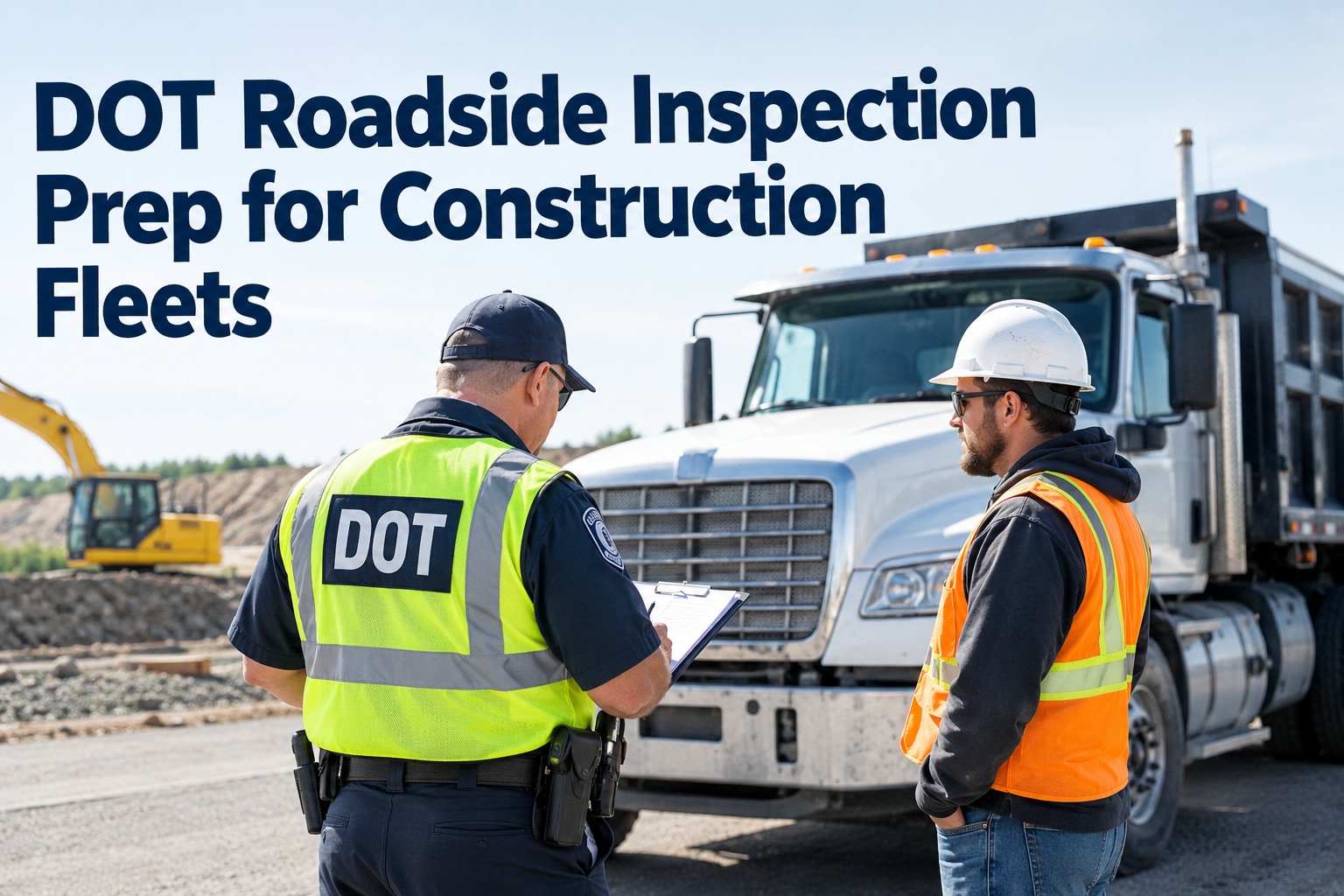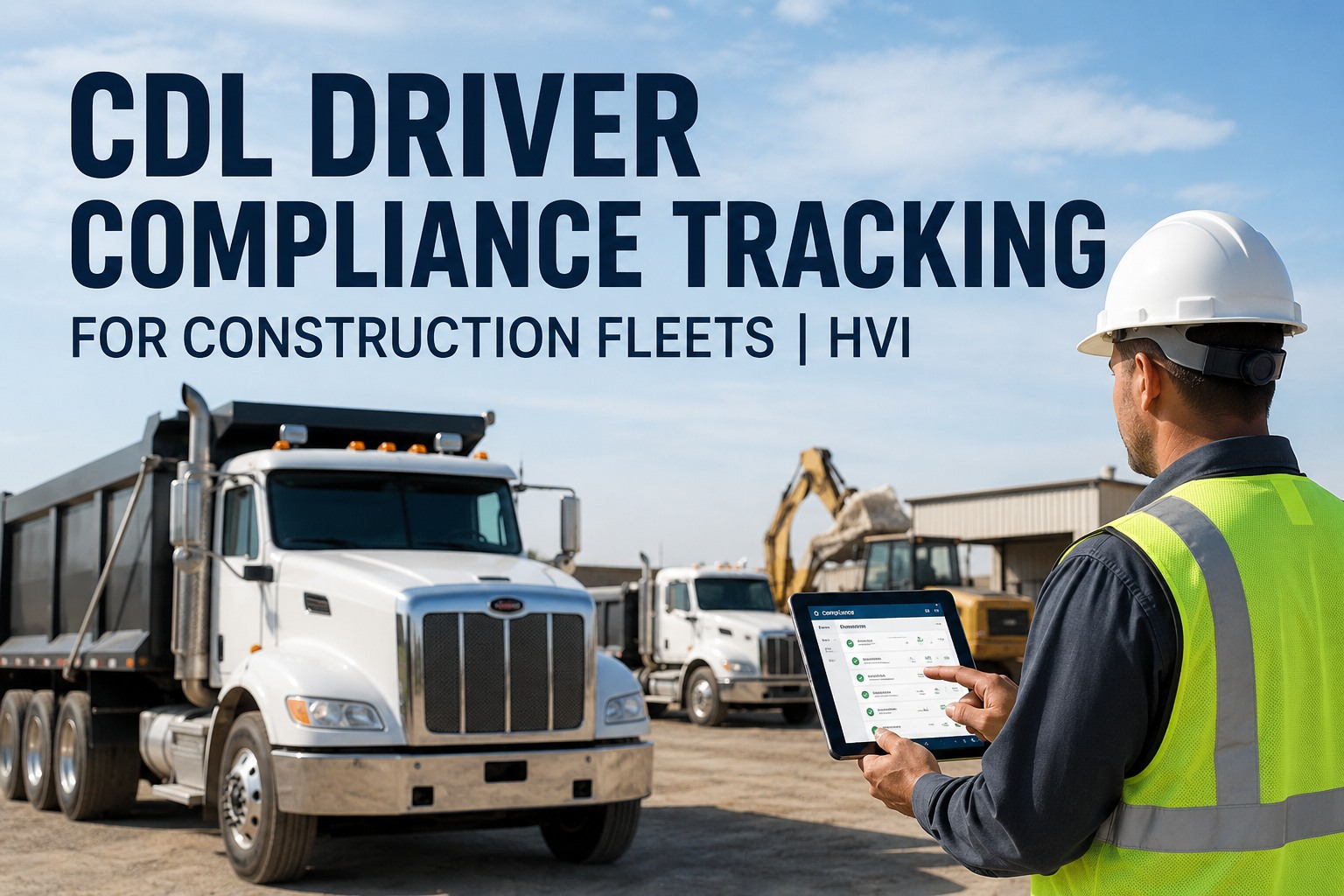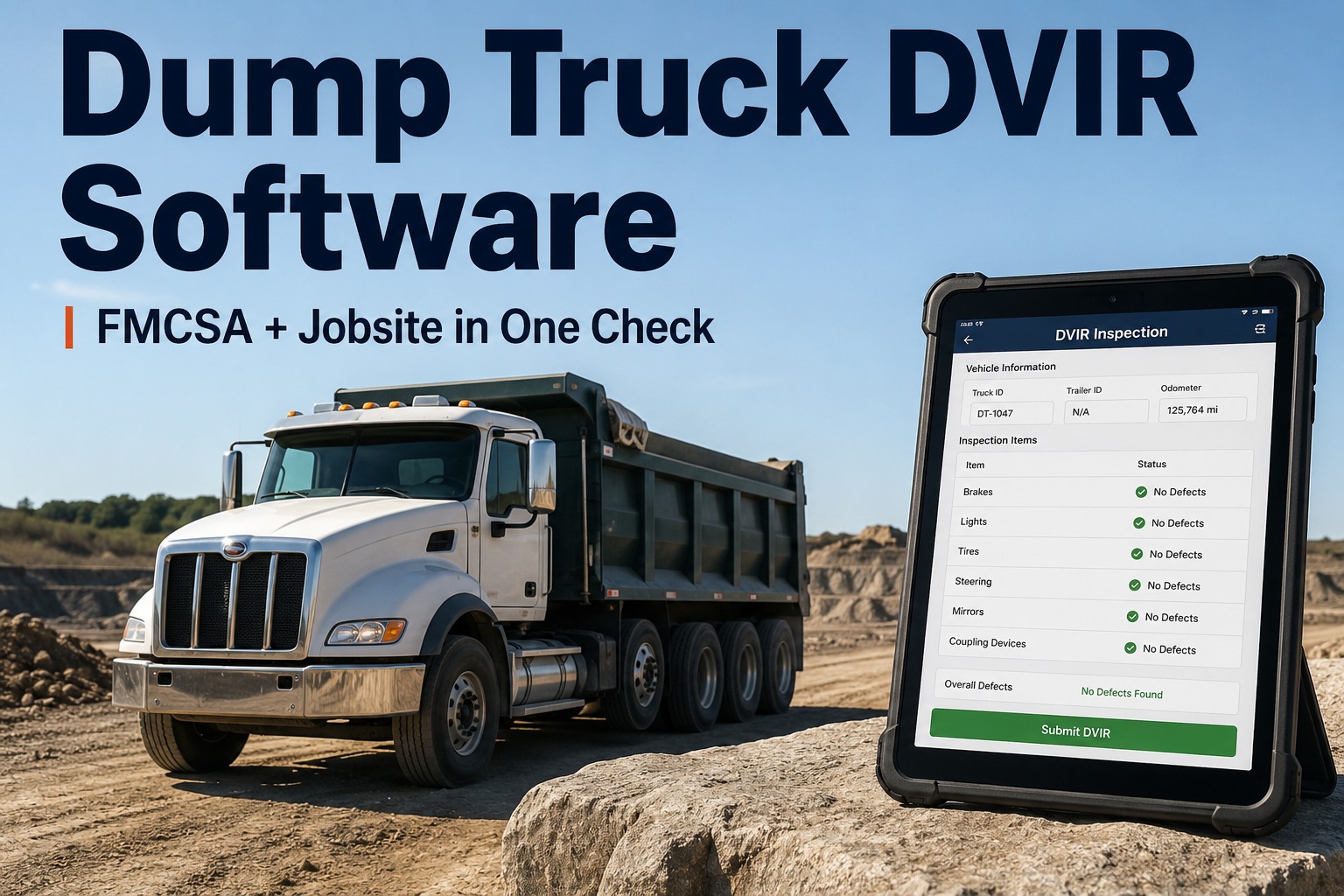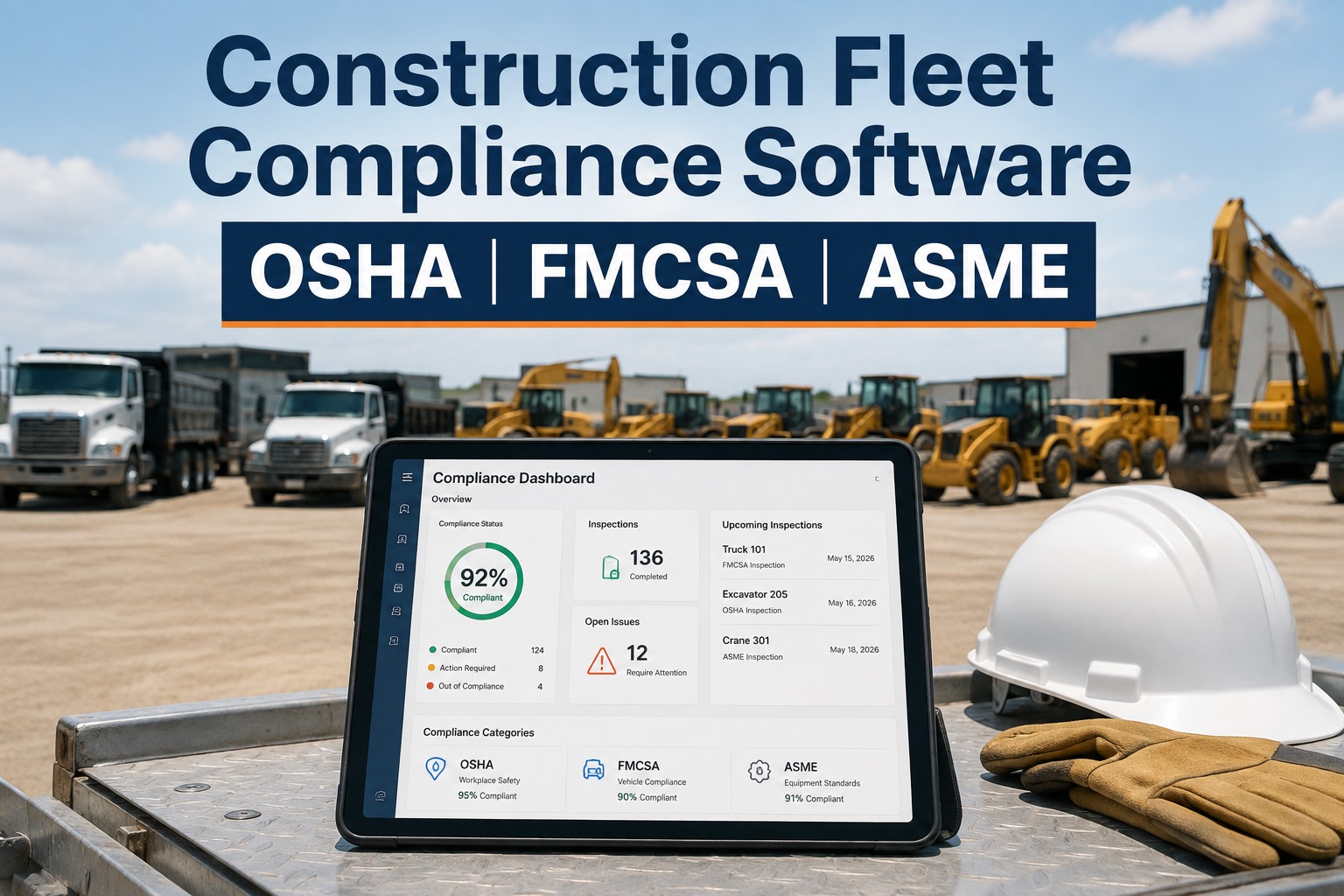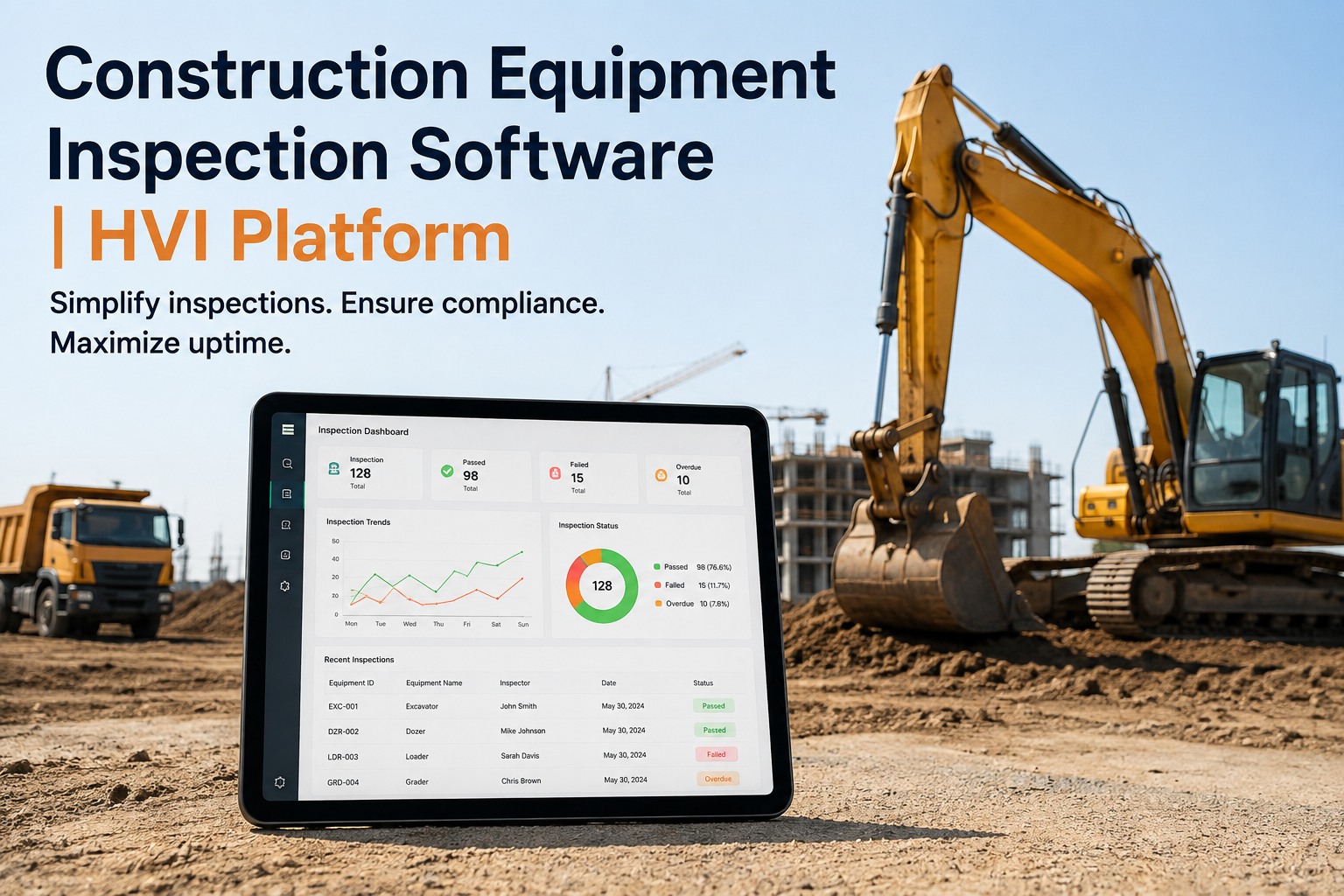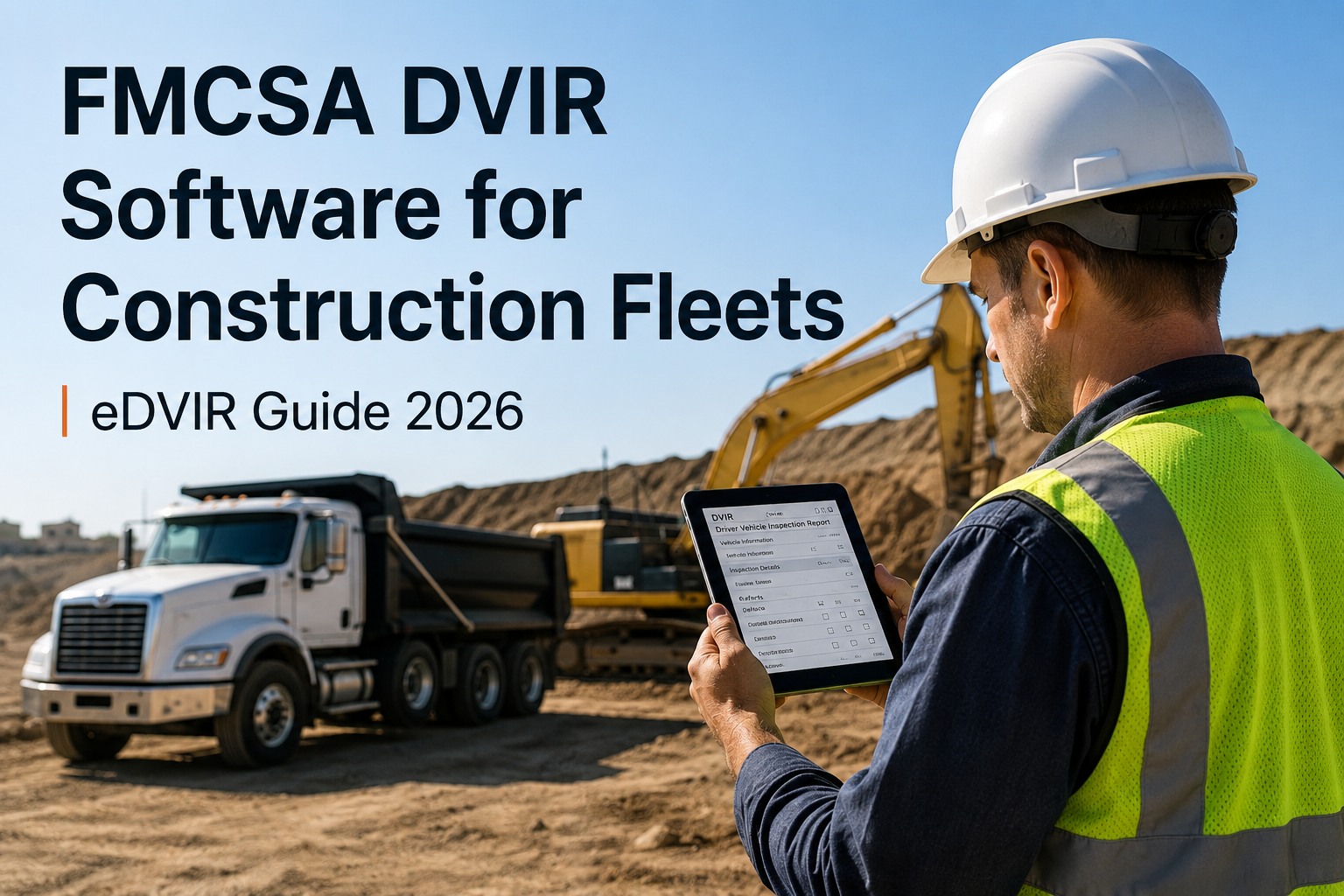
Construction fleets carry a compliance problem trucking-only fleets don't have: on-road CMVs under FMCSA (dump trucks, water trucks, semi-tractors) alongside off-road equipment (excavators, loaders, dozers) that doesn't fall under DVIR but still needs inspection for OSHA, insurance, and safety programs. Most fleets run two separate systems — and end up with disconnected records that don't line up in an audit. This 2026 FMCSA DVIR software guide walks the digital requirements after March 2026's eDVIR rule and the unified-audit-trail approach. Book a demo .
The Mixed Construction Fleet Problem — Two Regulatory Worlds, One Audit Trail
On-road CMVs answer to FMCSA. Off-road equipment answers to OSHA and insurance. Both need inspection discipline that survives an audit.
Construction fleets sit at the intersection of two distinct compliance regimes. On-road commercial motor vehicles (Class 8 dump trucks, water tankers, semi-tractors hauling equipment, service trucks) are subject to the full FMCSA safety regulation set including 49 CFR Part 396 inspection, repair, and maintenance rules. Off-road equipment (excavators, loaders, dozers, backhoes, skid steers, compactors) operates under OSHA construction safety standards (29 CFR 1926) and internal safety programs, but not FMCSA DVIR. In practice, both need documented inspections — and running them in separate systems creates the exact audit weakness that FMCSA compliance reviews and OSHA inspections find first: fragmented records that can't be produced together.
What 49 CFR 396.11 and 396.13 actually requireThe DVIR chain from post-trip discovery to next-day pre-trip review
Understanding the DVIR requirement means understanding it as a chain, not a form. The DVIR document itself is one piece; the full requirement is post-trip inspection with defect documentation, repair certification when required, and pre-trip review by the next driver — three moments captured in three signatures on a durable record. Book a demo to see the 3-signature chain enforced digitally in HVI
49 CFR 396.11 — Post-trip DVIR
Driver must complete a written report at the end of each day's work covering the 11 inspection categories, listing all defects that would affect safe operation or that could result in mechanical breakdown. Report must be signed by the driver and available for review.
Property vs passenger reporting
Since 2014, property-carrying CMVs require a DVIR only when defects are found — no-defect days do not require a DVIR by regulation, though many carriers require them as internal policy. Passenger-carrying CMVs still require a DVIR every day regardless of defects.
Repair certification
When a defect is reported, the motor carrier or its agent must certify on the DVIR that the defect has been repaired or that repair is unnecessary before the vehicle is operated again. The certification is the second signature in the chain.
49 CFR 396.13 — Pre-trip review
Before operating the vehicle, the driver must review the previous DVIR, be satisfied that the vehicle is in safe operating condition, and sign to acknowledge review of the last driver's report. This is the third signature in the chain.
49 CFR 390.32 — Electronic records
Records required under Parts 390–399 may be created and maintained in electronic form since 2018. FMCSA's February 19, 2026 final rule added explicit eDVIR authorization to 396.11 and 396.13 including electronic signatures with timestamps for all three signature chain parties.
Retention — 396.11(a)(4)
DVIRs must be retained for at least 3 months (90 days) from the date the report was prepared, including the original DVIR, repair certification, and next driver's review acknowledgment. Digital storage typically enables longer retention at negligible cost for better audit and litigation defense.
The periodic inspection under 49 CFR 396.17 — separate from DVIRAnnual inspection meeting Appendix A minimums by qualified inspector under 396.19
DVIR and periodic inspection are frequently conflated but are entirely separate requirements. DVIR is a driver-completed daily post-trip report. Periodic inspection is an annual (or more frequent) formal inspection meeting the minimum standards in Appendix A of Part 396, performed by a qualified inspector meeting the credentialing requirements of 49 CFR 396.19. Both apply to every CMV subject to FMCSA; neither substitutes for the other.
Annual inspection required
Qualified inspector per 396.19
Inspection report retention
DVIR does not satisfy periodic
Why construction fleets specifically benefit from unified inspectionThe mixed-fleet operational realities that drive the software case
Construction fleets have operational patterns that make disconnected inspection systems particularly painful. Same crews often operate both on-road CMVs and off-road equipment across a shift — the driver hauling a lowboy to the site becomes the loader operator at the site. Same shop technicians service both equipment classes. Same maintenance budget covers both. Splitting inspections into two systems creates duplication where the operation itself is integrated. Start a free trial to configure per-asset-class templates in one platform.
Single asset registry
Every vehicle and piece of equipment in one asset list, tagged by class and regulation type. Fleet manager sees the full fleet, not two lists that don't reconcile. New equipment adds cleanly; retired equipment archives properly.
Class-appropriate inspection templates
CMV templates cover the 11 FMCSA inspection categories per 396.11 and 392.7. Off-road equipment templates cover OSHA-relevant items and manufacturer-recommended checks. Both templates configurable to the specific equipment class and operating environment.
Unified defect routing
Defects captured on any asset route to the same shop through the same work-order queue with the same parts and labor tracking. Technicians work from one defect list, not two systems they have to reconcile. Parts consumption tracks per asset regardless of class.
Cross-class operator accountability
Same operator inspects a dump truck at shift start (FMCSA pre-trip) and a loader at the jobsite (OSHA pre-use) — both under the same operator account with the same signature and same photo evidence workflow. Personal accountability crosses regulatory boundaries.
Consolidated audit response
FMCSA compliance review requests DVIR chain records for CMVs. OSHA inspection or insurance audit requests equipment inspection records. Both come out of the same platform with the same export format — instead of pulling from two systems in different formats under time pressure.
Trend visibility across the mixed fleet
Recurring defects, PM compliance rates, and consumables consumption visible across the whole fleet in one dashboard. Patterns show up (e.g., specific defect types clustering on specific model years) that a split-system fleet couldn't see because the data was never in the same place.
From a construction fleet safety manager on the mixed-fleet unification shift
We had 32 CMVs on one inspection app for FMCSA DVIRs and about 90 pieces of construction equipment on paper inspection sheets that got filed in the shop office. When our insurance carrier asked for equipment inspection records after an injury claim, we spent almost a week pulling and reconciling paper sheets from three yards. When FMCSA did a focused compliance review six months later, we spent almost a week the other direction — pulling DVIRs from the app and matching them to work orders in the shop system.
We moved everything to one platform — CMVs and equipment, digital DVIR chain with the 3 signatures, equipment pre-use inspections on the same templates, one audit-export button. Next insurance audit was 15 minutes. Next FMCSA review was clean, no citations. The compliance benefit was real but the operational benefit was bigger — our shop stopped reconciling two systems and started actually fixing things.
Frequently asked questions
Are electronic DVIRs legal under FMCSA?
Yes, and the legal position is now explicit. Electronic records were permissible under 49 CFR 390.32 since 2018, but paper-centric language in 49 CFR 396.11 and 396.13 created interpretive ambiguity that different auditors treated differently. FMCSA's final rule (Docket FMCSA-2025-0115) published February 19, 2026 and effective March 23, 2026 added explicit electronic DVIR authorization directly to 396.11 and 396.13, removing all remaining ambiguity. Digital signatures, mobile submission, and cloud storage are unambiguously compliant. All three signatures in the DVIR chain (driver, mechanic certifying repair, next driver reviewing) can be captured electronically with timestamps. E-SIGN Act-compliant electronic signatures are accepted. Paper DVIRs remain legal, but FMCSA actively encourages the transition to electronic methods, and the rulemaking was supported by industry associations including the American Trucking Associations, OOIDA, and NTTC. Digital records also produce better audit trails and litigation defense than paper alternatives at effectively negligible additional storage cost.
What's the difference between property-carrying and passenger-carrying DVIR requirements?
Property-carrying CMVs (which includes most construction fleet vehicles — dump trucks, water trucks, semi-tractors, service trucks) require a DVIR only when defects are found. Since a 2014 FMCSA rulemaking, no-defect DVIRs are not required for property-carrying CMVs by regulation, though many carriers require them as internal policy because a positive no-defect record produces better audit and litigation defense. The 2026 eDVIR final rule did not reinstate mandatory no-defect DVIRs for property-carrying CMVs, despite requests that eDVIRs make no-defect reporting faster and easier. Passenger-carrying CMVs (buses, motor coaches, and other passenger-carrying commercial vehicles) still require a DVIR every day regardless of whether defects are found, per 49 CFR 396.11 as applied to passenger operations. Construction fleets typically operate property-carrying CMVs almost exclusively, so no-defect DVIRs are policy rather than regulation — but the policy choice matters for audit posture and internal safety culture.
How long do DVIRs need to be retained?
DVIRs must be retained for at least 3 months (90 days) from the date the report was prepared, per 49 CFR 396.11(a)(4). The retention requirement includes the original DVIR listing defects, the repair certification signed by the mechanic or motor carrier's agent, and the next driver's acknowledgment of review under 49 CFR 396.13. All three components of the signature chain must be preserved together. Best practice for many fleets is 1 year or longer retention — digital storage typically makes extended retention effectively cost-free and provides significantly better audit and litigation defense than the 90-day regulatory minimum. Separately, periodic inspection records under 49 CFR 396.17 must be retained for at least 14 months at the motor carrier's principal place of business or where the vehicle is housed, with a copy immediately accessible. These are separate retention requirements for separate records — a DVIR is not a substitute for a periodic inspection report and vice versa.
Does HVI support DVIR software for construction fleets?
Yes. HVI supports configurable digital inspection templates for on-road CMVs (dump trucks, semi-tractors, water trucks, service trucks, straight trucks) and trailers meeting 49 CFR 396.11 and 396.13 requirements with electronic signatures for the 3-signature chain per the March 2026 eDVIR final rule and 49 CFR 390.32 electronic records, plus configurable pre-use inspection templates for off-road construction equipment (excavators, loaders, dozers, backhoes, skid steers, compactors, graders) under the same platform. Features include digital defect reporting with severity-based routing, photo documentation with GPS and timestamp on flagged items, maintenance work order generation from defects, storage of qualified periodic inspection records under 49 CFR 396.17, and unified audit trail across the mixed fleet with per-asset inspection and maintenance history searchable together. HVI is not a qualified periodic inspector service under 49 CFR 396.19, a state fleet safety certification authority, an FMCSA compliance-audit substitute, or a roadside-inspection immunity provider. Qualified periodic inspection remains with credentialed inspectors; compliance-review defense remains with the fleet's safety program using HVI's records as evidence.
Is DVIR the same as the annual periodic inspection?
No — DVIR and periodic inspection are entirely separate requirements. DVIR under 49 CFR 396.11 is a driver-completed daily post-trip report of defects, with pre-trip review by the next driver under 49 CFR 396.13. Periodic inspection under 49 CFR 396.17 is an annual (or more frequent, per operator or state requirement) formal inspection of the vehicle meeting the minimum standards in Appendix A of Part 396. The periodic inspection covers brakes, steering, coupling devices, exhaust, lights, tires, wheels, suspension, frame, and other regulated components. The periodic inspection must be performed by a qualified inspector meeting the credentialing requirements of 49 CFR 396.19 — typically state or federal training and certification, ASE brake certification, or documented equivalent experience. Both requirements apply to every CMV subject to FMCSA; neither substitutes for the other. Digital DVIR platforms can capture the DVIR chain and store periodic inspection records when uploaded, but do not perform the qualified periodic inspection itself — that remains with credentialed personnel and appropriately equipped inspection facilities.
Run FMCSA DVIRs and construction equipment inspections in one platform, one audit export
HVI supports configurable inspection templates for on-road CMVs (dump trucks, semi-tractors, water trucks, service trucks, trailers) meeting 49 CFR 396.11 and 396.13 with electronic signatures per the March 2026 eDVIR final rule, plus off-road construction equipment pre-use inspections on the same platform, digital defect reporting with photo documentation, maintenance work orders, and unified audit trail across the mixed fleet. Qualified periodic inspection under 49 CFR 396.19 remains with credentialed inspectors. HVI is the digital inspection and maintenance-workflow layer that consolidates the record.
No credit card · No hardware · Mixed-fleet templates ready on day one