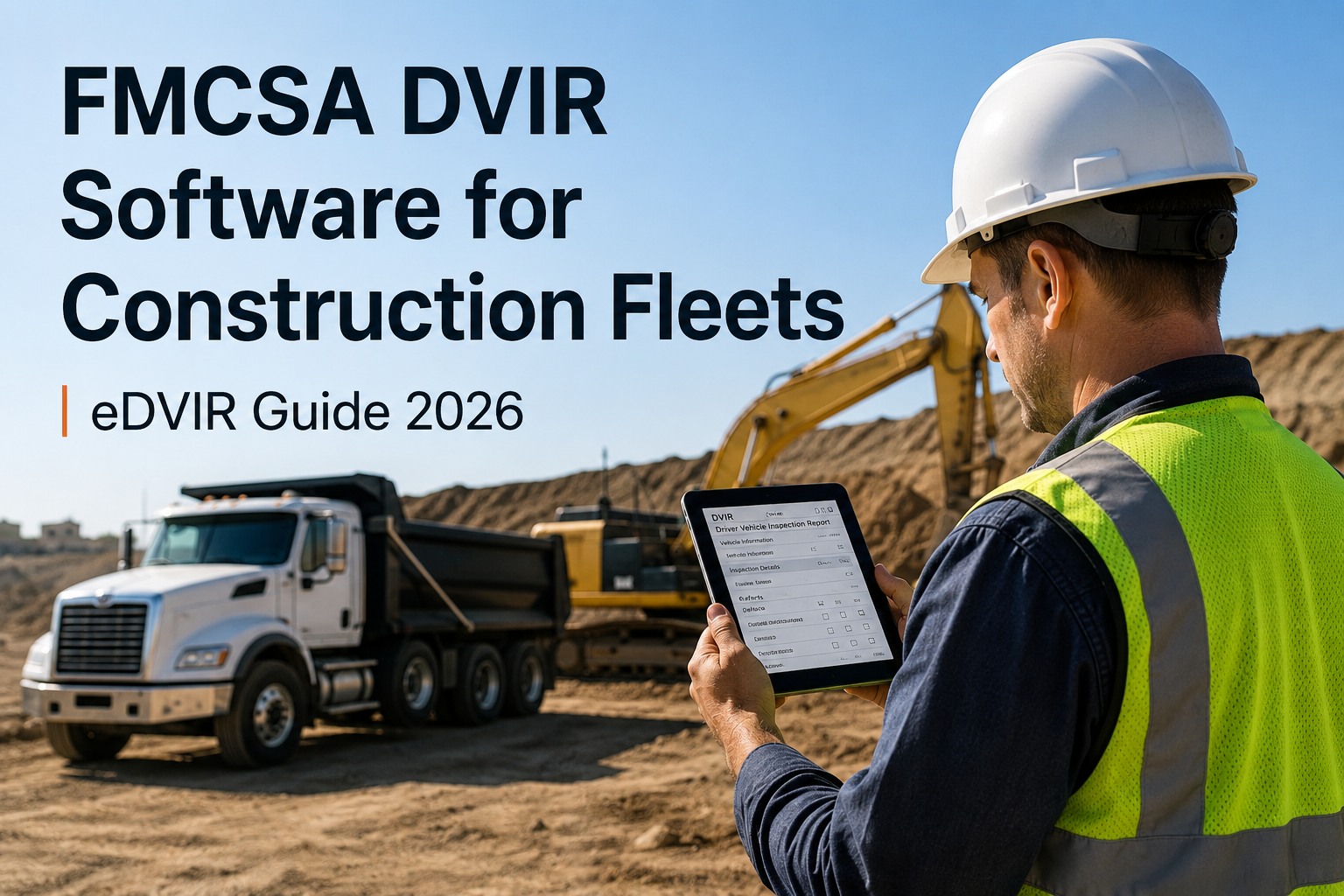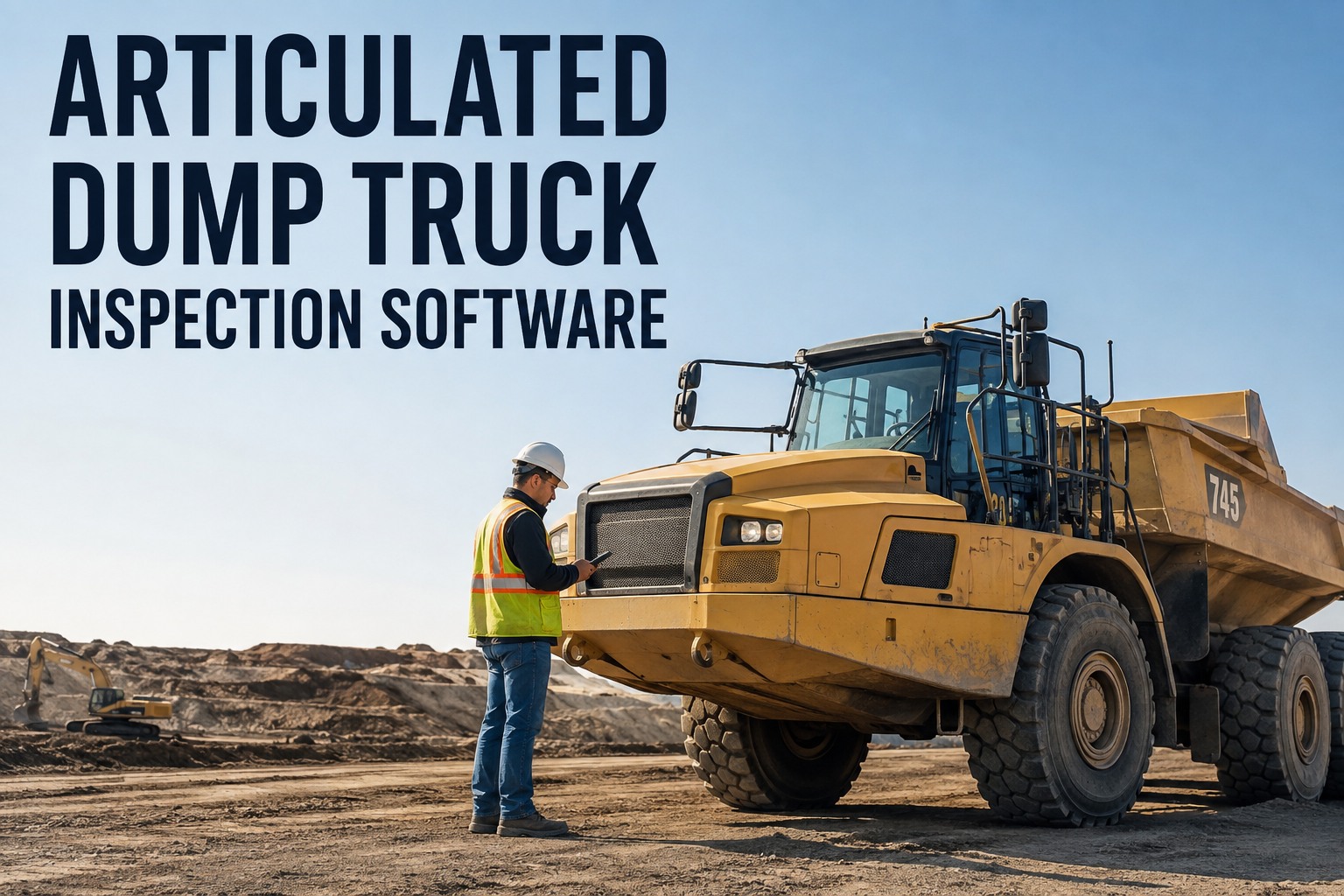
Your driver finishes a pre-trip at 6:40 in the yard, then the site foreman asks for the OSHA equipment check before the first load — same truck, same shift, two clipboards. That double inspection is the daily reality behind dump truck DVIR compliance: construction dump trucks answer to FMCSA on the road and OSHA on the jobsite, and most contractors run two separate paper processes to cover it. The result is duplicated walk-arounds, missed signatures, and records scattered between the glovebox and the site trailer. A single combined inspection — FMCSA DVIR items plus OSHA pre-shift items in one pass, with the full signature chain — closes that gap, and you can see it running on your own trucks in a 30-minute demo before your next shift starts.
FMCSA on the road. OSHA on site. One check.
The dump truck is the only asset your driver inspects twice a day — unless you combine it
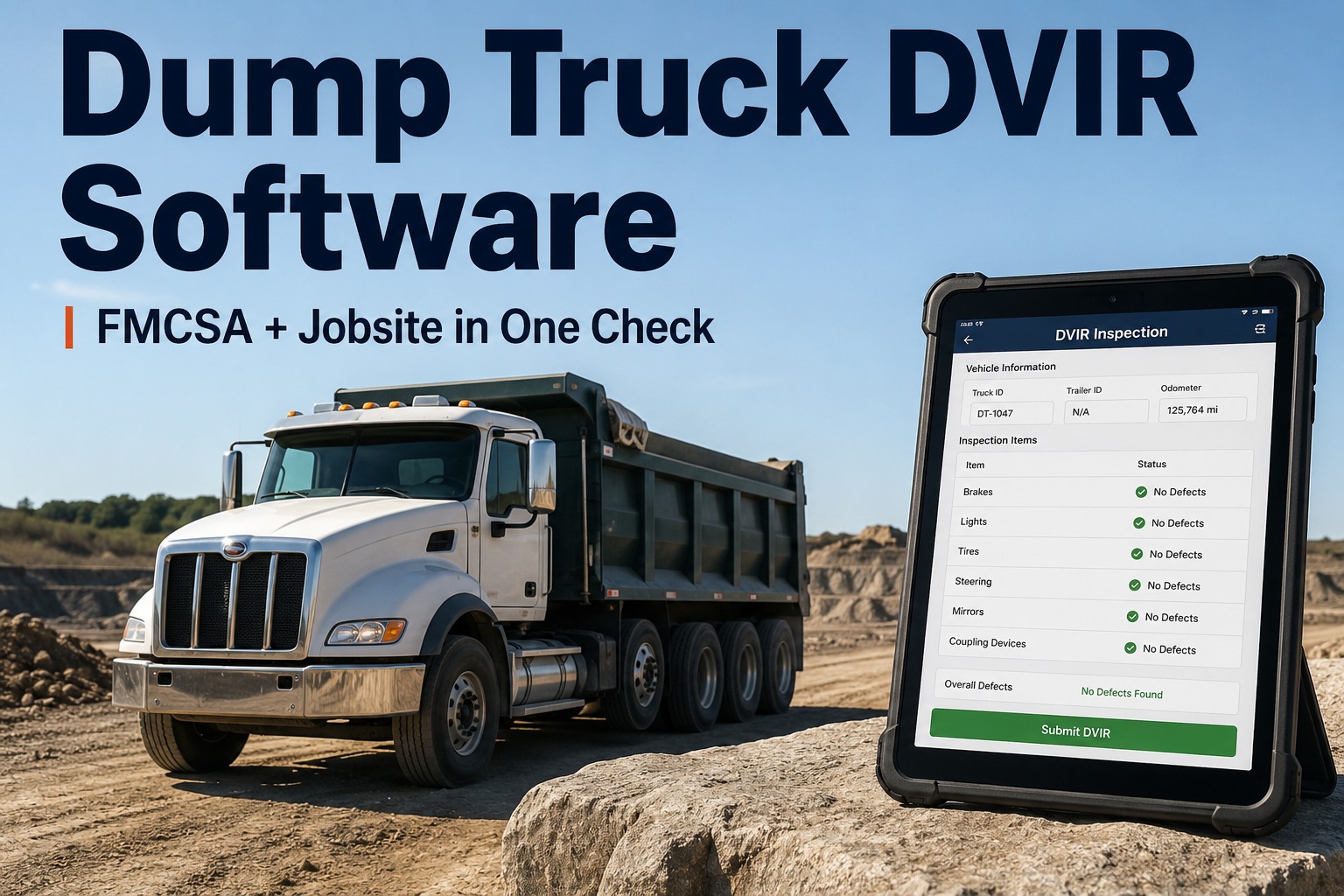
HVI merges the FMCSA pre-trip DVIR and the OSHA jobsite equipment check into a single mobile inspection: 37+ items for tractors, 28+ for trailers, hoist and hydraulics included, with the 3-signature chain built in.
- Combined FMCSA DVIR + OSHA pre-shift template — one walk-around, both regulators satisfied
- Driver, mechanic and next-driver signatures chained digitally on every defect
- DOT annual inspection tracked per FMCSA Appendix A with qualified-inspector records
- eDVIR authorised as of March 2026 — roadside-legal electronic reports
What the double standard costs you
Two regulators, one truck, and a paper trail that fails at the worst moment
2
Regulators per shift
FMCSA governs the truck on public roads; OSHA governs it the moment it crosses the site gate. One missed check exposes you to both.
3
Signatures per defect
Driver reports it, mechanic certifies the repair, next driver confirms it. Break any link on paper and the DVIR is legally incomplete.
37+
Items per tractor template
HVI truck templates cover 37+ points on tractors and 28+ on trailers — brakes, coupling, hoist cylinder, body pins, hydraulics and more.
20 min
Typical paper double-check
Two paper walk-arounds per truck per day adds up to hours of paid idling per week across a 10-truck spread — before anyone hauls a load.
The two-rule problem
What FMCSA and OSHA each demand from a construction dump truck inspection
The confusion isn't whether to inspect — it's that each regulator cares about different parts of the same machine. FMCSA wants the truck safe on the highway; OSHA wants the dump body, hoist and hydraulics safe around workers on foot.
FMCSA — the road layer
- Pre-trip and post-trip DVIR for every CMV in interstate operation, each day the vehicle is driven.
- A compliant report lists unit ID, date, defects found (or "none"), and the driver's signature.
- Defects trigger the 3-signature chain: reporting driver, repairing mechanic, and the next driver confirming the fix.
- Air brakes, steering, lights, tires, wheels, mirrors, coupling devices and emergency equipment are core checklist items.
- Records must be retained and producible at roadside and during audits.
OSHA — the jobsite layer
- Pre-shift equipment checks on machinery used around workers — the dump body is plant, not just a vehicle.
- Body pins and props: a raised bed without a locked body prop is a fatal-crush hazard during any under-body work.
- Hoist cylinder and hydraulic system: hose chafing, weeping seals and slow drift-down are cited failure points.
- Tailgate latches, bed vibration damage, backup alarms and site lighting fall under site safety rules.
- Site supervisors and clients increasingly demand proof of the check before the truck tips its first load.
HVI's combined template puts both lists on one screen, so the driver walks the truck once and both files are written. If you want to see how the items are sequenced for a tri-axle, book a walkthrough with your own fleet mix and we'll load your truck types.
The signature chain
How the 3-signature DVIR chain actually works — and where paper breaks it
One defect on a dump truck DVIR sets off a legal relay. On paper, the baton gets dropped in the shop office. In HVI, each hand-off is automatic, timestamped and impossible to skip.
Driver reports
Post-trip, the driver flags a slow air leak at the gladhand and a weeping hoist hose, with photos from the phone. The DVIR is signed and filed before they clock out — no trip back to the office.
Paper failure: the DVIR sits in the glovebox until Friday.
Mechanic certifies
The defect auto-opens a work order. The mechanic replaces the hose, records the part from inventory, and signs the repair certification on the same record — parts cost and labour hours attached.
Paper failure: the repair happens but nobody signs the DVIR, so it reads "open defect" at audit.
Next driver confirms
Whoever takes the truck next sees the repair note on their pre-trip screen and signs the confirmation. The chain closes. If the truck moves without that signature, the dashboard flags it red.
Paper failure: a different driver takes the truck at 5 a.m. and never sees the form.
This chain is the first thing a DOT auditor traces when they pull a unit file. With HVI you can pull the full signed history for any truck in seconds — or start logging inspections free and build that history from tomorrow's pre-trip.
Once a year, no exceptions
DOT annual inspection under Appendix A: the qualified-inspector rule most shops get wrong
Every dump truck needs a periodic inspection at least once every 12 months against the criteria in FMCSA's Appendix A — and the person signing it must meet the qualified-inspector definition. "Our mechanic looked at it" is not a defence if that mechanic can't show qualification evidence.
| Requirement | What it means in the yard | How HVI records it |
|---|---|---|
| 12-month cycle per unit | Each truck and trailer carries its own anniversary date — easy to lose across a mixed fleet of company and leased tri-axles. | Per-asset due dates with countdown alerts at 30, 14 and 7 days out. |
| Appendix A item coverage | Brake system, steering, suspension, frame, wheels, exhaust, lighting and more — the checklist is defined, not optional. | DOT annual template mirrors Appendix A line by line; nothing can be skipped silently. |
| Qualified inspector | The inspector must show training or experience evidence — a state or federal program, or verifiable work history. | Inspector credentials stored on the user profile and attached to every annual they sign. |
| Proof carried on the vehicle | Roadside officers can ask for evidence of a current annual — a sticker or a report copy. | Digital record retrievable on any phone at the scale house; printable for the cab. |
| Record retention | Reports must be kept and producible during a compliance review, alongside the DVIR history. | Annuals, DVIRs and work orders live in one unit file — one export for the auditor. |
If your annuals currently live in a filing cabinet keyed to one person's memory, a short demo will show you the per-unit countdown view that replaces it.
Book a demo and see the combined FMCSA + OSHA inspection on a real dump truck template
Thirty minutes, your truck types, your questions. We'll show the 3-signature chain, the Appendix A annual and the jobsite checklist running on one screen.
The items that actually hurt people
Hoist cylinder, body pins and hydraulics: the dump-body checks that can't wait for the shop
Brake defects get trucks put out of service at roadside. Hoist and body defects hurt people on site — and they rarely show up on a generic truck checklist. These are the items HVI's dump-body section forces to the surface every pre-shift.
Hoist cylinder and hoses
Look for weeping seals, scored rods, chafed lines at pivot points and drift-down under load. A hose that lets go at full raise drops the body with tons of force — photo capture in the app turns "it looked fine" into evidence either way.
Body pins and safety props
Anyone working under a raised bed needs a locked mechanical prop — hydraulics alone are never enough. The checklist makes prop condition and pin engagement a signed item, not an assumption, before any under-body task starts.
Tailgate latches and hinges
A latch that pops under load spreads rock across a live lane. Drivers check both latches, hinge wear and the spreader chain as a single tap-through item — defects route straight to a work order with the photo attached.
Backup alarms and site lighting
On a congested pour or a night shift, the alarm and beacons are the only things between a reversing tri-axle and a ground worker. These sit in the OSHA block of the combined template, checked before the truck enters the site.
How HVI helps
One platform for the DVIR, the jobsite check and everything the defect triggers next
Combined inspection templates
Truck templates with 37+ items for tractors and 28+ for trailers, plus a dump-body block covering hoist, pins, hydraulics and tailgate. One walk-around satisfies FMCSA and OSHA — cutting the double inspection to a single pass.
Defect-to-work-order automation
A flagged item opens a work order instantly, pulls the part from inventory and tracks labour. The mechanic's certification and the next driver's confirmation close the 3-signature chain on the same record — no paper relay, no open-defect surprises at audit.
Appendix A annual tracking
Every unit carries its own DOT annual due date with escalating alerts, and the inspection template follows Appendix A line by line. Inspector qualifications attach to the signature, so the qualified-inspector rule is provable, not asserted.
One dashboard for road and site
DVIRs and equipment inspections land in the same dashboard as PM schedules, work orders and compliance rate per unit. You see which trucks are clear to roll and which are holding an open defect — across the whole spread, not one clipboard at a time.
HVI runs on any phone or tablet already in the cab, and eDVIR is authorised as of March 2026, so the electronic report stands at roadside. Most crews are completing their first combined inspection the same day — you can create a free account and load your first truck template in minutes.
Key takeaways
Dump truck DVIR compliance, boiled down to what changes on Monday
-
Stop running two inspections. A combined FMCSA + OSHA template means one walk-around per shift, and both regulators' records written at once.
-
Protect the signature chain. Driver, mechanic, next driver — three signatures per defect, digitally enforced, or the DVIR is incomplete when an auditor reads it.
-
Treat the annual as a per-unit countdown. Appendix A coverage plus a provably qualified inspector, tracked by due date, not by memory.
-
Give the dump body its own checklist block. Hoist cylinder, body pins, hydraulics and tailgate are the items that hurt people — and the ones generic truck forms skip.
None of this needs new hardware or a systems project. It needs the paper binders and group-chat photos replaced by one app your drivers already know how to hold. If you'd rather see it than read about it, grab a demo slot and bring your toughest compliance question.
The thing that used to keep me honest was a wall calendar and a gut feeling. We run eleven tri-axles across four sites, and I could never tell you on a Tuesday which trucks had an open defect chain. Now I check one screen over coffee — if a unit's red, it doesn't leave the yard, and my foremen stopped arguing because the photos are right there. The number I watch is open defects older than 48 hours. It used to be nine or ten. It's been zero for months.
Marcus Delaney — Fleet & Safety Manager, regional site-work and aggregates contractor
Common questions
Dump truck DVIR and inspection questions, answered straight
Is a DVIR required for construction dump trucks that mostly work on site?
If the truck operates on public roads as a commercial motor vehicle, FMCSA's DVIR rules apply to every day it's driven — the jobsite portion doesn't exempt it. On top of that, OSHA expects pre-shift equipment checks once it's working around personnel. That's exactly why HVI combines both into one inspection: the driver completes a single walk-around and both obligations are documented, timestamped and signed.
What must a compliant dump truck DVIR actually contain?
At minimum: vehicle identification, the date, a list of defects or deficiencies found (or a statement that none were found), and the driver's signature. When defects are reported, the record isn't complete until the repair is certified and the next driver confirms it — the 3-signature chain. HVI enforces all of this in the app, so a report can't be "finished" with the chain still open.
Who is allowed to perform the DOT annual inspection?
A "qualified inspector" under FMCSA rules — someone who can show evidence of training or experience, such as completion of a state or federal inspector program or verifiable relevant work history. The inspection itself must cover the Appendix A criteria. In HVI, inspector credentials attach to the signature on every annual, and you can see how qualification records sit on the inspection during a demo.
Can an electronic DVIR replace the paper form at a roadside stop?
Yes — eDVIR is authorised as of March 2026, and officers accept electronic records that are retrievable on demand. The practical win is bigger than roadside: electronic reports can't be lost, coffee-stained or left unsigned, and every entry is timestamped with photos. You can sign up free and run your first eDVIR on one truck to prove it to yourself.
How does HVI handle the jobsite items a normal truck DVIR misses?
The dump-body block of the template covers hoist cylinder and hydraulics, body pins and safety props, tailgate latches, and backup alarms — the OSHA-layer items. Any defect opens a work order with the photo attached, and both the DVIR and the equipment inspection land in the same dashboard, so road compliance and site compliance are visible in one place instead of two filing systems.
One inspection. Two regulators. Zero paper chains.
Put the combined FMCSA + OSHA check, the 3-signature chain and the Appendix A annual on every dump truck you run — starting with tomorrow's pre-trip.
Free to start — Works on any phone — No card needed