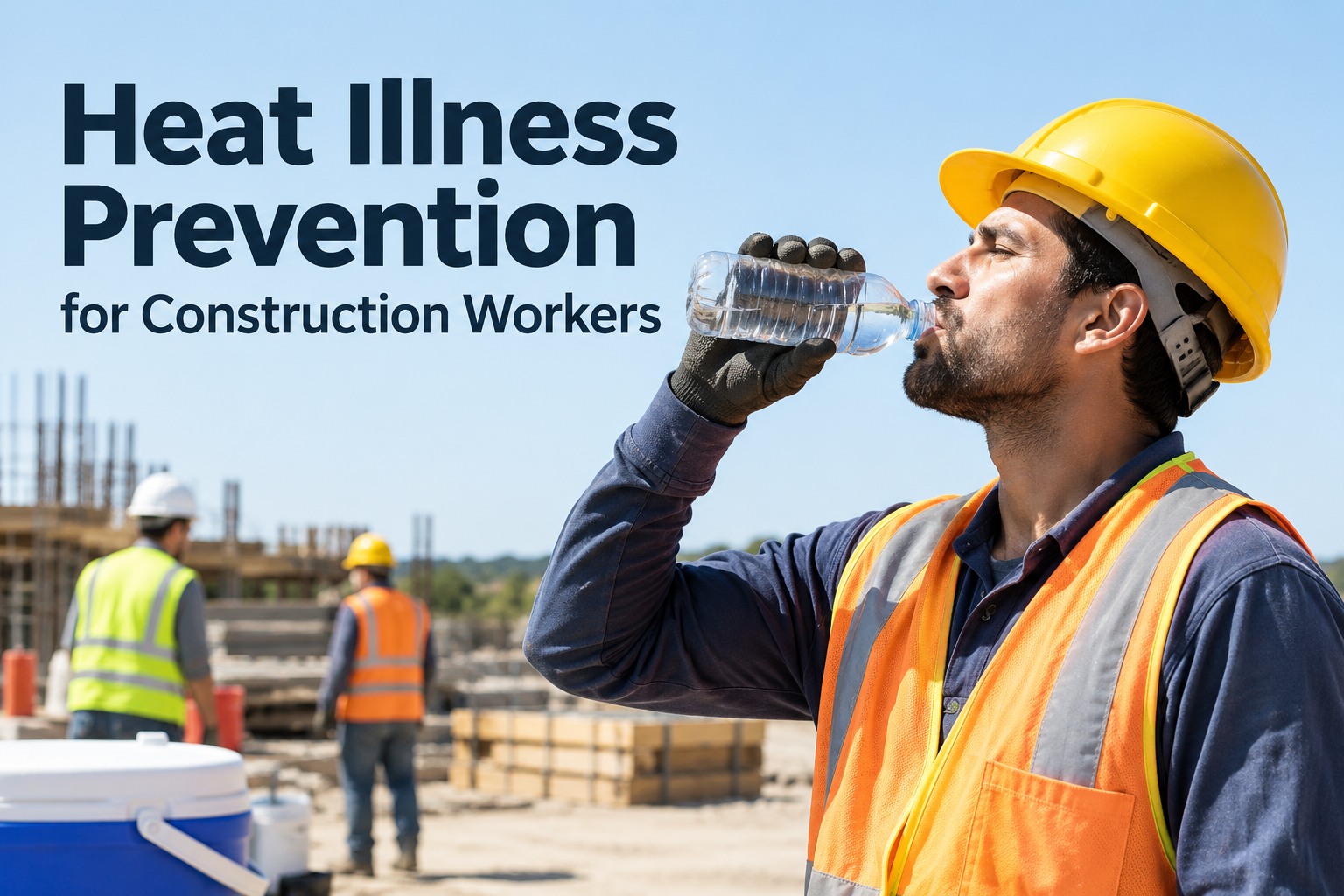
It is 2:30 PM on an asphalt paving project, the heat index has crossed 103°F (39.4°C), and a roller operator begins slurring their words over the radio. In heavy civil work, environmental heat is not just an endurance test; it is an immediate physical risk where confusion and delayed reaction times turn multi-ton machinery fatal. Managing heat illness construction risks requires systematic controls that do not rely on an individual worker's willingness to admit they're struggling. Book a demo to see how digital safety management automates jobsite thermal audits
Heat Illness Prevention for Construction Workers
Water, rest, shade, and acclimatization. When temperatures climb, paper checklists in a job trailer fail to protect field crews. Learn how to operationalize your heat illness prevention plan and keep projects fully compliant under federal and state enforcement.
The Realities of Heat Stress Construction Workers Face
Construction environments amplify ambient thermal loads through direct radiant heat off structural steel, asphalt surfaces,and heavy equipment cabs. According to OSHA inspection data, nearly 75% of heat-related occupational fatalities occur within the first week on the job, with over 50% occurring on the worker's very first day. The physical exertion demanded by trade work makes continuous physiological monitoring essential rather than optional.
Relying on crews to self-report heat exhaustion rarely works because peer pressure and production milestones incentivize working past physical warning signs. Safety directors must replace unverified safety talks with structured, documented daily protocols. Sign up to deploy digital safety checklists directly to your supervisors' mobile devices
Core Elements of a Construction Heat Illness Prevention Plan
A defensible compliance plan requires verifiable implementation across every shift. Whether managing a concrete pour or steel erection, safety programs must operationalize these four environmental controls every morning.
1. Potable Water Access
Provide at least 1 quart (32 oz) of fresh, cold drinking water per worker per hour. Water stations must be placed immediately adjacent to the work area, clearly labeled, and continuously replenished before ambient temperatures peak.
2. Preventative Rest & Shade
Provide shaded recovery structures or air-conditioned break trailers whenever temperatures exceed 80°F (26.7°C). Shade must be large enough to accommodate all crew members on break without contact with direct sunlight.
3. Acclimatization Scheduling
Follow the 20% rule for new or returning hires: limit exposure to 20% intensity on Day 1, increasing by 20% each consecutive day. Full acclimatization to heavy labor in heat requires 7 to 14 days of progressive conditioning.
4. Buddy Systems & Signs
Mandate peer observation for heat cramps, dizziness, nausea, and disorientation. Ensure rapid emergency communications are tested in dead zones, confirming dispatch can pinpoint the jobsite gate and coordinates instantly.
Automate compliance verification before supervisors leave the safety trailer. Book a demo to configure mandatory heat safety morning checklists
Regulatory Comparison: General Duty vs. Systematic Compliance
Under the OSHA General Duty Clause (Section 5(a)(1)) and specific state standards (such as Cal/OSHA Title 8 Section 3395 and Washington L&I), employers are legally obligated to protect crews from outdoor heat hazards. A lack of digital records leaves companies vulnerable during an OSHA inspection or an incident investigation.
Paper-Based Safety Management
- Water checks recorded on clipboard forms that get ruined or misplaced.
- Acclimatization tracking left to informal, unrecorded verbal check-ins.
- No timestamped evidence of mandatory shade deployment during audits.
- Incident reporting delayed until the end of the shift or work week.
HVI Digital Compliance Framework
- Signed PDF inspection reports capturing water and shade checks with photos[cite: 1].
- Logged daily operator reporting tracking worker hours and equipment status[cite: 1].
- Automatic alerts and fast defect-routing to supply teams for missing PPE[cite: 1].
- Centralized digital storage to eliminate paperwork and audit preparation delays[cite: 1].
Ensure safety records are defensible before an inspector arrives on site. Schedule an operational safety demonstration today
Expert Insight: Managing High-Exertion Operations in the Sun
"Our biggest exposure was always subcontractors and new hires on tilt-up concrete jobs. They would come in during a July heatwave, try to match the pace of seasoned hands, and be in the medical trailer by 1:00 PM. Paper sign-in sheets did nothing to stop that. Once we digitized daily tailboard safety checks and enforced structured acclimatization logs, our supervisors had to document rest breaks and hydration checks every two hours. That visibility stopped our emergency calls."
OSHA Heat Stress Triggers & Work-Rest Thresholds
A compliant jobsite adjusts labor intensity as the Heat Index or Wet Bulb Globe Temperature (WBGT) rises. Relying on fixed schedules during heatwaves leads to heat stroke. Implementing dynamic work-rest cycles protects health and keeps productivity steady.
| Heat Index | Risk Level | Required Safety Actions |
|---|---|---|
| < 91°F (32.8°C) | Lower to Moderate | Provide accessible cool water; review basic heat illness signs during morning safety briefings. |
| 91°F to 103°F (39.4°C) | High Risk | Implement 10-minute rest breaks in shade every 2 hours; enforce buddy system; monitor new hires closely. |
| > 103°F (39.4°C) | Very High to Extreme | Adjust shifts to early morning/night; institute 15-minute rest breaks every hour; stop unshaded heavy manual work. |
Automate threshold reminders for foremen before peak afternoon conditions hit. Book a demo to configure site-specific safety protocols
Conclusion: Defensible Safety Through Digital Execution
Mitigating heat illness construction risks demands reliable systems rather than good intentions. When high ambient temperatures combine with heavy physical exertion, having clear water, rest, shade, and acclimatization procedures keeps projects productive and avoids medical crises.
Transitioning to HVI's digital safety management tools gives project managers and safety leaders clear visibility across all active jobsites[cite: 1]. With signed digital inspections, timestamped photographic evidence, and immediate issue escalation, compliance becomes transparent and verifiable[cite: 1].
Digitize Your Jobsite Safety Checklists
Equip your supervisors with mobile checklists for water, shade, PPE, and daily safety verifications. Start building a proactive, audit-ready safety program today.
Frequently Asked Questions
What is the OSHA standard for heat illness prevention in construction?
While federal OSHA currently enforces heat-related safety under the General Duty Clause (Section 5(a)(1)) and its National Emphasis Program (NEP), state plans like Cal/OSHA and Washington have codified standards requiring potable water, preventative shade at 80°F, documented acclimatization, and high-heat procedures at 95°F.
How does heat acclimatization work for new construction workers?
Acclimatization requires gradually increasing workloads over 7 to 14 days. OSHA recommends the "rule of 20%": new employees work only 20% of their normal shift duration or intensity on Day 1, with a 20% increase each subsequent day until their bodies physiologically adapt to heat stress.
What are the early warning signs of heat stroke vs. heat exhaustion?
Heat exhaustion manifests as heavy sweating, rapid pulse, dizziness, nausea, weakness, and cool, pale skin. Heat stroke is a life-threatening medical emergency marked by confusion, slurred speech, loss of consciousness, seizures, and a body temperature above 104°F (40°C), requiring immediate 911 dispatch and aggressive cooling.
What are the shade requirements on a construction jobsite?
Shade must be made available when temperatures exceed 80°F, positioned as close as practical to work areas. The shaded area must allow workers to sit comfortably in a normal posture without touching each other and must not be located in areas that expose workers to other jobsite hazards, chemical fumes, or machine traffic.
How can digital inspection software improve heat safety compliance?
Digital inspection apps like HVI enable supervisors to complete scheduled checklists confirming water replenishment, shade station deployment, and buddy-system monitoring on mobile devices[cite: 1]. These submissions generate timestamped, signed PDF documentation with photo proof, verifying OSHA compliance[cite: 1].