A hydraulic leak hitting a hot manifold can go from a wisp of smoke to a total-loss fire in well under two minutes — and the only thing standing between those two outcomes is an extinguisher that's actually charged, accessible, and where it's supposed to be. Construction fire prevention fails almost never because nobody bought an extinguisher; it fails because nobody had a system for checking the ones already on site. Book a Demo
Equipment extinguishers and jobsite extinguishers don't follow the same rule
Switch below. One is sized by a hazard assessment, the other by square footage and travel distance — mixing the two up leaves gaps in both.
OSHA's construction fire protection standard, 29 CFR 1926.150, doesn't set a fixed weight or size for extinguishers mounted on individual machines. Instead, a hazard assessment is expected to determine what a specific piece of equipment actually needs, based on its real fire risk — hydraulic lines near a hot exhaust manifold, fuel proximity, engine compartment heat. That assessment result then becomes a checklist item, not a guess.
General jobsite fire protection runs on fixed numbers instead. A minimum 2A-rated extinguisher (or equivalent) is generally required for every 3,000 square feet of protected building area, travel distance to an extinguisher is capped at 100 feet, at least one 2A unit is required per floor, and a 10B-rated unit is required within 50 feet anywhere more than 5 gallons of flammable liquid or 5 pounds of flammable gas is present.
Most jobsite fire findings come from confusing these two logics — treating an equipment extinguisher like it satisfies the site's square-footage rule, or vice versa. Start Free Trial
Construction fire prevention isn't one requirement, it's a stack of smaller ones — equipment fire risk, jobsite fire risk, storage of flammables, training, and inspection discipline all pulling from the same underlying standard but asking different questions. Treating it as "did we buy extinguishers" misses almost everything that actually determines whether one works when it's needed.
What OSHA 1926.150 Actually Requires on a Jobsitethe numbers most fleets have never actually checked against their own site
29 CFR 1926.150 is the federal baseline for construction fire protection in the U.S., and it's more specific than most people assume. Firefighting equipment has to remain accessible at all times, stay conspicuously located, and be periodically inspected and maintained in operating condition. On top of that baseline, the standard sets real, checkable numbers.
- A fire extinguisher rated at least 2A (or an approved water-drum alternative) for every 3,000 square feet of protected building area
- Travel distance to the nearest extinguisher capped at 100 feet
- At least one 2A-rated extinguisher on every floor, with a unit adjacent to the stairway in multistory buildings
- A 10B-rated extinguisher within 50 feet wherever more than 5 gallons of flammable liquid or 5 pounds of flammable gas is present — this specific provision does not apply to a motor vehicle's own integral fuel tank
- Extinguishers and water drums protected from freezing conditions
Regions outside the U.S. generally run their own equivalent frameworks, so confirm the specific standard governing your jurisdiction rather than assuming the numbers above transfer directly. Start Free Trial
The Monthly Quick Check vs. the Annual Servicetwo very different levels of scrutiny, both required
Portable fire extinguishers need periodic inspection and maintenance consistent with NFPA 10A guidance — in practice, that means two distinct routines running on two different clocks.
A quick visual check: correct location, visible and unobstructed, gauge or pressure indicator in the operable range, pin and tamper seal intact, no visible damage.
A full professional maintenance inspection — internal examination, recharge where needed, and verification the unit still meets its rated performance.
On an active construction site, extinguishers get buried under materials, knocked off mounts, or relocated far more often than in a static office building — which is exactly why the 30-day check matters more here than the interval alone suggests. Start Free Trial
Why Equipment-Mounted Extinguishers Follow a Different Logicno fixed size, but not optional either
What OSHA has actually said about equipment extinguishers
In a published standard interpretation, OSHA has directly stated that its fire protection and prevention standard does not set any specific weight or size requirement for fire extinguishers mounted on construction equipment. Instead, a hazard assessment is expected to identify the potential fire hazards on that specific piece of equipment and determine what firefighting equipment is actually appropriate as part of a documented fire prevention plan.
That's a meaningfully different compliance posture than the jobsite's fixed square-footage rule — it puts the burden on the fleet to have actually assessed each machine's risk, rather than pointing to a table and calling it done. An excavator working near flammable brush and a paving machine running hot asphalt equipment don't necessarily need the same answer.
Excavators, loaders, and other heavy equipment with hydraulic systems running near hot components are common candidates for this kind of assessment, given how quickly a hydraulic leak igniting on a hot surface can escalate. Book a Demo
Building the Actual Fire Prevention Plan, Not Just an Extinguisher Listthe extinguisher is the backstop — the plan is what's supposed to prevent needing it
A fire prevention plan covers more ground than where the extinguishers sit. It should address how ignition sources are controlled around fuel and flammable storage, how combustible materials and debris are managed as the site changes day to day, and — as warranted by the specific project — whether a trained and equipped firefighting capability needs to be organized on site rather than relying solely on an external response.
None of this replaces the extinguisher requirements above; it's the layer meant to reduce how often those extinguishers actually get tested for real. HVI's fire extinguisher toolbox talk is a practical starting point for the crew-level piece of this — the part a written plan alone doesn't cover.
PASS: What Every Crew Member Should Actually Knowan extinguisher only helps if someone knows how to use it under pressure
Extinguisher ratings matter here too: an A-rated unit handles ordinary combustibles like wood and paper, B covers flammable liquids, and C is rated for electrical fires — using the wrong class on the wrong fire can make things worse, not better. Training crews on both the technique and the rating is a small addition to a toolbox talk that pays for itself the one time it actually matters.
From a safety manager who stopped treating extinguishers as a purchase order
We used to buy a case of extinguishers at the start of a project and consider fire prevention handled. Then a superintendent found one buried under drywall scrap with a gauge reading empty — nobody had checked it in months because there was no actual process, just an assumption they were fine.
Now the extinguisher check rides along with the same daily equipment inspection our crews already do, so it either gets checked every shift or it shows up as missing. We haven't had an unaccounted-for extinguisher since we stopped treating it as a separate task.
Diane's fix wasn't more extinguishers — it was folding the check into a routine that already happens every day. Start Free Trial
Frequently asked questions
What does OSHA require for fire extinguishers on a construction site?
Under 29 CFR 1926.150, firefighting equipment must be accessible at all times, conspicuously located, and periodically inspected and maintained in operating condition. Specific numbers include at least a 2A-rated extinguisher for every 3,000 square feet of protected building area, a maximum 100-foot travel distance to the nearest extinguisher, at least one 2A unit per floor, and a 10B-rated unit within 50 feet wherever significant quantities of flammable liquid or gas are present. Construction fire prevention plans should be built around these specific thresholds rather than a general assumption that "enough" extinguishers are on site.
How often do construction site fire extinguishers need to be inspected?
A quick visual check — confirming correct location, visibility, an operable gauge reading, and an intact tamper seal — should happen roughly every 30 days, and more frequently on active sites where extinguishers are prone to being moved or buried under materials. A full professional maintenance inspection, consistent with NFPA 10A guidance, is generally required annually and includes internal examination and recharge where needed.
Is there a fixed size requirement for extinguishers mounted on construction equipment?
No. OSHA has specifically stated that its fire protection standard does not set a fixed weight or size requirement for extinguishers mounted on construction equipment. Instead, a hazard assessment is expected to determine the appropriate firefighting equipment for that specific machine's fire risk, as part of a documented fire prevention plan, rather than applying a single fixed standard across every piece of equipment.
What does the PASS technique mean for using a fire extinguisher?
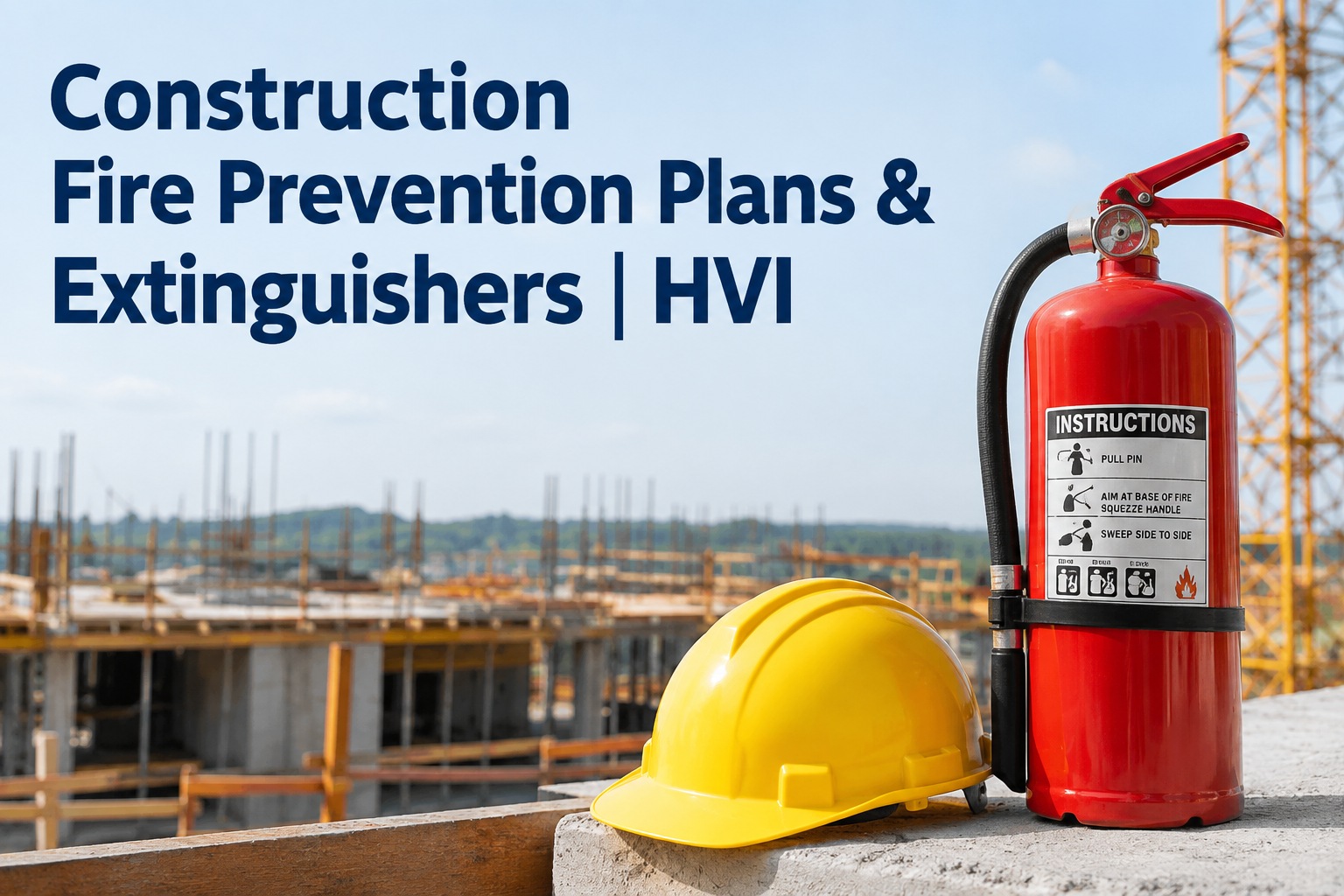
PASS stands for Pull the pin to unlock the operating lever, Aim low at the base of the fire rather than the flames themselves, Squeeze the lever to discharge the extinguishing agent, and Sweep side to side until the fire is fully out. Crews should also understand extinguisher class ratings, since an extinguisher rated for ordinary combustibles is not necessarily appropriate for a flammable-liquid or electrical fire.
What should a written construction fire prevention plan cover beyond extinguisher placement?
A complete plan typically addresses control of ignition sources near fuel and flammable material storage, ongoing management of combustible debris as the site progresses, extinguisher and firefighting equipment placement and maintenance, crew training on extinguisher use, and, where warranted by the scale of the project, whether an organized on-site firefighting capability is needed in addition to external emergency response.
Make Construction Fire Prevention Part of the Inspection Your Crews Already Do
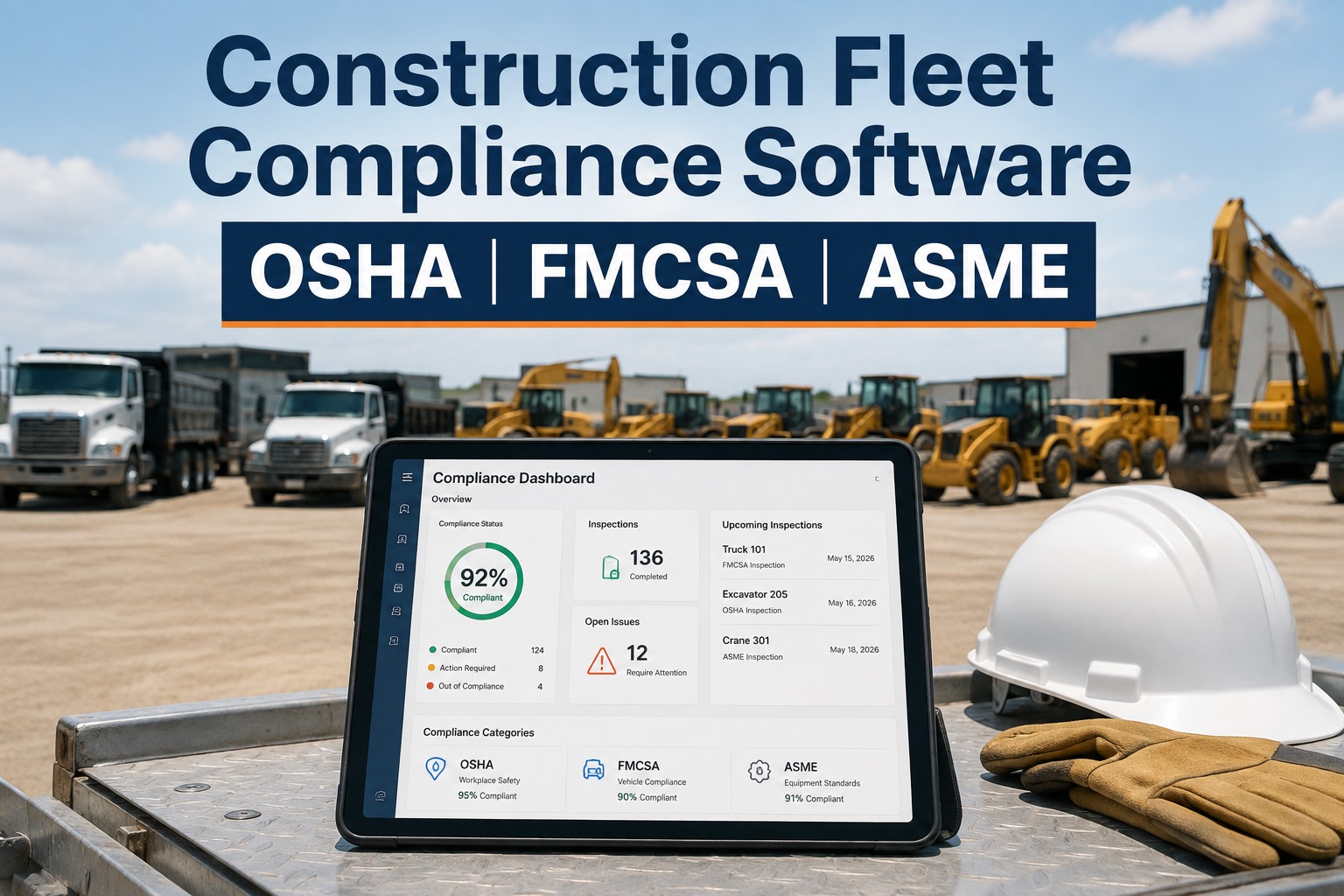
HVI folds fire extinguisher and suppression checks into the same DVIR your operators complete every shift, keeps each machine's hazard-assessment decision on record, and flags overdue monthly and annual checks before they become the extinguisher nobody trusts. Live in under two weeks.
No credit card · Add to your existing DVIR · Ready on day one