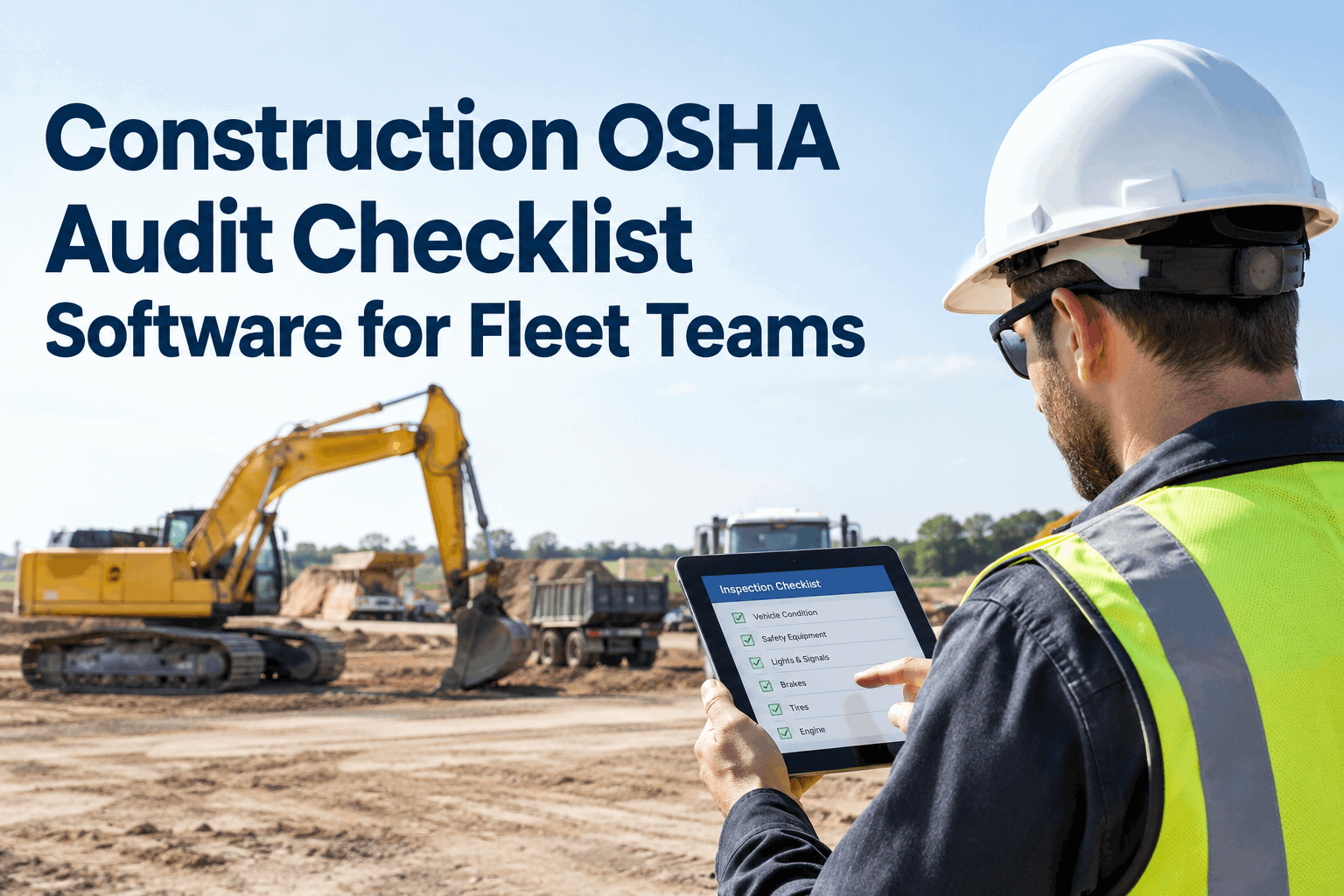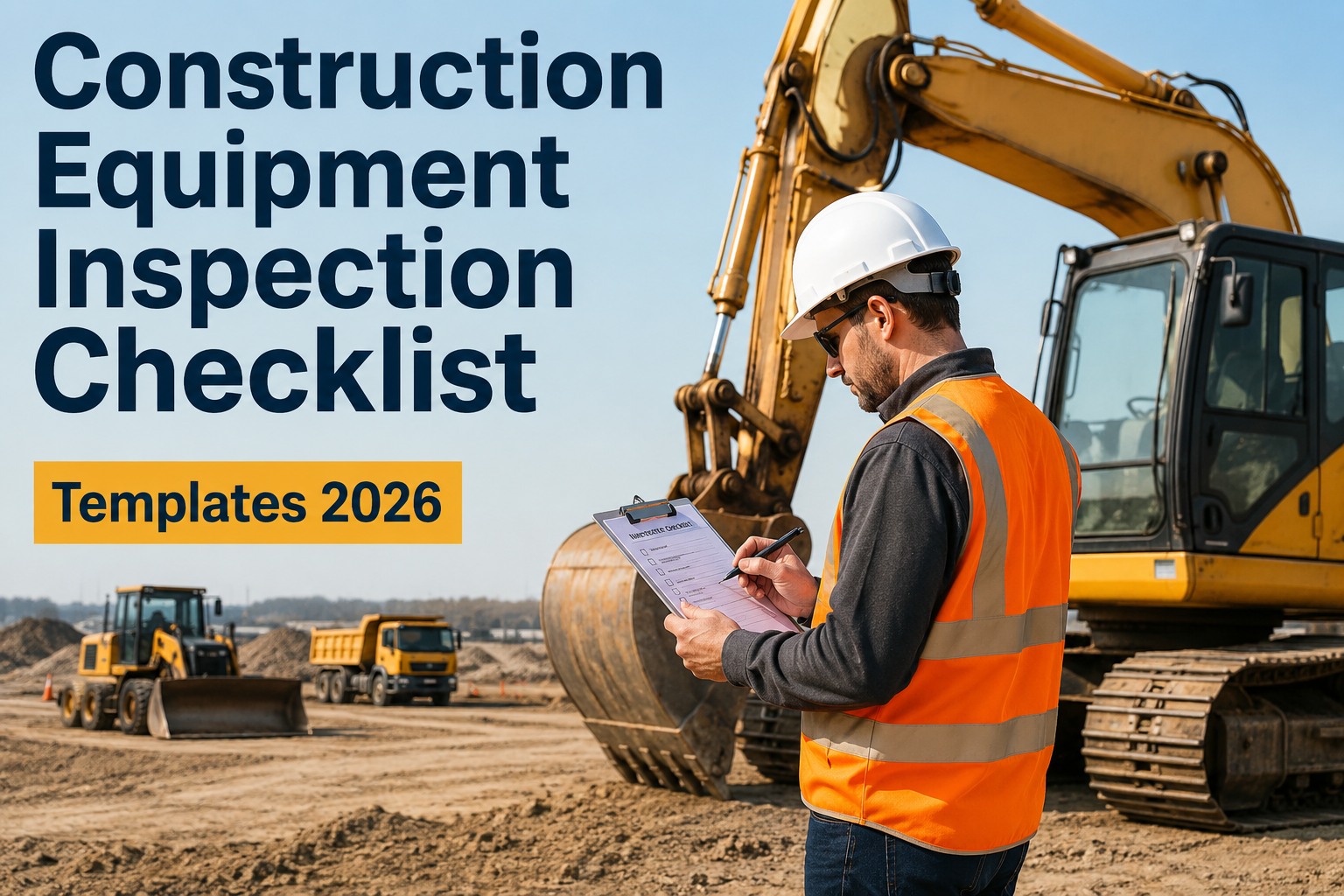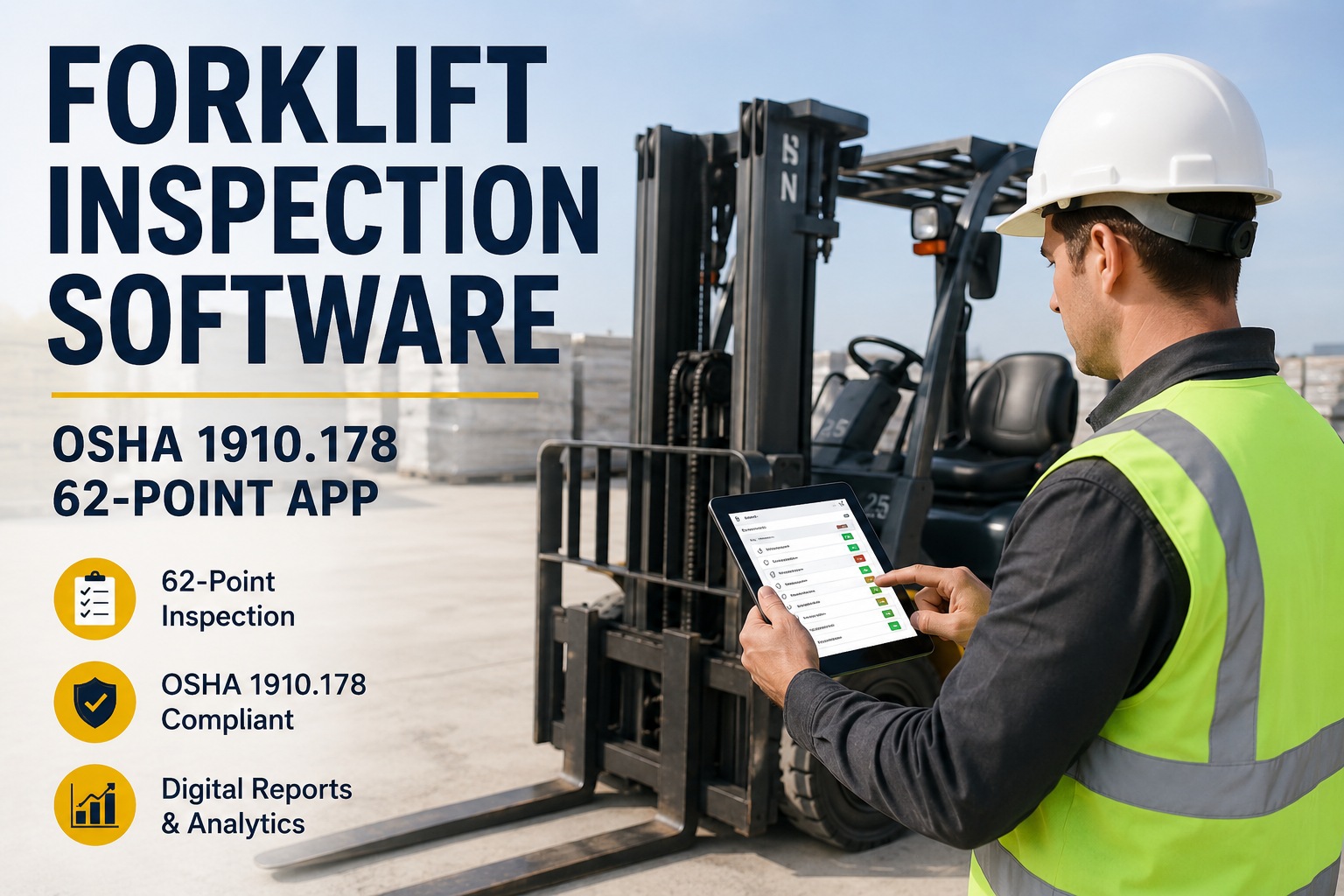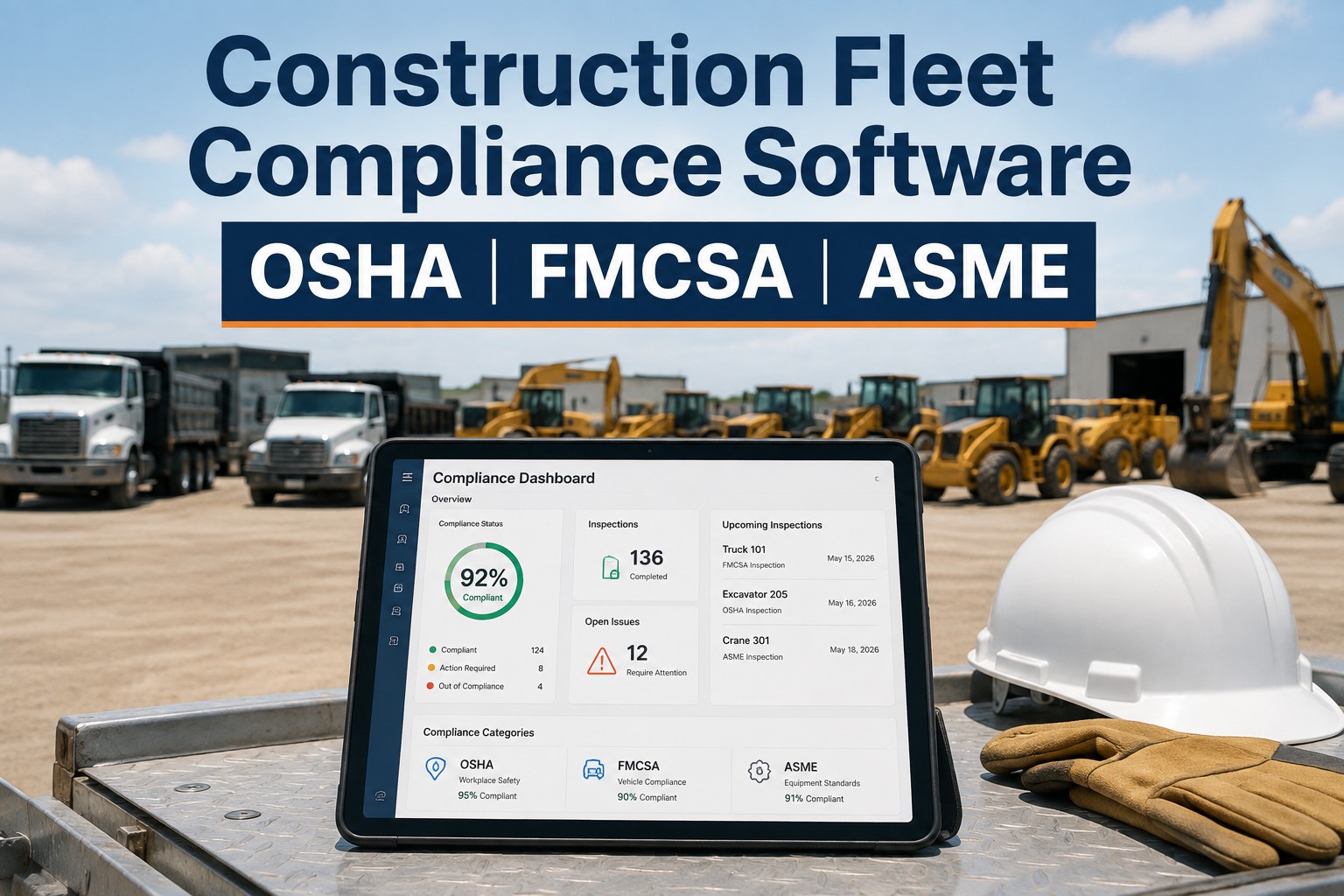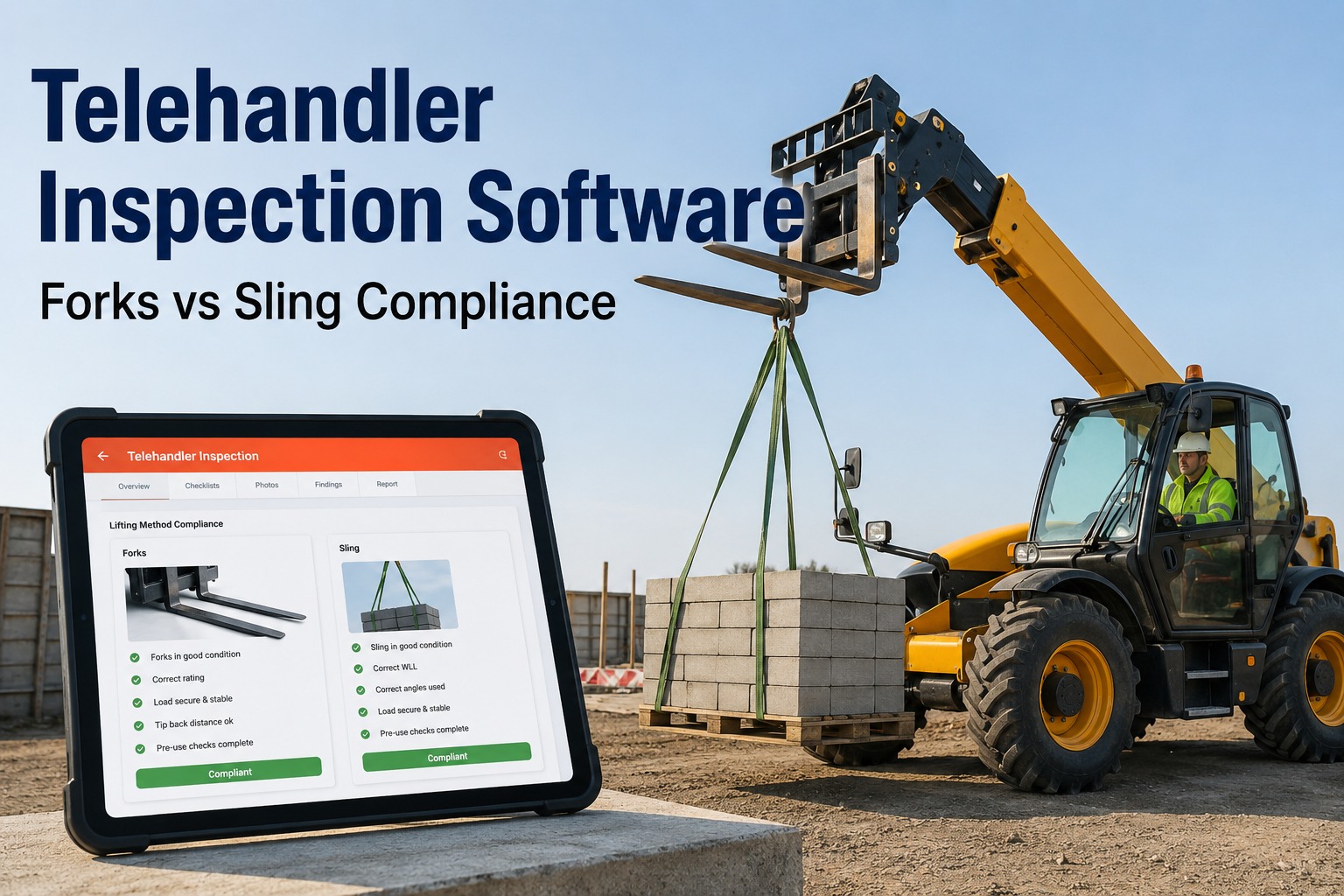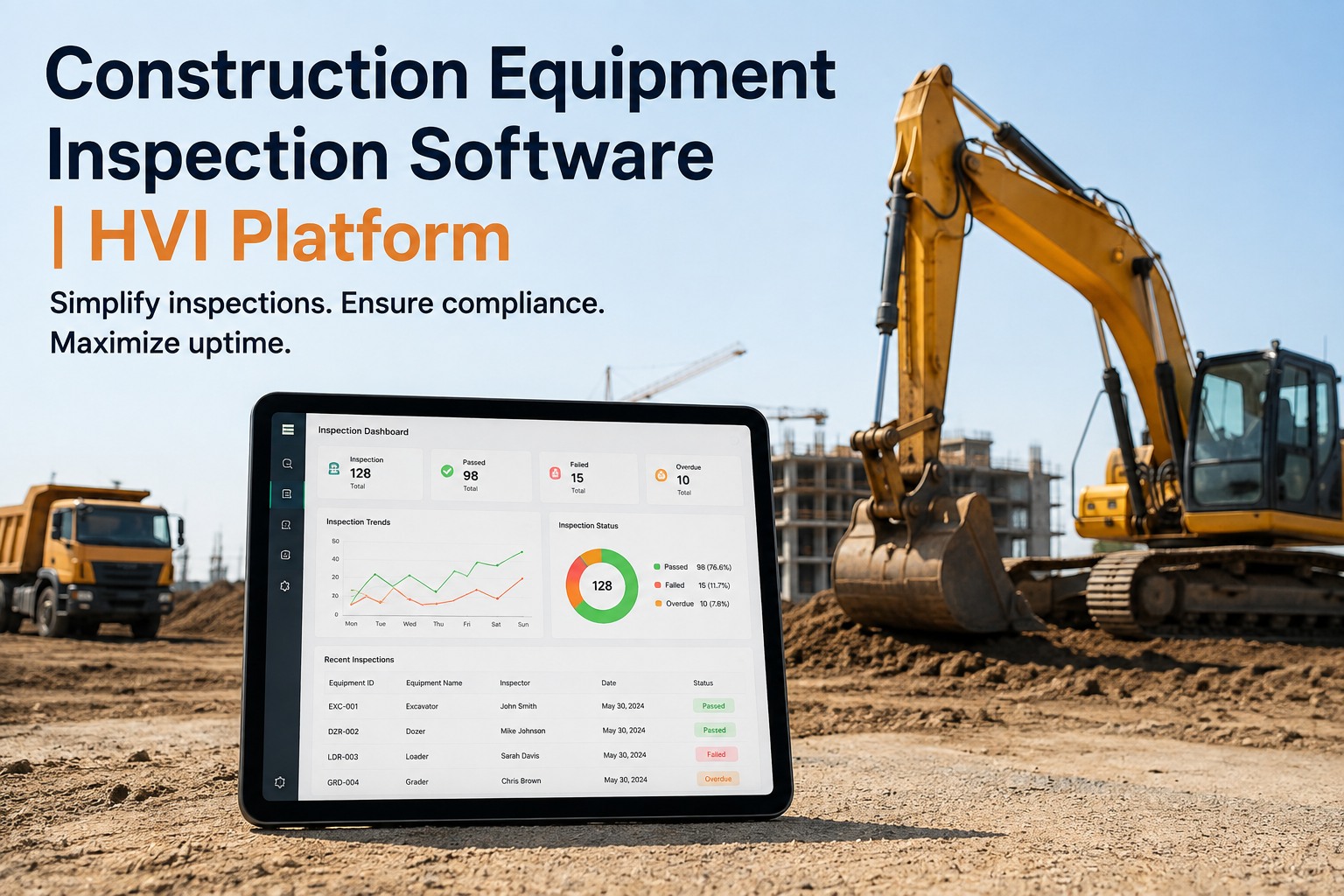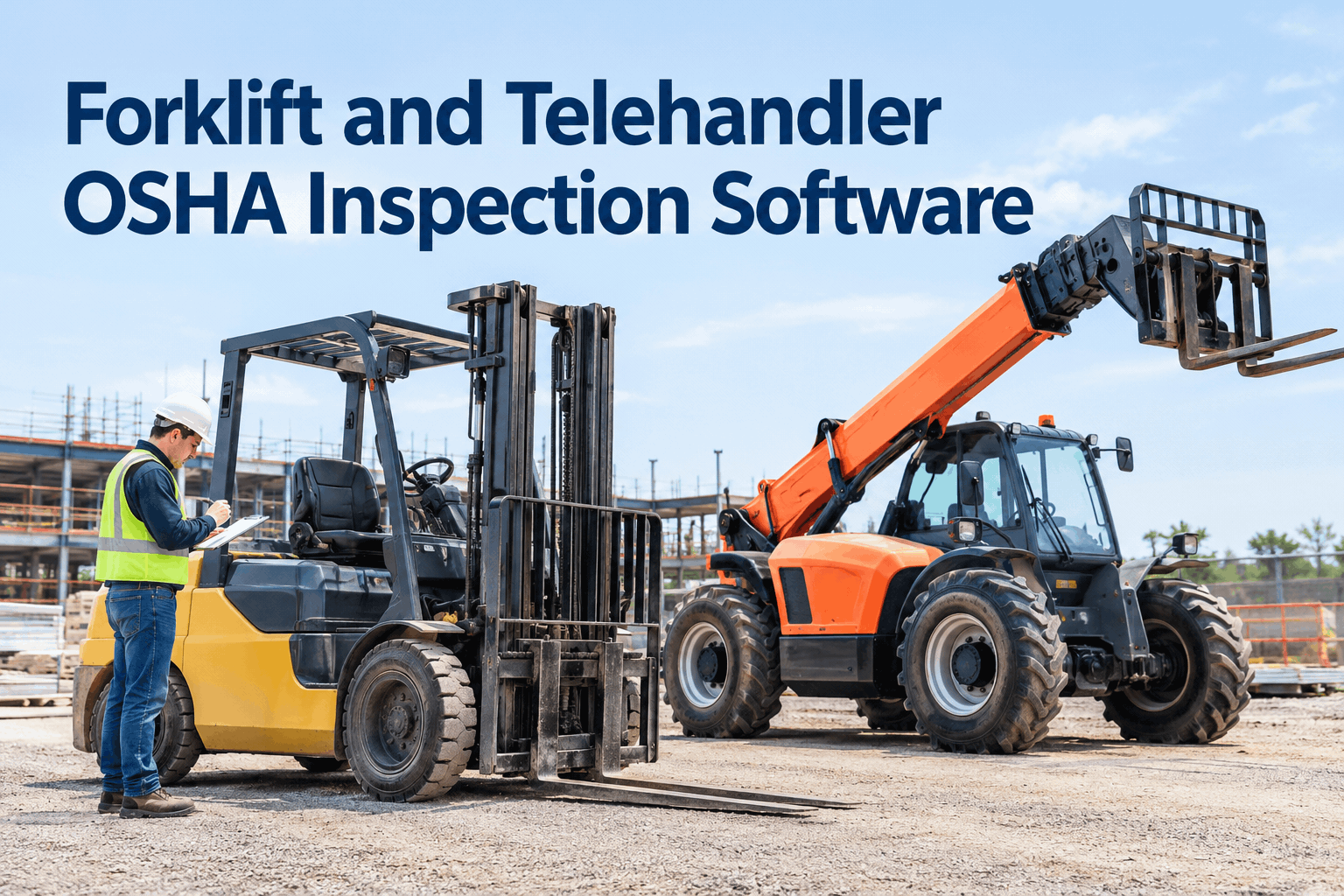
OSHA doesn't ask whether your forklift or telehandler is safe — it asks for the pre-shift inspection that proves someone checked it before it moved. And the rule is stricter than most sites run it: the check happens before each shift, by the operator using the machine, and a single daily sheet doesn't cover the afternoon crew. Forklift and telehandler OSHA inspection records are where a safe jobsite quietly becomes a cited one. This page breaks down what's actually required — for both machines — and how to keep a record that holds up. Then book a demo to see your pre-use inspections audit-ready .
Every Shift, Every Operator, Every Record on File
Run OSHA-aligned pre-use inspections on forklifts and telehandlers from one app — per shift, signed and timestamped, with defects flagged and removal-from-service documented.
Forklifts and telehandlers are the most-used powered equipment on a construction site and among the most-cited. OSHA's powered industrial truck standard (29 CFR 1910.178) requires that these trucks be examined before being placed in service and not less than each shift they're used — by the operator, who signs for the check — and removed from service immediately if anything found adversely affects safety. On construction sites the 1926 provisions also come into play, and the industry consensus standards (ANSI/ITSDF B56.1 for forklifts, B56.6 for rough-terrain telehandlers) set the inspection detail. Different machines, overlapping rules, one common requirement: inspect before each shift, document it, and keep the record.
Same duty, different rulebookhow forklift and telehandler inspection requirements line up — and diverge
Forklifts and telehandlers feel similar on site, but they sit under different standards and get inspected for different things. Treating them with one generic form misses what matters on each. Here's how they compare.
The common thread is the pre-shift, per-operator inspection and the immediate removal of any unsafe machine — but a telehandler adds boom, coupler, and load-chart items a forklift form never has. HVI lets you build a configurable checklist per machine type, so each gets the right items while both live in one records system. Book a demo to see both templates side by side
What the pre-shift inspection has to coverthe daily check OSHA expects, before the machine moves
The pre-use inspection is the single most-checked record in an OSHA visit, because it's supposed to happen every shift. It splits into a visual walkaround and an operational check — and both have to be done, logged, and signed before the machine works.
- Forks or attachment: cracks, wear, bent tips, secure pins
- Mast, boom, chains and hoses: condition and leaks
- Tires and wheels: wear, cuts, pressure, lug nuts
- Fluids: oil, coolant, hydraulic and fuel levels, leaks
- Data plate & load chart: present and legible
- Overhead guard, seatbelt, and safety decals intact
- Service and park brakes hold and respond
- Steering, including telehandler articulation, is true
- Lift, lower, tilt — and boom extend/retract — smooth
- Horn, lights, backup alarm, and gauges work
- Outriggers/stabilizers deploy and hold (telehandler)
- No unusual noise, drift, or warning codes
Anything that fails means the machine comes out of service immediately — not at the end of the shift. In HVI, a failed item flags the defect and takes the asset out of service in the record, so there's no ambiguity about whether it should have been running. Start a free trial and load your forklift and telehandler checklists
Where the records quietly failwhat a gap in forklift and telehandler inspection documentation costs
Powered industrial trucks are a perennial top-cited OSHA item, and the citation usually isn't for an unsafe machine — it's for the missing or inadequate inspection record. A paper program fails in a handful of predictable ways, and each one is a hole an inspector walks straight through.
None of these are field-safety failures; they're records failures — which is exactly why a digital system closes them. A failed inspection item flags a defect, triggers an out-of-service status, and becomes a tracked work order, with the whole chain documented. Book a demo to see the defect-to-removal trail
The forklift & telehandler compliance checklistwhat an audit-ready pre-use inspection program keeps for every machine
Measure your program against this. Every box a connected system ticks is a box a paper setup can leave open — and each open box is a citation an OSHA officer can write.
An important note: software organizes and documents your inspections — it does not replace the inspections OSHA requires or guarantee compliance. Always follow the applicable OSHA standards (including 1910.178 and relevant 1926 provisions), the ANSI/ITSDF B56 standards, manufacturer instructions, and your site safety procedures, and consult a qualified safety professional when requirements are unclear. Book a demo to see how HVI supports your program
From a construction safety manager who runs mixed lift fleets
The forklifts and telehandlers were always my paperwork nightmare. Not the machines — the records. We'd have a stack of daily sheets, half of them for the day shift only, and I genuinely couldn't tell you if the night operator checked that telehandler before he ran it.
Switching to a per-shift digital check fixed the thing that actually gets cited. Every operator does their own on a phone, it's signed and timestamped, and if something fails it's out of service with a photo before anyone can argue. The last OSHA walkthrough, they asked for telehandler records and I filtered to that machine and showed them every shift for the month. That's a very different conversation than digging through a truck for a clipboard.
Frequently asked questions
How often does OSHA require forklift inspections?
Under 29 CFR 1910.178, a powered industrial truck must be examined before being placed in service and not less than each shift it's used — so multi-shift operations need a check per shift, by each operator. HVI captures each one signed and timestamped. Book a demo to see it.
Do telehandlers follow the same inspection rules as forklifts?
Largely yes — both are pre-shift, operator-performed, remove-on-defect — but telehandlers fall under 1926 on construction sites and the B56.6 rough-terrain standard, and add boom, coupler, and load-chart checks a forklift form lacks. See both templates in a demo.
What happens if a pre-shift inspection finds a defect?
The machine must come out of service immediately — not at the end of the shift — and the defect logged. In HVI a failed item flags the defect, sets the asset out of service, and opens a work order with a photo attached. Book a demo to walk the flow.
Does inspection software make me OSHA compliant?
No — software organizes and documents inspections but doesn't replace the required inspections or guarantee compliance. It gives you per-shift, signed, retained records; the inspections, standards, and safety procedures remain yours. Book a demo to see how it supports your program.
Can one system handle both forklifts and telehandlers?
Yes. You configure a checklist per machine type, so forklifts and telehandlers each get the right items while both live in one records system with shared sign-off, defect, and reporting. Start a free trial or book a demo.
Have the inspection ready before the auditor asks
HVI gives every forklift and telehandler a configurable pre-use checklist built for that machine, captures the operator's sign-off and timestamp each shift, flags defects with photos, documents removal from service, and keeps the whole history retained and exportable. Safe in the field, provable in the office. Live in under two weeks.
- Per-shift, per-operator pre-use checks
- Forklift & telehandler templates
- Signed, timestamped, retained records
- Defect → out-of-service → work order