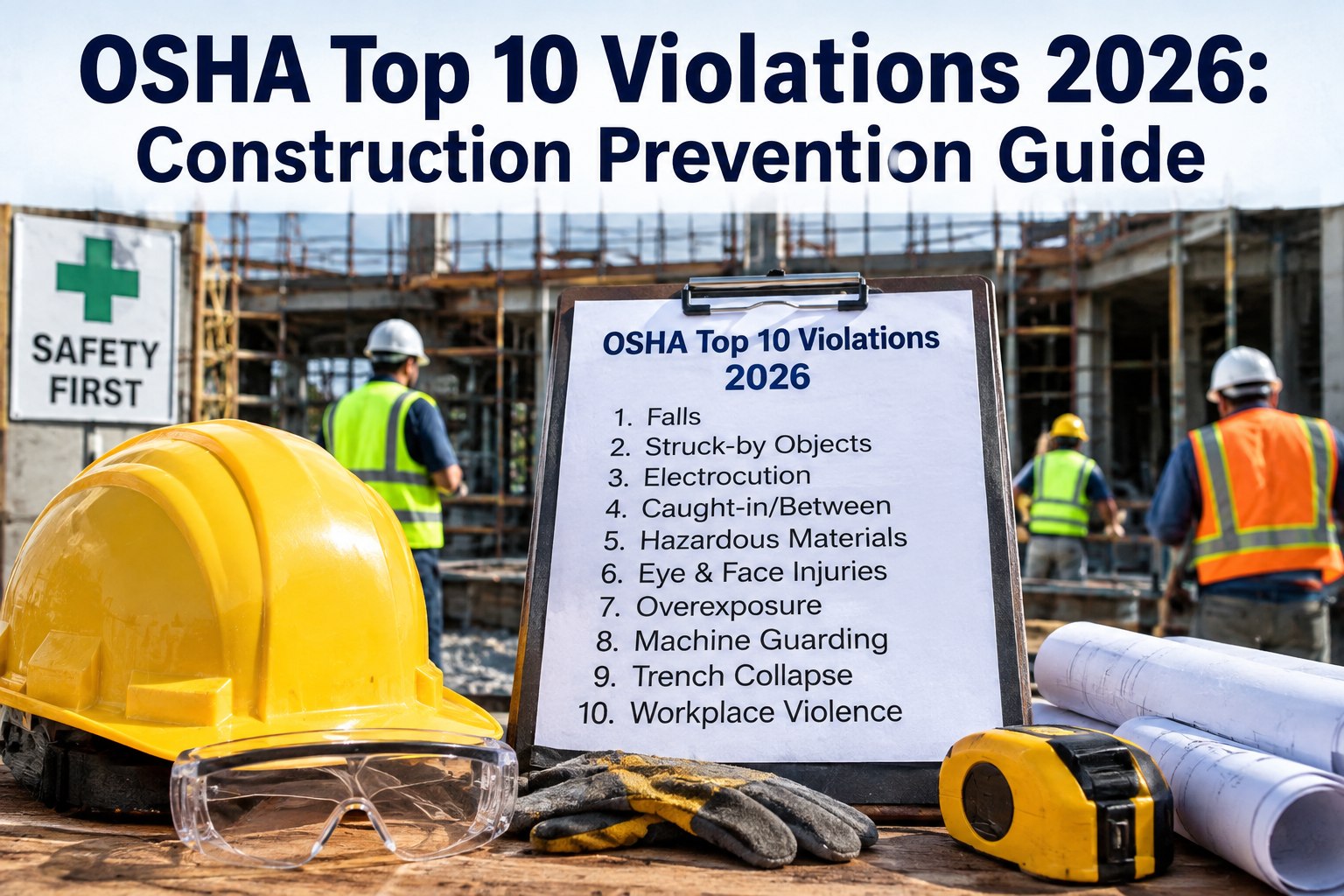
The OSHA top 10 violations list for FY2025 is out, and if you have read it any year in the last decade, you already know what it says. Fall protection, hazard communication, ladders, lockout/tagout, respiratory protection - the same standards, in almost the same order, cited tens of thousands of times across construction and general industry. That repetition is the real story. Your crews are not unaware of fall protection. The problem is that on a busy Tuesday with a concrete pour behind schedule, the guardrail check, the ladder inspection and the harness sign-off live in someone's head instead of in a system. This guide breaks down the full FY2025 list with citation counts, explains why the same violations keep winning, and gives you a practical way to close the gaps - the same approach safety managers use when they walk their inspection workflow through a short demo and see where the paper trail breaks.
The same ten standards have topped the list for over a decade. That is not an awareness problem - it is a workflow problem.
Fall protection has held the number one spot for fifteen consecutive years. If awareness campaigns fixed this, they would have fixed it by 2012. What actually moves the numbers is a repeatable inspection and corrective-action system that runs the same way on every site, every shift, every crew.
OSHA's most cited standards, FY2025 - the numbers that matter
Four numbers tell you where enforcement attention actually goes. Treat this list as a free prioritisation tool: OSHA is publishing exactly where its inspectors found the most failures, so you know where yours are most likely to be found too.
Number one for the fifteenth straight year. Missing guardrails, unprotected edges and uncovered holes on active sites.
Unlabeled containers, missing safety data sheets, crews never trained on the chemicals they handle daily.
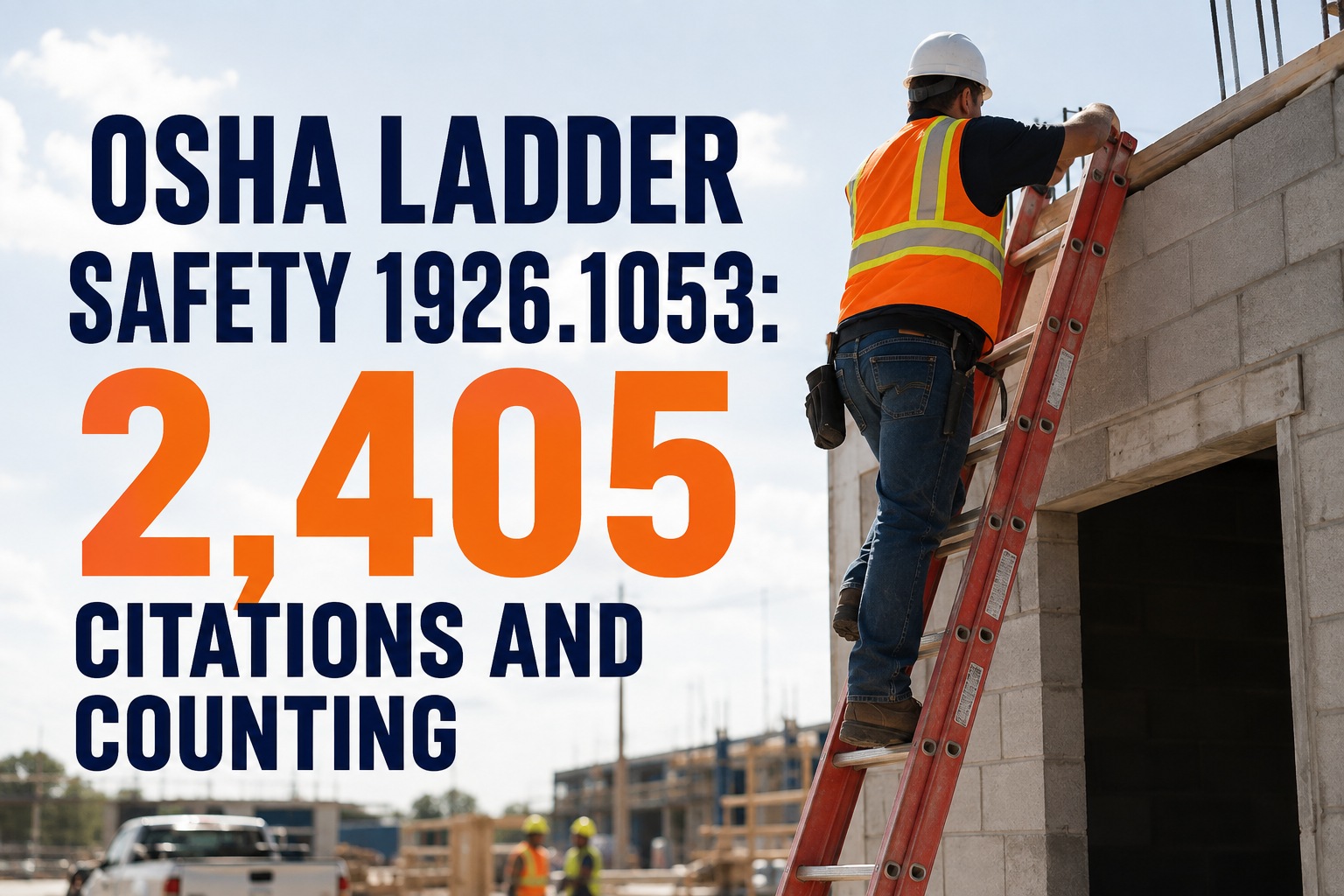
Damaged ladders still in service, wrong ladder for the job, three-point contact ignored under time pressure.
Machinery serviced without energy isolation. The citation is paperwork; the underlying event is often a fatality.
All ten most cited OSHA standards, ranked with citation counts
Scan the right-hand column. Three of the ten are fall-related, and two more - ladders and scaffolding - are really the same hazard wearing different clothes. Fall exposure is not one line item on this list; it is the spine of it.
| Rank | Standard | FY2025 citations | What inspectors actually find |
|---|---|---|---|
| 1 | Fall protection - general requirements | 5,914 | Unprotected edges, missing guardrails, no covers on floor holes |
| 2 | Hazard communication | 2,546 | No written program, unlabeled containers, SDS binder out of date |
| 3 | Ladders | 2,405 | Cracked rails, missing rungs, ladders used as platforms |
| 4 | Lockout / tagout | 2,177 | No energy control procedure, no periodic inspection of the program |
| 5 | Respiratory protection | 1,953 | No fit test records, wrong cartridge, no medical evaluation on file |
| 6 | Fall protection - training | 1,907 | Workers exposed to falls with no documented training or retraining |
| 7 | Scaffolding | 1,905 | Missing planks, no guardrails above ten feet, no competent-person inspection |
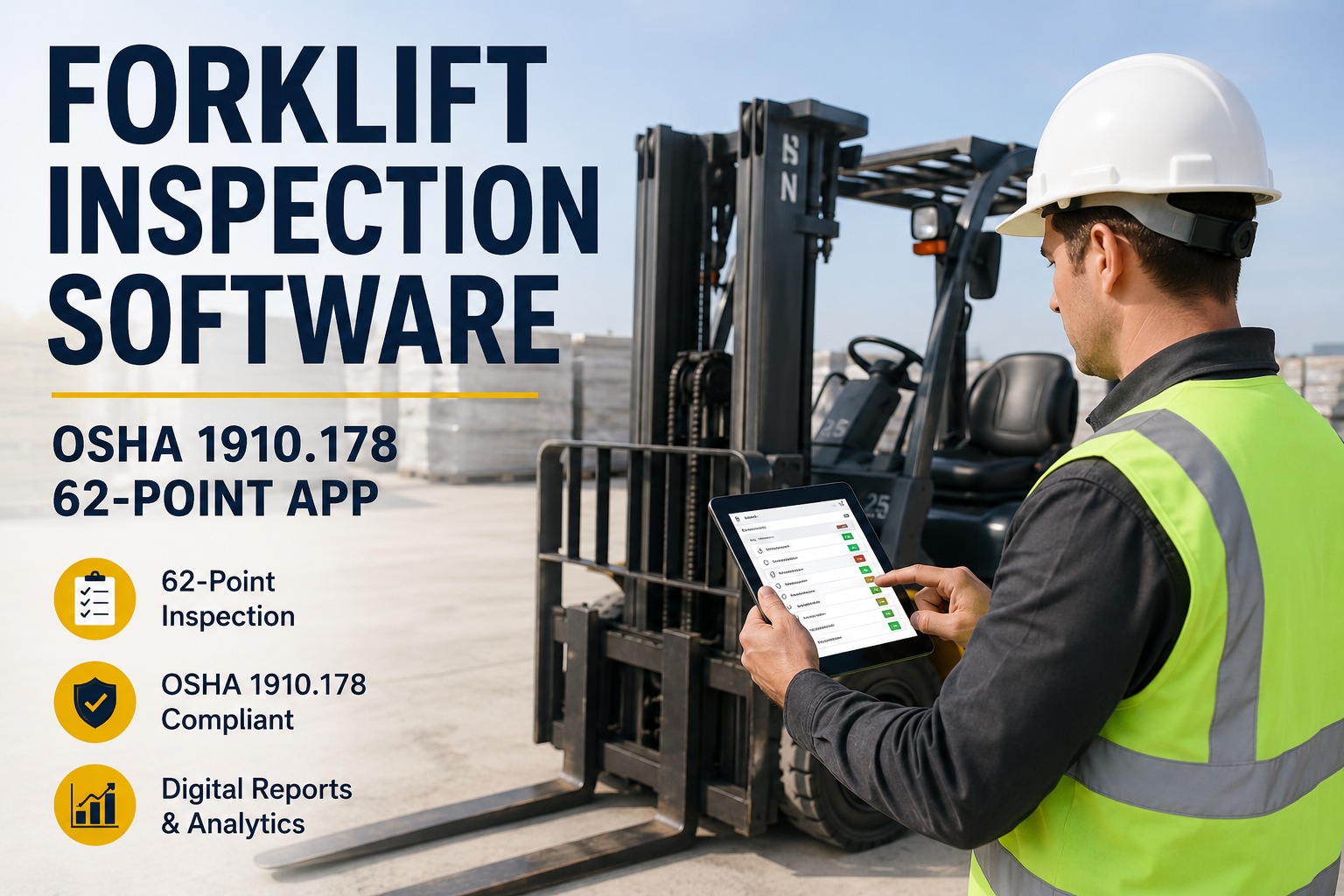
| 8 | Powered industrial trucks (forklifts) | 1,826 | No daily pre-use inspection, expired operator certifications |
| 9 | Eye and face protection | 1,665 | Grinding and cutting without rated eye protection on the face |
| 10 | Machine guarding | 1,239 | Guards removed for a jam and never reinstalled, missing point-of-operation guards |
Add the fall-related rows together - general requirements, fall training, ladders, scaffolding - and you get roughly 12,100 citations aimed at one hazard family. If your fall controls are weak, you are exposed in four separate places on the same inspection.
Why the same OSHA violations top the list every single year
Fifteen years of fall protection at number one is not a coincidence and it is not laziness. It is structural. These violations share three traits that posters, toolbox talks and annual training cannot fix on their own.
The hazard resets every day
A guardrail removed Monday for a material lift is a violation Tuesday. A ladder that passed inspection last month has a cracked rung today. These are not one-time fixes - they are conditions that decay between checks, which is why they need a recurring inspection loop, not a one-off campaign.
The proof is the hard part
Most cited companies had some form of training or inspection - they just could not prove it when the inspector asked. Fall protection training (rank 6) and forklift certification (rank 8) citations are usually documentation failures, not knowledge failures. If the record lives in a binder on a different site, it does not exist.
Fixes die in the gap between finding and fixing
A supervisor photographs a missing scaffold plank, texts it to the group chat, and it is buried under forty messages by Friday. The hazard was found - it just was never tracked to a completed corrective action. That gap, repeated across ten standards, is the entire list.
What one repeat citation actually costs a mid-size contractor
Run the arithmetic on a realistic scenario: a 60-worker civil contractor gets cited for fall protection and fall training on the same visit, then gets hit again fourteen months later because nothing systemic changed.
The paper trail version
- Two serious citations, first visit: penalties in the tens of thousands of dollars
- Repeat citation fourteen months later: penalty multiplies several times over
- Abatement verification, legal review, safety consultant: days of management time
- EMR and insurance impact: higher premiums for three renewal cycles
- Bid prequalification: some owners and GCs screen out contractors with repeat serious citations
The tracked version
- Daily fall-protection checklist on every active deck, photo-backed, timestamped
- Missing guardrail logged at 7:20 am, corrective action closed with photo by 9:05 am
- Training expiry alerts fire 30 days before any card lapses
- Inspector asks for records: you pull them up on a phone in under a minute
- Total system cost: a fraction of one serious citation
The difference between those two columns is not effort or intent. It is whether the finding, the fix and the proof live in one connected system. That is exactly the loop you can see running on your own sites in a 30-minute demo.
Your next OSHA visit will ask for records, not intentions
Book a demo and see how digital inspections, photo evidence and tracked corrective actions close the exact gaps on this list - before an inspector finds them for you.
How to prevent OSHA citations: audit your two weakest categories first
Do not try to fix all ten at once - that is how safety programs stall. The instruction that actually works is narrower: pick the two categories where your operation is weakest, build an airtight inspection-and-correction loop around them, then extend the same process outward to the rest of the list.
Score yourself against the top 10
Walk one active site with this list in hand. For each standard, answer two questions: do we have a control, and can we prove it ran in the last 30 days? Most contractors find their two weakest categories quickly - fall protection and training records are the usual suspects.
Turn each weak category into a recurring digital inspection
A fall-protection checklist that runs every morning on every deck. A forklift pre-use inspection that the operator completes on a phone before the key turns. A ladder check tagged to each ladder's ID. Recurrence is the whole point - the hazard resets daily, so the check must too.
Force every finding into a tracked corrective action
A defect with no owner and no deadline is a future citation. Each failed item should generate a corrective action with a name, a due date and a photo of the completed fix. When you can start logging inspections free and watch findings close in hours instead of weeks, the list stops being scary.
Extend outward and review monthly
Once the first two categories run clean for a month, add the next two - hazard communication and respiratory protection are common second waves. Review open corrective actions and overdue training in a standing monthly meeting. The system that fixed two categories fixes all ten.
The proof OSHA asks for, mapped to the record that answers it
Every standard on the list has a paper-trail question behind it. If you can produce the record in seconds, the conversation with the inspector changes completely.
| Top-10 standard | The inspector's question | The record that answers it |
|---|---|---|
| Fall protection | Who inspected this edge protection, and when? | Timestamped daily checklist with site photos |
| Fall protection training | Show me training records for the crew on that roof | Per-worker training log with expiry dates and alerts |
| Ladders | When was this ladder last inspected? | Asset-tagged inspection history per ladder |
| Scaffolding | Where is the competent-person inspection for this scaffold? | Signed digital inspection tied to the scaffold ID and shift |
| Powered industrial trucks | Show me the pre-use inspection and operator certification | Daily operator checklist plus certification expiry tracking |
| Lockout / tagout | Where is your energy control procedure and its periodic review? | Documented procedure with dated periodic inspection records |
Notice the pattern: none of these answers require new safety knowledge. They require a system that captures the check, the photo and the fix at the moment it happens. Contractors who book a walkthrough of this record trail usually recognise their own gaps within the first ten minutes.
Four HVI capabilities aimed straight at this list
HVI is cloud + mobile inspection and maintenance software built for fleets, sites and shops. These four features map directly onto the violations above.
Digital inspections with photo evidence
Fall protection, ladders, scaffolds and forklifts get recurring mobile checklists with mandatory photos. Every check is timestamped, geolocated and tied to the asset - the exact record an inspector asks for first.
Corrective actions tracked to completion
A failed item becomes a tracked action with an owner, a due date and a photo of the fix. Nothing dies in a group chat. Open items surface on a dashboard until they close, which kills the find-it-then-forget-it cycle behind most repeat citations.
Training and certification expiry alerts
Fall training, forklift operator cards, respirator fit tests - HVI flags every expiry 30, 14 and 7 days out. Ranks 6 and 8 on the list are documentation failures, and this is the direct counter.
Compliance analytics across every site
See inspection completion rates, overdue corrective actions and expiring certifications across all crews in one view. You spot the weak category before OSHA does - and you can sign up free and run your first checklist today.
OSHA violation prevention comes down to three habits
The FY2025 OSHA top 10 violations list is not news - it is a mirror. The standards barely move because the failures behind them are workflow failures, and workflows only change when the system around them changes.
Treat the list as your audit checklist
OSHA has published its enforcement priorities for you, free of charge. Score your sites against all ten, find your two weakest categories, and start there instead of spreading effort thin across everything.
Make the proof automatic
Most citations in the training and certification rows are paperwork failures. Timestamped, photo-backed digital records mean the answer to any inspector's question is already on your phone.
Close the loop on every finding
A hazard found but not tracked to a completed fix is a repeat citation waiting its turn. Corrective actions with owners, deadlines and photo proof of completion are what separate one-time citations from repeat ones.
If you want to see what this looks like when it runs on phones across real sites, book a 30-minute demo and bring your toughest category - the walkthrough works best against a problem you actually have.
"I keep a running count of open corrective actions on my desk whiteboard. When we ran paper checklists, that number sat around forty and I never trusted it. Once every finding had to close with a photo in the system, it dropped under ten in six weeks - and when an OSHA inspector showed up unannounced in March, I pulled two years of forklift inspections on my phone before he finished his coffee. He left with nothing to write. That never happened on paper."
Daniel Reyes - Safety Manager, regional civil and sitework contractor, 140 workers across 9 active sites
OSHA top 10 violations - frequently asked questions
What is the most cited OSHA standard in FY2025?
Why do the same OSHA violations appear every year?
How should I use the OSHA top 10 list to improve my safety program?
Are training and certification citations avoidable?
Can digital inspection software really reduce OSHA citations?
Stop reading the same top 10 list every year
See HVI running on your own fleet and sites - digital inspections, tracked corrective actions and training alerts that close the gaps OSHA keeps citing. Book a 30-minute demo and bring your weakest category.
Free to start - Works on any phone - No card needed