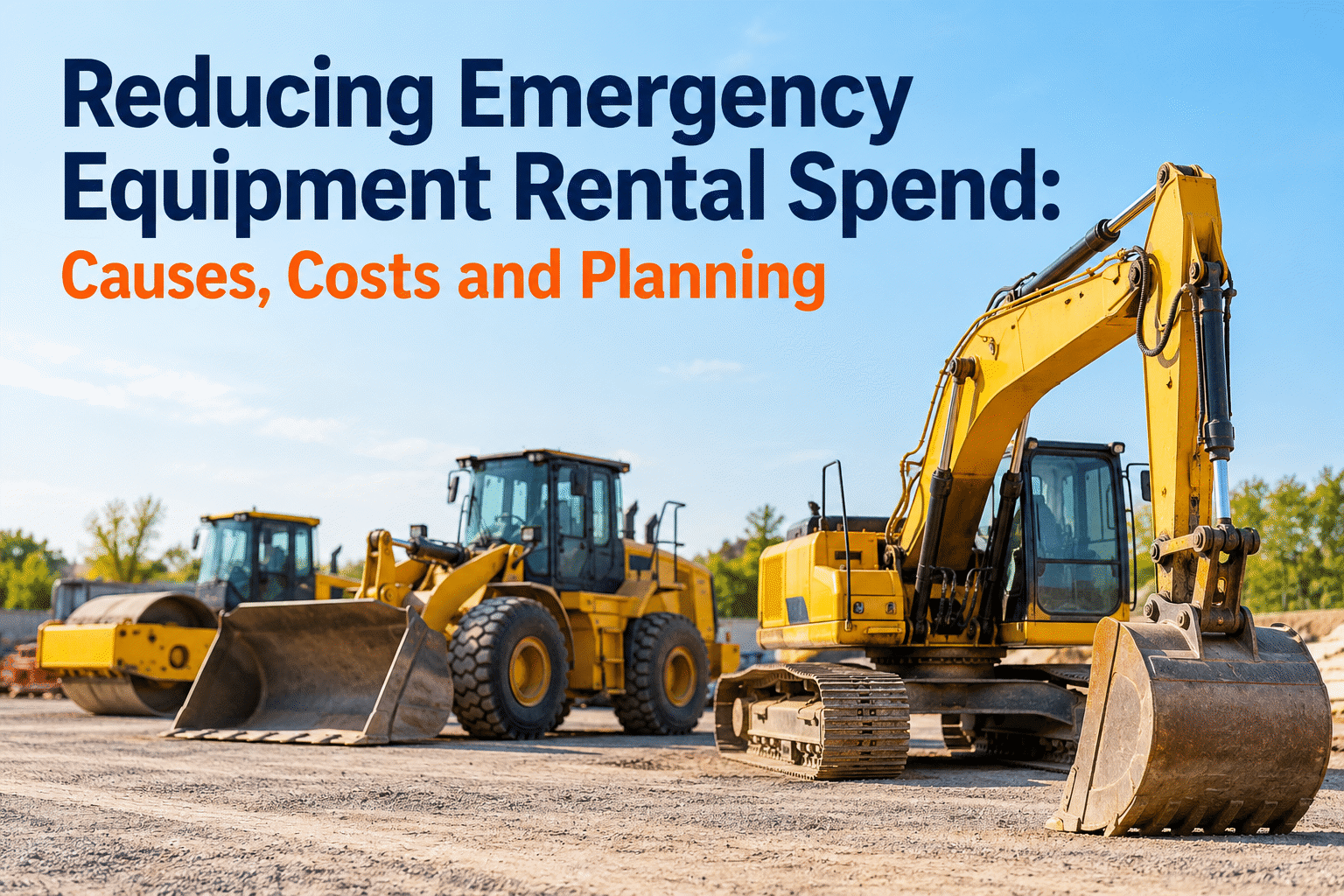
Emergency equipment rentals often begin with an unexpected breakdown but become expensive when repairs, approvals and pickup dates are not coordinated. Contractors can reduce emergency equipment rental spend by tracing why each rental was needed, recording its full cost and preparing backup options before a critical machine goes down. This guide explains the cost drivers, practical controls and maintenance records that make that process easier.
Stop the rental clock before costs multiply
A breakdown creates a replacement need. Repair delays, standby days and missed off-hire dates turn that need into an avoidable expense. Build a response that connects equipment condition, rental decisions and actual cost.
Why emergency equipment rental spend rises
The quoted daily rate is only one piece of the cost. Start with the breakdown, then investigate everything that kept the replacement machine on rent longer than necessary.
Unplanned breakdown
A critical machine fails without a ready substitute or a reliable estimated repair date.
PM and inspection gapRepair waiting time
Diagnosis, parts, technician availability or vendor approvals extend downtime.
Work order delayUnclear site demand
A rented unit remains assigned even when another owned machine could cover the work.
Availability blind spotLate off-hire
Crews finish using the machine but nobody confirms pickup or the billing stop date.
Handoff failureTo address breakdown-related rentals, book a demo to review HVI preventive maintenance and repair records before the next urgent dispatch.
Calculate the full emergency rental cost—not just the daily rate
Capture every rental-specific charge against the triggering equipment failure and the affected project. The example below is illustrative, not an industry benchmark.
The hidden question
Two avoidable extra days at $450 per day would add this much before other charges.
Separate unavoidable replacement time from days caused by late repair decisions or delayed off-hire.
Want cleaner records behind these calculations? Start free with HVI to organize equipment maintenance history alongside your cost review.
Use a decision ladder before authorizing an emergency rental
The fastest rental is not always the lowest-cost response. Give dispatchers a consistent sequence to check before placing an order.
Is the failed machine safe to operate?
Review the defect and remove unsafe equipment from service. Do not delay safety-critical repairs to avoid rental cost.
How long is the repair expected to take?
Get a realistic estimate based on diagnosis, parts availability and labor—not an optimistic guess.
Can another owned asset cover the job?
Check equipment suitability, readiness, transport time and the effect on its current assignment.
What rental period and approval are justified?
Record the project, required capability, expected return date, rate and approving manager.
Who owns the daily off-hire review?
Assign one person to confirm utilization, repair progress and the earliest viable return date.
Link the rental to the breakdown and close the loop
A simple reference number connecting the failed asset, its repair record and the temporary replacement makes emergency rental spend easier to explain and reduce.
Excavator EX-214
Hydraulic leak identified during inspection
WO-4821
Parts awaited; expected return-to-service reviewed daily
Rental RN-073
Replacement excavator assigned to Project North
Reduce the next emergency rental with a three-layer plan
Rental reduction is not simply negotiating lower rates. It means reducing avoidable failures, shortening repair delays and choosing replacements deliberately.
Prevent the failure
Use inspection findings, recurring defect history and preventive maintenance schedules to identify critical assets needing attention.
- Track overdue service
- Review repeat breakdowns
- Document condition trends
Accelerate the repair
Prepare for common failure modes and review work orders that wait on parts, approvals or vendor response.
- Identify critical spares
- Assign repair ownership
- Update expected completion
Limit replacement days
Know which owned machines are available and set a firm daily decision on keeping, transferring or returning the rental.
- Check site utilization
- Review rental end dates
- Confirm pickup promptly
For a maintenance-led prevention plan, book an HVI demo to discuss inspection findings and PM schedules across your contractor fleet.
Review the few metrics that reveal repeat rental problems
Use consistent definitions and compare similar projects and equipment classes rather than chasing a single fleet-wide average.
Emergency rental events
Count rentals triggered by unplanned equipment unavailability.
Rental days per breakdown
Measure elapsed rental days tied to each failed asset.
Total cost per event
Include base rate, freight and other contract charges.
Off-hire delay days
Track time between no longer needing a rental and its billing stop.
Ask this in every weekly review
Which rental would we have avoided with earlier maintenance, faster repair or a clearer return decision? Assign one corrective action and check it at the next meeting.
A four-week rollout for contractors
Begin with your most expensive or frequently rented equipment classes. Expand only after the process is being used consistently.
Establish the baseline
List recent emergency rentals, failed assets, rental dates and full charges.
Connect the records
Use common IDs for equipment, repair work orders, projects and rental events.
Introduce daily reviews
Assign off-hire ownership and check repair progress against the replacement need.
Fix repeat causes
Prioritize PM gaps, long repair waits and excess rental days found in the review.
To build the equipment maintenance record foundation, start your free HVI account and organize your first group of critical assets.
Emergency equipment rental spend FAQs
What counts as emergency equipment rental spend?
It is the cost of short-notice replacement equipment obtained because planned equipment is unavailable unexpectedly. Track rental fees and associated charges, and link the event to the original failure or operational need.
How do contractors reduce unplanned equipment rental costs?
Prioritize critical preventive maintenance, document defects early, improve repair turnaround, check internal equipment availability before renting and review the rental's necessity and off-hire date every day.
Should rental costs be assigned to the equipment or the project?
For useful analysis, record both the failed asset that triggered the rental and the project that used the replacement. Finance teams can then apply the company's approved accounting and cost-allocation policy.
Which records are needed to explain an emergency rental?
Keep the inspection or failure report, related work order, equipment ID, project assignment, rental approval, contract terms, delivery and pickup dates, invoices and the decision history for extensions.
Can HVI automatically track rental invoices or end rental contracts?
Do not assume that capability. HVI is relevant for equipment records, inspections, preventive maintenance and work orders. Confirm any specific rental-system or accounting integration during a product demo and use your rental provider's process for off-hire.
Spend less time reacting to equipment downtime
Connect equipment inspections, preventive maintenance and repair history so your team can identify avoidable failures and plan replacement needs with better information.