Equipment resale timing is a financial and operational decision: sell too early and you may give up useful production years; sell too late and rising repairs, downtime, and declining resale value can erode your return. This guide shows construction fleet owners how to evaluate machine hours, condition, maintenance spending, replacement availability, and market offers before choosing when to sell heavy equipment.
Equipment Resale Timing: Know When to Keep, Repair or Sell
Compare the cost of keeping a machine with the value of releasing it—using records your fleet team can actually maintain.
What Determines the Best Time to Sell Heavy Equipment?
There is no universal resale hour threshold. A machine with clean service records and predictable operating costs may justify longer ownership, while a similar machine with repeated failures may warrant earlier replacement.
Hours and duty cycle
Compare accumulated hours with how the machine was used. High-idle and high-load applications can create different wear patterns.
Repair cost trajectory
Look for rising repair spending, repeat defects, and longer outages—not just a single expensive service.
Resale market
Use recent comparable sales and dealer quotes for your exact model, condition, region, and attachments.
Replacement economics
Consider purchase or lease cost, lead time, financing, and whether the replacement improves jobsite productivity.
Spot the Resale Window Before Costs Accelerate
Review these indicators together each quarter. A single signal is a reason to investigate, not an automatic instruction to sell.
Equipment Resale Timing: Calculate Keep-Versus-Sell Cost
A sound decision compares the forward-looking cost of keeping the machine with the net economics of selling and replacing it. Historical purchase price is usually a sunk cost; do not let it dominate the decision.
Illustrative one-year comparison
| Cost / value component | Keep existing excavator | Replace excavator |
|---|---|---|
| Operating and planned maintenance | $31,000 | $22,000 |
| Expected unplanned repairs | $19,000 | $7,000 |
| Downtime impact | $12,000 | $5,000 |
| One-year value decline / financing and capital cost* | $24,000 | $40,000 |
| Illustrative one-year total | $86,000 | $74,000 |
*Simplified example using an estimated economic capital cost for the replacement; actual calculations must consistently account for sale proceeds, acquisition cost, taxes, financing, residual value, and equivalent utilization. Figures are hypothetical, not industry benchmarks.
In this example, replacement appears $12,000 less costly over one year. Confirm that the newer machine can handle the same workload, that replacement availability is reliable, and that the cash-flow impact is affordable before acting.
Build the Records Behind Better Resale Decisions
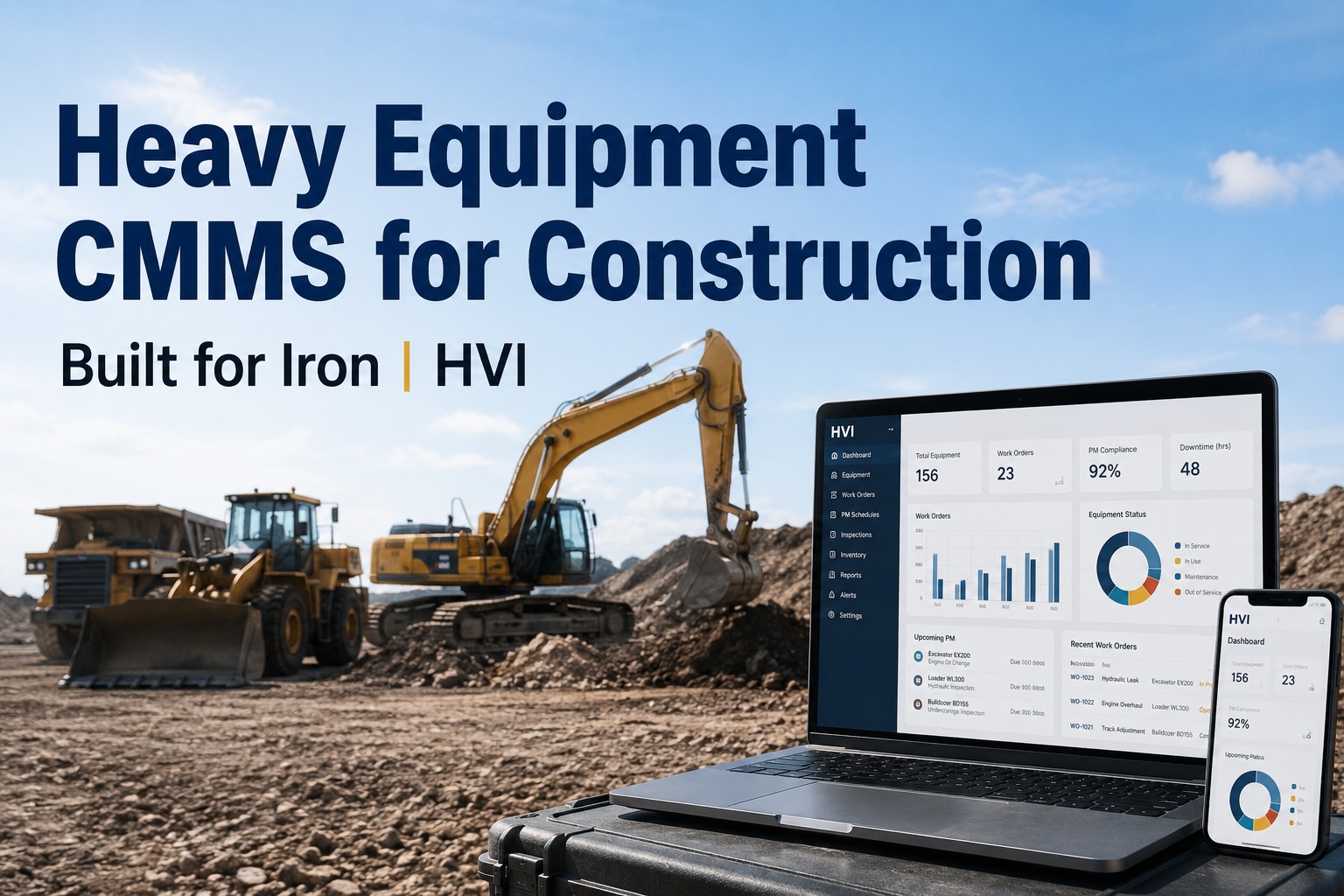
See how HVI helps organize equipment assets, inspections, maintenance histories, and expenses so your team can review lifecycle costs with greater confidence.
How Maintenance Records Protect Heavy Equipment Resale Value
Buyers need confidence in what they are purchasing. Organized inspection and service evidence can help explain machine condition and reduce uncertainty during appraisal, although it does not guarantee a higher sale price.
Example documentation packet. Verify ownership, liens, and transfer documents separately.
Prepare a buyer-ready asset file
Start with equipment ID, serial number, make, model, year, meter reading, attachments, ownership status, and operating location. Add dated inspections, preventive maintenance completion, major component repairs, and open defects.
Before marketing the asset, reconcile missing meter entries, close or disclose outstanding maintenance issues, and document known damage accurately. Keep appraisal estimates separate from actual offers.
HVI's equipment and maintenance records can support the operational portion of this process. Formal valuations, title verification, and selling arrangements remain outside the platform's core maintenance role.
Keep, Repair, Redeploy or Sell? Use This Decision Matrix
Classify each machine by upcoming demand and condition, then choose a practical next action.
Retain and monitor service intervals; confirm it fits the next projects.
Transfer to another project or assess resale offers if demand is limited.
Compare downtime exposure and repair investment against replacement economics.
Request condition appraisal and offers; avoid carrying an idle, costly asset.
12-Point Equipment Resale Timing Checklist
Use this before presenting a sell/keep recommendation to the fleet director or finance team.
Record make, model, serial number, attachments, and ownership.
Reconcile missing or inconsistent hour readings.
Identify overdue maintenance and major repairs.
Check wear components, leaks, safety defects, and appearance.
Separate planned services from unexpected repairs.
Value lost production or rental substitution realistically.
Review awarded work, pipeline, and seasonal demand.
Collect comparable sale results and multiple buyer quotes.
Deduct selling, transport, lien, and transaction costs.
Include lead time, financing, warranty, and productivity.
Use consistent assumptions and sensitivity scenarios.
Record the rationale, owner, and next review date.
Turn Asset Data Into a Repeatable Resale Review
Make resale timing part of fleet governance rather than a one-off reaction to breakdowns.
Monthly: update the asset picture
Review hours, inspections, open defects, PM status, repair expenses, and availability by machine.
Quarterly: shortlist candidates
Flag high-cost, low-utilization, and end-of-project equipment. Check market prices and replacement lead times.
Before sale: validate the economics
Confirm appraisals, expected proceeds, tax treatment, and operating coverage with finance and operations.
For teams struggling to assemble this information, Book a Demo of HVI equipment and maintenance tracking to see how operational records can support your review.
Track the History That Informs Your Next Equipment Sale
Organize asset records, inspections, maintenance work, and costs in one fleet workflow—then make the resale decision with your operations and finance teams.
Equipment Resale Timing FAQs
When is the best time to sell heavy equipment?
The best time depends on expected future repairs, utilization, market offers, replacement availability, and projected resale value. Review these together rather than relying on a fixed machine age or hour count.
Do high operating hours always reduce equipment resale value?
Hours matter, but condition, maintenance evidence, model demand, usage severity, and component history also affect buyer expectations. Two machines with similar hours may command different offers.
Should I repair heavy equipment before selling it?
Repair safety-critical issues and disclose defects. For cosmetic or major repairs, compare the realistic increase in net sale proceeds with the repair cost and downtime before approving work.
How do I calculate heavy equipment residual value?
Estimate the price a willing buyer may pay at a future date using comparable transactions, condition, projected hours, and market demand. Treat it as a forecast, not a guaranteed selling price.
How can HVI help with equipment resale decisions?
HVI supports equipment asset records, inspections, preventive maintenance, maintenance history, and expense visibility. These records help teams evaluate condition and ownership costs; HVI does not guarantee resale valuations or execute equipment sales.