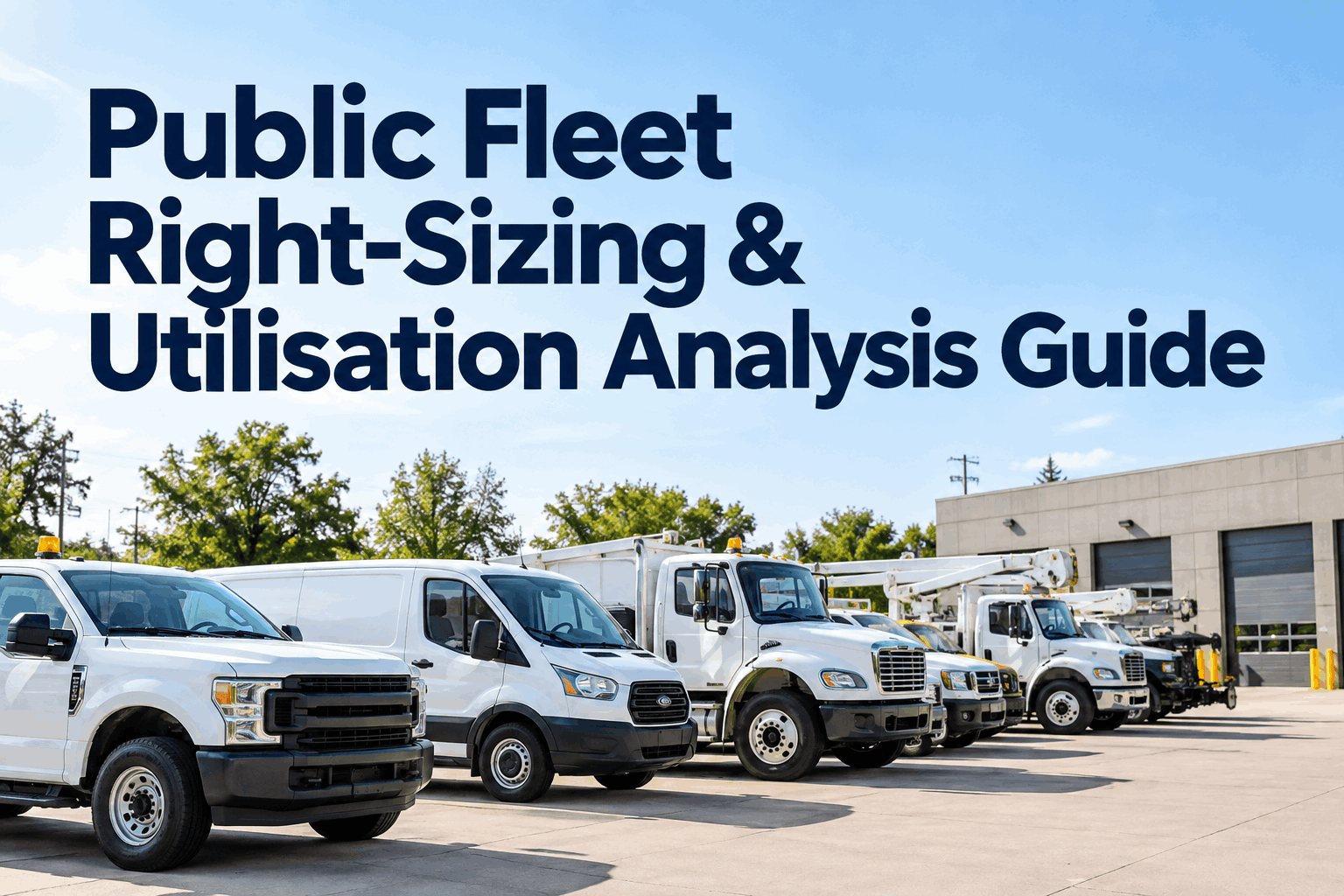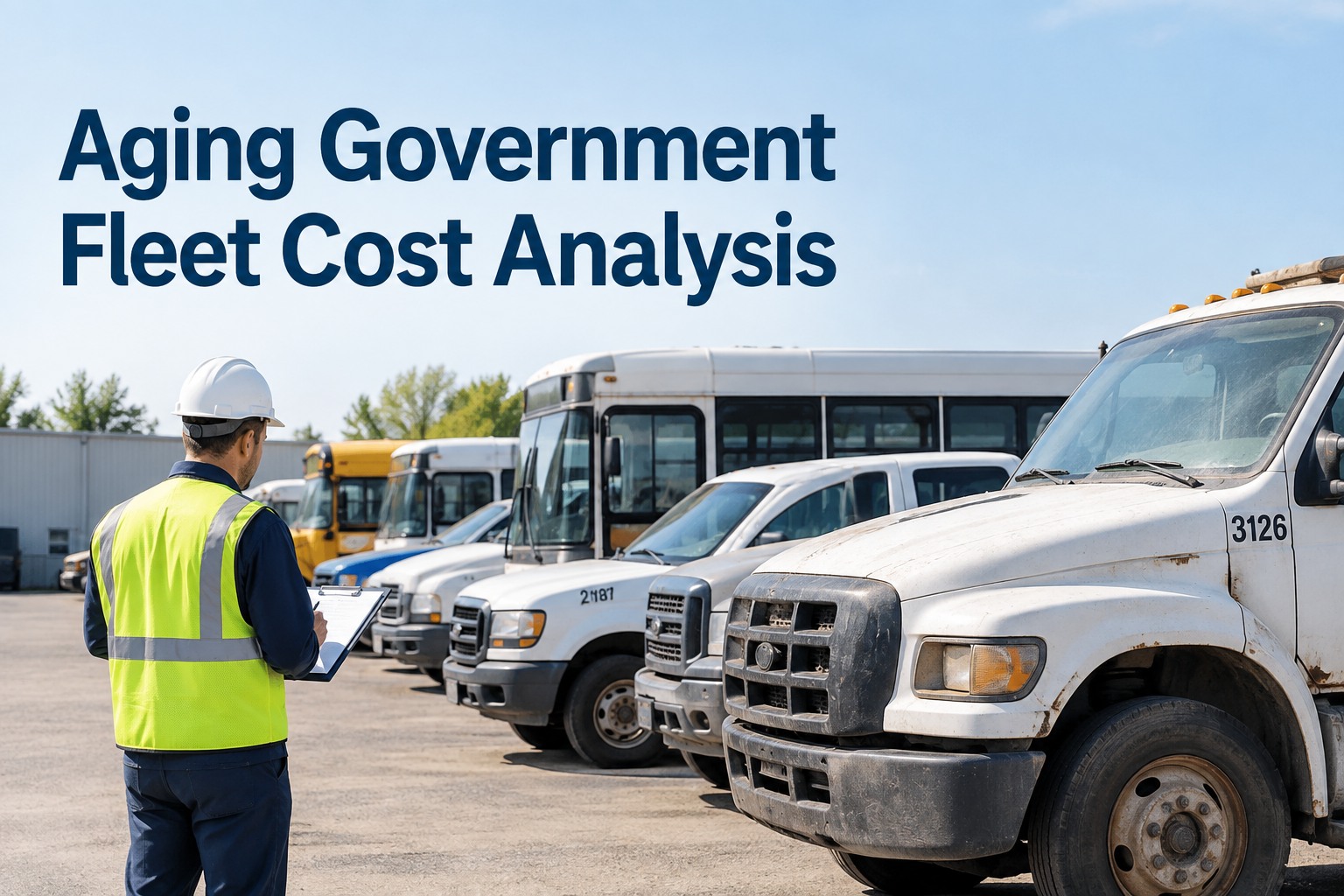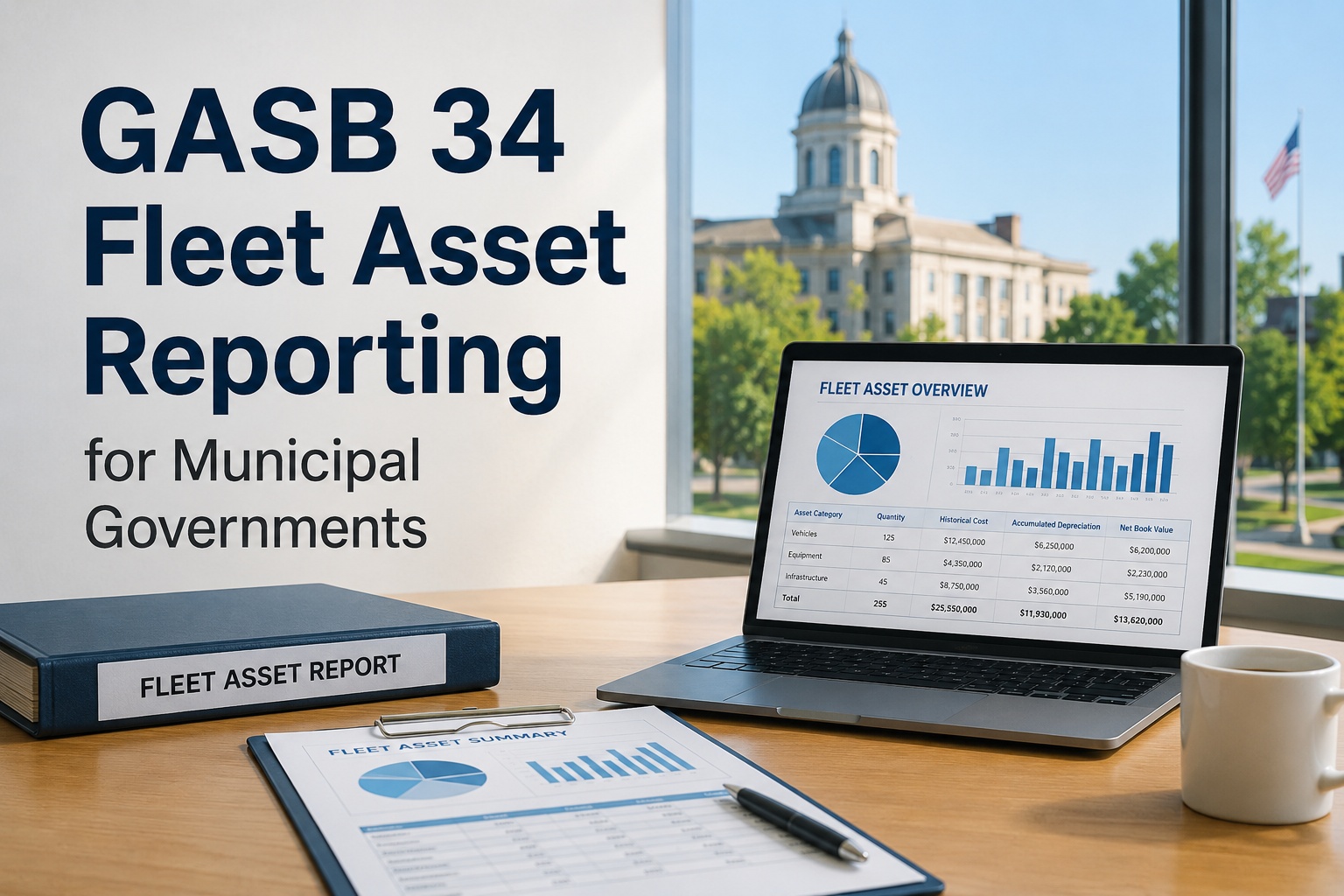
Government fleet rightsizing is not simply cutting vehicles from a budget. It is matching the number, type and availability of vehicles to real public-service demand. This guide shows how to combine utilization, maintenance costs and peak-period needs to identify assets worth retaining, sharing, replacing or retiring.
Government Fleet Rightsizing: Keep the Capacity, Remove the Waste
Build a defensible fleet-size recommendation from actual use, mission criticality, vehicle condition and lifecycle cost—not mileage alone.
What Is Government Fleet Rightsizing?the difference between cutting vehicles and matching service demand
Government fleet rightsizing is the ongoing process of aligning fleet size and vehicle types with actual agency workloads. A good analysis considers utilization, seasonal demand, emergency response, geography, shared-use options, maintenance availability and total cost. It can result in fewer vehicles, a different vehicle mix—or even additional capacity for a critical function.
“This truck drove only 2,000 miles. Sell it.”
Low annual mileage can hide essential standby service, severe-duty operating hours or seasonal peak use.
“Check use, mission, cost and alternatives.”
Confirm whether the asset is essential, whether another unit can cover demand and whether its replacement cycle makes sense.
The Four Signals That Matteruse more than odometer readings to evaluate the fleet
Utilization
Miles, engine hours, days used, trips and assigned versus available days, normalized by vehicle mission.
Mission coverage
Peak workload, emergency reserve, geography, specialized attachments and required response times.
Maintenance burden
Repair spending, repeat defects, service frequency, downtime and work-order history.
Lifecycle economics
Replacement cost, remaining useful life, fuel and maintenance expense, and alternative service options.
Use HVI asset records and maintenance history to build the cost and condition side of this review. For demand measures such as trip counts or reservations, combine HVI records with dispatch, assignment or booking data from the agency. Book a Demo of HVI Asset and Maintenance Reporting to explore the available data.
A Fleet Rightsizing Decision Mapmove each vehicle through the same evidence-based gates
Preserve emergency, specialized and mandated capacity before applying utilization thresholds.
Check seasonal schedules, severe weather, field response and simultaneous assignments.
Test vehicle suitability, travel distance, staff access and operational overlap.
Compare maintenance, fuel, replacement timing and the cost of sharing or renting.
Retain, pool, reassign, change class, replace or retire—with a documented reason.
Make fleet-size decisions with maintenance evidence
Review vehicle records, preventive maintenance, work orders and repair spending in HVI before making a budget recommendation.
Example: Which Vehicles Deserve a Closer Look?an illustrative municipal fleet scorecard—not industry benchmarks
| Asset / duty | Annual use | Maintenance cost | Mission context | Initial action |
|---|---|---|---|---|
| Pickup A · inspections | 9,800 mi | $1,400 | Daily assignments | Retain |
| Sedan B · administration | 2,100 mi | $3,200 | Flexible trips | Test pooling |
| Truck C · storm response | 1,400 mi | $2,000 | Critical standby | Protect reserve |
| Van D · field support | 4,600 mi | $6,800 | Repeated failures | Review replacement |
All assets, mileage and costs above are fictional examples. A low-use emergency truck should not be treated the same way as a lightly used administrative sedan.
Annual maintenance spend ÷ annual miles × 1,000
This measure helps compare like-for-like vehicles, but it can mislead for equipment measured primarily by engine hours, severe-duty work or standby missions. Always review the underlying work orders and use an appropriate denominator. Sign Up Free to organize fleet maintenance records.
From Fleet Data to a Budget Recommendationa visual evidence chain for fleet directors and finance officers
Class, age, duty, department
Miles, hours, trip demand
Cost, defects, downtime
Retain, pool, replace, retire
HVI supports the asset and maintenance-record portions of this evidence chain. Agencies should bring in trip-booking, dispatch, staffing and service-demand information where needed; HVI should not be mistaken for a dedicated motor-pool reservation platform.
Set Utilization Targets by Vehicle Classwhy a single fleetwide benchmark can distort decisions
Bar lengths are illustrative design elements, not actual utilization rates or recommended thresholds. Establish baselines by vehicle class, department and service mission before defining local targets.
Track changes across multiple months rather than making decisions from one quiet season. A replacement plan should also account for vehicle condition and maintenance trends, not just a utilization snapshot.
A Practical 30-Day Rightsizing Reviewturn a broad cost-reduction goal into a controlled pilot
Inventory and classify
Confirm assets, departments, vehicle classes and emergency exceptions.
Collect evidence
Gather miles, hours, assignments, work orders and maintenance expenses.
Test alternatives
Model sharing, reassignment, rental and replacement without reducing required coverage.
Approve a pilot
Document assumptions, service safeguards, owners and review dates.
Start with a manageable vehicle group—such as administrative sedans—rather than making simultaneous changes to emergency, specialty and field-service fleets. Recheck service levels after the pilot.
Know which vehicles cost more than they contribute
Bring asset records, maintenance costs and repair history into one review so fleet directors can justify retention, reassignment and replacement decisions with confidence.
Government Fleet Rightsizing: FAQs
What is government fleet rightsizing?
It is a structured review of whether a public fleet has the right number and mix of vehicles for its service needs. It combines utilization, operational demand, mission criticality, vehicle condition and cost.
How do you identify underutilized government vehicles?
Compare miles, engine hours, active days and trip demand within similar vehicle classes, then check peak use and standby obligations. Low mileage alone does not prove a vehicle is unnecessary.
What fleet utilization benchmark should a municipality use?
There is no universal threshold that fits administrative sedans, public works trucks and emergency units. Establish local baselines by mission and class, and evaluate readiness alongside use.
How can maintenance costs affect rightsizing decisions?
High repeat-repair costs and extended downtime can make reassignment or replacement more economical. Compare costs against the vehicle's work, age, remaining useful life and available alternatives.
Can HVI manage a government motor pool and rightsizing analysis?
HVI supports fleet asset records, inspections, preventive maintenance, repair history and maintenance-related reporting. For reservations, trip demand and dispatch utilization, agencies may need complementary operational data or tools.