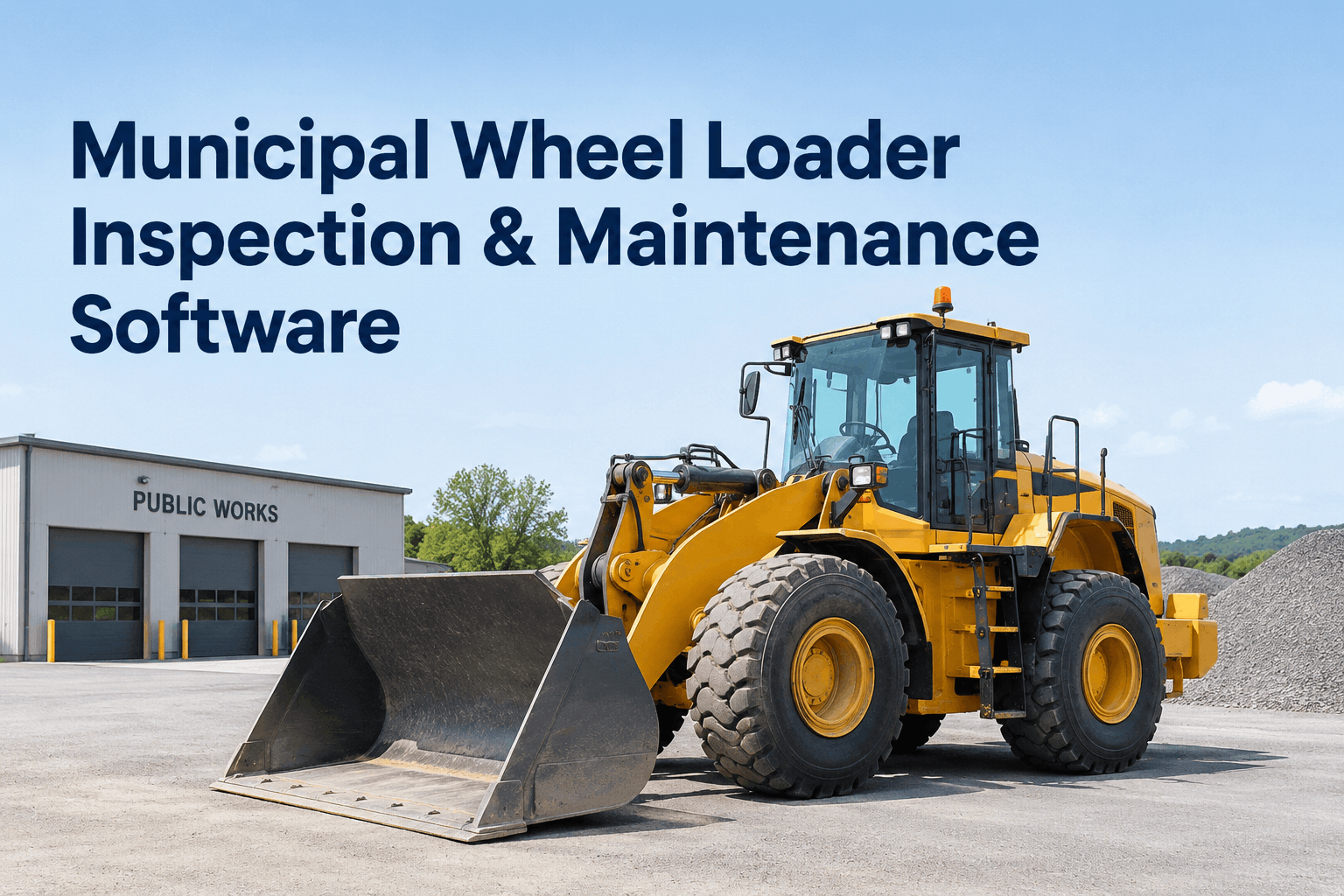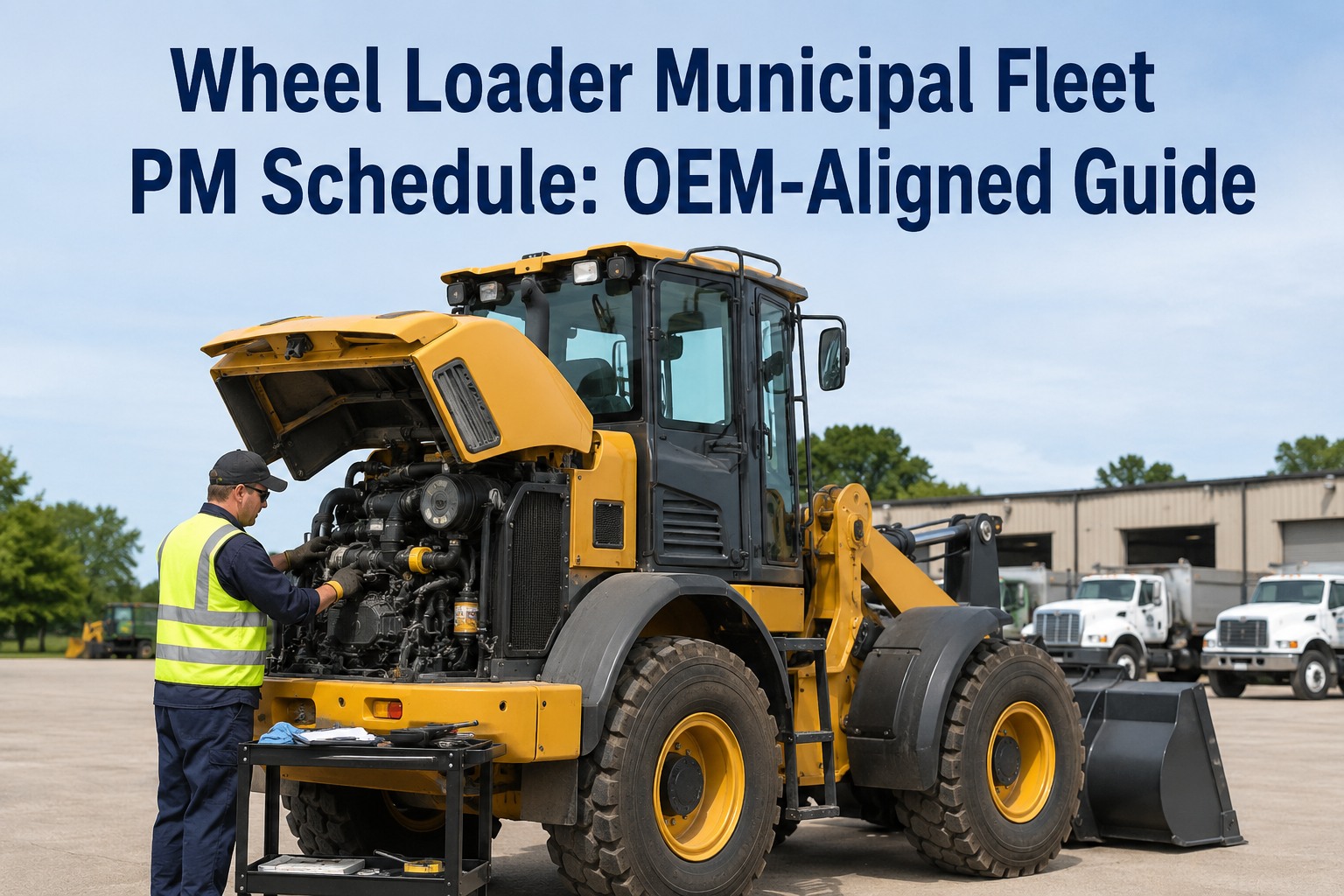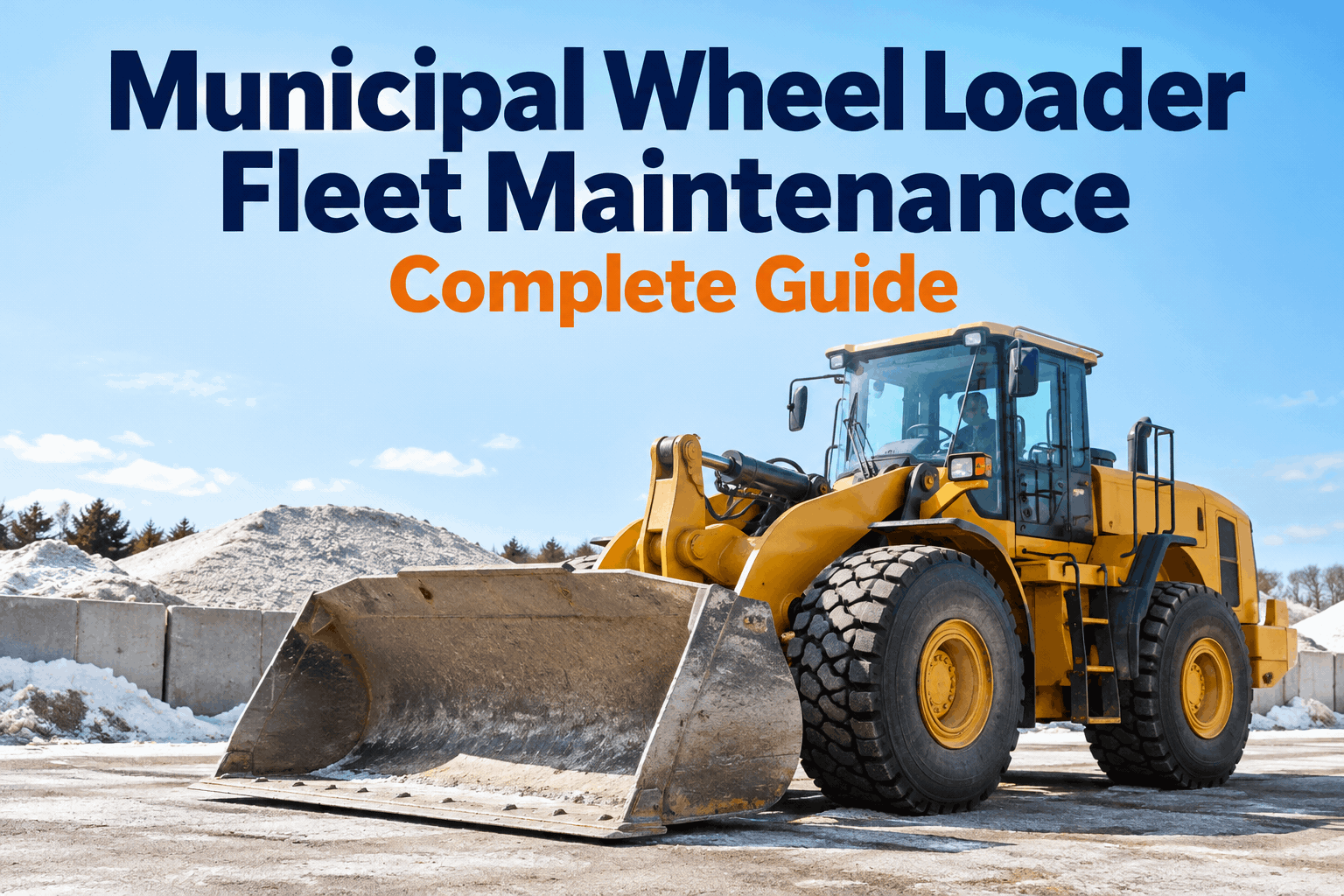
Your wheel loader lives two different lives. Half the year it's grading gravel and loading trucks in dust; the other half it's bolted to a plow pushing wet snow in deep cold, logging hours twice as fast.Municipal wheel loader maintenance fails when it treats those seasons as one — a calendar schedule misses the winter hour-spike, and the loader that hauled sand all summer isn't ready for the first storm. This guide splits the job the way the machine does. Start free and set up hour-based PM.
Municipal Wheel Loader Maintenance Is Two Jobs on One Machine
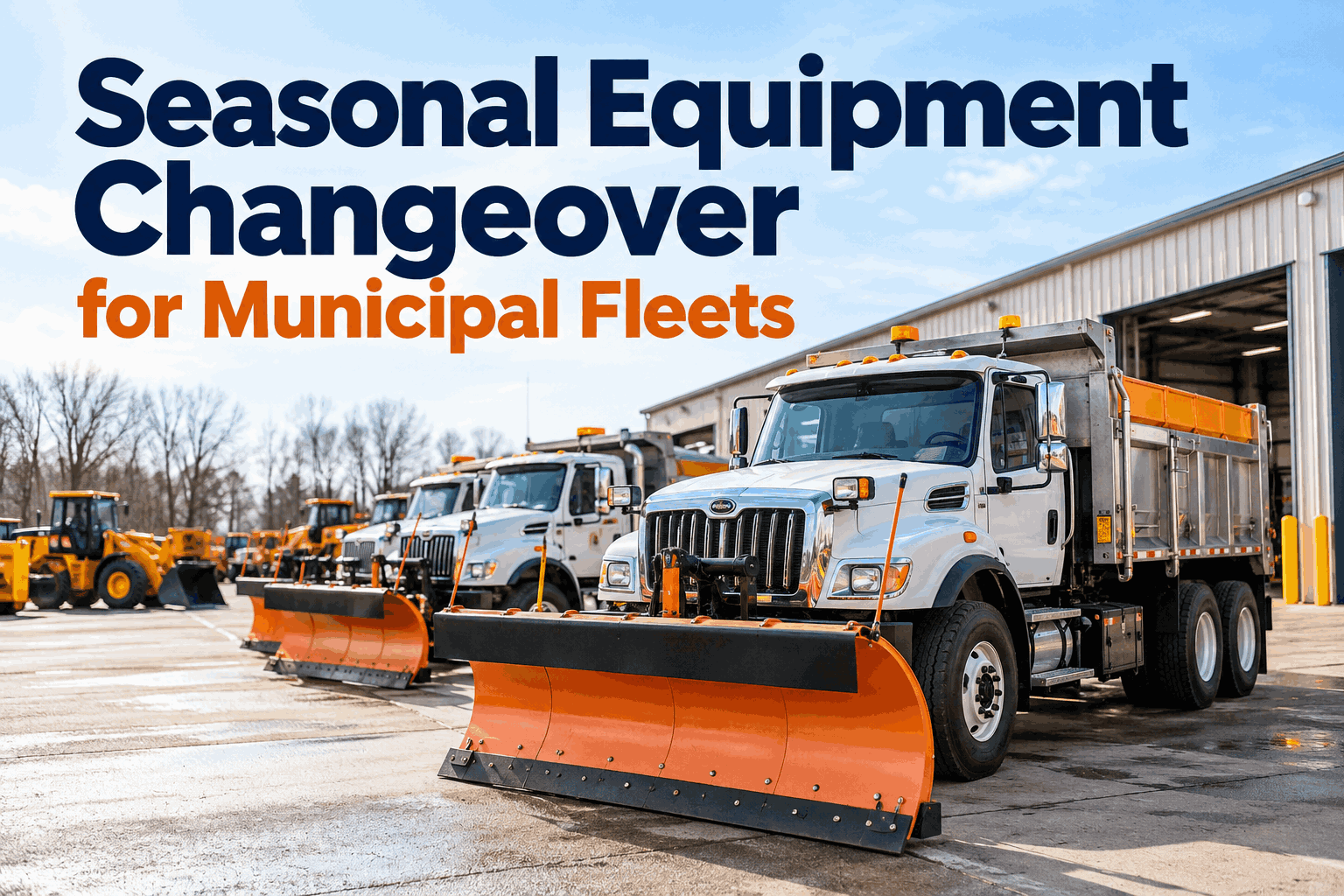
Summer grading and loading, winter plowing — same loader, two duty cycles that wear it in opposite ways. Maintain it for one and it fails at the other. Here's how to cover both.
- Grading & loading
- Dust & abrasion
- Hydraulics worked hard
- Plowing & pushing snow
- Salt, cold, corrosion
- Hours stack up fast
One loader, two wear patterns. The PM plan has to change with the season, not the calendar.
A wheel loader doesn't run on miles — it runs on hours, and in a municipal fleet those hours arrive unevenly. A unit might log 400 hours across a quiet summer and then 400 more in six weeks of storms. Tie maintenance to the hour meter and the plan keeps pace; tie it to the calendar and you'll service a machine that barely moved while the plow loader blows past its hydraulic interval mid-season. Everything below follows the hours and the season.
Hours, not monthswhy municipal wheel loader maintenance follows the meter
Here's the trap a calendar schedule walks into. Two identical loaders, same PM date on the wall — but one plowed all winter and one sat. By the time the "quarterly" service comes around, the plow unit is hundreds of hours overdue on its hydraulic filter while the yard unit gets serviced early for nothing.
Those winter months are where PM intervals get blown through unnoticed. Hour-based scheduling triggers the service when the machine has actually earned it — which is the whole point of tracking by meter. Book a demo to see hour-based scheduling. For the exact OEM interval numbers by tier, our wheel loader PM schedule by OEM tier breaks down Cat, Deere and Komatsu side by side.
Two seasons, two stress mapswhich systems each duty cycle attacks
The reason one maintenance plan can't cover the year is that summer and winter hit different parts of the machine. Match the attention to the season and you stop chasing failures.
Summer — grading & loading
- Cooling system — radiator and fins pack with dust; clean often or it overheats
- Air filtration — abrasive dust loads filters fast; check restriction daily
- Hydraulics — heavy loading cycles stress pumps, hoses and the return filter
- Pins & bushings — grit accelerates wear at the articulation joint and bucket pivots
- Tires — cuts and chunking from rock and debris underfoot
Winter — plowing & snow
- Cold-start & hydraulics — oil must warm before load; cycle 10–15 min in extreme cold
- Battery & starting — cold cuts cranking power sharply; CCA batteries, block heater
- Coolant & fuel — 50/50 coolant mix; top off fuel each shift to limit condensation
- Corrosion — road salt eats pins, cylinders and the undercarriage; wash it off
- Plow edge & couplers — cutting-edge wear and quick-coupler condition before every storm
Build the inspection template once for each season and the right checks surface at the right time of year. Book a demo to see seasonal templates in action.
The seasonal checklista working municipal wheel loader maintenance checklist
Here's the checklist a foreman can actually run — the daily walkaround that never changes, plus the two seasonal changeovers that catch a machine up before its duty cycle flips. In HVI these become tap-through templates; failed items open a work order on the spot.
Daily walkaround — every shift
- Engine oil, coolant and hydraulic levels
- Walk-around for leaks under the machine
- Tire condition and inflation
- Grease articulation and bucket pivot points
- Lights, beacon, backup alarm and horn
- Bucket, teeth and cutting edge condition
Summer changeover
- Clean radiator and cooling fins of dust
- Check air filter restriction indicator
- Inspect hydraulic hoses for abrasion
- Pin and bushing play at the center joint
- Switch to summer inspection template
Winter changeover
- Confirm coolant mix and antifreeze rating
- Test battery and fit block heater
- Wash salt off undercarriage and cylinders
- Inspect plow cutting edge and quick coupler
- Switch to winter inspection template
Run the daily every shift and the changeover at each season flip, and the loader is never caught out by the work it's about to do. Start free and load these checklists on your loaders.
PM that follows the machinehour-based service, even where there's no signal
A loader works in a gravel pit, a salt shed or a snowed-in lot — rarely where there's a clean cell signal. This is where the inspection has to capture offline and sync later, and the PM has to count the hours the machine actually logs, not a date someone typed in an office.
Captured in the yard with no signal, synced at the shop — the 250-hour service is counting down by real hours, and the worn plow edge already has a work order.
That's the backbone of hour-based preventive maintenance for heavy equipment: the schedule tracks the machine, not a wall calendar, and the inspection works wherever the loader does. Book a demo to see offline capture on a loader.
From a maintenance foreman who runs loaders year-round
We used to service everything on a quarterly calendar, and every winter the plow loaders would come in with hydraulic oil that looked like coffee — they'd done triple the hours of the summer schedule and nobody caught it. Now the PM counts hours, so the storm units flag themselves when they're due, salt or no salt. The thing I didn't expect was the seasonal checklist catching worn cutting edges before the first push — that alone saved us a couple of torn-up plow frames. The loader tells us what it needs now instead of us guessing off a date.
Municipal wheel loader maintenance — quick answers
Should wheel loader maintenance be scheduled by hours or calendar?
By engine hours. A loader's wear tracks how much it works, and municipal loaders log hours very unevenly — a quiet summer, then a heavy plow season. Hour-based PM services each unit when it's actually earned the interval; a calendar misses the winter hour-spike entirely.
What's different about maintaining a loader used for snow plowing?
Winter adds cold-start care, battery and coolant checks, and heavy salt exposure that corrodes pins, cylinders and the undercarriage — so washing becomes part of the routine. You also inspect the plow cutting edge and quick coupler before storms, none of which matter during summer grading.
What goes on a daily wheel loader inspection?
Fluid levels, a leak walk-around, tire condition, greasing the articulation and bucket pivots, and a check of lights, beacon, alarm and horn, plus the bucket teeth and cutting edge. It's a short walkaround every shift — the point is catching the small thing before it strands the machine mid-task.
How does cold weather affect loader hydraulics?
Cold hydraulic oil is thick and slow to move, so running under load before it warms stresses pumps and seals. In extreme cold, idle and cycle the boom and bucket for about 10–15 minutes to circulate warm oil first. Cold-weather hydraulic oil helps, but the warm-up habit matters most.
How does HVI help with municipal wheel loader maintenance?
HVI schedules PM off each loader's hour meter, lets you build separate summer and winter inspection templates, and captures inspections offline for sync when the machine is back in range. Failed checks open work orders automatically. It organizes the program — it doesn't replace your OEM service specs or technician judgment.
Keep municipal wheel loader maintenance in step with the work the machine is doing
HVI schedules every loader service off real engine hours, switches inspection templates with the season, and captures checks offline in the yard or the storm — so the loader is ready for grading in July and plowing in January, without a missed interval in between. Live across your equipment in under two weeks.
No credit card · No hardware · Hour-based loader PM from day one