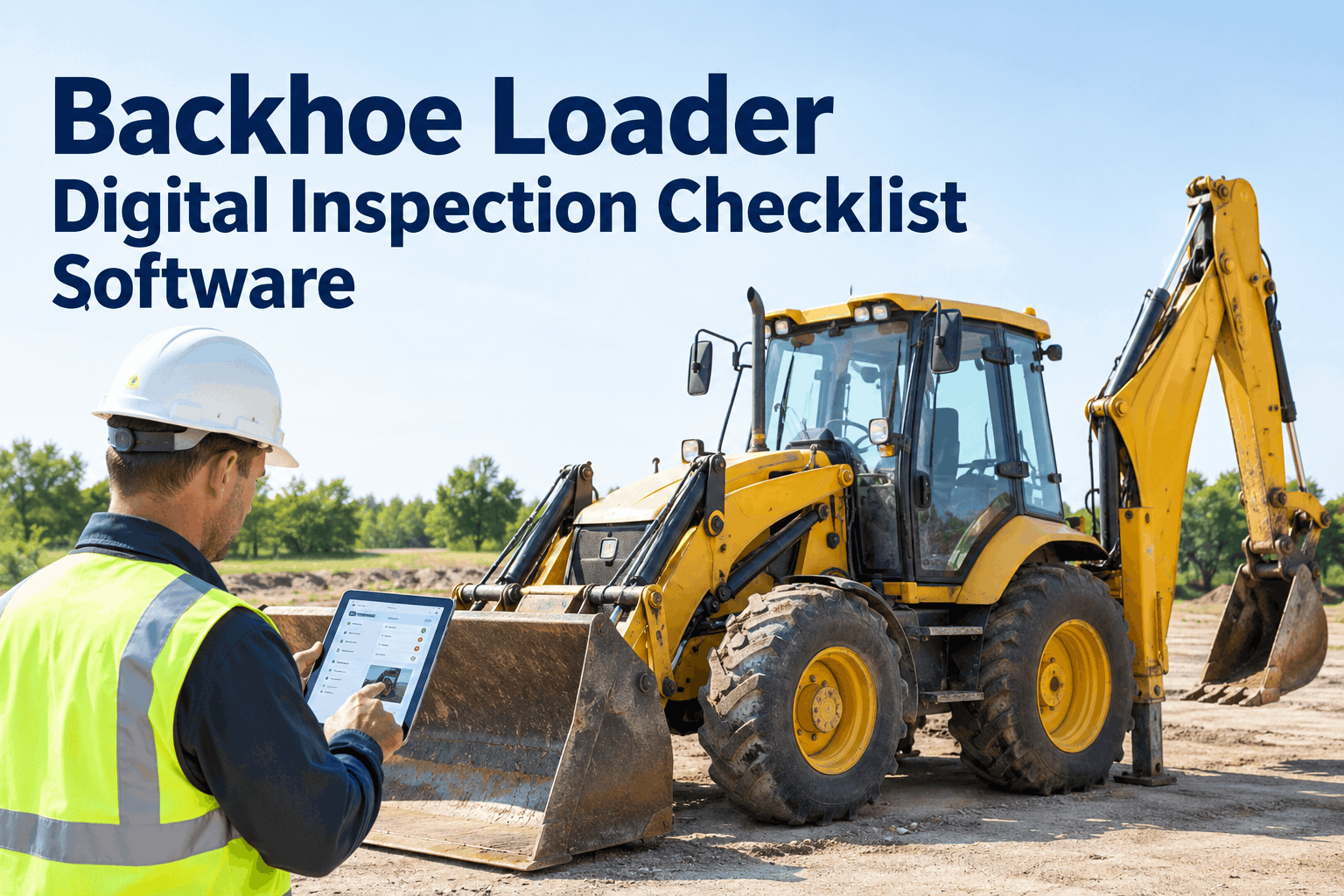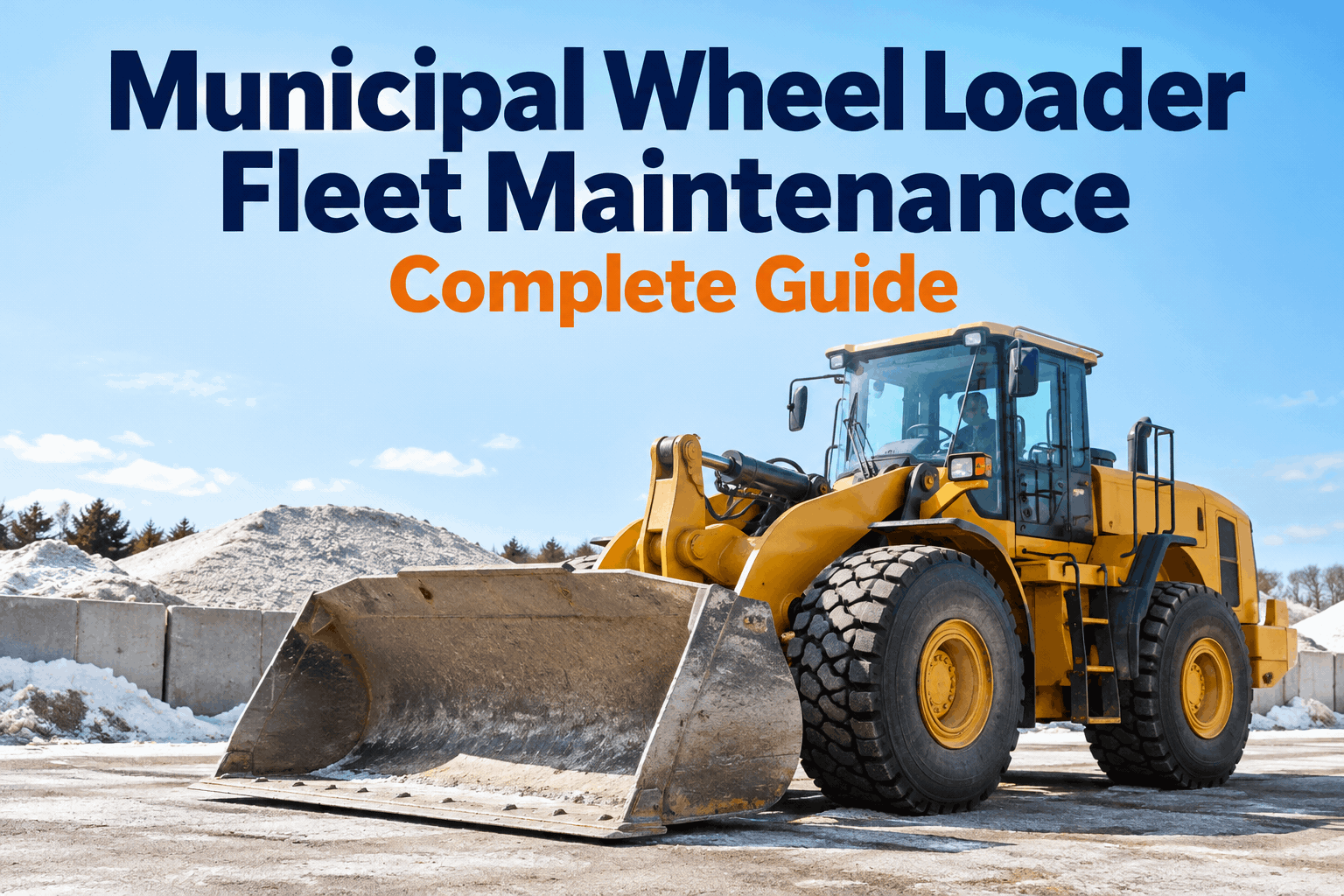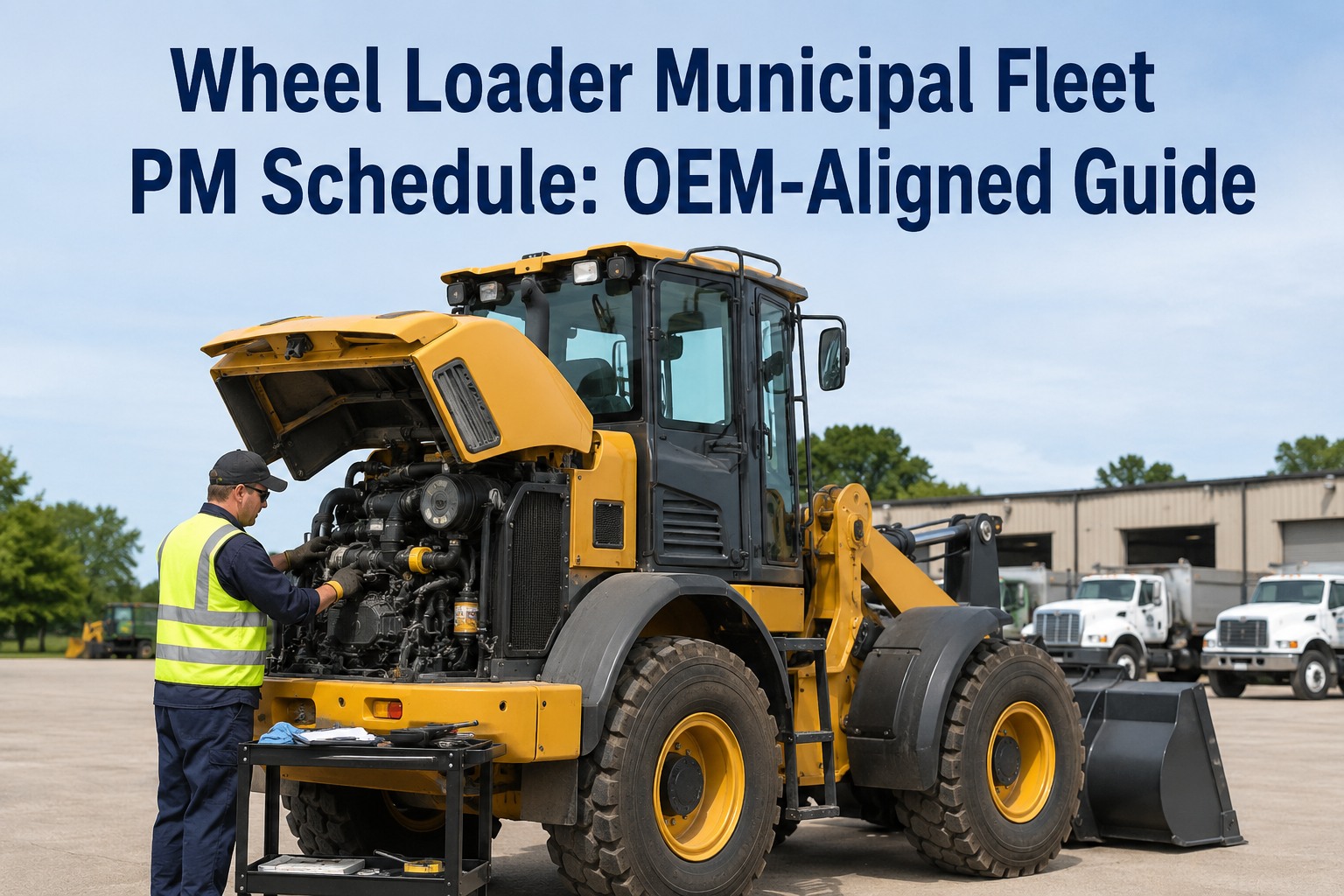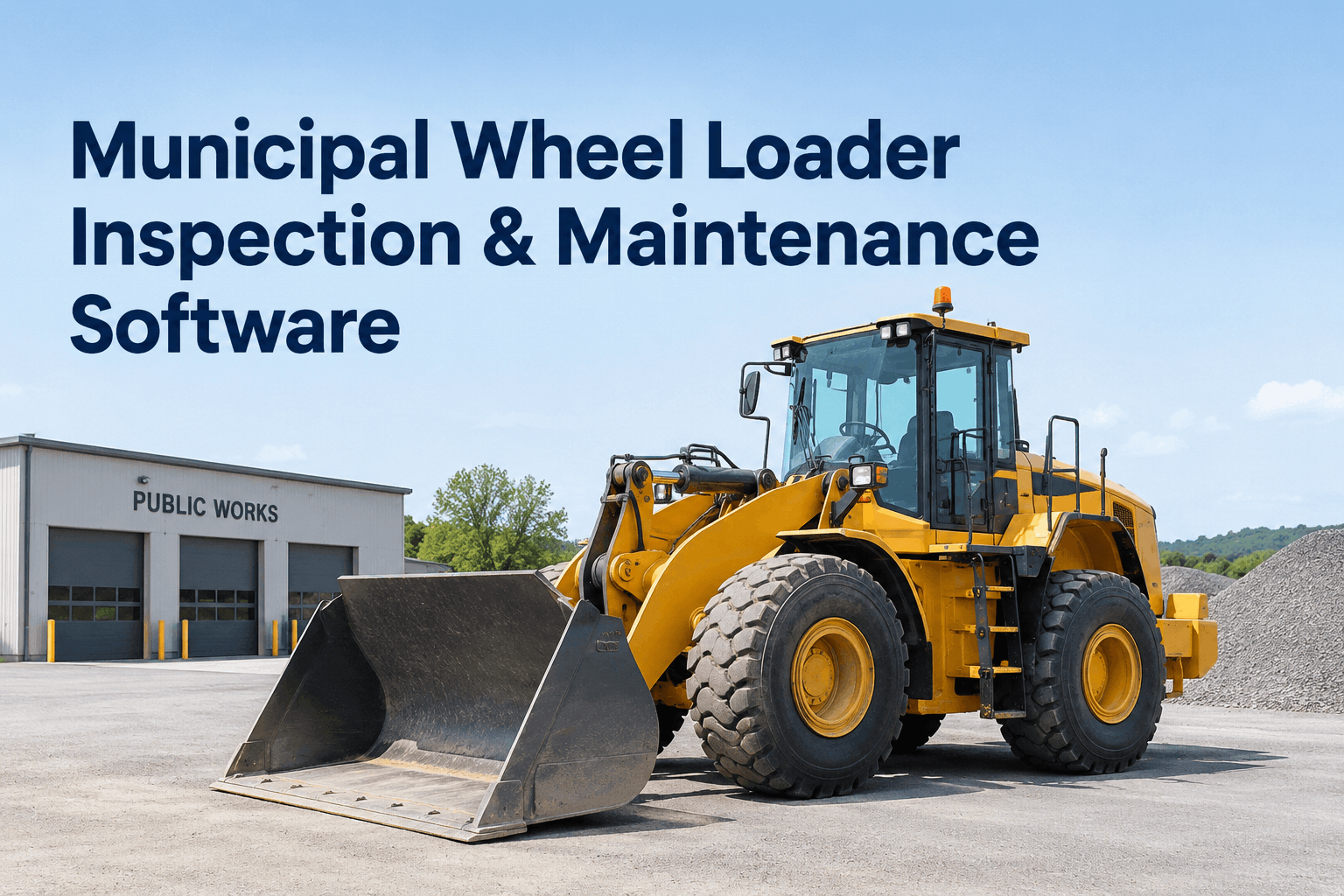
A municipal wheel loader doesn't fail on a form — it fails at the articulation joint on a February salt run, or on a worn bucket pin mid-load. Generic inspection forms skip the parts that actually strand a public works loader. Municipal wheel loader inspection software catches those defects on a phone and turns them into tracked work orders before they become a budget line — book a demo to see it on your loaders.
Municipal Wheel Loader Inspection & Maintenance Software
Asset-specific inspections for the parts a loader actually breaks — articulation, brakes, tires, bucket — with every defect flowing straight into a tracked, audit-ready work order.
Articulation joint — play detected
Flagged on pre-shift inspection · 2 photos
The parts a generic form skipswhere a municipal wheel loader actually wears and fails
A pickup checklist asks about lights and wipers. A wheel loader lives or dies on the heavy articulated gear doing the work — the parts a municipal wheel loader inspection checklist has to put in front of the operator every shift.
Bucket & linkage
Pins, bushings, cutting edge and cylinders that take every load — worn pins are a dropped bucket waiting to happen.
Articulation joint
The hinge the whole machine pivots on. Play or a leaking pin here is the number-one municipal loader down-day.
Hydraulics
Pumps, hoses and cylinders under constant load — a chafed line strands the loader and leaves a mess to clean up.
Brakes
Loaded and working slopes and salt domes — brake wear a pickup form never asks about, checked every shift.
Tires & wheels
Cut and chunked on rubble and curbs, run at working load — a sidewall gone is an afternoon lost to a service call.
HVI lets public works teams build a loader-specific template so every one of these is on the walkaround — not assumed. You can set up wheel loader inspection templates once and every operator taps the same critical points, every shift.
From flagged defect to closed recordthe inspection-to-work-order workflow, start to audit
On a municipal fleet the inspection isn't the end — it's the start of a trail a city auditor can follow. Here's the lifecycle each defect runs, from the operator's phone to the record that answers an audit.
Inspect on a phone
The operator walks the loader pre-shift and logs each system — articulation, brakes, hydraulics, bucket.
Flag with a photo
A defect is captured with a photo and a note, tied to the exact unit — no paper slip to lose.
Work order opens
The flag becomes a work order assigned to the shop, with the part checked against inventory.
Audit-ready record
The inspection, the fix and the sign-off land on one dated record — the answer when the city asks.
Preventive maintenance rides the same rails: schedule it by engine hours, odometer or calendar, and a due service becomes a work order automatically. See how engine-hour preventive maintenance keeps a loader from drifting past its service window.
A down loader stops a route
When the only loader for a salt route or a transfer station is down, the work doesn't happen — and on a public schedule, a missed route is a call to the department, not just a line in a log.
An unflagged defect is a liability
A brake or articulation fault that nobody recorded is a safety and liability exposure for the municipality — a signed, dated inspection is the proof the fault was caught and acted on.
A budget question needs an answer
When a repair cost or a replacement request lands in front of the council, “we think” doesn't hold up — a per-unit history of inspections, defects and work orders does.
The municipal wheel loader inspection checklistgrouped by system, the way an operator actually walks it
This is the pre-shift walkaround a public works loader should run before it touches a salt pile or a job site — grouped by the systems that strand a loader, each line observable on the machine.
Articulation & frame
- Articulation joint free of play, pins and locks sound
- No leaks at the center pivot or steering cylinders
- Frame and welds clear of cracks
Bucket & hydraulics
- Bucket pins, bushings and cutting edge sound
- Lift and tilt cylinders hold, no drift
- Hoses and fittings clear of chafe and leaks
Brakes & tires
- Service and park brakes hold on a grade
- Tires clear of cuts and chunks, pressure set
- Wheel nuts and rims tight
Fluids, lights & cab
- Engine oil, coolant and hydraulic levels good
- Lights, beacon and backup alarm working
- Seatbelt, horn and mirrors sound
Each line can require a photo or reading, so a finished walkaround is evidence, not a tick. Start free and build your loader walkaround on your own units.
What the work order looks like on filethe record a public works manager pulls in seconds
When the articulation flag from this morning becomes a repair, the whole thread is on one unit record — so a down loader or a budget question is answered with evidence, not memory.
The same records roll up into fleet-wide equipment status and uptime reporting — so a public works director can see which loaders, which defects and which costs need attention across the whole yard, instead of chasing paper from three different operators. The quickest way to judge it is on your own units — book a demo on your municipal loaders and watch one defect run the full lifecycle.
From a public works fleet supervisorwhy the loaders stopped surprising him
Our loaders ran on paper walkarounds that nobody read until something broke. The articulation and the bucket pins were always the culprits, and always a surprise. Now the operator flags it on a phone, it's a work order before the loader leaves the yard, and when the city asks why a unit was down I pull the whole history in front of them. During snow season that record is the difference between a hard question and a clean answer.
Frequently asked questionsmunicipal wheel loader inspection & maintenance software
What does municipal wheel loader inspection software do?
It runs asset-specific pre-shift inspections on a phone — articulation, brakes, hydraulics, bucket — and turns any defect into a tracked, photo-backed work order on one loader record. Book a demo to see it on your units.
How is this different from your wheel loader PM schedule guide?
This page is the inspection-to-work-order workflow. For OEM-aligned engine-hour intervals specifically, see the municipal loader PM schedule guide, or book a demo for the full picture.
Can it schedule preventive maintenance by engine hours?
Yes — PM triggers on engine hours, odometer or calendar, and a due service becomes a work order automatically. See preventive maintenance or book a demo for your loader mix.
Is the record good enough for a government audit?
Yes — every inspection, defect, work order and repair is dated, signed and photo-backed on one unit record, pulled in seconds for a council or audit question. Book a demo to see the audit trail.
How fast can a public works fleet get started?
Most teams run digital walkarounds on day one and layer in PM and reporting over the first weeks — no hardware to install. Start free with your loader list, or book a demo for a guided setup.
Run your municipal loaders on one audit-ready record
Municipal wheel loader inspection and maintenance software that checks the parts a loader really breaks, turns every defect into a tracked work order, schedules PM by engine hours, and keeps the whole history dated and photo-backed — mobile in the yard, ready for the council in the office.
No hardware · Loader-specific templates · Audit-ready from day one