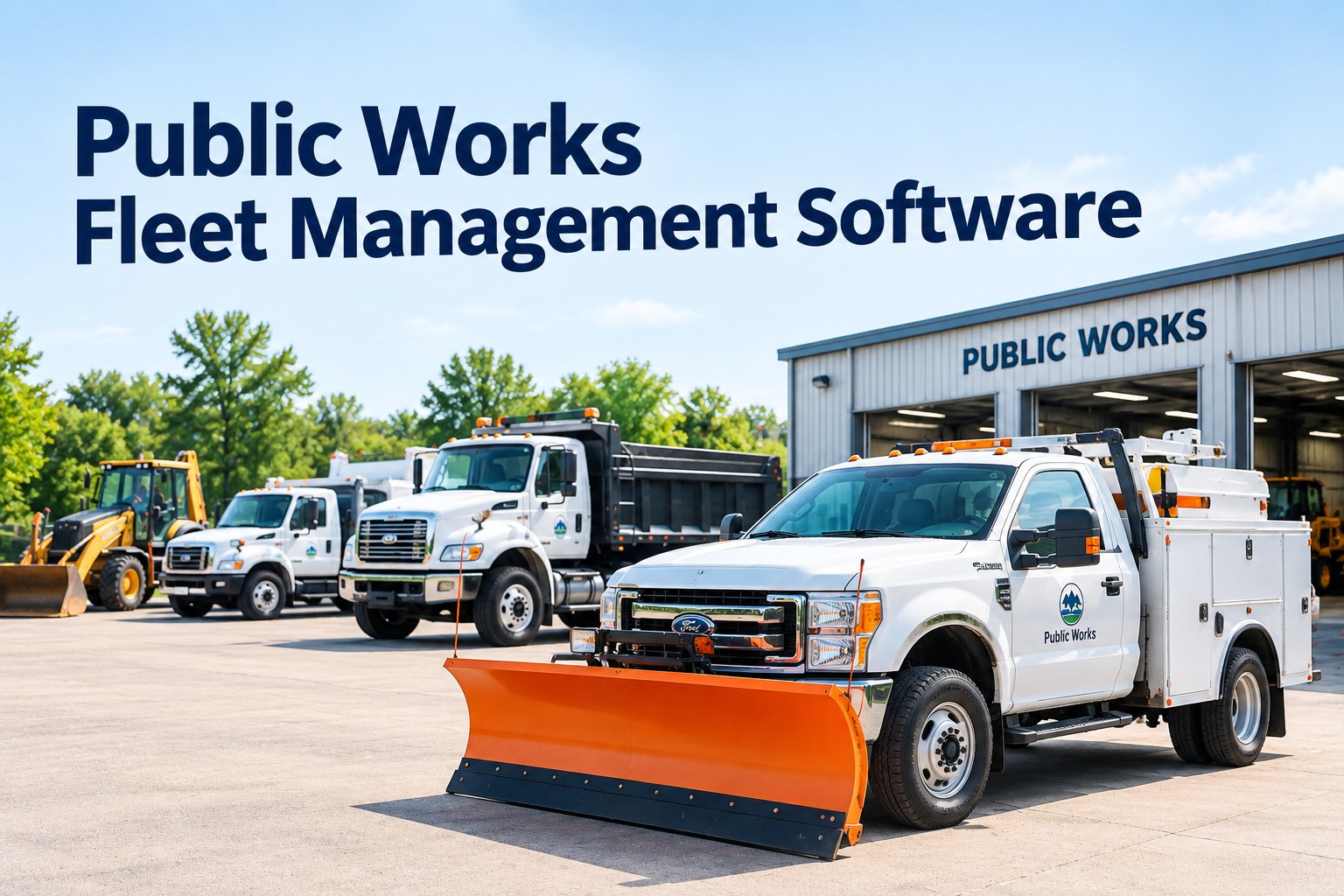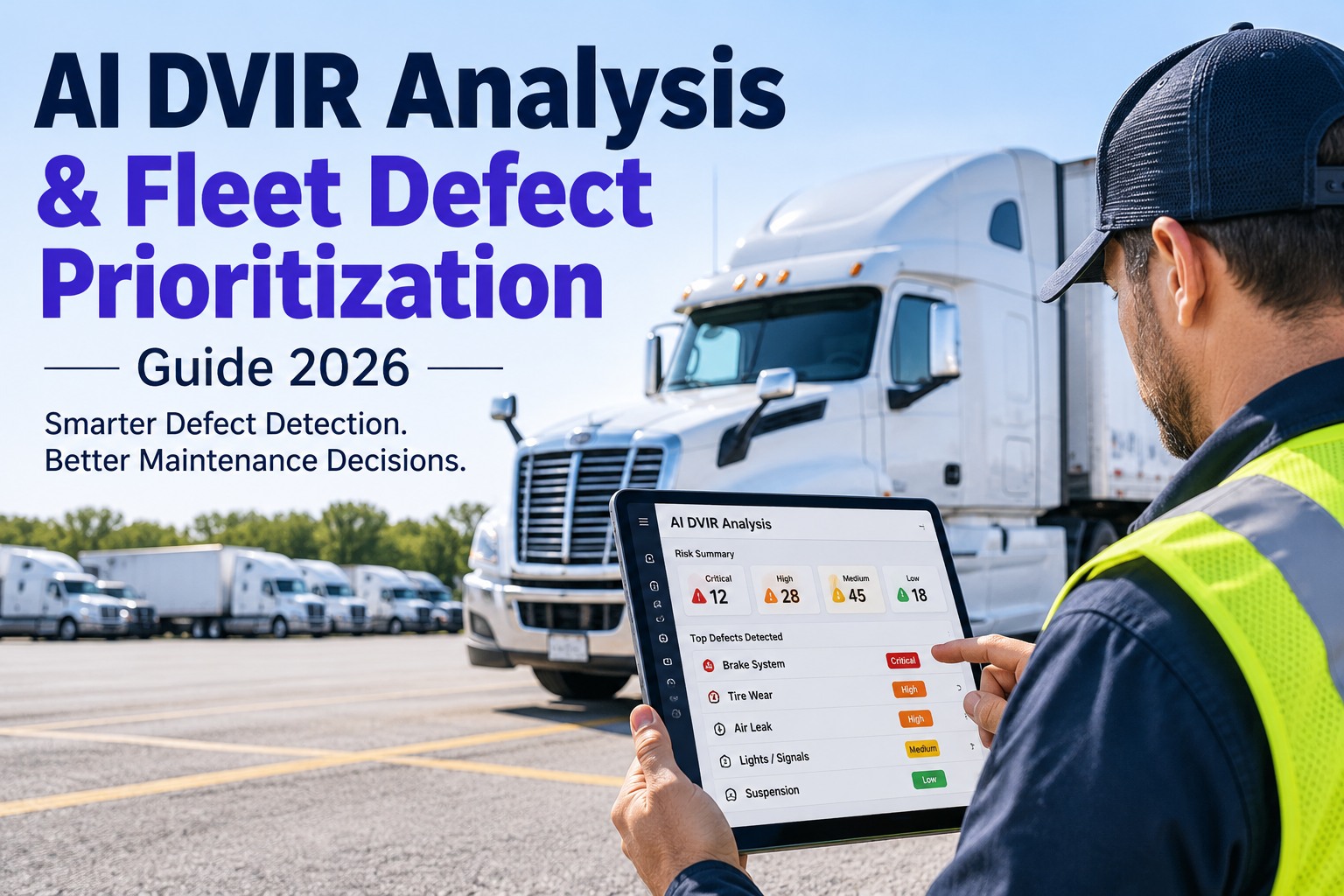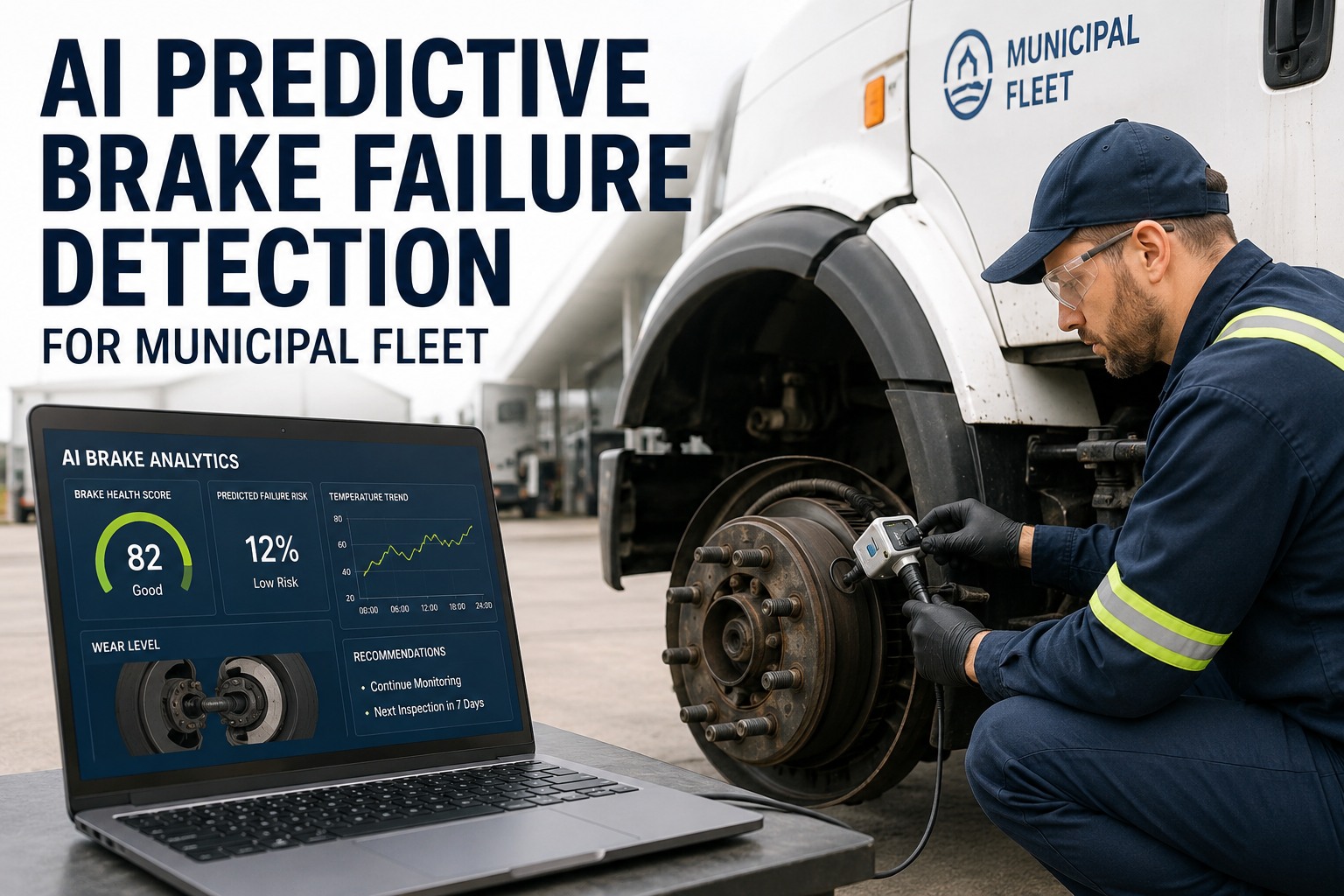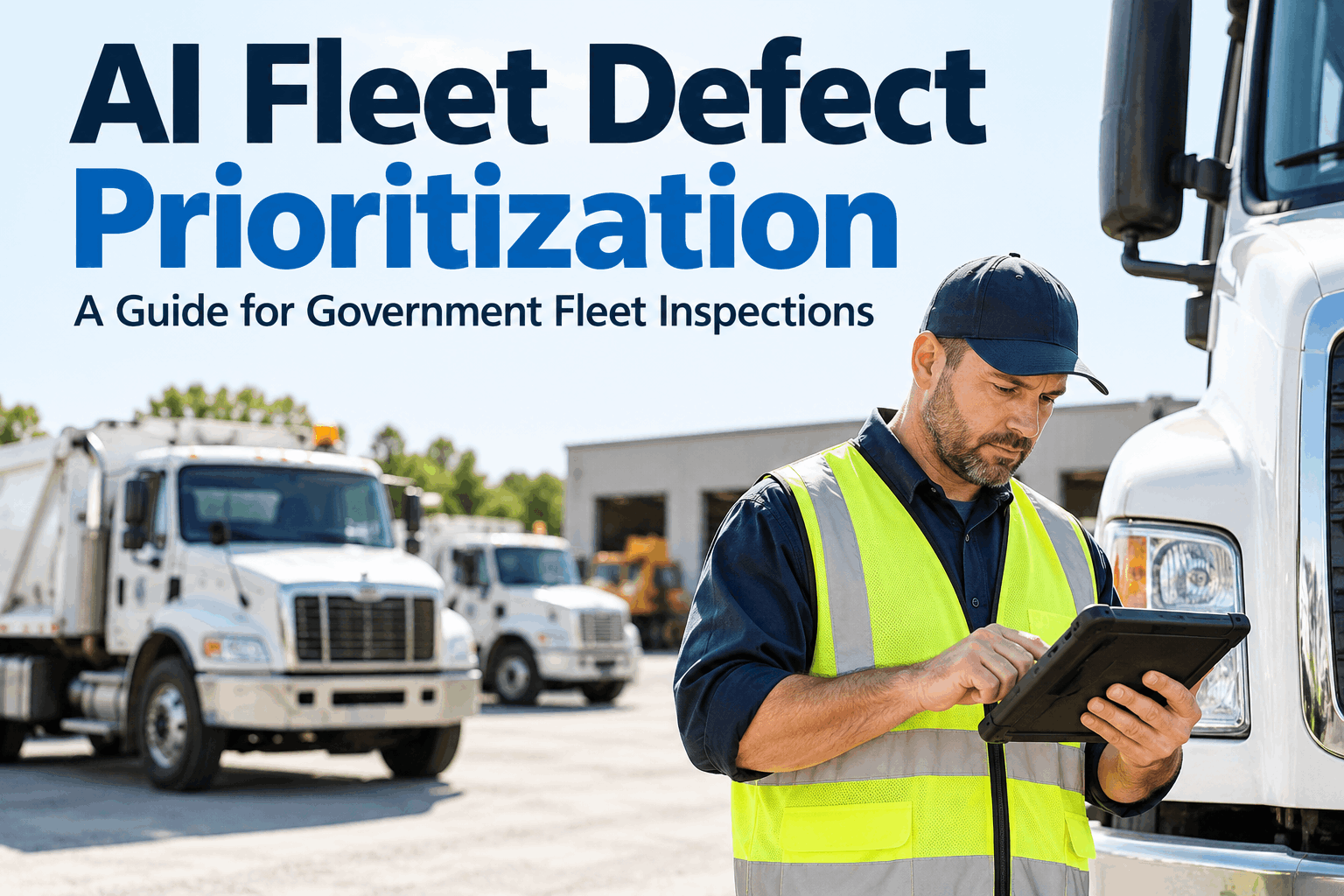
At 6:20 a.m., your municipal garage has three new inspection reports: a sanitation truck with a brake warning, a parks pickup with a broken mirror, and a snowplow with a recurring hydraulic leak. All three need attention, but not in the same order. AI fleet defect prioritization helps government maintenance teams sort incoming findings, surface urgent risks, and move the right vehicles into the right repair queue before dispatch decisions are made.
Every defect matters. The order you handle them matters more.
When public works, utilities and parks submit inspections at the same time, a flat list of defects is not enough. Build a defensible triage process: flag immediate safety concerns, check vehicle context, assign repairs and record who cleared the vehicle.
AI can help organize inspection language, spot repeated problems and suggest which findings deserve attention first. It cannot inspect hidden components, confirm a repair or override a qualified person's safety judgment. That distinction matters when a vehicle serves residents, carries workers or responds to an emergency. For a closer look at how digital reports feed a maintenance queue, book a demo of HVI's inspection-to-repair workflow.
One inspection queue. Three accountable decisions.
Use AI to surface evidence. Use trained people and agency rules to decide whether a vehicle can operate.
Inspection evidence
Vehicle, component, symptom, photos, inspection time and prior defects.
AI-assisted triage
Possible severity and repeat patterns flagged for supervisor assessment.
Repair and clearance
Qualified review, work order, verified repair and documented release.
How AI fleet defect prioritization should rank inspection findings Use severity, exposure and evidence—not a single unexplained score
A good priority system begins with a clear rule: a suspected safety-critical condition receives immediate human review. The vehicle should not be released merely because a model calls the finding “moderate.” Then the maintenance team considers the type of defect, whether it is getting worse, the duty cycle and the consequence of losing that vehicle during service.
Potentially unsafe to operate
Examples include braking, steering, severe tire damage or a leak that could create a fire or loss-of-control hazard. Follow applicable rules and agency procedures; a qualified person decides whether the unit is held, repaired and cleared.
Growing fault or mission impact
A repeat hydraulic issue on a plow, intermittent starting fault on a standby truck or repeated coolant loss may require rapid diagnosis even when the precise failure mode is not yet confirmed.
Lower-risk finding after assessment
Minor wear or cosmetic damage may fit a planned service window, but only after checking whether it affects visibility, safety equipment, regulatory compliance or the intended assignment.
Priority is not the same as diagnosis. Document the reason for a classification, the person who approved it and the action taken. Book a demo to review digital defect records with your maintenance team.
From AI DVIR analysis to a closed maintenance work order The evidence chain that keeps a reported problem from disappearing
The real gain is not a colorful severity label. It is keeping the original observation connected to the repair. In a municipal fleet, the driver who reports the problem may work for a different department than the technician who fixes it. A connected record makes that handoff easier to follow.
Capture
Vehicle ID, checklist item, defect description, photo and inspection time.
Assist
AI flags possible severity, repeat patterns or missing context for review.
Decide
Supervisor verifies risk, applies hold rules and assigns ownership.
Repair
Technician records diagnosis, labor, parts and corrective work.
Verify
Authorized staff confirm resolution and document return to service.
What belongs in the defect record?
- Asset ID and department
- Inspection date, operator and checklist item
- Original wording and supporting photos
- AI suggestion, reviewer and final severity decision
- Vehicle status and work-order reference
- Repair evidence and return-to-service approval
What should AI never decide alone?
Whether a truck with a brake concern is safe for a public road; whether a steering defect meets an out-of-service threshold; whether a technician's repair is technically complete; or whether a department may disregard a mandatory inspection rule.
These require the applicable standard, trained personnel and a documented approval path. AI recommendations should be reviewable and correctable, not treated as final authority.
Digital inspection records, maintenance history and work orders can support this handoff. Sign up to start organizing vehicle inspection records in HVI.
Stop losing urgent defects between departments
See how HVI can connect field inspections, maintenance records and work orders so supervisors have a clearer starting point for review.
Government fleet AI inspections: what the model needs to know A defect description without vehicle context can lead to the wrong queue
“Hydraulic leak” is not a complete maintenance instruction. A slow seep at a fitting, a sudden loss of pressure and fluid spraying near a hot surface are different situations. The same issue on a standby snowplow during a storm can also have a different operational impact than on a spare unit in July. Good AI-assisted triage uses structured inputs, then asks a person to verify what the data cannot establish.
| Input | Why it changes the decision | What to check |
|---|---|---|
| Defect and component | Separates a cosmetic issue from a potentially safety-critical system. | Precise component, symptoms, photo quality. |
| Repeat inspection history | Shows whether the same fault has returned after prior work. | Previous reports, completed repairs, dates. |
| Vehicle assignment | Identifies service exposure and operational consequences. | Route, load, weather, emergency or standby role. |
| Condition and measurements | Supports diagnosis better than vague labels such as “bad.” | Leak rate, pressure, tread, fault code where available. |
| Maintenance status | Reveals open work orders and deferred corrective work. | Parts availability, technician review, hold status. |
One snowplow. Three inspection reports. A different priority.
On Monday, the operator reports a light hydraulic seep. On Wednesday, the same location is wet again despite a fitting adjustment. By Friday, the operator reports slower blade response. A flat inspection list shows three separate entries; a connected history shows a developing pattern that warrants investigation before the next deployment.
The right response is to verify the condition and apply the agency's operating and safety rules—not to let an algorithm declare the plow roadworthy. Book a demo to explore repeat-defect tracking.
Fleet repair prioritization: a rollout plan for public works Start with one department and measure decisions, not AI marketing claims
You do not need to rebuild every municipal maintenance process at once. Start with a limited vehicle group and a small set of well-defined defects. Compare the recommendations against experienced supervisors and your written safety procedures before extending the process to police support, utilities or emergency equipment.
Set the rules
Define critical defect categories, vehicle hold authority, escalation contacts and required documentation. Agree on which decisions must always be made by people.
Clean the records
Standardize asset IDs, checklist terms and repair categories. Check whether previous defect descriptions can be linked to the correct vehicle.
Run a supervised pilot
Review AI suggestions alongside human triage. Record false alarms, missed issues and the reasons for overrides. Keep existing safety controls in force.
Review and improve
Measure how quickly critical findings are acknowledged, how many repeat defects recur and whether repair closure evidence is complete.
Inspection submitted → qualified reviewer acknowledges it.
Same component flagged again after a documented repair.
Work orders with repair details and verified disposition.
A practical pilot should also test low-connectivity sites, shift changes and how supervisors correct an incorrect AI suggestion. Book a demo to discuss a government fleet inspection pilot.
Where HVI fits in an AI-assisted defect workflow Digital evidence first, human accountability throughout
HVI brings inspections and maintenance information into a connected fleet workflow. Its published product materials describe digital vehicle inspections, defect-related work orders, maintenance histories and AI-assisted analysis capabilities. The exact AI classification, alerts, approval controls and integration options available to your agency should be confirmed in a product demonstration and procurement review.
Digital inspections
Collect consistent observations across mixed municipal vehicles and equipment.
Vehicle history
Review earlier findings and maintenance work before setting the next repair priority.
Work orders
Give technicians a trackable corrective task linked to the reported issue.
Fleet reporting
Review defect trends, outstanding work and recurring issues across departments.
Explore HVI's digital inspection tools, maintenance management and government fleet solutions. To try organizing records with your team, sign up for HVI.
From the fleet manager's desk
“If a report says ‘brake problem,’ I don't want the software quietly deciding that it can wait. I want the original note, the photo if we have one, the truck's history and a clear person responsible for the decision. The value of AI is helping us find the reports that need a closer look before the morning dispatch rush.”
Illustrative fleet-management perspective; not a customer testimonial.
AI fleet defect prioritization — frequently asked questions
What is AI fleet defect prioritization?
AI fleet defect prioritization is the use of AI-assisted analysis to organize vehicle inspection findings by likely urgency and operational context. It can help surface repeat issues and route reports for attention, but qualified staff must verify critical findings and decide on vehicle release.
Can AI decide whether a municipal vehicle is safe to operate?
No. An AI suggestion should not replace a required inspection, a trained mechanic's diagnosis, applicable out-of-service rules or a designated supervisor's approval. Suspected critical defects need prompt human review and the agency's normal safety controls.
How does AI DVIR analysis help maintenance teams?
AI DVIR analysis can help organize defect descriptions, identify recurring findings and bring important reports to a supervisor's attention. When paired with digital inspection and work-order records, it may reduce manual sorting and make repair follow-up easier to track.
Which municipal vehicles benefit from defect prioritization?
Sanitation trucks, snowplows, public works pickups, utility service vehicles, parks equipment and other inspected assets can benefit from consistent triage. Priority rules should account for vehicle type, assignment, safety exposure and agency-specific operating requirements.
How can HVI support government fleet defect management?
HVI offers digital inspections, maintenance records, work-order workflows and fleet reporting, with AI-assisted inspection capabilities described in its product materials. Ask for a demo to verify the exact AI features, human approval steps, data access and configuration available for your fleet.
Make AI fleet defect prioritization useful—and accountable
Start with reliable inspection records, written safety rules and a clear owner for each repair decision. Then use AI-assisted review to help your team spot urgent findings and repeat problems without losing the evidence behind them. For government fleets, the best outcome is not an automated label: it is a documented, timely and defensible maintenance response.
Give every reported defect a clear next step
Bring inspection findings and repair records together, then explore how AI-assisted review could fit your municipal fleet's safety and maintenance procedures.