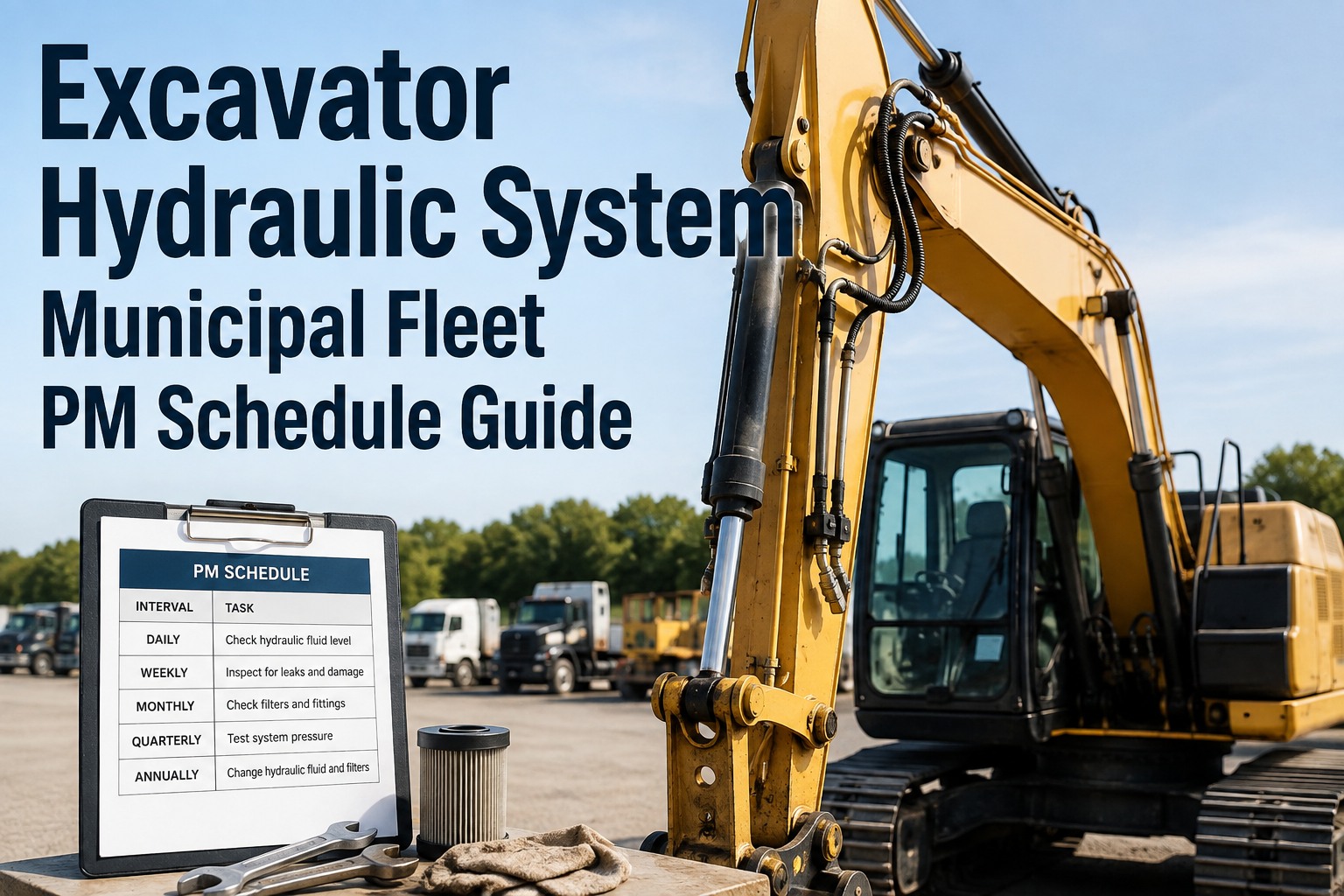
Your excavator hydraulic PM schedule is the difference between a machine that digs for 12,000 hours and one that needs a pump at 4,000. Most municipal fleets lose nearly half their hydraulic component life to contamination — not wear — because filters get changed late, oil samples get skipped, and nobody tracks ISO 4406 cleanliness codes per machine. If you're running Cat 320s, Komatsu PC200s, or Deere 250Gs across multiple sites, you already know the frustration: one operator tops up with the wrong oil, another ignores a weeping cylinder seal for three weeks, and suddenly you're looking at a $18,000 main pump rebuild that could have been caught with a $40 oil sample. The fix isn't more spreadsheets — it's a system that tracks every filter change, every oil analysis result, and every hour on every machine, then tells you what's due before it fails. You can see how HVI tracks hydraulic PM intervals on your own fleet in a 30-minute walkthrough.
How Many Hydraulic Pumps Did You Replace Last Year That Should Still Be Running?
Municipal excavators lose 40% of hydraulic life to contamination — not wear. This guide shows you the exact PM intervals for Cat, Komatsu and Deere machines, how to read ISO 4406 oil samples, and how to track it all without paper logs.
Excavator Hydraulic PM Schedule by Machine: Cat, Komatsu, Deere
Every OEM publishes different intervals for filters, oil changes and breathers. Miss one and you void warranty; run them all on the same calendar and you waste parts. Here's what the manuals actually say.
| Machine | Component | Interval | What Happens If You Miss It |
|---|---|---|---|
| Cat 320GC | Hydraulic return filter | 500 hours | Bypass valve opens, unfiltered oil circulates, pump wear accelerates |
| Cat 320GC | Hydraulic oil change | 2,000 hours | Additive depletion, oxidation, varnish on valve spools |
| Komatsu PC200 | Pilot filter | 500 hours | Sluggish controls, joystick drift, pilot pump cavitation |
| Komatsu PC200 | Hydraulic tank breather | 500 hours | Moisture and dust ingress, oil aeration, seal weep |
| Deere 250G | Hydraulic tank breather | 250 hours | Pressure imbalance, tank cracking, contamination ingress |
| Deere 250G | Suction screen | 1,000 hours | Pump starvation, cavitation noise, premature pump failure |
| All machines | Oil sample | 250–500 hours | No early warning of contamination, wear metals or water |
These intervals assume normal duty. If you're running hydraulic hammers, shears or working in dusty conditions, cut filter intervals by 30–50%. HVI lets you set different PM schedules per machine and per attachment, so a PC200 on hammer duty gets flagged at 250 hours while a 320 on trenching stays at 500. Book a demo to see how multi-interval tracking works across a mixed fleet.
How to Read ISO 4406 Codes and Catch Hydraulic Problems Early
An ISO 4406 cleanliness code of 18/16/13 means your oil has a controlled level of particles larger than 4, 6 and 14 microns. Exceed that target and you're grinding your pump, valves and cylinders from the inside.
Particles >4 microns
Silt and fine dust. Causes valve spool sticking and pilot circuit drift. Target: keep this number at or below 18 for excavator hydraulics.
Particles >6 microns
Wear metals and larger silt. Scratches cylinder bores and scores pump pistons. A jump from 16 to 19 means active component wear.
Particles >14 microns
Large debris from seal failure, hose delamination or poor top-up practices. Anything above 14 here means immediate filter and breather inspection.
Oil Sampling Workflow That Actually Works
Most municipal fleets sample once a year and file the PDF in a drawer. By the time you see a problem, the pump is already scored. Fleets that sample every 250–500 hours and act on the results cut hydraulic rebuilds by more than half. You can start logging oil samples free in HVI and set automatic reminders per machine.
Excavator Hydraulic Inspection Checklist for Operators and Technicians
Catching a weeping cylinder seal or a chafed hose in the daily walkaround saves you a $12,000 cylinder rebuild and three days of downtime. Here's what to check and when.
Daily (Operator Pre-Start)
- Hydraulic oil level in sight glass — top up only with correct ISO VG 46 or OEM-spec oil
- Visual check for oil leaks at cylinders, hoses, fittings and pump
- Listen for cavitation noise (gravel-in-a-blender sound) at startup
- Check for hose chafing at boom and stick pivot points
- Test all functions — sluggish or jerky movement means air or contamination
Weekly (Technician)
- Inspect hydraulic tank breather — clean or replace if clogged
- Check cylinder rods for scoring, pitting or chrome damage
- Inspect hose condition — look for weeping, bulging or outer cover wear
- Check pilot filter restriction indicator (if fitted)
- Torque check on pump mounting bolts and hose clamps
Monthly (Technician)
- Take oil sample for ISO 4406 and wear metal analysis
- Check system pressures at main relief and pilot circuits
- Inspect suction screen and clean if needed
- Check accumulator pre-charge pressure (if fitted)
- Review HVI dashboard for overdue PMs and repeat defects
Paper checklists get lost, pencil-whipped or ignored. HVI turns this into a mobile inspection that operators complete on any phone, with photo capture for leaks and automatic defect-to-work-order conversion. See how digital inspections work on excavators in a live demo.
What One Missed Filter Change Actually Costs Your Fleet
A $45 hydraulic filter and 30 minutes of labour feels easy to defer when the machine is busy. Here's the real math when that filter goes 200 hours overdue.
That's a 500:1 cost ratio. Municipal fleets running 10–15 excavators typically see 2–3 hydraulic failures per year that trace back to missed PMs or contamination. Cut that to zero and you've paid for a CMMS platform several times over. HVI tracks every filter, every oil change and every sample per machine, then alerts you 50 hours before anything is due. Sign up free and set your first PM schedule in 10 minutes.
Stop Losing Hydraulic Pumps to Missed Filter Changes
HVI tracks PM intervals, oil samples and inspection history for every excavator in your fleet — and tells you what's due before it fails.
How HVI Tracks Excavator Hydraulic PM Across Your Whole Fleet
You can't manage 15 different PM schedules across 10 machines with a whiteboard and a spreadsheet. HVI automates the tracking, alerting and record-keeping so nothing gets missed.
Multi-Interval PM Scheduling
Set different PM schedules by machine, component and duty cycle. HVI tracks engine hours from telematics or manual entry and alerts you 50 hours before any filter, oil change or sample is due. No more guessing or missed intervals.
Oil Sample Logging & Trending
Log every oil sample with ISO 4406 codes, wear metals and lab notes. HVI charts results over time per machine, so you see contamination trends before they become pump failures. Attach lab PDFs and photos for audit-ready records.
Mobile Inspections with Photo Capture
Operators complete daily hydraulic checks on any phone or tablet, with photo capture for leaks, hose damage and cylinder scoring. Defects auto-convert to work orders with timestamps and operator sign-off. No paper, no lost checklists.
Work Order & Parts Tracking
Every hydraulic repair, filter change and oil sample becomes a timestamped work order with parts used, labour hours and cost. Track filter inventory across multiple shops and get low-stock alerts before you run out of Cat 1R-0751s on a Friday afternoon.
HVI works on any device, integrates with GPS and telematics for automatic hour tracking, and gives you audit-ready records for warranty claims, insurance and client reporting. Book a 30-minute demo to see HVI running on excavator fleets like yours.
Excavator Hydraulic PM: What You Need to Remember
We used to lose two or three hydraulic pumps a year across our excavator fleet, and every one traced back to a missed filter or a skipped oil sample. Since we started tracking PMs in HVI and sampling every 300 hours, we haven't had a single hydraulic failure in 18 months. The system tells me what's due 50 hours out, and I can see the oil sample trends per machine. It's the difference between reacting to failures and preventing them.
Excavator Hydraulic PM: Your Questions Answered
How often should I change hydraulic oil on a Cat 320 excavator?
What does an ISO 4406 code of 18/16/13 actually mean?
Can I extend hydraulic filter intervals if the oil looks clean?
How do I track different PM schedules across a mixed excavator fleet?
What's the most common cause of premature hydraulic pump failure?
Ready to Stop Losing Hydraulic Pumps to Missed PMs?
See HVI tracking excavator hydraulic PM schedules, oil samples and inspections on your own fleet — book a 30-minute demo or start free today.
Free to start — Works on any phone — No card needed