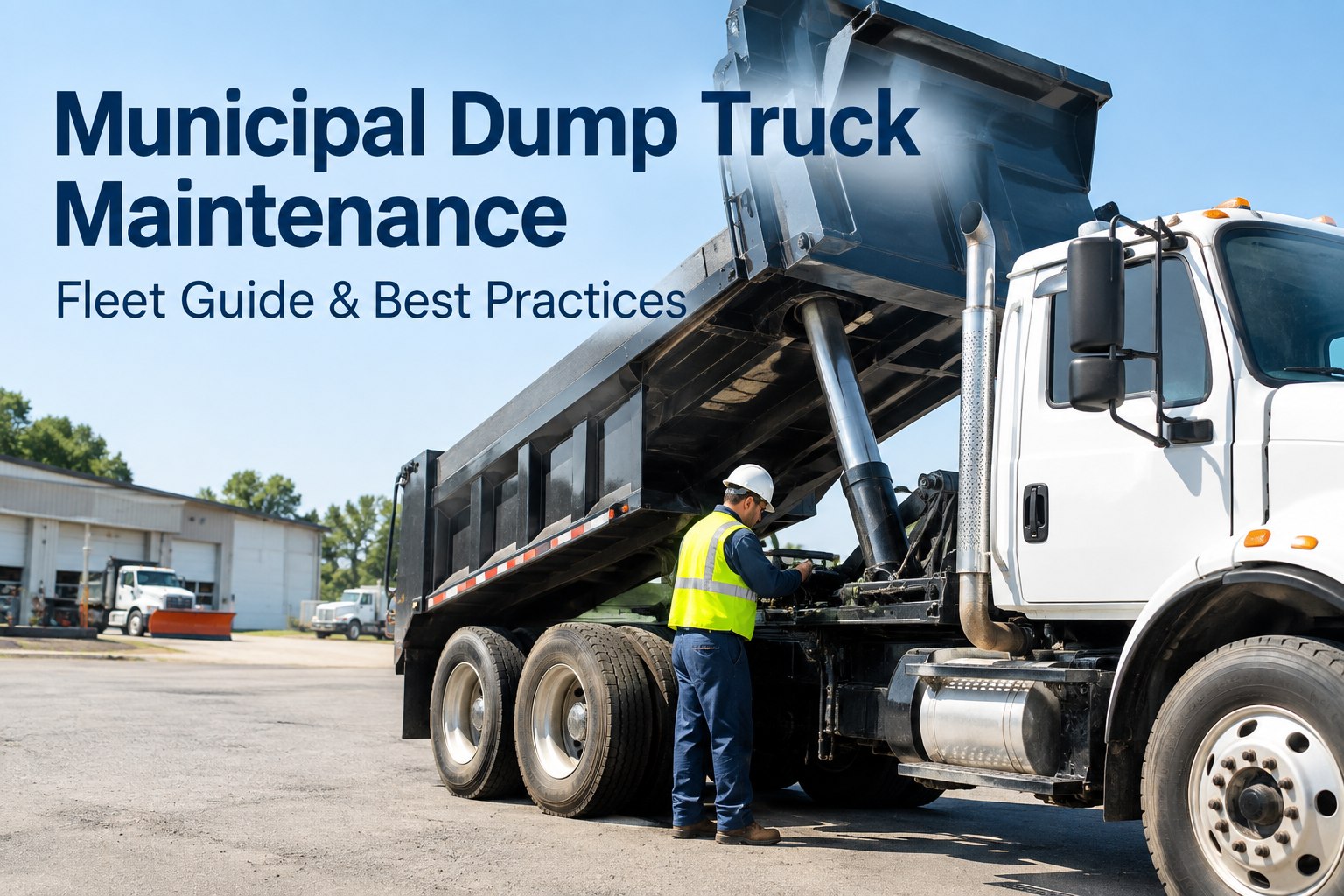
Municipal dump truck maintenance is harder than fleet maintenance anywhere else, and it's because your trucks live two lives. Half the year a public works dump truck is hauling aggregate and running highway miles. The other half it's a plow with a spreader bolted on, grinding through salt slush at 15 mph with the hydraulics working overtime. One asset, two duty cycles, and a PM schedule built for a normal truck misses most of what actually breaks. This guide walks through what wears out on a municipal dump, why mileage alone lies to you and how to build a program around it. Book a demo when you want to see it tracked per asset.
Municipal Dump Truck Maintenance Runs on Two Clocks at Once
Road miles track the chassis. Engine hours track the hydraulics, the plow, and the spreader. Schedule on one clock and you service the wrong half.
A garbage packer, a plow, and a haul truck can all be the same VIN in a municipal yard. The maintenance program most public works shops inherit was written for the highway half of that life and quietly ignores the rest. Below is the part it ignores — the systems that fail on a dump body, why a mileage-only schedule can't catch them, and the seasonal rhythm a working municipal program actually runs on.
Why a mileage-only PM schedule misses municipal dump trucks
Picture a snowplow dump that logged 4,000 road miles all winter — low enough that your mileage-based service interval never tripped. But those 4,000 miles took 600 engine hours, most of them idling with the plow down and the spreader auger turning. The hydraulic fluid degraded, the hoist cylinder seals took a full season of thermal cycling, and the PTO ran hundreds of hours the odometer never counted. On mileage, the truck looks barely used. On hours, it's overdue for three services.
That gap is the whole problem with municipal dump truck maintenance. The chassis and the work equipment age on different clocks, and the odometer only tells you about one of them. Preventive maintenance scheduled by both meter reading and calendar is the only way to keep the hydraulic side from sliding out of service unnoticed.
The hydraulics, PTO and spreader don't care how far the truck drove. They wear on time under load — and that's the half a mileage-only program never sees.
The dump body systems that break first
A standard DOT walkaround covers the truck as a commercial vehicle — brakes, tires, lights, steering. It says almost nothing about the equipment bolted to the frame, which is exactly where a municipal dump earns its keep and exactly where the expensive, dangerous failures live. These are the five systems a dump-specific inspection has to add, in the order they tend to cause trouble.
-
1
Hoist cylinders & the raised-body crush hazard
Inspect the rod for scoring, the seals for weeping, and the pin connections at both the frame and body pivots. A leaking hoist cylinder lets the body drift down under its own weight — and a body that won't hold up is a fatal crush hazard the moment anyone steps under it. The body prop must be deployed every single time, no exceptions. Scored rods caught early cost a seal; caught late they cost the whole cylinder.
-
2
Hydraulic hoses, fittings & fluid
At 3,000-plus PSI, a pinhole leak isn't a drip — it's a fluid-injection injury waiting to happen. Check hoses for chafe, bulge, and weep at the fittings, and read the fluid at the sight glass daily. On a plow truck running hundreds of hours a season, fluid degrades on hours, not miles, so a time-and-hour interval is what keeps it clean.
-
3
PTO engagement
Engagement and disengagement should be smooth and complete, with no grinding, and the indicator light has to work. A PTO that doesn't fully disengage drags on the driveline and quietly chews up the transmission and bearings. On municipal trucks that cycle the hoist and spreader constantly, PTO hours pile up fast — tracking PTO-related defects separately from chassis defects tells you which half of the truck is actually failing.
-
4
Tailgate latches, hinges & pins
The tailgate has to lock securely in both the closed and open positions. Worn pins let it swing in transit — and a tailgate that lets go under a loaded body on a public road is a catastrophic liability event for a municipality. This is a cheap part and a five-minute check that prevents a headline.
-
5
Body-up warning & suspension under load
Confirm the body-up light and alarm work — a raised body caught on an overpass or a wire is how dumps get destroyed. And inspect the suspension while the truck is loaded: a weak spring on one side changes the center of gravity and is a leading cause of tip-overs during a dump. Even loading front-to-back keeps you inside axle-weight limits.
Every one of these lives on the hydraulic-and-body side of the truck, which is why a chassis-only program keeps passing trucks that are one season away from a failure. Building a dump-specific inspection template that adds these items on top of the standard DVIR is the single highest-leverage change most public works shops can make.
Corrosion: the slow failure road salt builds in
If your municipal dump trucks spread salt, they also live in it. Road salt and the brine that clings to a plow chassis is relentless on the frame, the brake lines, the hoist frame, the wiring, and the spreader itself. It doesn't fail a truck on any one inspection — it's the slow one, the failure that shows up eighteen months later as a corroded brake line or a hoist frame with a crack starting at a rust pit.
The trucks that make it fifteen years in a northern municipality aren't the ones that never touched salt — they're the ones whose shops treated corrosion as a tracked, scheduled item instead of an act of god. Logging corrosion findings by asset turns a vague "it's getting rusty" into a repair history you can budget against.
The seasonal changeover a public works dump truck lives by
Municipal fleets don't run one calendar — they run a plow season and a construction season, and the truck changes jobs twice a year. The maintenance program has to change with it. The two changeovers are the busiest, highest-stakes days in the shop, because that's when equipment that's been idle gets bolted back on and pushed straight into service.
-
Fall
Plow-up changeover
Mount plows and spreaders, service hydraulics and PTO before the first storm, pressure-test the spreader controls, verify all lights and strobes. This is the deadline that can't slip — the first snow doesn't wait for the shop.
-
Winter
Salt-season running maintenance
Hour-based hydraulic checks, cutting-edge and spreader-chain wear, frequent undercarriage washes, and daily operator reporting on plow and spreader defects — the systems that only exist in winter.
-
Spring
Plow-down changeover
Pull and store the winter equipment, deep-clean off the season's salt, inspect the frame and hoist for corrosion, and convert the truck back to a hauler. Catch the winter's damage now, not in July.
-
Summer
Construction-season haul duty
Now the mileage clock leads — brakes, tires, driveline and alignment on distance intervals, plus hoist and tailgate checks on every aggregate haul. Use the quiet stretch to knock out deferred repairs.
A program that runs this rhythm keeps changeover from becoming a crisis, because the work is planned across the whole year instead of crammed into two panicked weeks. Scheduling seasonal PM and inspections by asset is how a shop of three techs keeps forty dual-duty trucks honest.
Records: the part public works can't afford to lose
Municipal fleets answer to auditors, insurers, and the public in a way a private carrier doesn't. When a dump truck is involved in an incident, the first question is always the same: show me the maintenance and inspection records. Paper DVIRs that get lost in a truck cab or a filing cabinet aren't an inconvenience here — they're a liability exposure for the municipality.
Federal rules require inspection records be retained for a defined period, and municipal risk policies often go further. The practical answer is a digital record that captures every inspection, defect, and repair by asset the moment it happens — signed, dated, and searchable — so that when the question comes, the answer is a two-minute export, not a two-day scramble. Keeping defect and repair history per truck also turns your fleet's own data into the case for next year's replacement budget.
Our snowplows would show almost no miles come spring, so the old schedule left them alone. Then we started reading engine hours and realized those trucks were doing 500-plus hours a winter with the hydraulics maxed the whole time. We'd been servicing them like they'd sat in the yard.
Switching to hours-and-mileage together caught it. First season, hydraulic-side breakdowns during storms dropped hard — and honestly the bigger win was the records. When our insurer asked for two years of inspection history on a truck, I pulled it in about five minutes instead of digging through a cabinet.
Frequently asked questions
Should municipal dump trucks be serviced by mileage or engine hours?
Both — and that's the core of municipal dump truck maintenance. The chassis systems (brakes, tires, driveline, alignment) wear with distance and should be scheduled on mileage. The work equipment (hydraulics, hoist cylinders, PTO, plow and spreader) wears with time under load and should be scheduled on engine hours plus a calendar interval. A plow truck can log very few road miles over a winter while running hundreds of engine hours, so a mileage-only schedule leaves the hydraulic side badly under-serviced. The fix is a PM program that tracks both meters on the same asset and triggers service on whichever comes due first.
What does a dump-specific inspection add beyond a standard DVIR?
A standard DVIR covers the truck as a commercial motor vehicle — brakes, tires, lights, steering, and so on. A dump-specific inspection adds the body and hydraulic systems the DVIR ignores: hoist cylinders (rod scoring, seal leaks, secure pins), hydraulic hoses and fluid, PTO engagement, tailgate latches and pins, the body-up warning light and alarm, and suspension checked under load. It also covers the body prop that must be deployed before anyone works under a raised body. These items are where the expensive and dangerous failures on a dump truck actually happen, so a configurable template that layers them on top of the DVIR is what makes the inspection genuinely fit for a dump.
How do you maintain hoist cylinders on a municipal dump truck?
Inspect hoist cylinders at every detailed service and during pre-trip walkarounds: look for scoring or scratches on the rod, weeping or leaks at the rod seals, and secure, un-worn pin connections at both the frame and body pivot points. Catching a scored rod early lets you replace a seal; missing it lets the scratch destroy the seal and eventually the whole cylinder. Keep the rod clean — road salt and grit are what score it in the first place. Critically, a leaking or worn cylinder that lets the body drift down is a crush hazard, so never work under a raised body without the safety prop deployed, and replace a worn cylinder with the same size and type rather than a substitute.
How does road salt affect dump truck maintenance and how do you fight it?
Road salt and brine corrode the frame, brake lines, hoist frame, wiring harnesses, and the spreader itself — and it's a slow failure, usually showing up a year or more after the exposure as a corroded brake line or a stress crack starting at a rust pit. Fighting it comes down to three habits: wash the undercarriage and spreader on a schedule (not just when someone remembers), inspect the frame and mounting points for rust pits and cracks separately from the body, and chase small corrosion findings like weeping fittings or frayed wiring before they become shop days. Logging corrosion findings by asset turns a vague sense that a truck is "getting rusty" into a documented repair history you can budget and plan against.
What does the seasonal PM changeover look like for a plow-and-haul dump truck?
A dual-duty municipal dump runs on a seasonal calendar. In fall, the plow and spreader go on, the hydraulics and PTO get serviced, and spreader controls and lights are tested before the first storm — a deadline that can't slip. Through winter, maintenance is hour-based hydraulic checks, cutting-edge and spreader-chain wear, frequent salt washes, and daily operator reporting on plow and spreader defects. In spring, the winter equipment comes off and gets stored, the truck is deep-cleaned of salt, and the frame and hoist are inspected for corrosion damage. Through summer the truck is a hauler again, so the mileage clock leads with brake, tire, driveline, and alignment intervals. Planning this rhythm across the whole year keeps the two changeovers from turning into crises.
Put every dump truck on the two clocks it actually runs on
HVI schedules PM by mileage and by engine hours on the same asset, holds dump-specific inspection templates beyond the standard DVIR, tracks seasonal changeovers, and logs every defect, corrosion finding, and repair by unit — signed, dated, and audit-ready, even when the operator is offline in the yard. See your own fleet in it before the next plow season.
No credit card · Works offline · Configurable dump & plow templates