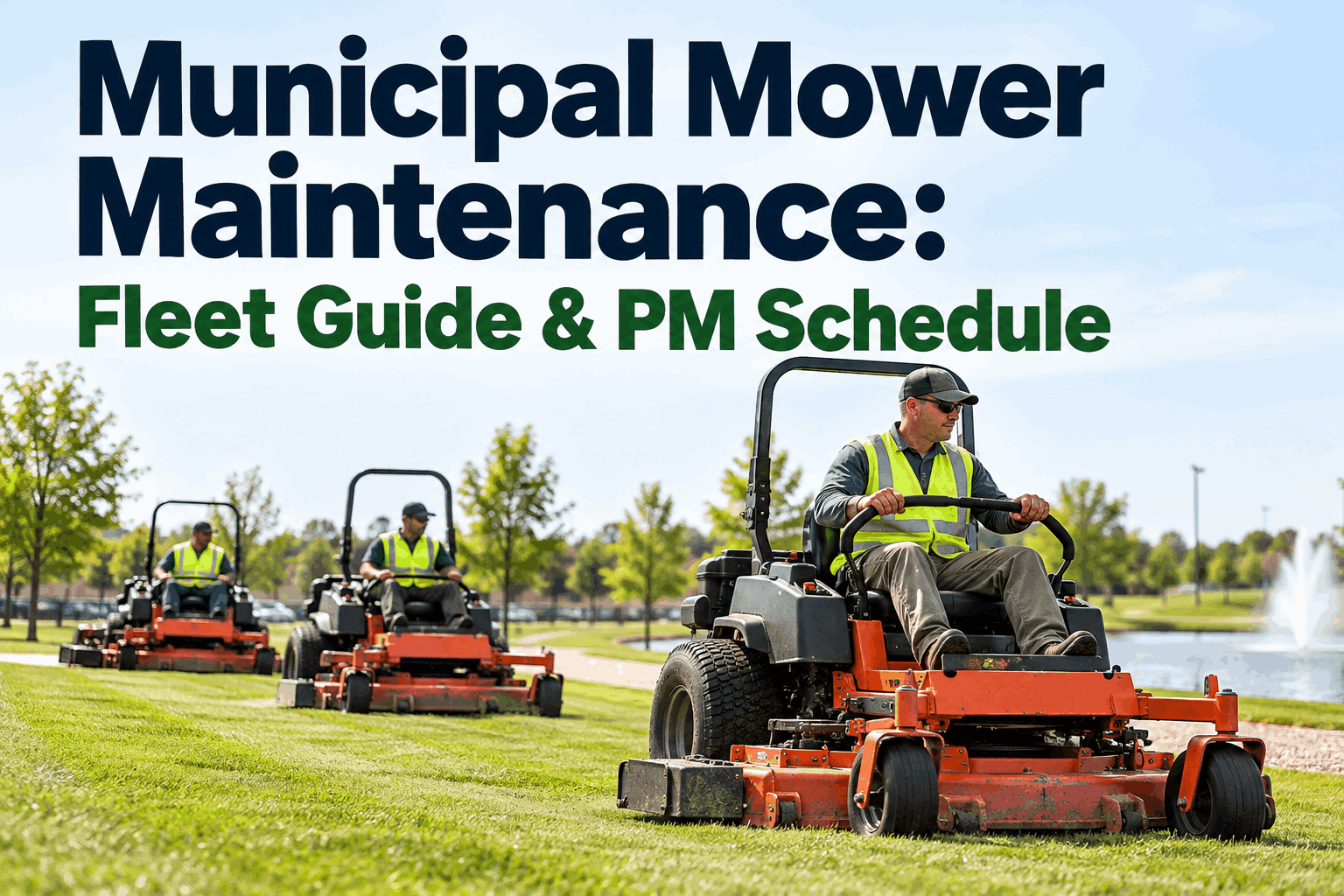
Municipal mower maintenance works best when service decisions follow how mowing equipment is actually used: operating hours, seasonal workload, site conditions and manufacturer recommendations. Unlike road vehicles that may be managed mainly by mileage, ride-on, zero-turn and commercial mowers can accumulate intensive hours across parks, verges, sports grounds and public facilities. A structured program connects pre-use inspections, hour-based preventive maintenance, repair history and seasonal preparation to each individual mower.
Build Mower Maintenance Around Hours, Conditions & Season
Organize municipal mowing equipment around pre-use inspections, hour-based PM, blades and decks, lubrication, hydraulics, seasonal readiness and asset-level maintenance history.
A practical mower fleet maintenance program has two jobs: identify problems before equipment enters service and trigger planned maintenance before predictable wear becomes unplanned downtime. The exact intervals should come from the mower manufacturer and the municipality’s operating experience. The maintenance system then needs to make those intervals visible as hours accumulate and preserve what was inspected, serviced and repaired on each asset.
Start With a Pre-Use Mower Inspection
A short mower inspection checklist gives operators a consistent way to identify visible problems before the machine begins its route. The checklist should reflect the specific mower model and manufacturer instructions rather than applying one generic form to every asset.
For a mixed municipal fleet, configurable templates help distinguish zero-turn mowers, ride-on equipment and other grounds assets while preserving a consistent inspection record.
Before use
Watch condition
Capture defects
Plan action
Municipal Mower Inspection Checklist
Adapt this inspection framework to each mower model, local procedure and manufacturer guidance. Operators should report abnormal conditions rather than treating the checklist as a substitute for technical diagnosis.
Check required fluid levels and look for evidence of leakage around the machine.
Look for visible blade damage, excessive wear or conditions requiring service before operation.
Inspect the mower deck, discharge area and visible mounting points for damage or abnormal condition.
Check visible belt condition and confirm required guards and shields are properly positioned.
Look for tire damage, obvious inflation concerns and wheel or fastener issues according to procedure.
Confirm controls and applicable safety interlocks operate as required by the manufacturer.
Look for visible hose, fitting or component leakage and other abnormal hydraulic conditions.
Report unusual vibration, noise, looseness or damage discovered before or during operation.
Build the PM Program by System—Then Apply the Correct Interval
There is no single universal service interval for every municipal mower. Engine type, mower design, manufacturer, environment and workload differ. Use each machine’s manual to define the exact tasks and intervals, then organize them into a service plan that supervisors can track.
Oil, filters, air intake, fuel-related service and other engine items at specified intervals.
Keep screens, cooling surfaces and related components maintained according to the machine design.
Inspect cutting edges, blade condition, deck structure and associated mounting components.
Inspect for wear, damage and adjustment requirements specified by the manufacturer.
Follow lubrication points and intervals defined for bearings, spindles and other serviceable joints.
Inspect fluid condition, hoses, fittings and service items applicable to hydraulic drive or lift systems.
Maintain components affecting traction, maneuverability and reliable machine control.
Include battery, wiring, switches, warning devices and applicable interlock systems in planned checks.
Keep PM Schedules and Service History Connected to Each Mower
See how HVI can help municipalities manage hour-based preventive maintenance, configurable inspections and equipment maintenance records across mixed fleets.
Turn Engine Hours Into a Maintenance Trigger
Hour based maintenance is useful for equipment whose wear relates more closely to operating time than road mileage. The first step is reliable meter capture. The second is connecting that meter reading to the applicable PM schedule.
For example, if a particular mower has manufacturer-defined tasks at specific hour intervals, supervisors should be able to see the current reading, the relevant service threshold and whether the service is approaching or overdue.
The actual thresholds must be configured from the manufacturer’s requirements and the municipality’s approved maintenance plan rather than copied from another mower model.
Record current operating hours consistently.
Evaluate hours against the asset’s configured maintenance plan.
Schedule work before the applicable threshold is exceeded.
Preserve service details in the mower’s maintenance history.
Manage Blades and Decks as High-Attention Wear Areas
Blade and deck condition directly affect the mower’s working function. Inspection frequency should reflect the machine, manufacturer guidance and operating environment, especially where equipment encounters debris, rough terrain or intensive seasonal use.
Check blade condition and other cutting components according to the equipment procedure.
Sharpening, replacement, balancing and installation should follow manufacturer instructions and shop procedures.
Asset-level history helps supervisors see how often a mower requires blade, deck or spindle attention.
Adjust Attention When the Work Gets Harder
A mower working in clean, moderate conditions may not experience the same maintenance demand as equipment operating in heavy dust, heat, wet material or debris. Where the manufacturer provides severe-service guidance, incorporate it into the PM program.
Important: these bars illustrate relative maintenance attention, not universal service intervals. Follow the applicable mower manufacturer’s requirements.
Manage the Mower Fleet as a Seasonal Cycle
Municipal grounds operations often move through preparation, intensive use, late-season service and storage. Planning maintenance around that cycle helps avoid discovering preventable problems when mowing demand is already high.
Review stored equipment, complete required service, inspect cutting systems and confirm readiness before workload rises.
Capture meter readings, complete PM, respond to defects and watch high-wear systems during intensive use.
Review recurring repairs, outstanding defects and components that should be addressed before storage.
Follow manufacturer storage procedures and document condition so the next recommissioning starts with a known baseline.
Plan Parts Around the Failures and Wear You Actually See
Seasonal availability can be affected when a relatively small component leaves a mower waiting in the shop. Parts planning should therefore combine manufacturer recommendations, current fleet composition and actual maintenance history.
Review which blades, belts, filters and other service items are repeatedly consumed across the mower fleet. Standardization may simplify stocking where compatible equipment shares parts, while unique machines may require different planning.
Maintenance history can also help distinguish normal consumable demand from a mower that repeatedly requires the same repair and deserves further investigation.
Filters and other scheduled-service consumables applicable to the fleet.
Blade-related inventory based on equipment models and actual consumption.
Use maintenance history to identify components that regularly affect seasonal availability.
Keep the Maintenance History With the Mower—Not the Location
Mowers may move between parks, depots, roadside crews and public facilities during the season. A central equipment record helps preserve continuity when the asset changes operator or location.
Use Records to Find the Mowers Consuming Shop Attention
Good mower fleet management goes beyond knowing whether scheduled service was completed. Asset-level history gives managers a basis for reviewing recurring defects, repair frequency, maintenance activity and equipment availability.
That history can support better repair-versus-replacement discussions because decisions are based on the mower’s actual maintenance record rather than memory alone. Cost information is most useful when it remains tied to the correct asset and work performed.
Scheduled maintenance completed and recorded.
Cutting-system maintenance attached to the asset.
Hour-based scheduled work documented.
Inspection finding and repair history preserved.
Support Grounds Crews Away From Reliable Connectivity
Municipal mowing crews may inspect equipment at parks, roadside locations or other field sites where connectivity is inconsistent. An inspection workflow that supports offline use can help crews continue required checks when a reliable connection is not available.
HVI includes offline inspection capability, helping field teams capture inspection information and maintain a digital process across distributed municipal equipment operations.
See HVI inspection workflows →Build the Municipal Mower Maintenance Program in Seven Steps
Use a simple operating framework so every mower has an identified maintenance basis, inspection process and traceable service record.
Identify each mower, model, location or assignment, meter type and the information needed to distinguish one machine from another.
Use the applicable manuals and approved internal procedures to establish tasks, hour thresholds and calendar requirements.
Configure pre-use checks around the systems and safety features relevant to each mower type.
Keep meter readings current enough for hour-based preventive maintenance planning.
Use current hours and expected workload to identify services likely to become due during busy mowing periods.
Keep maintenance events connected to the individual mower so recurring issues remain visible.
Evaluate recurring failures, downtime, maintenance activity and parts demand before planning the next season.
Manage Mowers Alongside the Rest of the Municipal Fleet
Grounds equipment should not disappear into a separate maintenance process simply because it is not a road vehicle. HVI can support mixed municipal equipment fleets with hour-based preventive maintenance, configurable inspection templates, equipment records, maintenance history and offline inspections.
That gives supervisors a way to keep inspection and service information connected to individual mower assets while maintaining broader visibility across municipal vehicles and equipment.
Book a demo for municipal equipment management →Track maintenance against operating hours.
Build inspection templates around equipment needs.
Keep mower information tied to the individual asset.
Preserve service and repair information over time.
Bring Mower Inspections, Hours and Maintenance History Together
See how HVI can support grounds equipment alongside vehicles and other municipal assets without forcing mower maintenance into a mileage-only workflow.
Municipal Mower Fleet Maintenance Program Checklist
Use this management-level checklist to review whether the fleet has the basic controls needed for a repeatable mower maintenance program.
The process should remain practical enough for field crews while giving supervisors useful asset-level visibility.
Build Mower Maintenance Around the Way the Equipment Actually Works
A strong municipal mower maintenance program recognizes that grounds equipment operates differently from road vehicles. Engine hours, calendar requirements, operating severity and seasonal demand all influence when maintenance attention is required. The technical schedule should always start with manufacturer recommendations for the specific mower.
From there, municipalities can create consistent pre-use inspections, track hour-based preventive maintenance, maintain blades and decks, monitor hydraulic and drive systems, prepare for seasonal peaks and preserve repair history against each mower. That creates a clearer operating picture across parks, roadside crews, facilities and depots.
For public works teams managing mowers alongside other equipment, HVI can support hour-based PM, configurable inspections, equipment records, maintenance history and offline field inspections. Book an HVI demo for municipal equipment management or start free.
Municipal Mower Maintenance FAQs
Common questions about mower PM schedules, operating hours, inspections, cutting systems and seasonal maintenance.
01 How should a municipal mower maintenance schedule be created?
Start with the maintenance schedule and instructions provided by the manufacturer for each mower model. Identify hour-based tasks, calendar requirements, lubrication points and inspection requirements. The municipality can then plan those tasks around current engine hours, seasonal workload and applicable severe-service guidance.
02 Why are engine hours important for mower preventive maintenance?
Mowers can spend substantial time operating while accumulating little road mileage, so hours can provide a more useful trigger for maintenance tasks that manufacturers specify by operating time. Current meter readings should be connected to the correct asset and its applicable PM schedule.
03 What should be included in a mower inspection checklist?
The exact checklist depends on the mower, but common areas include fluid levels and visible leaks, blades and deck condition, belts and guards, tires and wheels, hydraulic condition, controls, applicable safety systems and abnormal noise or vibration. Always adapt the checklist to manufacturer guidance and local procedures.
04 Should mower service intervals change in dusty or severe conditions?
Some manufacturers specify additional checks or shorter intervals for severe operating conditions. Dust, heat, heavy vegetation and debris can increase maintenance attention, but fleets should use the applicable manufacturer instructions rather than applying a universal shortened interval to every mower.
05 How can fleet software help manage municipal mower maintenance?
Fleet software can help keep meter readings, PM schedules, inspections and maintenance history connected to individual mower assets. HVI supports hour-based preventive maintenance, configurable inspection templates, equipment records, maintenance history and offline inspections for mixed equipment operations.
Track the Hours. Plan the Service. Preserve the History.
Give public works and grounds teams a clearer way to manage inspections and preventive maintenance across mowers and mixed municipal equipment.