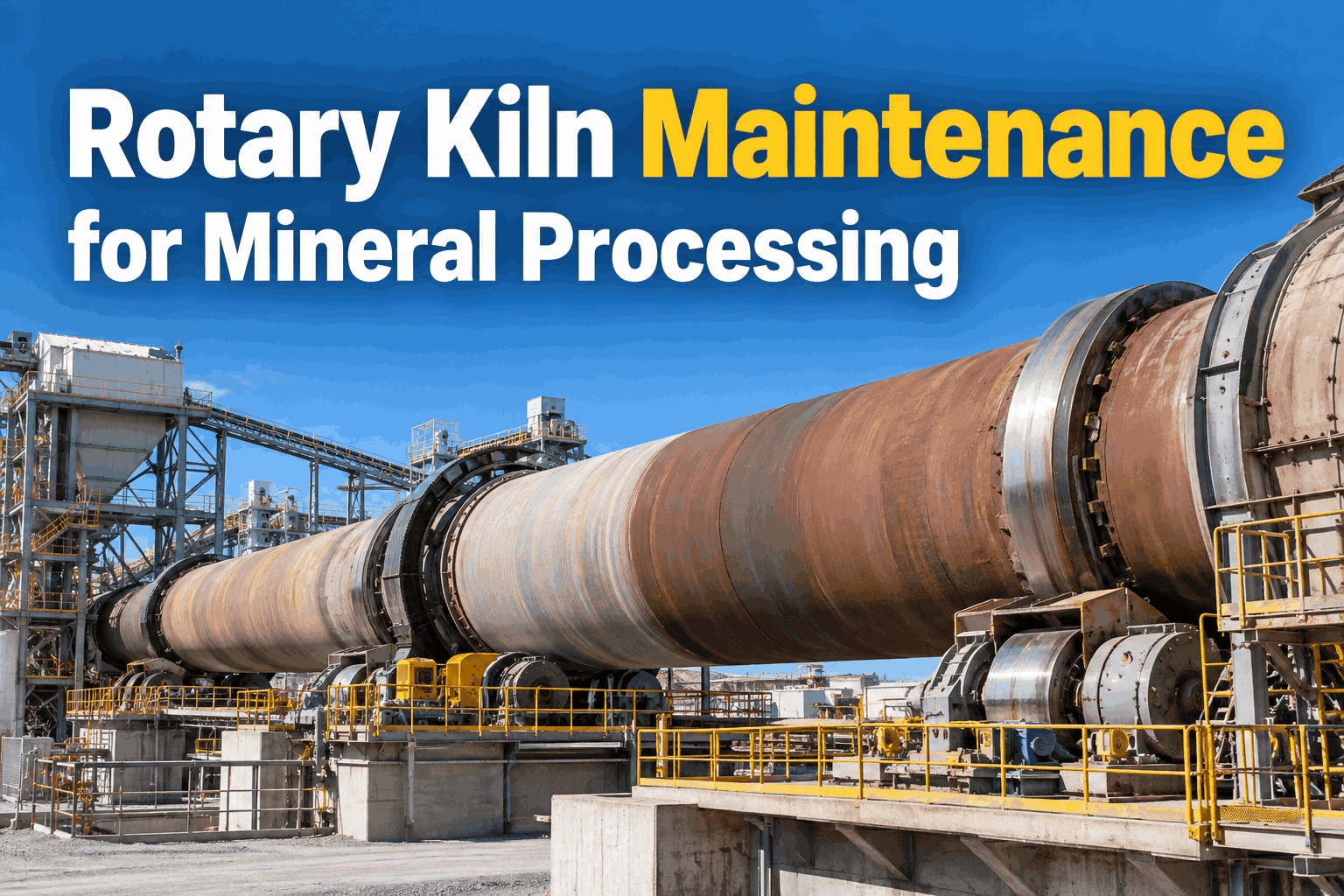
A rotary kiln is the one asset in a mineral processing plant that can't be swapped out in an afternoon. It turns slowly at red heat, hundreds of tons riding on a handful of tyres and rollers, lined with refractory that fails from the inside where nobody can see it. Rotary kiln maintenance is really reliability engineering — because when a kiln goes down unplanned, the whole plant stops with it. See kiln condition tracked round by round.
Rotary kiln maintenance that holds alignment and uptime
Refractory, shell, tyres, rollers, girth gear and seals — inspected on rounds, measured for trend, and kept in alignment, so the kiln keeps turning instead of taking the whole plant down with it.
Most plant equipment fails loudly and locally. A kiln fails slowly and everywhere — a few millimeters of misalignment quietly grinds rollers, cracks refractory and overloads the drive for months before anything shows on a gauge.
Why alignment is the master variable in rotary kiln maintenance
Almost every expensive kiln failure traces back to one root cause. The kiln is a long cylinder on multiple supports, and if those supports drift out of line, the damage cascades.
Catching that drift early is the whole game — which means measuring alignment and run-out on a schedule, not after the shell cracks — see alignment and run-out trended over time.
The kiln systems a reliability program measures
A kiln inspection isn't a glance — it's measurement. These are the systems that get read and trended, and the number that tells you each one's health.
Hot spots on the shell mean refractory is thinning behind them. Shell-temperature scanning and thickness testing catch lining loss before a burn-through.
Tyre and trunnion wear, tyre creep and roller skew all signal the kiln fighting its own alignment. Measured clearances flag it before a bearing cooks.
Gear and pinion root gap and backlash reveal drive alignment and wear. Drifting numbers mean the mesh is loading teeth unevenly and shortening gear life.
End seals leaking air hurt efficiency and pull dust; bearing temperature and vibration flag trouble early. Both are cheap to read and costly to ignore.
Each one is a reading logged against the kiln and trended, not a box ticked — see each measurement captured and trended per kiln.
The shell tells you first: reading the hot spots
The cheapest early warning a kiln gives is heat. Refractory fails from the inside, but the shell outside runs hotter exactly where the lining is thinning.
Logged and trended, a creeping hot spot becomes a scheduled reline instead of an emergency shutdown — put shell-temperature trending on the record free.
How HVI runs rotary kiln maintenance
The inspection round, the measurements, the trends and the work orders live on one platform, so a drifting number becomes an action instead of a note that ages in a logbook.
Measurements captured and trended
Shell temp, run-out, backlash, clearance and vibration logged as numbers on each round, so you see the drift coming instead of the failure arriving.
Standardized inspection rounds
The refractory, tyre, roller, gear and seal checks run as a consistent round on a phone with photos, so every shift reads the kiln the same way.
Defects into planned work
A drifting reading or a hot spot becomes a work order with the part and the window attached, so a reline or alignment is planned, not an emergency.
It runs on the same platform as your wider preventive maintenance scheduling and your crusher and conveyor maintenance, so the kiln sits in the same record as the rest of the plant.
We lost a kiln for eleven days once because a hot spot nobody was trending finally burned through the shell. The refractory had been telling us for months — we just had the readings on paper in a binder nobody compared week to week.
Now shell temps, run-out and gear backlash are measurements that trend automatically. We caught the last reline coming six weeks out and did it on a planned outage. On a kiln, that's the difference between a shutdown and a schedule.
Frequently asked questions
What does rotary kiln maintenance involve?
Inspecting and measuring the refractory and shell (hot spots, thickness, run-out), the tyres and support rollers (wear, creep, skew), the girth gear and pinion (root gap, backlash), and the seals and bearings — and keeping the kiln in alignment. It's a condition-monitoring program, because kiln wear is slow, hidden and expensive when it fails.
Why is kiln alignment so important?
A rotary kiln is a long cylinder on multiple supports. If those supports drift out of line by even a few millimeters, the load goes uneven — which cracks refractory, overloads rollers and bearings, and mis-meshes the girth gear. Most major kiln failures trace back to misalignment.
How do you detect refractory failure early?
By watching shell temperature. Refractory fails from the inside, but the shell runs hotter exactly where the lining is thinning. Trending shell-temperature scans turns a creeping hot spot into a planned reline instead of a shell burn-through and an emergency shutdown.
What causes the most rotary kiln downtime?
Refractory failure and misalignment-driven wear on tyres, rollers, bearings and the drive. Nearly all of it is slow and detectable — the downtime comes from not catching the drift, so the fix happens as an emergency instead of on a planned outage.
How does HVI help with rotary kiln maintenance?
HVI runs the kiln inspection round on a phone, captures shell temperature, run-out, backlash and clearance as trended measurements, and turns a drifting reading into a planned work order. It makes kiln reliability a data trend instead of a binder nobody compares week to week.
Make rotary kiln maintenance a trend you can see coming
Measured inspection rounds, shell-temperature and alignment trending, and drifting readings routed to planned work before a kiln failure takes the plant down. Keep the one asset that can't go down, turning.