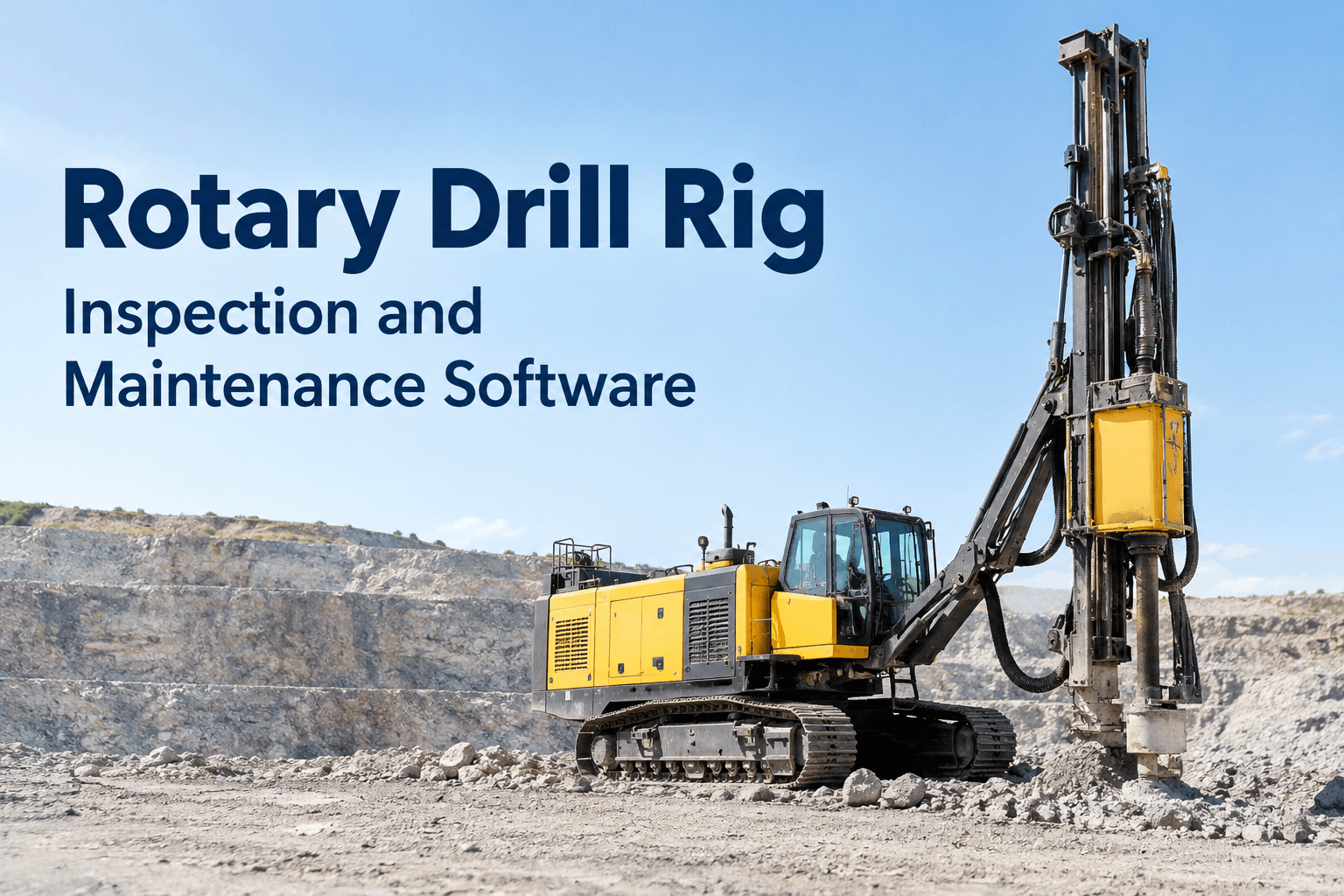
A rotary drill rig is the machine that feeds the whole pit — when it's parked, the pattern doesn't get drilled, the shovels run out of face, and the haul fleet behind it idles. Yet the rig that can idle the most trucks is usually the one with the thinnest paper trail. Rotary drill rig inspection and maintenance software fixes that by putting every check, every meter-hour service and every defect into one record per rig, so a supervisor can see at a glance whether the drill runs tonight. Book a demo to see a rig's record live.
Rotary Drill Rig Inspection & Maintenance Software
Guided drill-specific checks, meter-hour preventive maintenance, and defect-to-work-order — all on one record per rig, so the drill keeps feeding the pit.
Most mines inspect the rotary drill rig the least and lose the most when it goes down. The reason is rarely that nobody checks it — it's that the checks live on paper that never reaches the planner, so a flagged track or an overdue compressor service drills on until it fails mid-pattern. Software closes that gap by making the rotary drill rig inspection and its service history one connected record.
What one down rotary drill costs the pitwhy the drill rig is the asset to digitize first
A down rotary drill doesn't cost one machine's downtime — it cascades. The pattern isn't ready, the shovel runs out of blasted face, and the trucks queue behind it. That's the multiplier that makes rotary drill rig maintenance software pay for itself faster than almost any other mining asset you could put it on.
That's the whole case for a connected record: a flagged defect on the night shift becomes a scheduled repair before the day crew tram out, instead of a note on a clipboard nobody read. You can book a demo and trace that path on your own rig.
The systems the software has to trackwhat a rotary drill rig inspection app must cover, head to track
A generic equipment app misses what actually sidelines a rotary rig. The checks that matter run from the mast down to the crawler — and the two the field most often loses track of are the undercarriage and the rotary head, because they wear slowly and silently. Good software keeps every one of these on the rig's record.
For the full pre-shift walkthrough of these systems, our blasthole drill inspection and maintenance guide covers the seven-system check; this page is about the software that carries those checks, their history and their work orders. HVI builds it on a configurable digital inspection system so every rig template matches its own rotary rig.
Preventive maintenance by meter hourswhy a rotary drill rig PM schedule can't run on the calendar
A rotary rig drilling two shifts on hard ground hits its services far faster than one that sat through a weather delay. Tie the schedule to a date and you'll service the compressor too early on one rig and too late on the next. Rotary drill rig preventive maintenance has to fire on meter hours — engine, compressor and rotary-head hours — per rig. This is the interval ladder software should drive for you.
Set it once and the software counts the hours for you, so preventive maintenance scheduling flags a service before it's overdue instead of after a failure. You can start a free trial and load your own rigs' hour schedules in an afternoon.
The rotary drill rig software checklistwhat to require before you standardize on a platform
Score any shortlist against this before you commit. These are the capabilities that decide whether software actually replaces the clipboard at the rig — or just sits beside it. Treat it as a sign-off sheet: a tool worth running should tick nearly every line.
HVI meets every line of this as one platform, part of the wider mining equipment maintenance it supports — and it sits alongside the pit-wide program on our surface mining equipment inspection software for the rest of the fleet.
Paper records vs. a connected rig recordwhat changes when rotary drill rig maintenance tracking goes digital
The difference software makes isn't the inspection — it's what happens to the record afterward. Here's the same rotary rig, run two ways.
That connected flow is what a maintenance management workflow gives a drill fleet, and the analytics and reporting dashboard turns it into the availability numbers your maintenance meeting runs on.
From a mine maintenance supervisor on digitizing the drills
Our rotary rigs were the best-maintained machines in the pit on paper and the worst-tracked in reality — the walkarounds happened, the sheets just never left the cab. The thing that changed it was the undercarriage and compressor hours finally living somewhere the planner could see. Now a flagged track on night shift is a work order before day crew tram out, and we service the compressor on its hours instead of guessing off a date. Our drill availability stopped being an argument in the Monday meeting.
Rotary drill rig software FAQs
What is rotary drill rig inspection and maintenance software?
How is this different from a pre-shift drill checklist?
Can it schedule PM by meter hours instead of calendar?
Does it cover the crawler and undercarriage?
How long until it's running on our rigs?
Keep the rotary drill rig feeding the pit
Rotary drill rig inspection and maintenance software turns scattered checks into one connected record — so a flagged track becomes a work order, the compressor services on its hours, and the drill is ready when the shovel needs the pattern. Run the checklist, bring the demo, keep the rig drilling.
- Drill-specific checks, mast to crawler
- Meter-hour PM per rig
- Defect-to-work-order in one flow
- Per-rig history & availability reporting