You are standing at the bottom of the ramp at 5:40 a.m., watching a 400-ton haul truck idle past with a wet film of hydraulic oil on the engine bay firewall, and the operator waves you off because the truck "ran fine all last shift." That is exactly how mining equipment fire suppression failures begin: a fire suppression system on mining equipment is only as good as the last verified pressure reading, and a gauge nobody checked is a gauge that may read zero the day a turbo line lets go. Equipment fires underground and on ultra-class trucks escalate faster than almost anywhere else in heavy industry, because these machines carry enormous fuel and hydraulic volumes and an underground fire threatens every person in the ventilation circuit. This guide gives you the pre-shift verification points, the servicing and certification cycle, and the ignition-source controls that keep suppression systems ready — and shows how sites are booking a 30-minute walkthrough to see it enforced digitally on their own fleets.
Would your suppression system pass at 3 a.m. underground, or only on the clipboard?
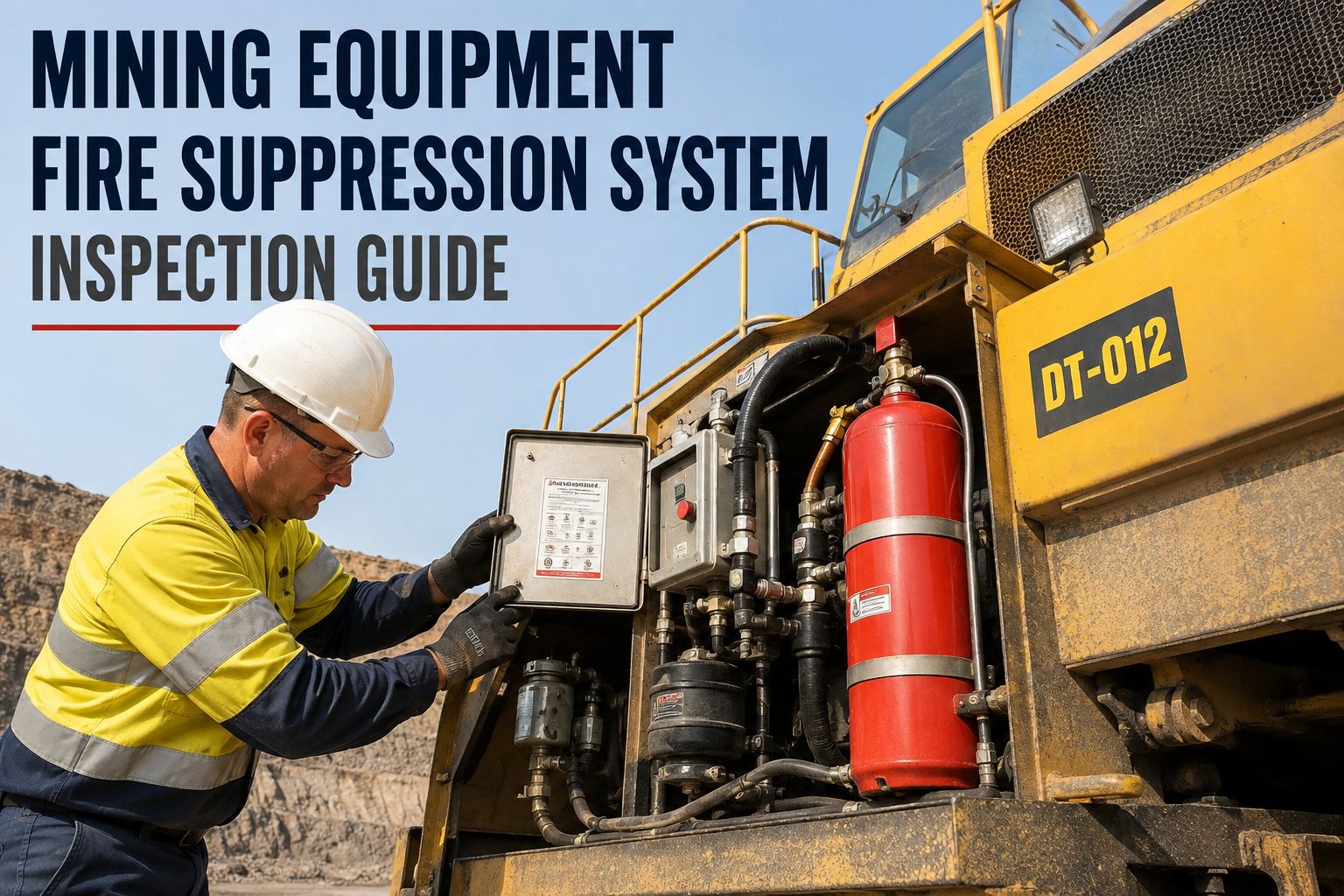
Suppression status is a pre-shift pass or fail, not an advisory item. Here is the exact verification list your operators should complete before the key turns — every shift, every machine.
- Pressure gauge needle confirmed inside the operational (green) range
- Extinguishers present, charged, and carrying a current inspection tag
- Nozzles clear, undamaged, and still aimed at the protected zones
- Manual actuator reachable from ground level with the pin and seal intact
What an equipment fire actually costs you
These are not scare numbers. They are the arithmetic every fleet and safety manager ends up defending internally after a thermal event — or before one, if you build the case now.
Fire suppression system inspection: the pre-shift checklist
Four checkpoints, under five minutes, before the machine moves. If any one fails, the unit does not dispatch — that is the rule that separates a checklist from a liability.
Pressure gauge in range
The agent cylinder gauge needle must sit inside the marked operational range. A needle drifting low means a slow leak or a partial discharge nobody reported. A gauge pinned at zero means the machine has no suppression at all — it is a fuel load with a cab on top.
Extinguishers present and tagged
Handheld units must be in their brackets, charged, with the pin and tamper seal intact and a current inspection tag. A missing monthly tag is a compliance gap an auditor or investigator will find in the first hour.
Nozzle condition and aim
Nozzles clog with dust, mud, and overspray, and they get knocked out of alignment by hose replacements and washdowns. Every nozzle must be clear, capped where designed, and still aimed at the protected zone — turbo, fuel rails, pump drives.
Manual actuator accessible
The manual strike point must be reachable from ground level, unobstructed by toolboxes, spare tires, or lashed cargo, with the safety pin and seal in place. In a cab-fire scenario the operator has seconds and may be exiting — the actuator cannot be a scavenger hunt.
The pass/fail rule: any failed checkpoint is a critical defect. The unit is tagged out, the defect becomes a work order, and dispatch is blocked until a qualified person signs off the repair. Sites running digital pre-starts can start logging these checks free with photo evidence required before the form submits.
Where engine bay fires actually start
Suppression is your last line. The first line is removing what ignites. Three fuel-and-heat combinations account for the overwhelming majority of mobile equipment fires.
Hydraulic and fuel leaks onto hot surfaces
A pinhole in a hydraulic line atomises oil into a mist that ignites on contact with a turbo housing or exhaust manifold running at several hundred degrees. This is the classic engine bay fire: fast, pressurised, and self-feeding until the line is isolated. Weeping fittings and chafed hoses found on a pre-shift are fire prevention, not cosmetic defects.
Accumulated grease and oil-soaked debris
Grease, coal fines, and oil-soaked rags packed around the engine bay and belly pans create a pre-built fuel bed. A single hot fragment or electrical arc turns months of lazy housekeeping into a fire that suppression has to fight through. Washdown schedules and bay cleanouts belong on the preventive maintenance plan, not on someone's good intentions.
Brake areas on haul trucks
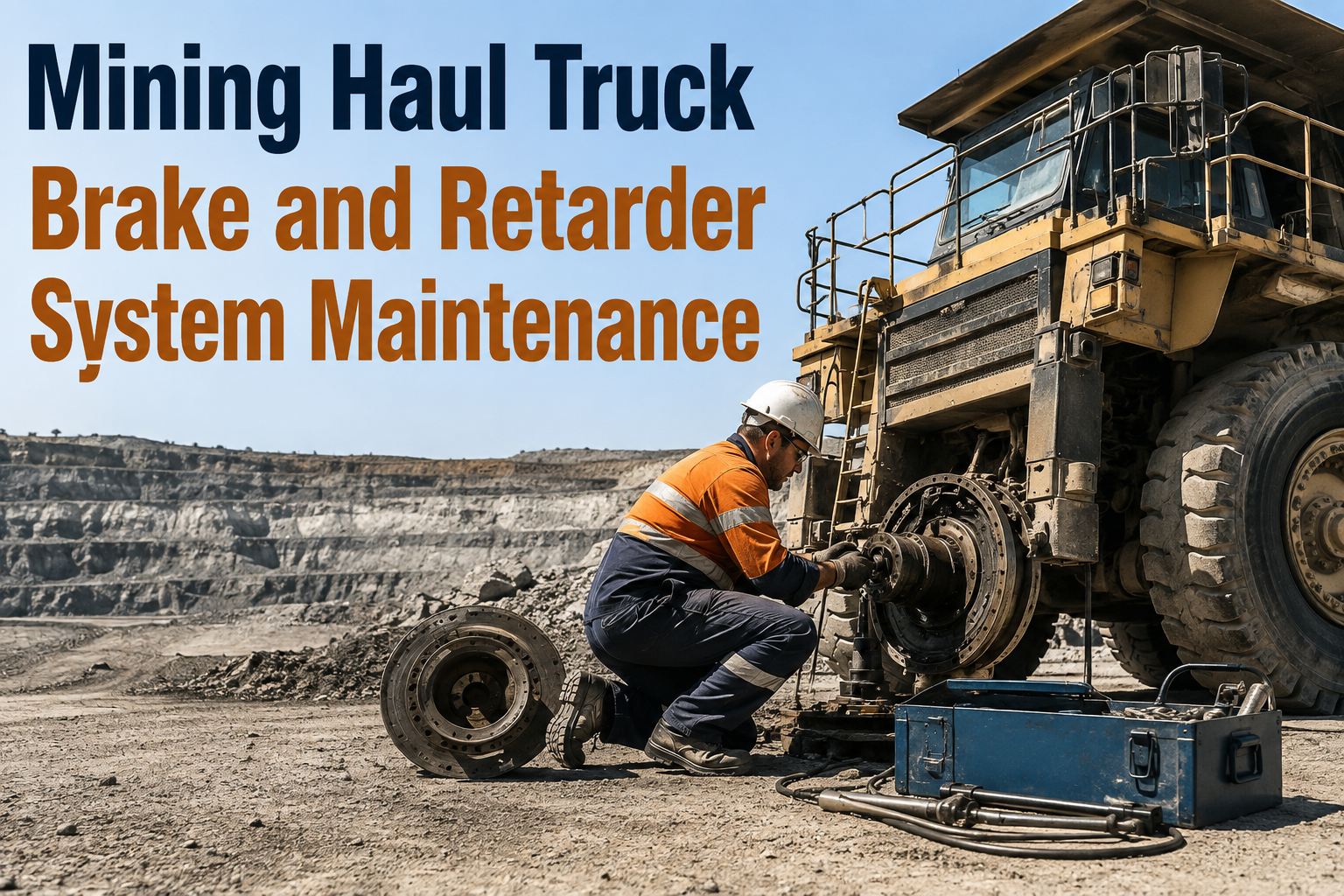
Retarder and service-brake components on downhill haulage run hot enough to ignite grease, hydraulic seepage, and tire rubber. Wheel-end fires on loaded trucks are a known loss pattern in surface mining. Brake-area temperature checks and leak repairs flagged in inspections are what keep a hot brake from becoming a burned truck.
How often should fire suppression systems be serviced?
Pre-shift checks catch the obvious. Certified servicing catches everything else. The cycle below is the pattern most mine sites and their insurers expect — your system OEM and local regulator set the binding intervals.
Operator verification
Gauge, extinguishers, nozzles, actuator — the four-point check above, recorded with a photo of the gauge. This is your daily proof the system is armed.
Documented visual inspection
A designated person inspects cylinders, brackets, hose runs, detection lines, and actuator cables for damage and corrosion, then signs and dates the tag. Missed months are the first gap an audit finds.
Qualified technician service
A certified suppression provider weighs or pressure-tests agent cylinders, function-tests detection and actuation circuits, blows out distribution piping, replaces nozzle caps, and re-certifies the system. This is the visit that produces the certificate your insurer and regulator ask for.
Discharge, fire, or major repair
Any discharge — even partial or accidental — any thermal event, and any engine or hydraulic major repair triggers a full system recharge and re-certification before the unit returns to work. A half-empty system is a failed system.
Tracking four interval types across a mixed fleet of trucks, loaders, drills, and underground plant is where paper binders quietly fail. Sites that move this into a CMMS get expiry alerts weeks before a certificate lapses — you can see the certification tracker in a live demo with your own asset list.
The evidence an auditor expects to see
When an inspector, insurer, or client auditor asks about fire suppression, they do not want your word — they want a record. Map every requirement to a stored artefact before they ask.
| Requirement | What good looks like | Record that proves it |
|---|---|---|
| Pre-shift suppression check | Completed before dispatch, every shift, every unit | Timestamped digital inspection with gauge photo |
| Extinguisher currency | Charged, pinned, tagged within the month | Tag photo plus monthly inspection log per unit |
| Certified system service | On interval, by a qualified provider | Certificate stored against the asset with expiry alert |
| Defect response | Failed check removes unit from service | Defect auto-converted to work order, dispatch blocked |
| Post-event re-certification | Recharge and recert before return to work | Linked work order and new certificate on file |
Stop trusting gauge checks to memory and paper tags
See HVI enforce photo-required suppression checks, certification expiry alerts, and dispatch blocks on critical defects — on your own fleet, in 30 minutes.
Fire suppression compliance, enforced by the software — not by chasing operators
HVI (Heavy Vehicle Inspection & Maintenance, by JRS Innovation Inc.) is cloud + mobile inspection and maintenance work order CMMS software built for fleet-heavy operations. Four capabilities carry this specific problem.
Dedicated suppression section, photo required to pass
Your pre-shift form carries a fire suppression block where the gauge reading photo is mandatory. No photo, no pass — the inspection cannot submit, so the check actually happens at 5:40 a.m., not at the end of shift in the car park.
Certification tracking with expiry alerts
Every semi-annual certificate is stored against the asset with its expiry date. HVI warns you weeks ahead, so a lapsed ANSUL-type system certificate never surfaces first in an insurance review or a client audit.
Dispatch block on critical defects
A failed suppression checkpoint flags critical, converts instantly to a work order, and blocks the unit from dispatch until a qualified sign-off closes it. The pass/fail rule stops depending on who is supervising that morning.
Audit-ready records in seconds
Timestamped, photo-backed, per-asset history across trucks, underground plant, and shop equipment. When an auditor asks for suppression records on one unit, you pull them on your phone before they finish the sentence — and you can watch that exact lookup in a demo.
Mining equipment fire suppression: what to do this week
Everything on this page reduces to four moves. None of them need capital approval.
Make suppression pass/fail in writing. Gauge in range, extinguishers tagged, nozzles aimed, actuator reachable — one failed item grounds the unit. Publish the rule and hold it on night shift too.
Book any overdue certified service now. If you cannot produce a current certificate for every suppressed machine from memory, assume at least one is lapsed and check today.
Attack the fuel beds. Put engine-bay washdowns and grease cleanout on the preventive maintenance schedule. Suppression fights the fire; housekeeping decides whether there is one.
Digitise the evidence. Photo-required checks, expiry alerts, and dispatch blocks turn fire suppression from a binder nobody opens into a system that cannot be skipped. That is the whole game.
A worked example to take to your director: a 25-machine fleet where one lapsed certificate surfaces after a minor engine-bay fire can face the claim being contested, weeks of investigation downtime on a production-critical unit, and a mandated re-inspection program across the fleet. The software that prevents that lapse costs less per month than one hour of that truck's downtime. If you want the numbers on your own fleet size, book a working session with the HVI team or sign up free and build your first suppression checklist this afternoon.
My gripe was never the checks — it was proving them. We had a nozzle knocked sideways after a hose change and nobody caught it for days, because the paper pre-start just said "fire system OK." Now the form forces a photo of the gauge and the nozzles, and I track one number every Monday: units dispatched with an expired suppression certificate. It has been zero for eleven months, and I intend to keep it there.
Daniel Reeves — Safety & Compliance Manager, contract mining services company
Fire suppression inspection FAQs
What should a pre-shift fire suppression inspection include on mining equipment?
How often does a vehicle fire suppression system need professional servicing?
What causes most engine bay fires on haul trucks and heavy plant?
Is a low reading on the fire suppression pressure gauge really a no-go defect?
How do I prove suppression compliance during an audit or insurance review?
Make every suppression check photo-proven before the machine moves
HVI enforces the pass/fail rule, tracks every certificate, and blocks dispatch on critical defects — across trucks, underground plant, and shop equipment, on any phone your crew already carries.
Free to start — Works on any phone — No card needed