A surface haul-truck checklist will not keep an underground truck safe. The decline, the shared ventilation and the dark change which items matter and how they fail. Below is a complete, copy-ready underground truck digital inspection checklist — every system an operator should clear before a loaded run — built so you can print it, adopt it, or turn it into a guided digital form your crews run from a phone at the bay.
The underground truck checklist, ready to use — and to go digital
Six sections, built for the decline: brakes & retarder, fire suppression, exhaust & ventilation, comms & lights, cab & controls, and the walkaround. Take the list as-is, or let HVI turn it into a guided check with photo capture and offline sync.
- Underground-specific — not a surface form
- Critical items photo-verified, defects to work orders
- Works offline at the bay, syncs to surface
The reason a generic form fails underground is physics, not paperwork. A loaded truck holds a 1-in-7 decline for minutes at a time, so the retarder — not the service brake — is the item that keeps a runaway from happening. Every litre of diesel exhaust rides on the ventilation you pay to move. And when there's no daylight and no cell signal, the truck's comms are its voice. These are the realities an underground checklist has to encode, and why it belongs in a guided digital inspection rather than a photocopied sheet.
The underground truck pre-start checklistcopy it, print it, or make it a guided digital form
Here is the full list, section by section. The two marked critical — brakes/retarder and fire suppression — are the ones that should stop a truck leaving the bay on a fail, and the ones worth photo-verifying every shift.
Walkaround & tyres
- No fresh leaks under the truck (engine, hydraulic, brake, coolant)
- Tyres & rims sound — no cord-depth sidewall damage
- Articulation & steering joints secure, no play or damage
- Frame, tray/body, pins and guards intact, no cracks
- Ladders, handrails and steps clear and secure
Brakes & retarder
critical · photo- Park brake holds the truck on grade — tested, not assumed
- Service brakes firm, no pressure drop when held
- Retarder responds before the first loaded descent
- Secondary / emergency braking functional where fitted
- Brake accumulator pre-charge and warnings normal
Fire suppression
critical · photo- System charged — gauge in range, not discharged or isolated
- Actuators, pins and keepers in place; seals intact
- Hoses and nozzles sound, aimed, not corroded
- Inspection/service tag current
- Hand extinguisher present, charged, accessible
Exhaust & ventilation
- No exhaust leaks, cracks or holes into the cab path
- DPF / emissions system clear of faults or warnings
- No excessive smoke on start — it's load on the fans
- Cooling air ducting clear, radiator free of debris
Comms, lights & alarms
- Radio / leaky-feeder comms working — the truck's voice
- Reverse alarm and horn audible
- Proximity detection / interlocks functional where fitted
- Head, tail and work lights all operating — there's no daylight backup
- Beacon / strobe working
Cab & controls
- Seat belt and seat in good condition
- ROPS/FOPS and decals present and legible
- Gauges, warning lights and emergency stop functional
- Cab free of combustible material and loose items
- Meter reading recorded for PM tracking
That's the whole pre-start. Run it on paper and it's only as good as the sheet that reaches the shop; run it in HVI and every failed line becomes a tracked defect. You can start free and build this exact checklist as a digital form today .
The two items that stop a truckwhy brakes/retarder and fire suppression are flagged critical
Most of the checklist is pass-or-note. Two sections are different: a fail on either should block the truck from dispatch until a supervisor clears it, because underground these aren't maintenance items — they're the line between a defect and a fatality.
Brakes & retarder
A retarder that fades halfway down a 1-in-7 decline isn't a defect — it's a runaway. The park brake has to hold on grade, tested every shift, not assumed from last week.
Fire suppression
A discharged or isolated system found at audit is bad; found during a fire, in a confined drive with one way out, it's catastrophic. The gauge, pins and tag get checked every shift.
In HVI these two can't be closed without a photo, and a fail auto-blocks dispatch and needs a supervisor sign-off to release — the discipline written into the workflow, not left to the operator's judgment. Book a demo to see photo-enforced critical checks
How the checklist runs with no signaloffline-first capture, from the bay to the surface
The objection we hear most is "there's no signal underground, so a digital checklist won't work." It works — if the app captures offline and syncs later. Here's the shift flow for this checklist.
Scan the truck at the bay
The operator scans the truck's plate and this exact underground-truck template loads — the right form every time, no dropdown, no wrong checklist.
Walk & capture, offline
Each item is checked on the phone with a photo on the critical ones — all stored locally, no cell signal required at the face.
Defect to a work order
A failed item becomes a work order assigned to a technician; a critical fail blocks the truck from dispatch.
Syncs to the surface
When the device is back in coverage, the signed, timestamped record syncs up — supervisors see completed checks and open defects in reporting.
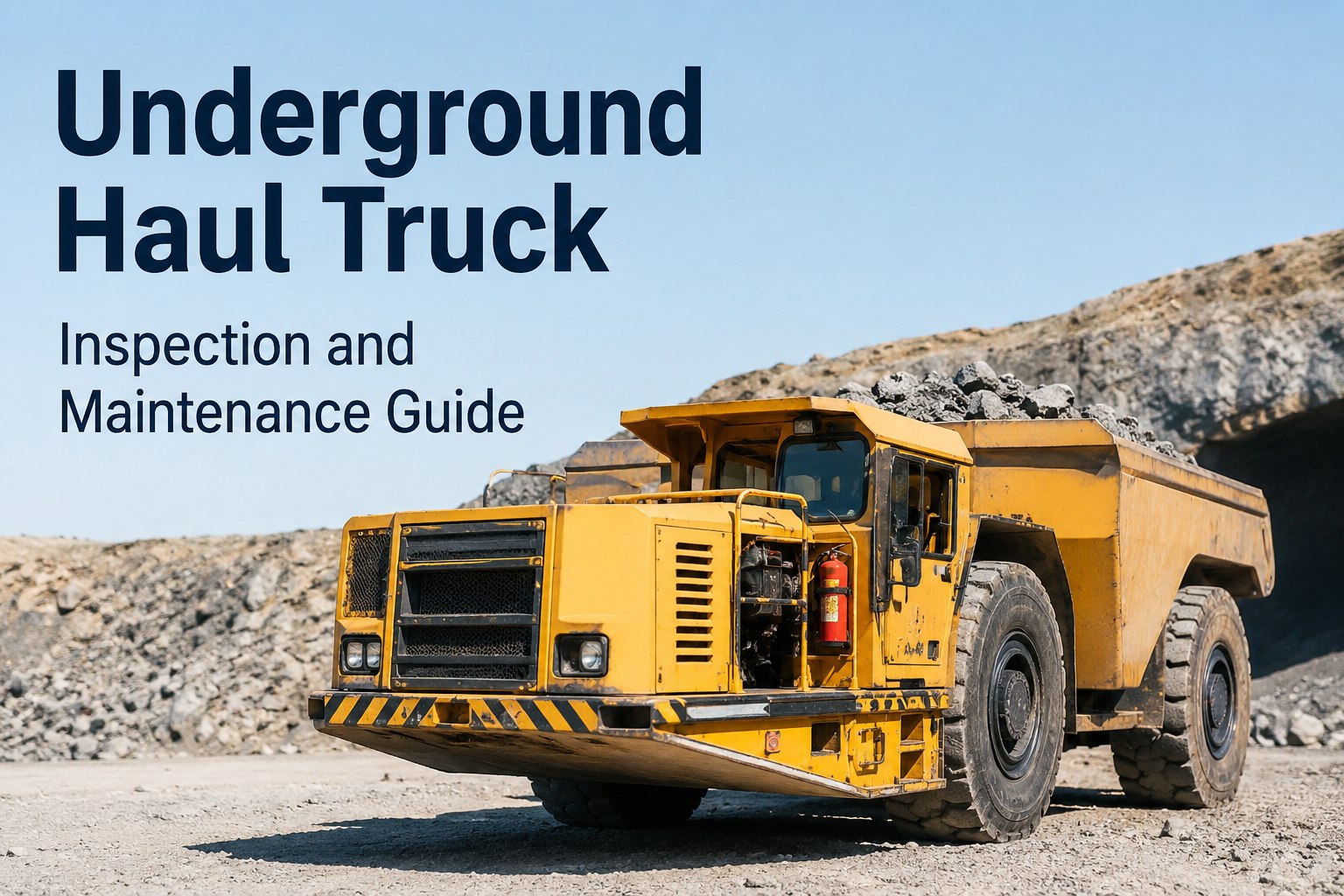
For the full breakdown of why each underground system earns its place and how the program is run, see HVI's underground haul truck inspection and maintenance guide. Book a demo to see the offline bay workflow
From an underground shift supervisor
We were running a surface pre-start sheet underground because that's what we had. It didn't even have a line for retarder test or fire suppression gauge — the two things that'll actually kill someone in a decline.
We rebuilt it as the real underground checklist and put it on phones. Now the brake test and the suppression check won't close without a photo, and a fail locks the truck out until I clear it. The operators adopted it in a couple of shifts because the form just loads when they scan the truck.
Frequently asked questions
What should an underground truck pre-start checklist include?
Six areas: the walkaround and tyres, brakes and retarder, fire suppression, exhaust and ventilation, comms/lights/alarms, and the cab and controls. The brake/retarder and fire-suppression sections are the critical ones that should stop a truck leaving the bay on a fail.
Why can't I use a surface haul-truck checklist underground?
Because the hazards differ. Underground adds sustained decline braking where the retarder is critical, fire suppression as a life-safety item in a confined drive, exhaust measured against the ventilation budget, and comms the truck depends on in the dark.
Can a digital inspection work with no signal underground?
Yes, if it's offline-first. The operator captures the whole check and photos locally at the bay with no connection, and the signed, timestamped record syncs to the surface when the device is back in coverage.
What happens when a critical item fails?
A failed brake/retarder or fire-suppression check auto-blocks the truck from dispatch and requires a supervisor sign-off to release. The defect becomes a work order assigned to a technician, with photo evidence attached.
How long does it take to set up in HVI?
Most operations are live in under two weeks. You build this underground-truck checklist as a guided form once, tie it to each truck's plate, and crews run it from any phone or tablet — offline-ready from day one.