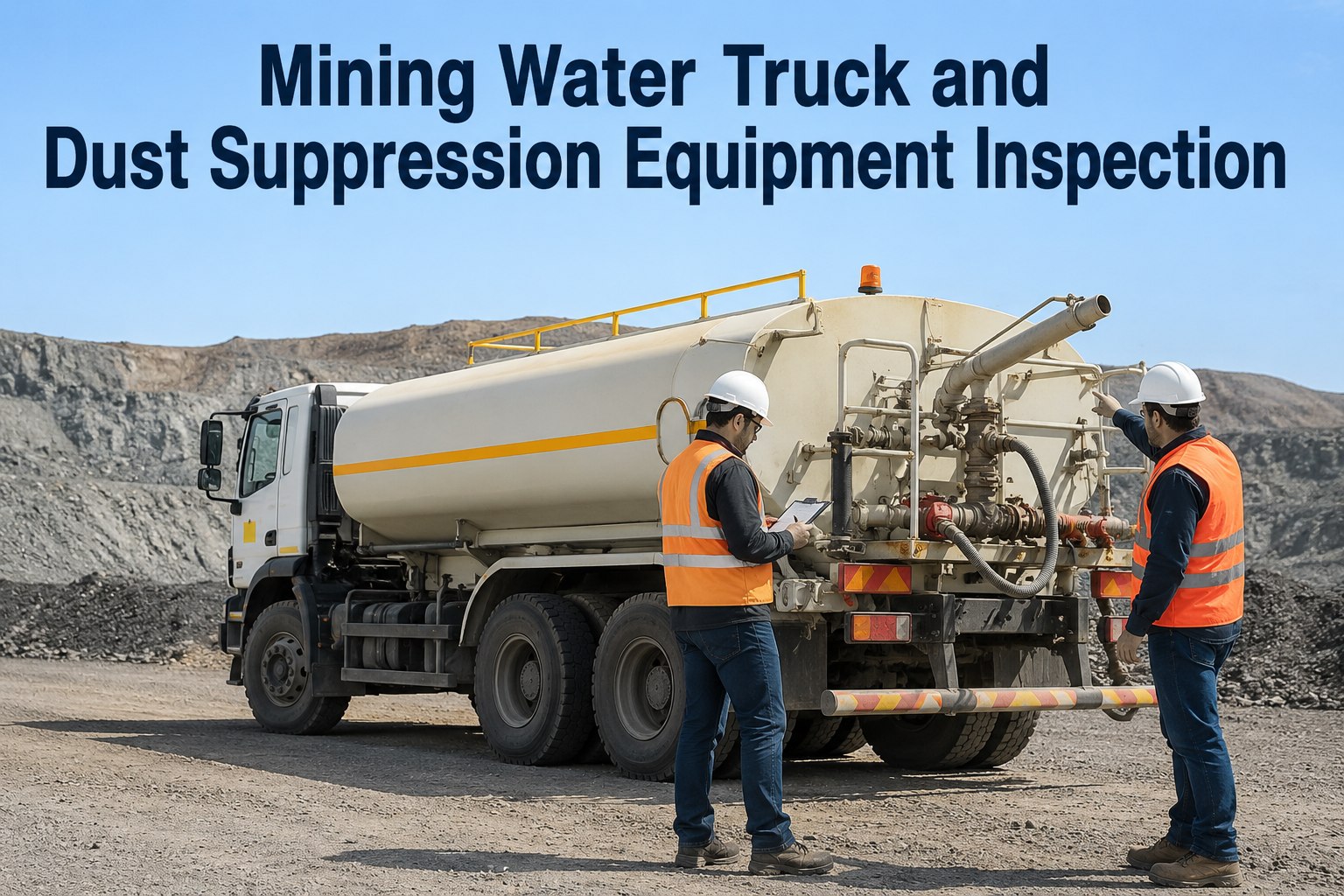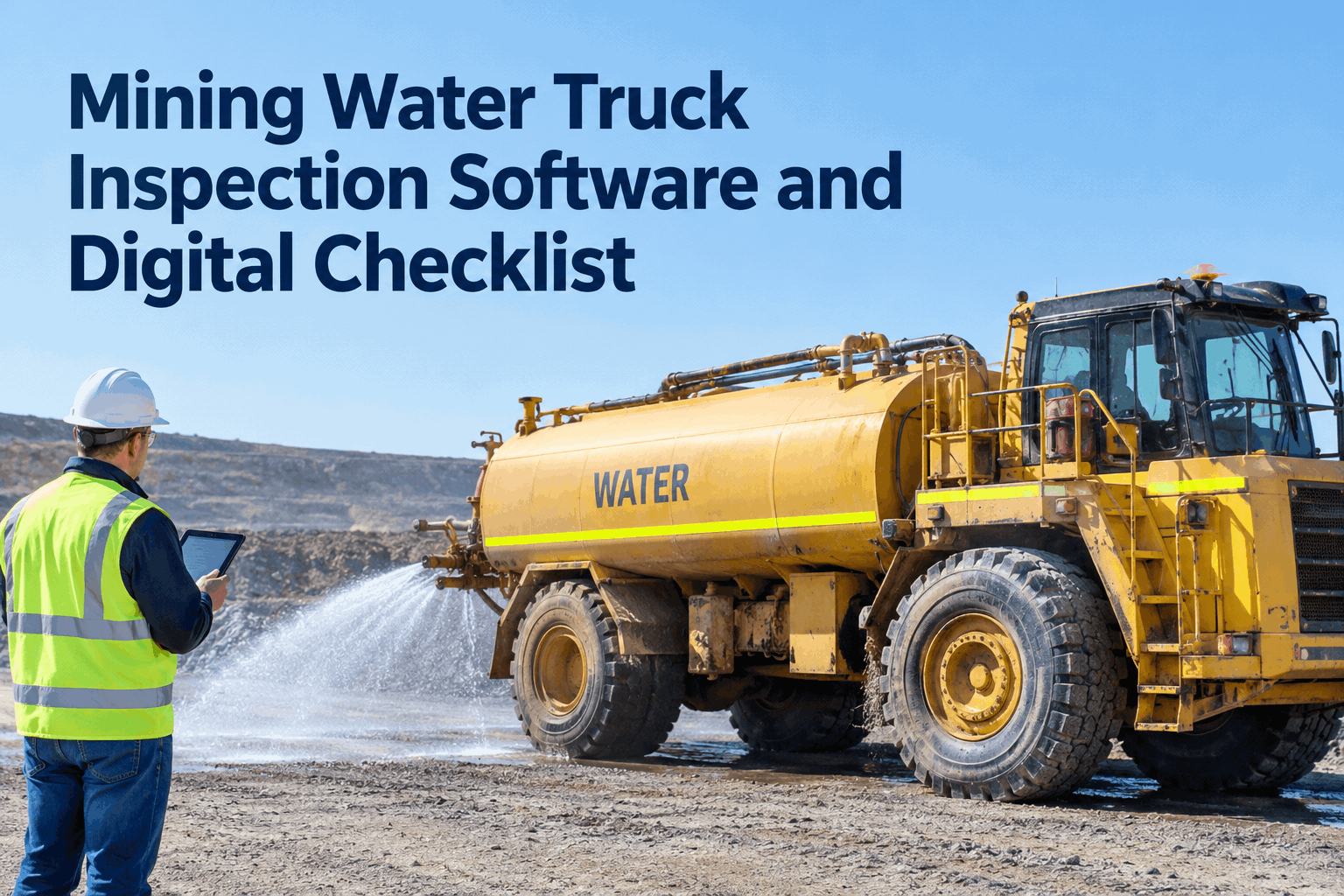
A water truck that's still spraying isn't necessarily still suppressing dust — worn nozzle orifices enlarge over time, pushing more water out in a distorted pattern while actual dust knockdown quietly drops. Mining water truck inspection software catches that drift with a digital checklist for tanks, pumps, spray bars, and hoses before the dust monitor does. Book a demo to see it on your water cart fleet .
The Nozzle That's Still Spraying Isn't Still Suppressing Dust
A water truck inspection app that checks spray pattern and flow — not just "is water coming out" — catches worn nozzles before the dust monitor spikes or a haul road turns to soup.
Every mining water truck checklist checks the obvious things: is the pump running, is water coming out, are the hoses intact. What most checklists miss is the one failure mode that matters most for actual dust control — nozzle orifice wear. Mining spray systems handle mineral-laden, abrasive water, and the orifices wear measurably in continuous service, which enlarges them, pushes flow rate above design, and distorts the spray pattern. The truck passes a visual check every time. The dust suppression it's actually delivering keeps dropping. Mining water truck inspection software closes that gap — a digital checklist that checks condition, not just function.
Why a water truck can fail quietlynozzle wear doesn't look like a defect — it looks like water
Standard orifice materials wear measurably within days of continuous service in mineral-laden water. That's not a maintenance footnote — it's the governing variable in whether the spray system is actually controlling respirable dust.
Droplet size relative to dust particle size is the governing variable in dust knockdown — a nozzle within spec keeps that relationship intact, shift after shift.
An enlarged orifice pushes more water out at the wrong droplet size and pattern — using more water for less suppression, with nothing on a visual check to flag it.
Respirable dust exposure is a hard regulatory line, not a judgment call — MSHA's reduced dust standard scales with silica content, and operations are measured against it directly. A checklist that only confirms water is flowing doesn't confirm compliance; one that tracks nozzle condition and flow-test data over time does. Start a free trial and bring nozzle condition into your inspection record
The mining water truck digital inspection checklistwhat a pre-start walk-around should cover, tank to spray bar
Our deeper mining water truck and dust suppression guide covers the pump and cost case in detail; our water tanker checklist goes deep on tank and baffle condition. Here's the shortlist a digital pre-start should run through on every shift.
On HVI, the operator scans the truck's QR code and the exact water truck template loads — tick, flag, photo — timestamped and ready if an investigator or auditor ever asks for the inspection history alongside the watering record. Book a demo and see this checklist live on one screen
Meter-hour PM for water trucks, with a flow test built inwhy a leak-free visual check isn't the same as a suppression check
A water truck's PM schedule should include more than lubrication and leaks — it should include a periodic flow and pattern test against the nozzle's original spec, the only reliable way to catch wear that a walkaround can't see.
-
250 hr
Basic service
Engine oil and filter, pump seal check, hose and fitting inspection, visual spray pattern check.
-
500 hr
Intermediate service
Nozzle flow and pressure test against spec, pump flow test, tank interior and baffle inspection.
-
1,000 hr
Major service
Full nozzle set replacement if flow drift exceeds tolerance, pump rebuild inspection, tank structural check.
HVI's meter-hour PM scheduling auto-generates the work order when a truck's hours cross an interval, and lets you log flow-test results right against the machine's own record — so nozzle drift is a tracked trend, not a surprise at the dust monitor. Book a demo to see tiered PM set against your water truck fleet
From flagged defect to closed work orderhow one truck's inspection protects dust coverage across the whole pit
A mine rarely runs one water truck — haul road watering and dust-source suppression both depend on coverage, which means one truck's defect is a coverage gap, not just a maintenance ticket.
-
1
Operator runs the digital pre-start
Tank, pump, spray bar, hoses — the water-truck-specific checklist, on a phone, before the route starts.
-
2
A defect is flagged with photo & severity
A distorted spray pattern or a weeping pump seal gets logged with a photo, tied to that exact truck, and timestamped the moment it's found.
-
3
It becomes a work order in one tap
The flag converts to a work order and lands with the shop — visible before the truck's own shift is even done.
-
4
Repair closes against that truck's history
Parts, labor, and sign-off record against the vehicle's own file, feeding cost-per-hour analytics across the whole water cart fleet.
From a mine-site dust control supervisor
Our old checklist asked one question about the spray bar: does it spray. Every truck passed that every single time, right up until the month our dust monitor readings crept up and nobody could explain why — coverage looked the same on paper.
Turned out half the nozzles on two trucks were worn well past spec. Water was still coming out, just in the wrong pattern at the wrong flow. Once we started logging nozzle condition and flow tests as part of the actual inspection, that kind of quiet failure stopped hiding in plain sight.
Frequently asked questions
What is mining water truck inspection software?
A mobile digital checklist built around a water truck's systems — tank, pump, spray bar, nozzles, hoses — that flags defects with photos and routes them straight to a work order.
Why can a water truck fail dust suppression without an obvious defect?
Nozzle orifices wear from abrasive, mineral-laden water. Worn orifices enlarge, raising flow rate but distorting spray pattern and droplet size — the truck still sprays, but suppresses less dust.
How often should a mining water truck be serviced?
Typically 250-hour basic, 500-hour intermediate (including a nozzle flow test), and 1,000-hour major service tiers. HVI auto-fires the work order at each interval.
Does this help with respirable dust compliance?
Yes. MSHA's reduced dust standard scales with silica content in the dust sample. A digital, photo-backed inspection with logged flow tests gives you a record that supports that compliance picture.
Can HVI track multiple water trucks across a site?
Yes. Each truck gets its own inspection history, PM schedule, and cost record, with defects and work orders visible site-wide the moment they're flagged.
Make sure the spray is actually suppressing dust
HVI gives every water truck operator a digital pre-start built for tank, pump, spray bar, and nozzle condition, routes flagged defects to a work order in one tap, fires PM on real meter hours, and keeps a cost-tracked history per truck — so dust suppression is a confirmed number, not an assumption. Live on site in under two weeks.
- Tank, pump & spray bar condition tracking
- Defect → work order in one tap
- Meter-hour PM with nozzle flow testing
- Audit-ready inspection & watering records