A dozer final drive doesn't fail all at once — it fails in stages, starting with a seal weep that most inspections wave past. Left alone, that weep runs 100–300 hours before the failure shows up, by which point a $500 seal repair has become an $8,000–$25,000 rebuild. Dozer final drive monitoring software tracks oil condition, and temperature trends across the fleet so the failure gets caught at stage one. Book a demo to see it on your dozer fleet .
A $500 Seal Leak or an $25,000 Rebuild — Same Final Drive
Final drive monitoring software tracks oil analysis, temperature, and metal-in-oil trends across your dozer fleet, so the failure gets caught while it's still a seal, not a planetary gear set.
-
1Seal weep begins$500–$2,000 to fix
-
2Leak ignored, 100–300 hrsoil level drops, lubrication fails
-
3Metal-on-metal contactgears and bearings grinding
-
4Catastrophic failure$8,000–$25,000+ per side
A final drive is one of the most expensive components on a dozer, and it almost never fails without warning — it fails in a predictable sequence that a seal leak starts and silence finishes. A leaking seal left unaddressed typically runs 100 to 300 hours before oil starvation turns into metal-on-metal wear, and from there the path to a full rebuild or replacement is short. The warning signs exist the entire time: temperature climbing, metal particles accumulating in the oil, a magnetic drain plug that tells the story before the machine does. Final drive monitoring exists because almost every catastrophic failure was visible in the data weeks before it was visible on the ground.
Why final drives fail quietly, and expensivelythe gap between a visible symptom and an actual warning sign
By the time a final drive is loud, hot to the touch, or visibly leaking, it's usually well past the point where a cheap fix was still on the table. The data that would have caught it earlier was already there.
A leaking seal caught early is a straightforward, scheduled repair — the cheapest point in the entire failure sequence to intervene.
The same leak, left unaddressed for 100–300 hours, ends in gear and bearing damage severe enough that rebuild or replacement is the only option — and the machine is down the whole time.
The spread between those two numbers is almost entirely a function of how early the leak or wear trend is caught — which depends on whether anyone is actually checking oil level, temperature, and metal content on a schedule, not just reacting when something sounds wrong. Start a free trial and start tracking final drive condition across your fleet
The $30 sample that prevents the $25,000 repairwhy oil analysis is the cheapest insurance on the dozer
Laboratory oil analysis is the most reliable way to see final drive wear before it's visible anywhere else on the machine. Iron and copper particle counts reveal gear and bearing wear, and a trend across several samples shows the rate of change — which matters more than any single reading.
A large mining dozer can carry up to 40 liters of gear oil per side in its final drives, and a sample costs a fraction of what a single hour of dozer downtime does. At a typical sampling interval of around 1,000 hours, the cost of a full-year analysis program on a final drive is negligible next to the repair it's designed to prevent — the economics only break down when the samples aren't actually taken on schedule, or the results aren't trended against the machine's own history. Book a demo to see oil analysis trends logged against each dozer
The final drive daily check, inside the full dozer inspectionwhat the walkaround should catch before a sample is even due
Our bulldozer inspection and maintenance guide covers the full daily walkaround, including undercarriage and structural checks. Here's the final-drive-specific shortlist that belongs inside it.
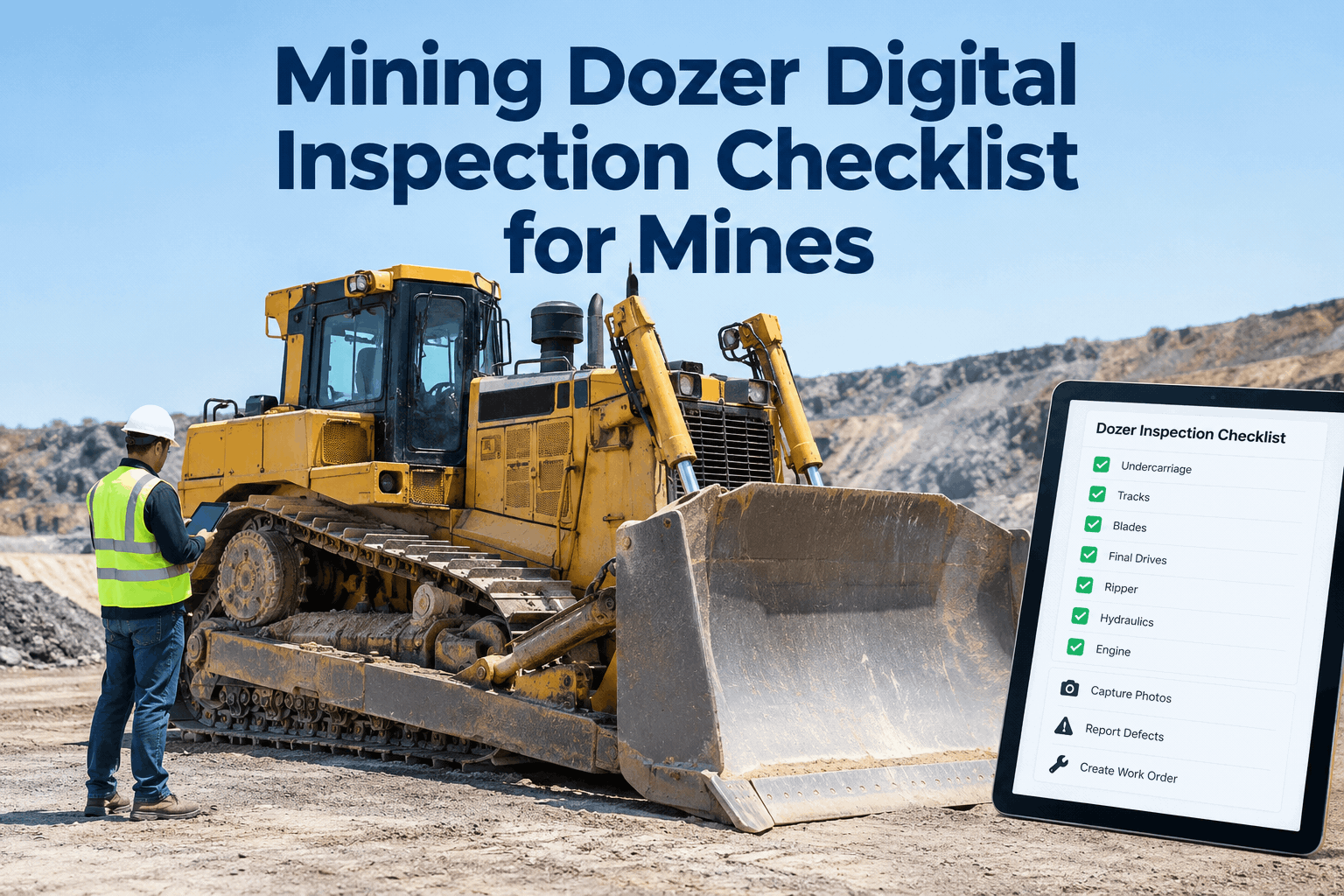
In HVI these checks sit on the same digital template as the rest of the dozer's daily inspection — tick, flag, photo — and a flagged leak or temperature issue routes to a work order the same way any other defect would. Book a demo and see final drive tracking live on your fleet
A monitoring schedule, not a reaction planputting oil analysis and temperature trending on the same clock as the rest of the dozer
Final drive monitoring works best layered onto the same meter-hour PM structure as the rest of the machine — not run as a separate program that's easy to let slip.
-
250 hr
Visual & level check
Oil level on both sides, housing condition, seal area, temperature noted after a shift of heavy pushing or ripping.
-
1,000 hr
Oil analysis sample
Lab sample on each final drive, trended against the previous result for iron, copper, and contamination levels.
-
Per interval
Oil change
Full gear oil change per OEM interval or sooner if analysis shows elevated contamination or wear metals.
HVI's meter-hour PM scheduling auto-generates the sample reminder when a final drive's hours cross the interval, and keeps lab results logged against that specific component — so a trend across three samples is a visible line, not three separate PDFs in an inbox. Book a demo to see final drive monitoring set against your dozer fleet
From flagged trend to closed work orderhow a final drive issue reaches the shop before the gears do
A final drive caught at the seal stage is a scheduled bay repair. A final drive caught at failure is a machine off the job for weeks waiting on a rebuilt or new unit.
-
1
Operator checks final drive on the daily walkaround
Oil level, seal area, temperature — on the same digital checklist as the rest of the dozer.
-
2
A leak or trend is flagged with photo & severity
A weeping seal or a worsening oil analysis trend gets logged with a photo or lab result, tied to that exact side, timestamped.
-
3
It becomes a work order in one tap
The flag converts to a work order and lands with the shop — a scheduled seal repair, not an emergency rebuild.
-
4
Repair closes against that dozer's history
Parts, labor, and lab results record against the machine's own file, feeding cost-per-hour analytics across the whole dozer fleet.
From a mining maintenance reliability planner
We used to only find out about a final drive problem when a technician mentioned it felt hot during a service, or an operator complained about one side pulling. By then we were usually already past the point of a cheap fix.
Putting oil sample due dates and daily temperature checks on the same system as the rest of the dozer's maintenance changed that completely. Now a seal weep gets flagged on the walkaround and a rising iron count gets flagged in the lab report, both routed the same way, both caught while it's still a scheduled repair instead of a multi-week rebuild.
Frequently asked questions
What is dozer final drive health monitoring?
Tracking a dozer final drive's oil level, leaks, temperature, and lab oil-analysis results over time, so a developing failure is caught as a seal leak rather than a catastrophic gear failure.
How much does a final drive failure actually cost?
A seal caught early typically costs $500–$2,000 to repair. The same issue left unaddressed for 100–300 hours can end in a full replacement costing $8,000–$25,000 or more per side.
How often should final drive oil be sampled?
A common interval is roughly every 1,000 hours, with results trended against the previous sample rather than read in isolation — the trend matters more than any single reading.
What are the earliest warning signs of final drive failure?
A seal weep, a drop in oil level since the last check, elevated housing temperature, and metal particles on the magnetic drain plug or in a lab sample — all visible before the machine shows any performance symptom.
Can HVI track final drive oil analysis across a whole dozer fleet?
Yes. Sample due dates, lab results, and daily condition checks log against each final drive's own record, with trends and alerts visible across the whole fleet.
Stop finding out about final drives by accident
HVI puts final drive condition on every dozer's daily inspection, trends oil analysis and temperature against each component's own history, and routes a flagged leak or wear trend straight to a work order — so the $500 fix gets caught before it becomes the $25,000 one. Live on site in under two weeks.
- Oil level, leak & temperature checks, daily
- Defect → work order in one tap
- Oil analysis trends per component, not per PDF
- Cost-per-hour per machine, fleet-wide