Two dozers, same model, same hours on the clock, wildly different undercarriage left in the tank. One ran in sand, one in sharp rock — but nobody could tell you that from a log, because nobody was measuring. "Looks about the same as last month" isn't tracking. It's a guess. See Wear Tracked as a Number
Wear Isn't a Yes/No. It's a Number That Moves.
Undercarriage can run roughly half a tracked machine's lifetime maintenance cost — and most fleets still manage it with a visual check instead of a measured trend. The difference is replacing a component on schedule versus replacing it in an emergency.
Why the undercarriage gets its own budget linethe numbers that make tracking worth the effort
Those first two numbers explain why this matters. The third is the whole game: hit 30% without a plan, and the next option isn't scheduled — it's whatever the machine decides to do first. See This Threshold Tracked on Your Fleet.
Eyeballing it vs. measuring itthe same undercarriage, managed two different ways
- "Looks worn" is a judgment call, different person to person
- No trend — this month's look isn't compared to last month's
- Replacement decided in the moment, often too late
- One machine's wear habits never get compared to another's
- A wear percentage, logged the same way every inspection
- A trend line per component, per machine, over real hours
- Replacement timed to the 30% window, not a surprise
- Ground type and operator habits show up as different wear rates
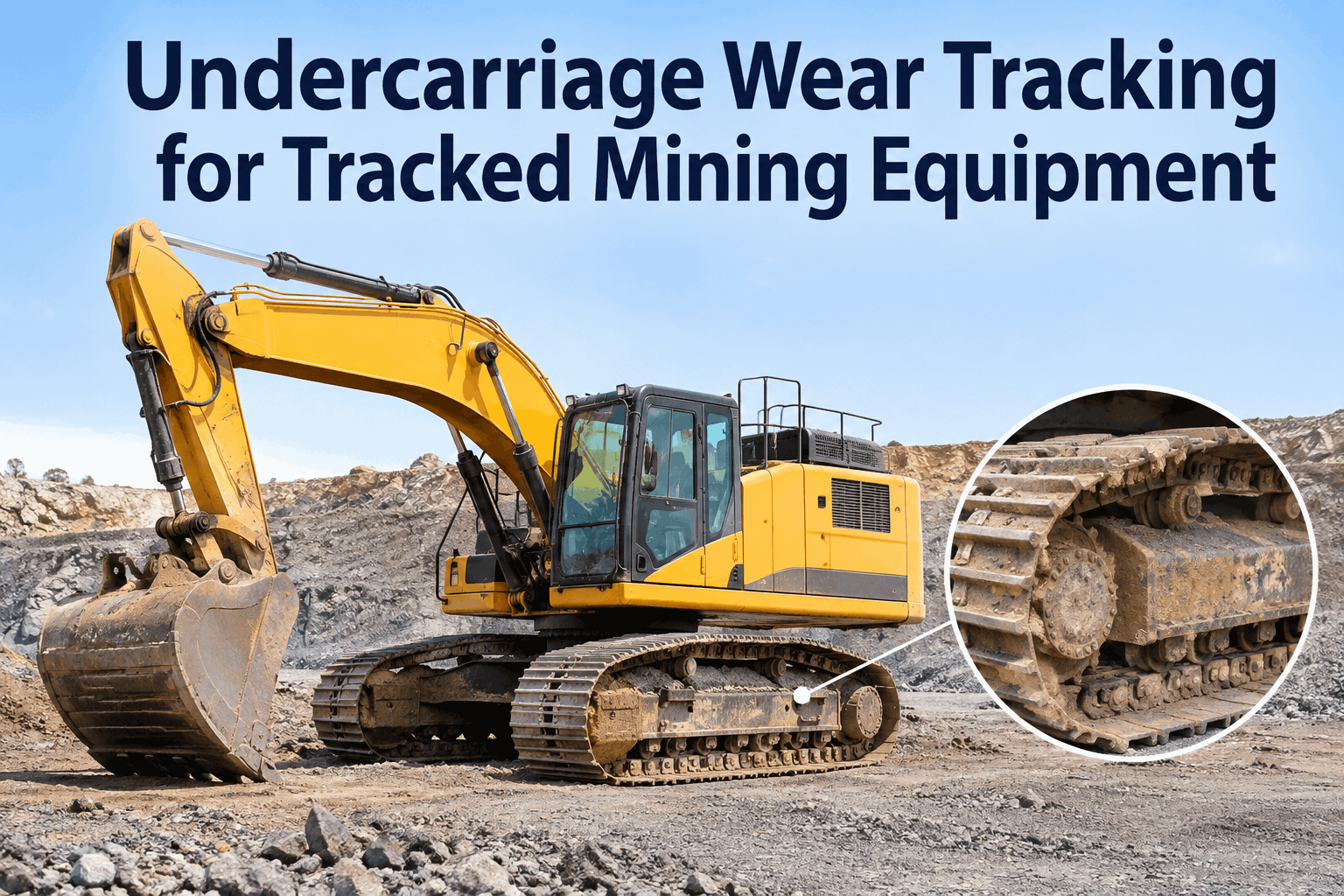
What's actually being measuredthe components a wear-tracking checklist captures as numbers, not pass/fail
Track chain / pin-bushing
Pitch elongation measured and logged — the clearest single number for overall undercarriage health.
Track shoes
Height and width measured against new-shoe spec, not just "still bolted on."
Rollers
Diameter and seal condition tracked per roller position, not averaged across the whole set.
Idlers
Groove depth logged on a cycle — the wear that hides best from a standing inspection.
Sprockets
Tooth profile measured against wear limits — a worn sprocket chews through a new chain fast.
Track tension
Checked and logged against spec — the one adjustment that slows every other component's wear rate.
For the full measurement-by-measurement walkthrough on an excavator, HVI has a dedicated 8-point undercarriage inspection guide; for dozers, see the dozer inspection best practices guide.
From a measurement to a scheduled replacementhow a wear trend turns into a planned work order
-
1
A wear measurement is logged
Chain, roller, or sprocket measurement entered on the digital inspection, tied to the machine's current hours.
-
2
It joins the component's trend line
Plotted against every prior reading on HVI's reporting — one line, climbing toward the replace window.
-
3
A part is reserved ahead of the window
The planner sees the trend crossing 30% weeks out, with time to order the component through parts & inventory.
-
4
Replacement happens on schedule
A planned job instead of an emergency — and the new component starts its own trend line at zero.
What to check in wear-tracking softwarea short list before trusting it with your replacement budget
Measurements, not just pass/fail boxes
A checkbox can't build a trend line — a number can.Trend graphed automatically, per component
Nobody should have to build this chart in a spreadsheet by hand.Alerts fire before the replace window, not at it
A heads-up at 40% beats a scramble at 25%.Ties to meter hours, not just a calendar date
Wear rate depends on hours and ground, not the number of weeks that passed.Machine-to-machine comparison is possible
Two identical machines wearing differently should be easy to spot, not a mystery.Parts can be reserved against a forecast
Knowing a part's needed in six weeks is only useful if it can be ordered now.From a planner who stopped replacing undercarriage by feel
We used to replace a dozer's chains whenever someone decided they "looked tired" — which meant some got swapped with 20% life left on the table, and others ran until a pin walked out mid-shift. Neither one was good, we just had no real way to tell the difference.
Now every inspection logs an actual measurement, and I can see the trend line for every machine in the fleet. I know which dozer is wearing fast because of the ground it's working and which one's just due. We stopped wasting good steel and stopped getting surprised — same budget, a lot less guessing.
Frequently asked questions
What is undercarriage wear tracking software?
It's inspection software that logs wear measurements for track chains, shoes, rollers, idlers, and sprockets as numbers over time, building a trend per component instead of a one-time pass/fail check.
Why does undercarriage wear tracking matter more than a visual check?
A visual check can't be compared reliably month to month or person to person. A measured trend shows exactly how fast a component is wearing, so replacement can be timed instead of guessed.
What wear percentage should trigger a replacement?
Most shops use roughly 30% remaining life on a major component as the trigger point to schedule replacement before the risk of unplanned failure increases.
Does this work across excavators, dozers, and other tracked machines?
Yes. Wear measurement checklists can be built per machine type. HVI has dedicated guides covering the full inspection points for excavators and dozers specifically.
Can wear trends help order parts ahead of time?
Yes. Once a trend shows a component approaching its replace window, the part can be reserved through inventory weeks before it's actually needed, rather than ordered after a failure.
Replace undercarriage on a schedule, not a surprise
HVI turns every undercarriage inspection into a logged measurement, builds a trend per component and machine, and flags the replace window before it becomes an emergency. Live on your fleet this week.