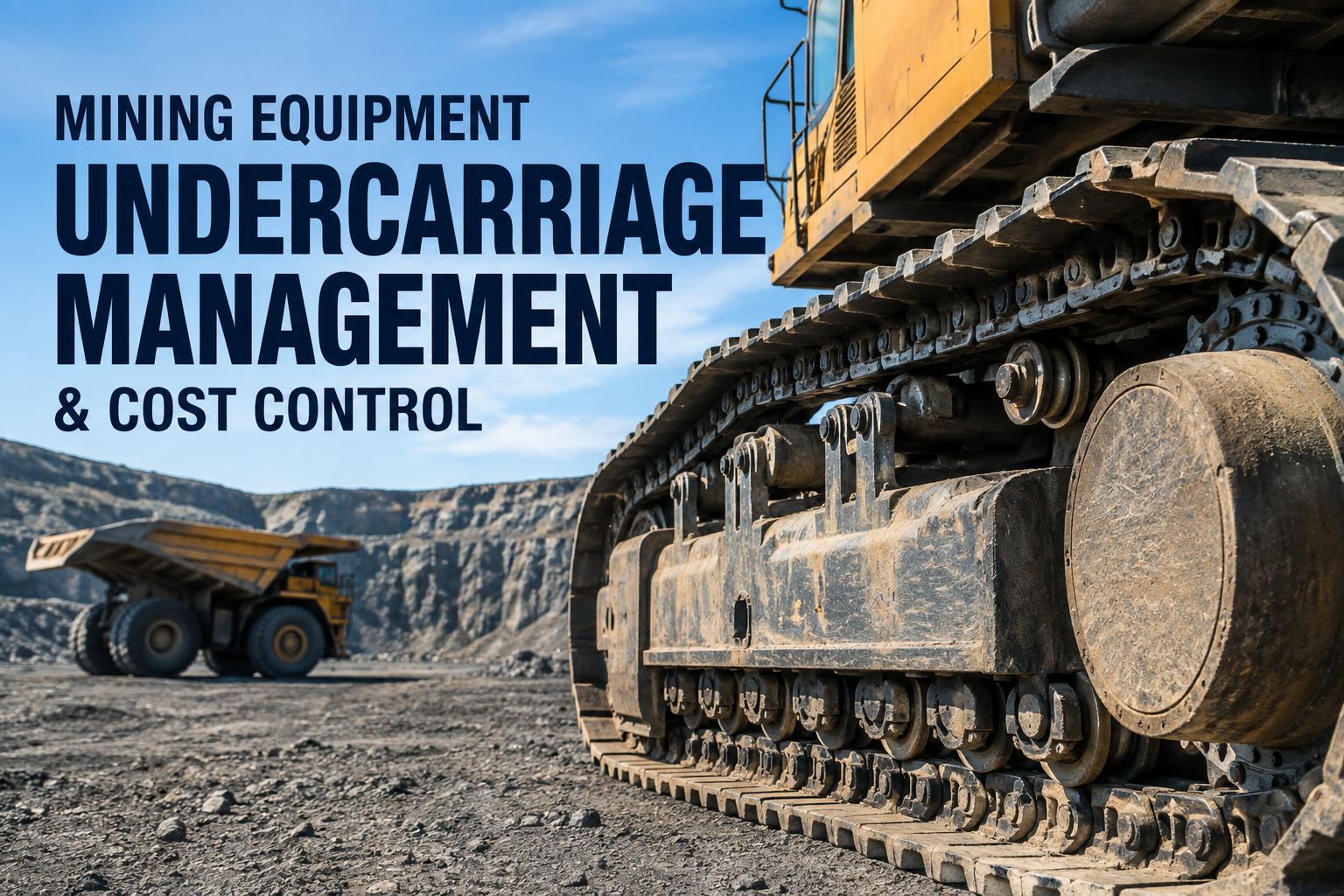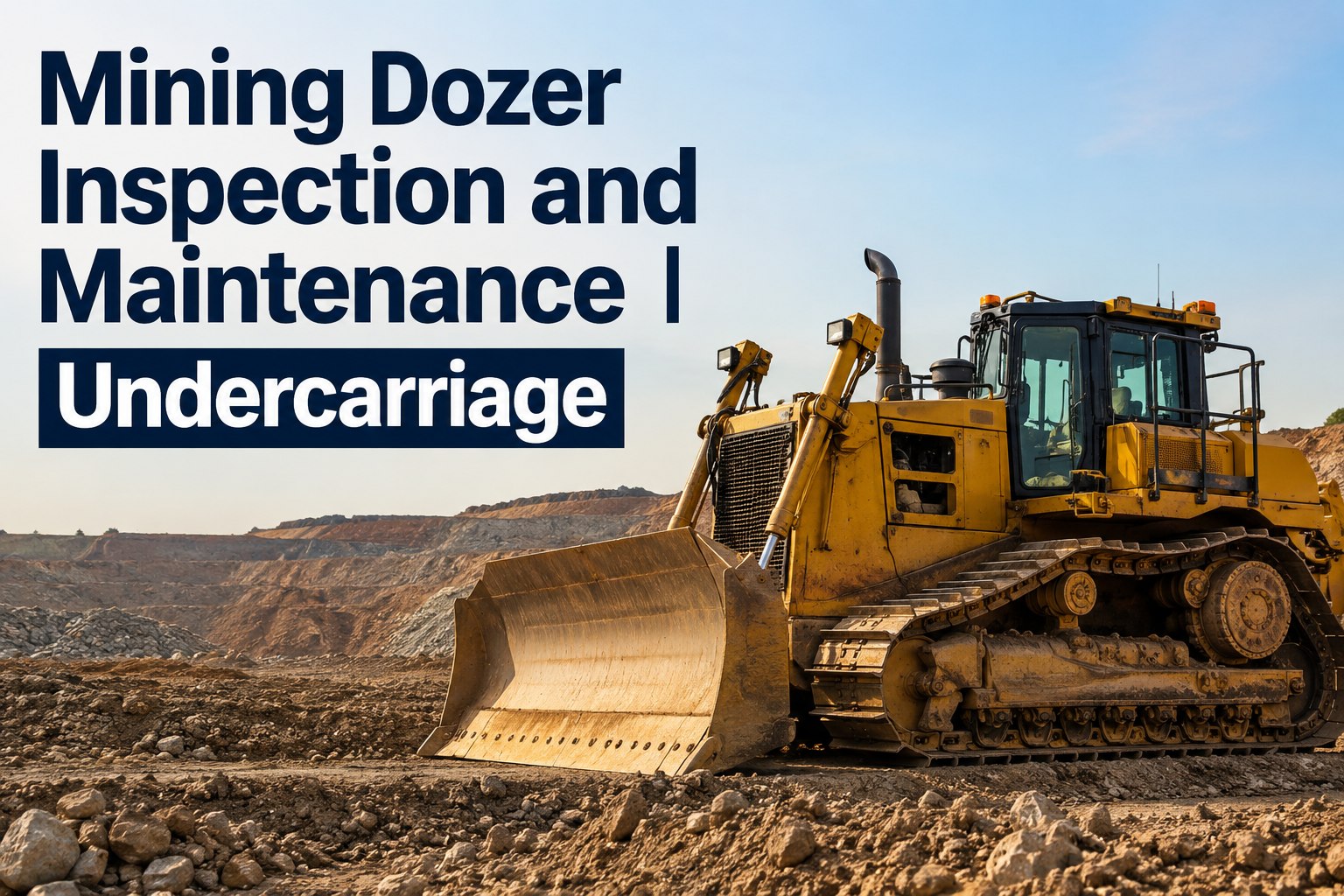
You walk out to the stockpile at 5:45 and the big dozer is already pushing, and the first thing you look at is not the blade or the ripper but the tracks, because on a mining dozer inspection the undercarriage is where the money goes. A large track dozer working shot rock, overburden or a dump hopper lives in the most abrasive material on site, and undercarriage typically accounts for half or more of its lifetime repair spend. The gap between a set of tracks scrapped at 4,000 hours and one that runs 8,000 hours is rarely the brand of steel - it is daily attention to track tension, measurement and operating habits. This page walks through what to check, how to trend wear, and how to see it running on your own dozers in a 30-minute demo.
What does your pre-shift walk actually catch on a D11 or D375?
Two minutes on the tracks each shift is the highest-return habit on the machine. Here is the daily preview a disciplined mining dozer checklist covers before the first push.
- Track sag measured, not eyeballed - correct tension for today's material
- Sprocket teeth, idlers and rollers scanned for abnormal wear or leaks
- Blade cutting edges, end bits and ripper shanks checked against limits
- Final drive oil level and any metallic sheen reported with a photo
The numbers behind large dozer maintenance
Every figure below is money out of your cost per hour. Track discipline is the one lever that moves all four.
Undercarriage is commonly the single largest maintenance cost on a mining track dozer - more than engine, hydraulics and blade combined.
The difference between a neglected and a managed undercarriage on the same machine in the same material is often a doubling of component life.
Running tracks too tight for the conditions accelerates bushing and link wear dramatically - a free adjustment most sites skip weekly.
A planetary running low on oil with metallic contamination can go from warning sign to destroyed gears inside a single shift of pushing.
How do you measure dozer undercarriage wear - and why one reading is useless?
A single measurement tells you where the track is today. A trend tells you when to book the rebuild, order the parts and plan the downtime. These are the six points a proper mining dozer inspection captures every cycle.
Track tension / sag
Measure sag at the midpoint between carrier roller and front idler against the OEM spec for your material. Tight tracks in soft, packing conditions grind bushings and links from the inside. Check weekly minimum, daily when conditions change.
Link height / rail wear
Caliper the rail height and compare to the new dimension and the wear limit. Rail wear rate per 100 hours is your best predictor of remaining life - log it every 250-500 hours, not once a year.
Bushing wear and turn timing
External bushing wear dictates the pin-and-bushing turn window. Miss the turn window and you scrap parts that had a second life in them - on a D11-class machine that is a five-figure mistake per side.
Sprocket profile
Check for hooked or pointed teeth and uneven wear between segments. A worn sprocket eats new bushings fast, so sprocket condition decides whether your next rebuild includes segments or not.
Idlers and rollers
Look for flange wear, scalloping, flat spots and oil leaks at the seals. A seized roller discovered on a pre-shift walk is a planned stop; discovered by the operator mid-push it is a derailed track on the dump edge.
Shoes and hardware
Grouser height, cracked shoes, loose bolts and bent master links. Shoe width matched to the job matters too - wider than needed in hard rock just adds weight and wear rate.
The practical move is capturing each measurement with a photo and a meter reading in one record, so wear-rate trending happens automatically instead of living in a fitter's notebook. You can start logging undercarriage readings free and build the trend from your next service.
What else belongs on a mining dozer checklist?
Undercarriage dominates the budget, but these four systems are what stop the machine mid-shift. Each gets a daily operator check plus a deeper technician inspection on meter-based intervals.
| System | Daily operator check | Technician inspection | Failure it prevents |
|---|---|---|---|
| Blade and ripper wear package | Cutting edge and end bit wear vs limit, ripper shank and tip condition, loose or missing hardware | Edge thickness measured, moldboard cracks, ripper frame and pin wear, hydraulic cylinder rod scoring | A worn-through edge grinding the moldboard, or a shank let go under load at the face |
| Final drives | Oil level, leaks at seals, unusual noise or heat after a push | Oil sample for metallic content, magnetic plug inspection, planetary backlash check | Planetary gear destruction - a warning sheen in the oil today is a destroyed drive this week |
| Hydraulic system | Hose chafing and weeps, cylinder drift, oil level and temperature behaviour | Pump pressures and cycle times, filter restriction indicators, oil analysis for contamination | A burst hose over hot surfaces, or slow contamination killing pumps and valves |
| Cooling in high dust | Radiator and cooler cores blown clear, fan and shroud condition, coolant level | Core flow test, fan drive and belt tension, thermostat and cap pressure check | Overheating derates and head gasket damage - the classic desert and summer killer |
| ROPS / FOPS and cab | Structure cracks, mount bolts, glass, seat belt, horn, lights, fire suppression pin and gauge | ROPS/FOPS integrity inspection and certification, mount torque, suppression service date | An uninsurable incident and a compliance breach if a rollover finds a compromised structure |
The operator habits that change dozer undercarriage wear rate
Two identical dozers in the same pit can show a 2:1 difference in track life purely from how they are driven. These are the habits worth coaching - and worth capturing in your inspection culture.
Do
- Alternate turning direction through the shift so one side's bushings and sprockets do not take all the load
- Re-check track tension when material changes - mud packing between links tightens a track that was correct in the morning
- Plan the push to minimise reverse travel and high-speed spinning on rock
- Report noise, heat or a pulling track immediately, with a photo, before the shift ends
Don't
- Don't run one-direction pivot turns all shift on a stockpile - it is the fastest way to asymmetric wear
- Don't keep pushing with a loose or jumping track; every pass is grinding the sprocket profile
- Don't spin the tracks to clean them - it polishes grousers and shocks final drives
- Don't treat a metallic sheen in final drive oil as "check it next service" - that is a today problem
A worked example from the dump
Say your 100-tonne-class dozer pushes 18 hours a day and a mid-life undercarriage rebuild - pins, bushings, sprocket segments, idlers, rollers and labour - runs around $120,000. If tension neglect and one-way turning habits cut track life from 7,500 hours to 5,000 hours, you have just added roughly $8 per operating hour to that machine, or over $50,000 a year on a single dozer, before you count the three days of lost production while it sits in the shop. A five-minute daily tension check and a turning-habits conversation cost almost nothing. When you book a walkthrough of the dozer templates, you will see how those checks become a two-minute phone task instead of a paper form nobody reads.
See your wear trends before the rebuild is overdue
HVI trends every undercarriage measurement against meter hours and projects the rebuild window - so parts arrive before the tracks are scrap.
Mining dozer inspection software that lives in the pit, not the office
Four capabilities, each mapped to a problem you already have on your dozers.
Dozer templates by QR scan
The operator scans the plate on the cab and gets the exact pre-shift mining checklist for that machine - tracks, blade, ripper, ROPS - on any phone. No paper book, no wrong form, no "I didn't know what to check."
Measurement capture with photo evidence
Link height, bushing wear and sprocket profile are entered as numbers with a photo attached, timestamped and tied to the asset. A defect becomes a work order instantly - no texted photos lost in a group chat.
Analytics that project rebuild timing
Wear-rate trending per component per machine shows you the rebuild window months out. You order undercarriage parts on your schedule and plan the downtime, instead of the track deciding for you mid-push.
Meter-based PM that follows engine hours
Preventive maintenance triggers off engine hours, not calendar guesses, with due and overdue alerts to the foreman. Oil samples, final drive checks and ROPS inspections never silently slip a service.
Because HVI is one CMMS across dozers, trucks, loaders and light vehicles, your dump dozer maintenance records sit next to everything else the shop touches - useful when a client, insurer or auditor asks for proof. Most sites have their first machine live the same week; you can walk through it on your own units before you commit to anything.
Mining dozer maintenance, boiled down
Tracks first, always
Undercarriage is half your repair budget. Tension weekly, measure on a schedule, and trend the wear rate - single readings are trivia, trends are planning.
Final drives warn you once
Metallic sheen in the oil or metal on the magnetic plug is the warning. Act the same day and it is a repair; wait a service and it is a rebuild.
Operators are half the program
Turning habits, reverse travel and spinning tracks can halve or double track life. Coach the habits and give operators a fast way to report what they see.
Paper cannot trend
A binder proves a form was filled in. A digital mining dozer inspection record with photos and meter hours proves the machine was actually checked - and tells you when to rebuild. If you want that proof without the admin, set up your first dozer free and run next week's checks through it.
"My gripe was never the cost of tracks - it was finding out they were shot when the operator reported a jump in the track at hour 4,900 and my parts were still twelve weeks out. Now I watch one number: bushing wear per hundred hours, per machine. When the trend line says 7,200, the kit is on the shelf at 6,800. The blokes thought the phone checks would slow them down; the pre-start takes them less time than the old paper book did, and I get a photo of the final drive oil instead of the word 'OK'."
Dave Kowalski - Maintenance Manager, open-pit aggregates producer
Mining dozer inspection FAQs
How often should you inspect a mining dozer undercarriage?
What is the biggest maintenance cost on a large mining dozer?
How do you know when dozer tracks need rebuilding?
What are the warning signs of dozer final drive failure?
Can a phone app really replace paper dozer inspection books?
Get 8,000 hours out of your next set of tracks
Put QR-scanned dozer checklists, photo-backed measurements and wear trending in your crew's pockets this week - and plan the next rebuild on your schedule, not the track's.
Free to start - Works on any phone - No card needed