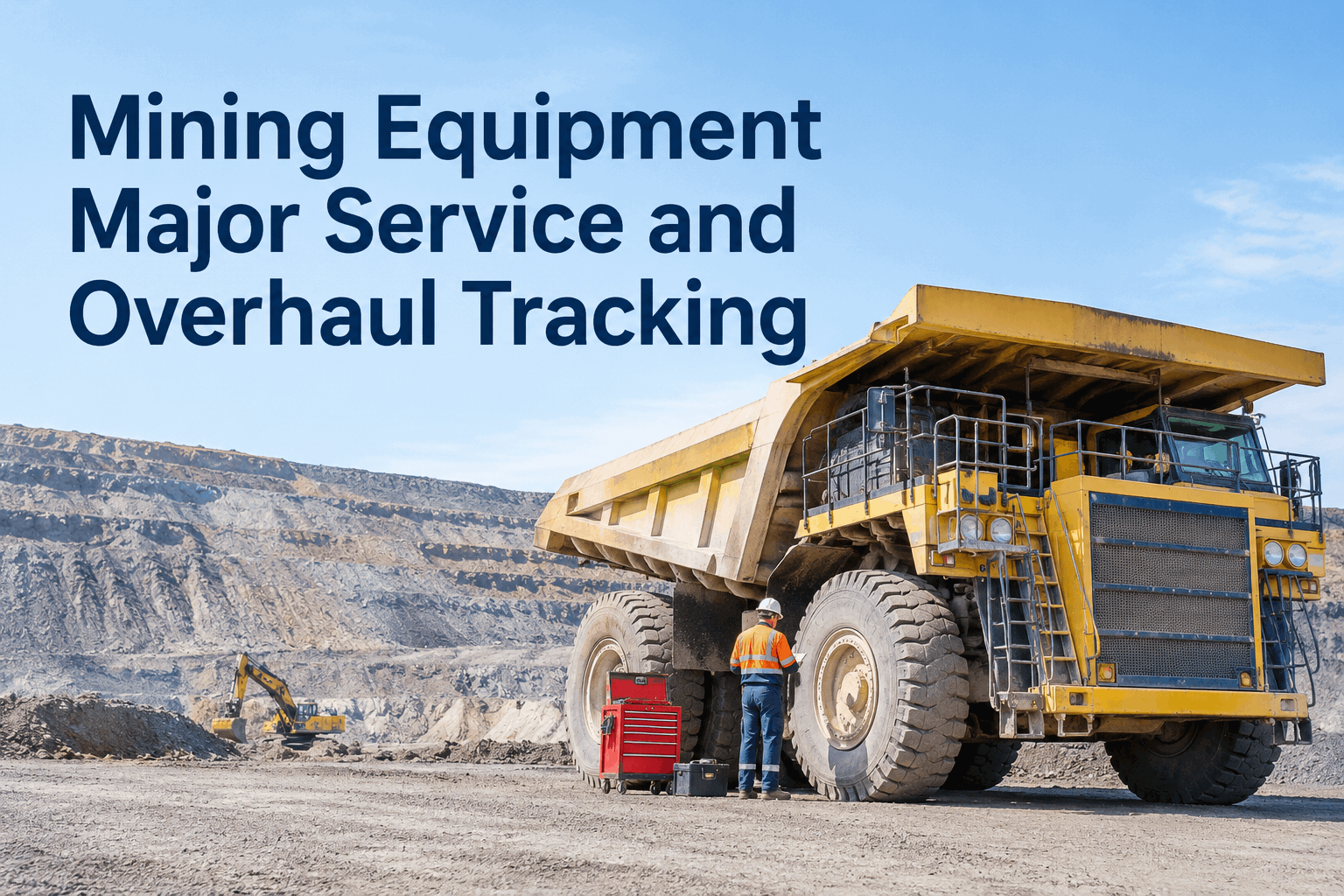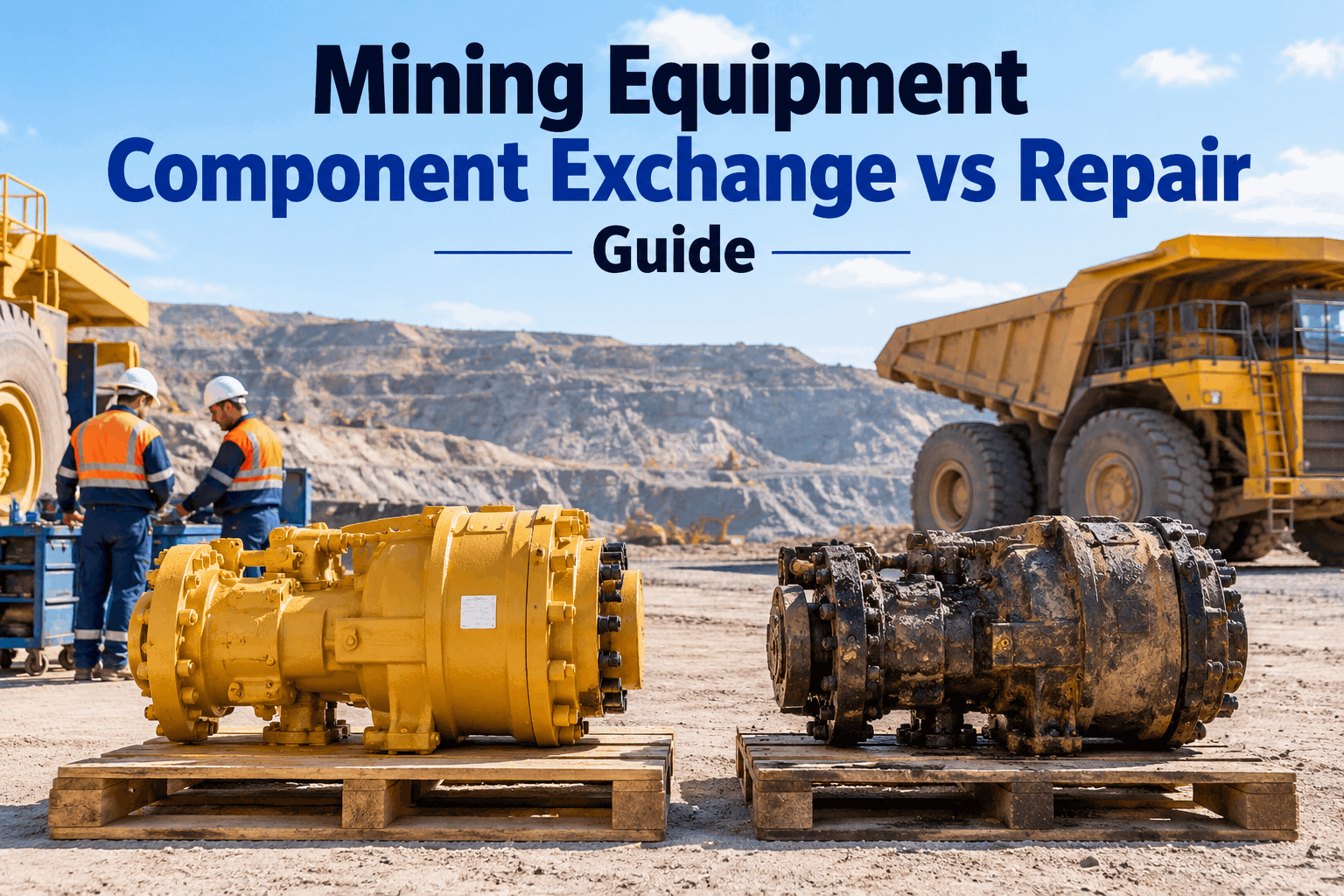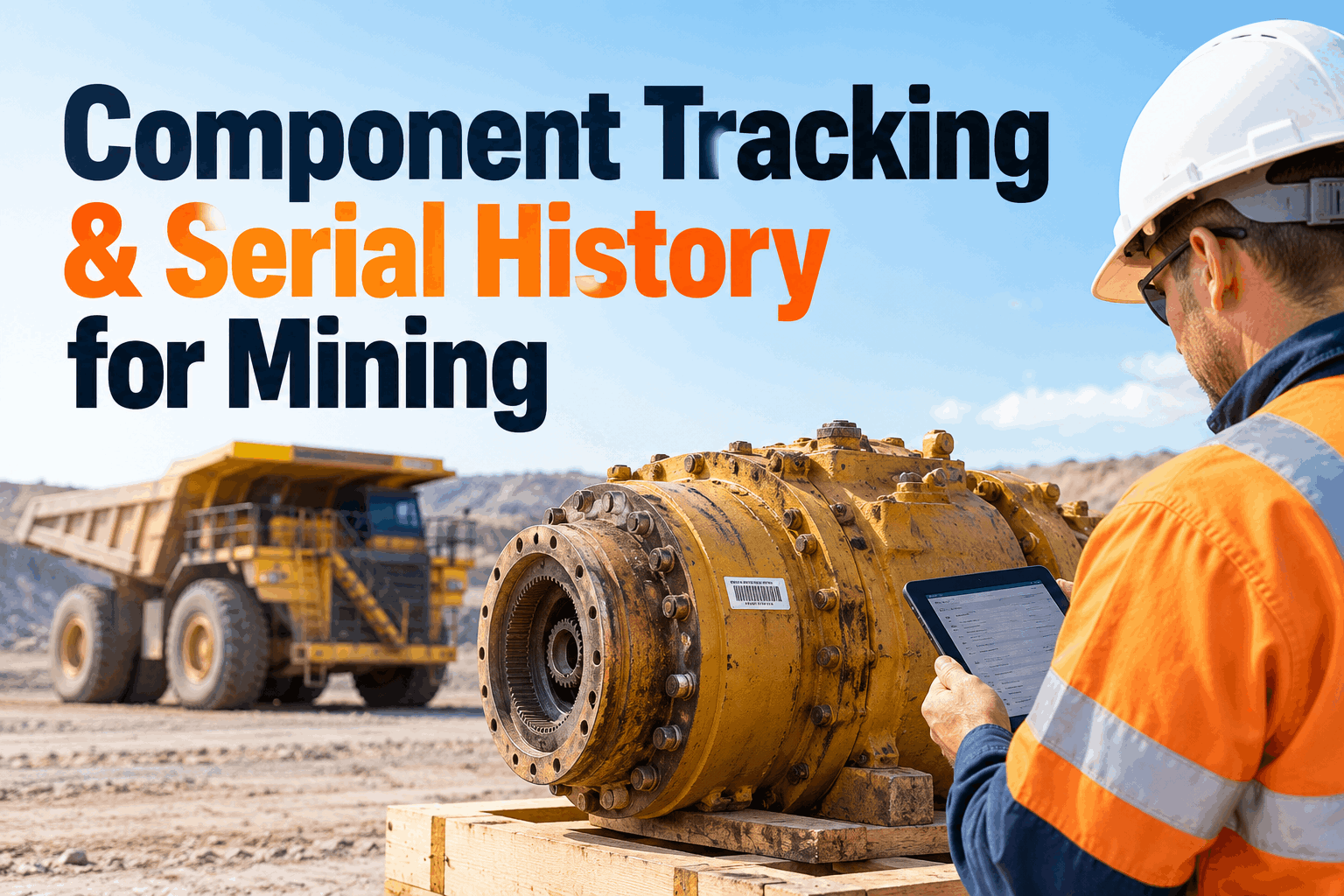
A rebuilt engine doesn't care which haul truck it's bolted into — it carries its own hours, its own rebuild count and its own failure history from one machine to the next. On a mine running component-exchange maintenance, that's the unit that actually costs the money, and it's the one most fleets track the worst: a serial scribbled on a work order, a rebuild logged in a spreadsheet nobody opens. Mining component serial tracking fixes that by giving every rotable a lifecycle record that follows the serial, not the machine. Book a demo to see a serial's full history.
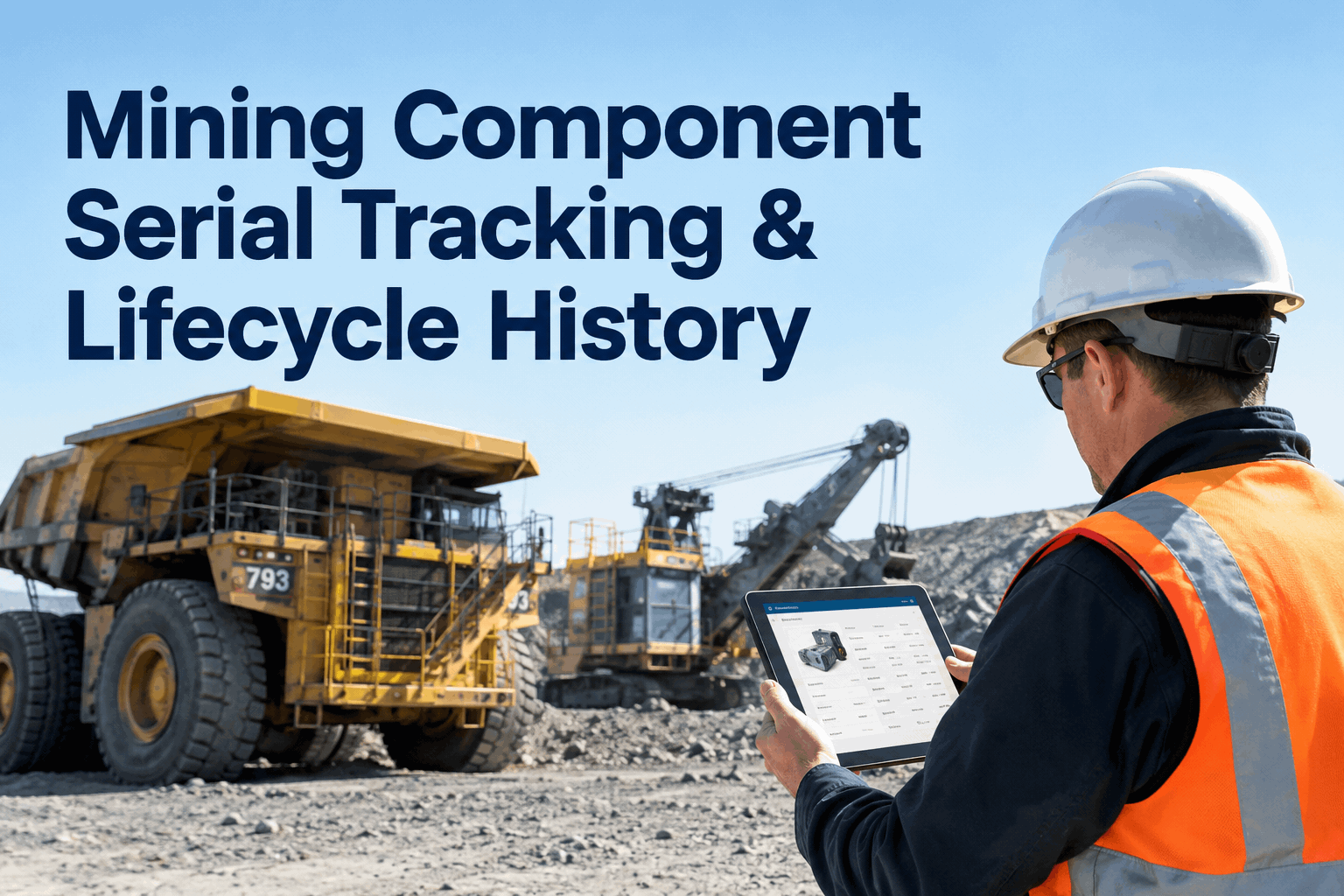
Mining Component Serial Tracking & Lifecycle History
Follow every engine, final drive and pump by serial number — hours, location, rebuilds and service history on one record, across every machine it lives on.
The machines get the attention because they're what breaks down in front of you. But on a mine, the real money sits in the rotables — engines, transmissions, final drives, wheel motors, hydraulic pumps — units worth tens of thousands each that get removed, rebuilt and bolted onto a different machine. Track those by machine and you lose the thread the moment a component moves. Mining component serial tracking keeps the thread.
A component outlives the machinewhy mining component history software tracks the serial, not the unit
A haul truck might carry three different engines over its life, and each of those engines might see three different trucks. If your records are organized by truck, a rebuilt engine's real age and history vanish every time it's swapped. Mining component history software flips that — the serial is the record, and the machine is just where it happens to be right now.
A rebuilt engine carries its own hour clock — not the truck's — so you rebuild it on time instead of running it blind.
Every serial is somewhere: on a machine, on the shelf, or at a rebuild vendor — the record always says which.
A serial that's failed the same way twice is a pattern — but only if its history isn't scattered across spreadsheets.
That's the shift serial tracking makes: from "which truck is down" to "which component, with what history, is about to be." HVI builds it into parts and inventory management so each serial carries its own record you can trace end to end.
The life of one serialized componentwhat component lifecycle tracking actually records
A rotable component's life isn't a straight line — it loops. It's installed, it runs, it's removed, it's rebuilt, and it goes back out on a different machine, often several times before it's retired. Here's that loop, and the record serial tracking keeps at each step.
Each of those events is a line on the component's history instead of a note lost on a work order, which is what lets a planner see the real picture on a maintenance management workflow. You can start a free trial and log your first serials in an afternoon.
What a serial record has to holdthe serial number tracking software checklist for a mining fleet
Not every "parts module" is real component tracking. A serial record worth keeping has to carry the fields that let you trust it for a repair-or-replace decision or a warranty claim. Score any platform against these — a tool worth standardizing on should hold every one.
A record with all of these is what replaces the scattered spreadsheet for good, and it's part of the wider mining equipment maintenance HVI supports — with findings flowing in from the digital inspection system.
History drives the repair-or-replace callhow component lifecycle tracking turns a guess into a decision
The decision that serial history exists for is the expensive one: do you rebuild this component again, or retire it? Made on a hunch, it goes wrong both ways — scrapping life you paid for, or pouring money into a unit that keeps failing. Made on the serial's record, it's just reading the numbers.
Roll those serial records up and the analytics and reporting dashboard shows which component classes are costing the most and which serials to watch — the view a reliability meeting actually needs.
The history you're actually buyingwhat one serial's record looks like inside the platform
What you're evaluating is this: a single component's timeline — where it's been, how many hours, what was done and what it cost — readable at a glance by the planner making the next change-out call.
That recurring seal failure jumps out because it's on the serial, not buried in three different trucks' paperwork — the kind of pattern that changes a repair-or-replace call — and it's worth asking to see a serial timeline from your own fleet on a demo.
From a mine reliability engineer on serializing the fleet
We had engines and final drives moving between trucks for years with the history living in whoever's spreadsheet. The day it bit us was rebuilding a transmission that turned out to be on its fourth rebuild — money we'd never have spent if we'd seen the count. Once every serial carried its own hours, rebuilds and failures, the repair-or-replace calls got boring in the best way: you just read the record. And we started catching the serials that failed the same way twice instead of rebuilding the same fault over and over.
Mining component tracking FAQs
What is mining component serial tracking software?
Why track by serial instead of by machine?
Does it track rebuilds and component exchanges?
Can it help with repair-or-replace decisions?
How long until it's running on our fleet?
Track the components, not just the machines
Mining component serial tracking turns scattered spreadsheets into one lifecycle record per rotable — so hours follow the part, rebuilds are counted, recurring failures surface, and every repair-or-replace call is read from the record. Bring the demo, load your serials, and stop losing the thread.
- Hours & history by serial, across machines
- Install, exchange & rebuild log per unit
- Findings & work orders linked to the serial
- Cost-to-date for repair-or-replace calls