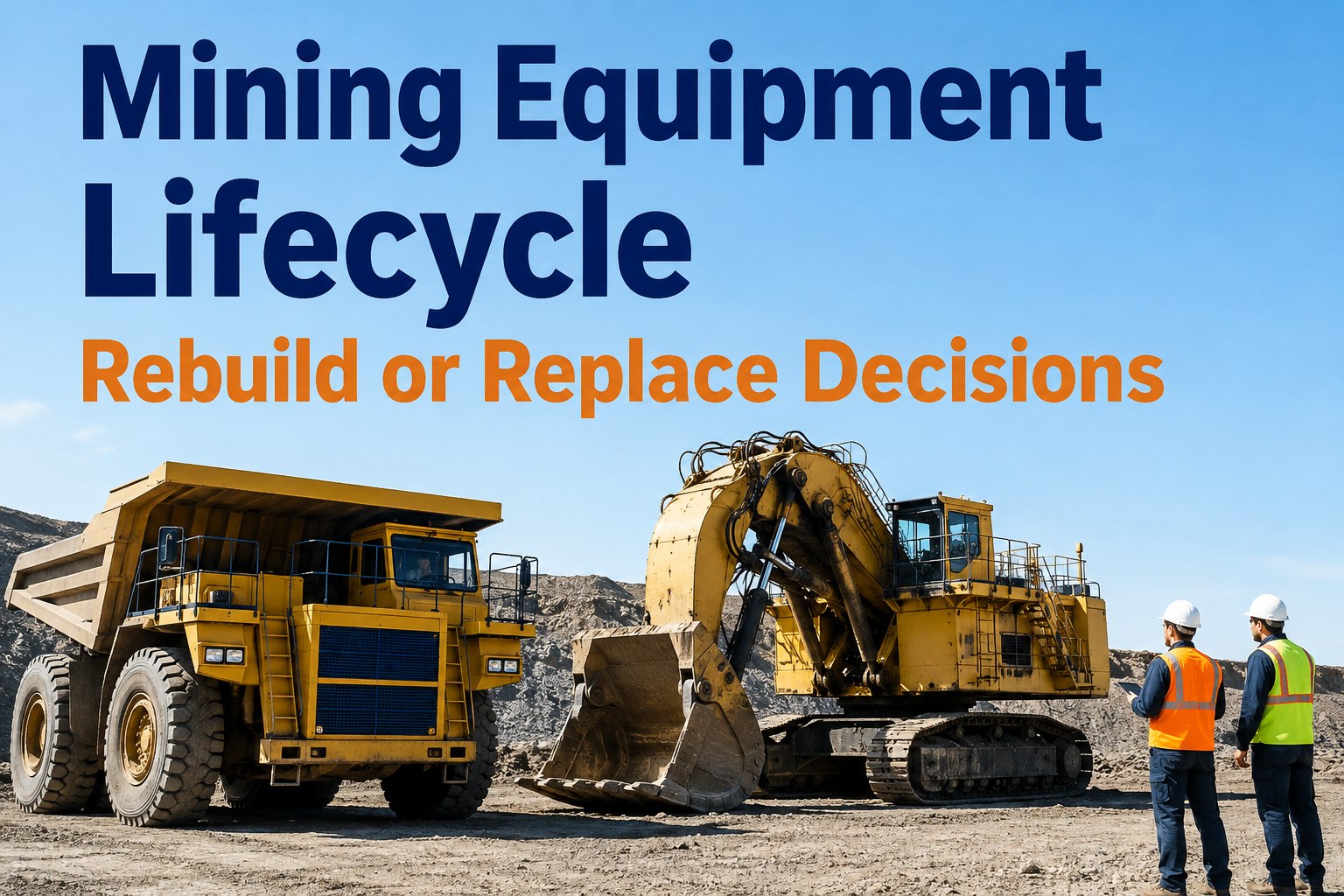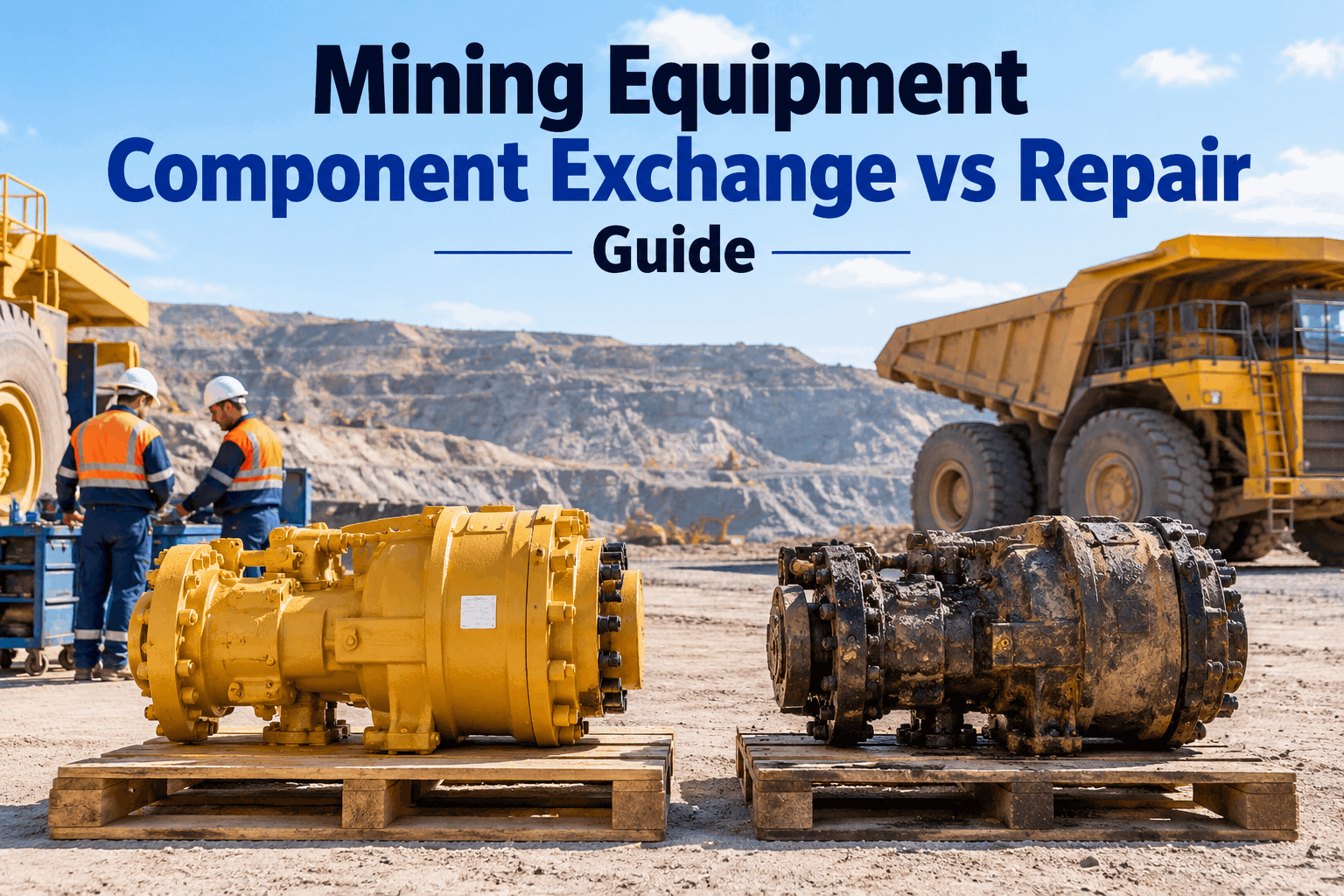
Component exchange vs repair is the call a mining maintenance manager makes with the clock already running. A final drive lets go on a haul truck mid-shift, and you've got two roads: pull it and bolt in a ready exchange unit so the truck is back on the ramp today, or repair the one you've got and accept the machine sitting idle while it's fixed. One costs more up front and almost nothing in downtime; the other saves cash and bleeds production. On a mine, the right answer is rarely the cheaper invoice. Book a demo of repair-cost and downtime tracking.
Same Failure. One Truck Runs Today, One Sits for a Week.
Exchange and repair send the same component down two very different timelines. The gap between them isn't the part cost — it's the production you lose while the machine waits.
Here's the trap that catches cost-focused fleets: the repair quote is always the lower number on paper, so it wins the meeting — and then the machine sits for five days and quietly loses more in production than the exchange premium would ever have cost. Exchange vs repair isn't a parts decision. It's a bet on what an hour of downtime is worth on that specific machine, and the fleets that get it right are the ones that actually know that number.
The real costwhy the repair quote hides the bigger number
Every exchange-vs-repair decision has two cost stacks, and most fleets only put one on the table. The repair quote covers parts and labor. What it leaves out is the production lost while the machine is down — and on a high-production mining unit, that's usually the bigger stack by far.
- Parts for the failed component
- Workshop labor hours
- No core charge, lower outlay
- Lost production per hour the machine is down
- Knock-on to the whole dig/haul cycle
- Operators and fleet idled around the gap
The whole case for exchange is that it collapses the downtime stack — the machine is only down for the swap, not the repair. The failed unit then gets rebuilt off-line on nobody's critical path. Whether that premium is worth it comes down to one number you either track or guess at: the cost of an hour of downtime on that machine. Explore tracking repair cost and downtime per asset.
Exchange vs repairthe factors that actually decide the call
Set the two side by side on what a maintenance manager weighs in the moment. Neither wins every time — the right choice shifts with the machine's downtime cost, whether a float unit exists, and how critical the asset is to the production plan.
| Factor | Component exchange | Repair the unit |
|---|---|---|
| Downtime | Just the swap — hours, not days | The full repair — machine down throughout |
| Up-front cost | Higher — exchange unit + core charge | Lower — parts and labor only |
| Availability | Needs a float / reman unit in stock | Needs workshop capacity and parts |
| Reliability | Tested reman unit to OEM spec | Depends on the repair scope and QA |
| Best for | High-production, high-downtime-cost units | Low-utilization assets, or no float exists |
| The failed unit | Rebuilt off-line, re-enters the float | Returns to the same machine once fixed |
One honest caveat: exchange only works if a float unit is actually available — build that float, and you've traded a repair-length outage for a swap. This is a different question from who rebuilds the failed unit afterward, which is its own call — Read our OEM vs third-party rebuilders comparison. Book a demo of component decision history.
Which call, whena decision guide for the component in front of you
Most of these calls sort cleanly once you name the dominant constraint — downtime cost or outlay. Use this as the quick filter, then let your own cost and reliability history settle the ones in between.
- The machine is a high-production unit where downtime is costly
- A float or reman exchange unit is available now
- The failure is on the production plan's critical path
- You want a tested, warranty-backed unit in fast
- The asset is low-utilization and downtime is cheap
- No exchange unit exists for that component
- The repair is minor and quick to turn around
- Lowest outlay matters more than lost hours here
The close calls almost always hinge on a single figure: what an hour of downtime costs on that machine, multiplied by the repair days you'd avoid. Fleets that track downtime and repair cost per asset run that math in seconds; the rest re-argue it every failure. This is a component-level version of the broader Read our rebuild-or-replace lifecycle strategy. Sign up free and start logging the decision.
The float poolhow exchange turns a repair-length outage into a swap
Exchange only delivers its downtime win because of the float — a pool of rebuilt, tested, ready-to-fit units sitting in stock before you need them. The machine never waits on the repair; it waits only on the bolt-up. Here's the loop that keeps the float turning.
-
1Component fails
A breakdown work order opens against the asset. The decision is made fast because the downtime cost is already known.
-
2Swap in the float unit
A tested exchange unit comes off the shelf and goes on the machine. Downtime ends when the bolts are torqued, not when a repair finishes.
-
3Rebuild the old unit off-line
The failed component goes to the workshop on nobody's critical path, gets rebuilt to spec, and is tested.
-
4Back to the float
The rebuilt unit re-enters the pool, ready for the next failure. The loop keeps downtime at swap-length every time.
The catch is that a float ties up capital and workshop throughput, so you build it for the components where downtime hurts most — not every part. Knowing which components those are means knowing their failure frequency and downtime cost, which is a history question. Explore planning float units from failure history, and Book a demo of component failure tracking.
Decide on datathe records that turn the exchange-or-repair debate into a number
The call only gets easy when four things are tracked per component and asset. Capture them and the decision stops being a meeting and becomes a lookup.
Tracked together, these turn the exchange-or-repair argument into arithmetic: downtime cost times days saved versus the exchange premium, backed by how this component has actually behaved. That's the record HVI keeps, and it's what makes the next call fast and defensible. Verifying the rebuilt unit meets spec is the next step — Read our component rebuild specifications & QA guide.
From a reliability manager running a high-production haul fleet
We defaulted to repair for years because the quote was always cheaper, and it felt responsible. Then we actually costed a haul-truck down-day against the exchange premium and the math flipped — on the big units, swapping was saving us multiples of what we "saved" by repairing in place. Now the call is quick: if the downtime cost on that machine beats the premium, we exchange and rebuild the old one off-line. Having the downtime and repair numbers per asset in one place is what turned a gut argument into a one-minute decision.
Component exchange vs repair — FAQs
What's the difference between component exchange and repair?
Exchange swaps the failed component for a ready, tested reman unit, so downtime is just the swap and the old unit is rebuilt off-line. Repair fixes the original unit while the machine stays down for the whole job. Exchange costs more up front but loses far fewer production hours.
When is exchange worth the higher cost?
When the machine is a high-production unit where downtime is expensive and a float unit is available. If an hour down costs more than the exchange premium spread over the repair days you'd avoid, exchange usually wins — which is why knowing your downtime cost matters most.
What is a component float pool?
A stock of rebuilt, tested, ready-to-fit components held before they're needed. When one fails, you fit a float unit immediately and rebuild the failed one off-line to re-enter the pool. The float is what lets exchange keep downtime to swap-length every time.
How do I decide exchange vs repair?
Compare the downtime cost of the repair days against the exchange premium, and check whether a float unit exists. High-production units on the critical path lean exchange; low-utilization assets or components with no float lean repair. Your own downtime and repair-cost history settles the close calls.
How does HVI help with exchange vs repair decisions?
HVI doesn't exchange or repair components — it tracks the data behind the call. It records repair cost, downtime, and failure frequency per component and asset, with your past decisions and outcomes, so you weigh the swap premium against real lost-production numbers.
Make every exchange-or-repair call a number, not a hunch
You know the trade — pay more and lose only swap-hours, or save cash and bleed production. HVI gives you the figures that decide it: downtime cost, repair cost, and failure history per component and asset, with every past call on record. The next decision is a lookup.
No credit card · No hardware · Per-component cost & downtime history from day one