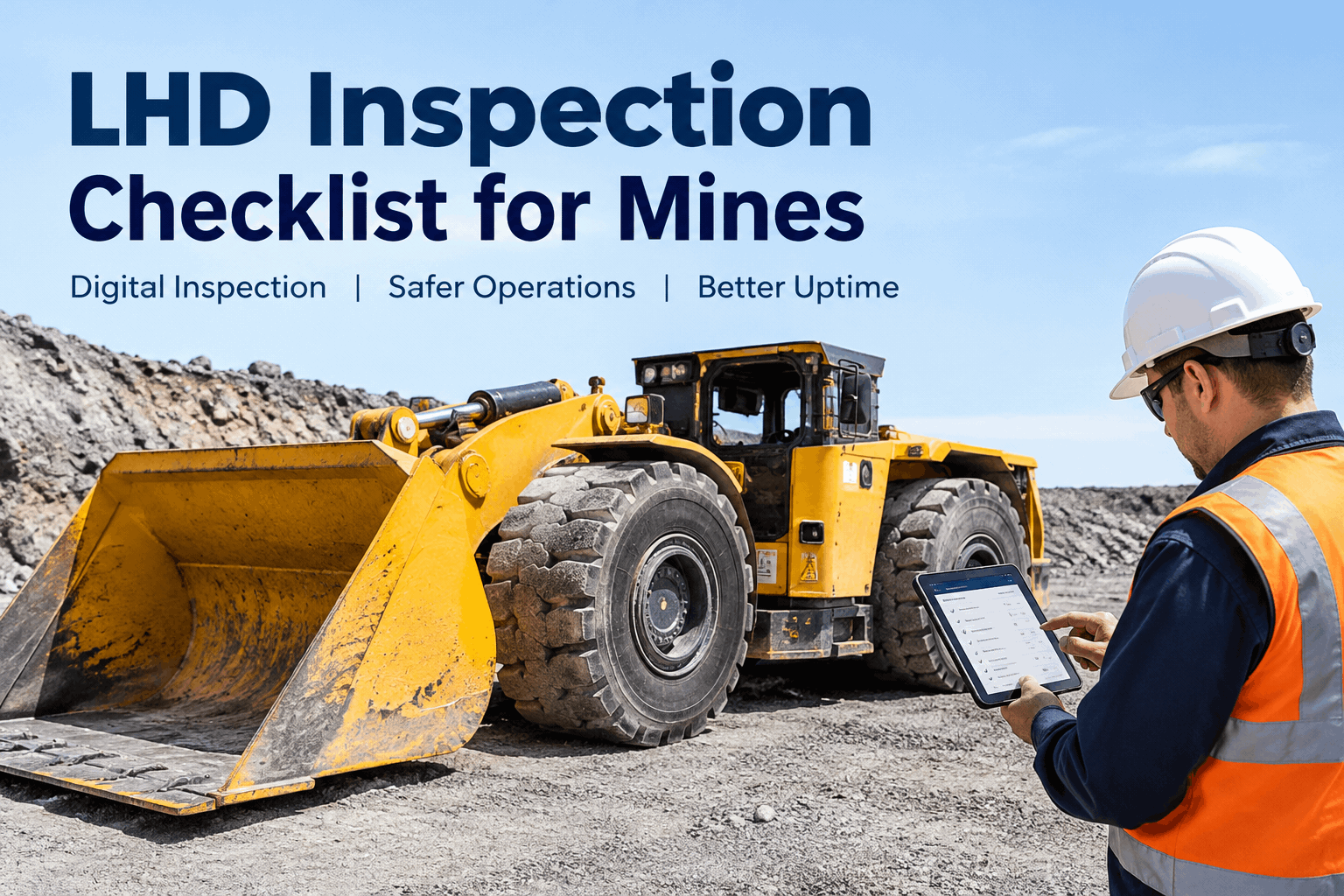
A LHD's load-haul-dump cycle is brutal on tires in a way almost nothing else underground is — short cycles, little cooling time, confined headings and a failure at the working face that's the hardest spot on the mine to recover from. LHD tire and wheel management software tracks heat, cuts, pressure, and life-hour trends across the fleet so a tire problem is a scheduled swap, not a stranded loader. Book a demo to see it on your LHD fleet .
The Tire That Fails at the Face Is the One You Can't Reach
LHD tire management software tracks heat, cuts, and wear per tire across the fleet, and keeps the solid-vs-pneumatic cost math visible — so a tire decision is based on data, not on which rep called last.
Nothing on an LHD works its tires harder than the job itself. Load, tram, dump, repeat, hundreds of times a shift, with almost no cooling time between cycles — that heat buildup is the defining stress on an underground loader tire, different from the steady-speed wear a haul truck tire sees. Most underground fleets run bias-ply tires for their sidewall-impact resistance, which trades off against shorter life and more heat buildup than a radial would give. Solid and flexi-cushion tires solve the puncture and heat problem differently, at a real cost premium that only pays off if it's tracked against actual hours, not guessed at. LHD tire and wheel management software exists to put real numbers behind that decision, tire by tire.
Why an LHD tire fails differently undergroundthe duty cycle that makes this tire problem unlike any other in the fleet
Three things stack against an LHD tire that don't stack the same way against a haul truck or a grader.
Heat buildup, cycle after cycle
Short load-haul-dump cycles leave almost no cooling time between loads — heat accumulates inside the carcass faster than it dissipates, the single biggest driver of early failure.
Scrubbing & impact at the face
Sharp turns in confined headings and loading against broken rock drive sidewall cuts and tread scrubbing well beyond what a haul-road tire sees.
Hard to reach when it fails
A tire failure at the working face — the most confined, least accessible part of the mine — is slower and more hazardous to recover than almost any other breakdown underground.
That combination is exactly why tire condition belongs on the same inspection and analytics record as everything else on the loader, not tracked separately on a tire vendor's spreadsheet. Our LHD loader inspection software guide covers the rest of the machine's wear points — GET, articulation, brakes, hydraulics — in depth. Book a demo to see tire data on the same screen as the rest of the loader
Solid vs. pneumatic, with the math attachedthe tire decision every underground fleet makes without always tracking the result
Both tire types have a real place underground. The decision only pays off when it's backed by actual cost-per-hour data from your own fleet, not a rep's pitch.
No punctures, no sidewall-cut scrapping, no air pressure to maintain — at roughly double the upfront price, paid back by 2.5–3× the service life in the right application.
Lower upfront cost and better low-speed sidewall-impact tolerance — but without hours-per-tire data, there's no way to know if the lower sticker price is actually the lower cost per hour.
HVI logs tire install date, hours, and condition against the machine's record, so this decision is made from your fleet's own numbers the next time a tire type is up for review. Start a free trial and start tracking tire cost-per-hour on your fleet
The LHD tire & wheel pre-shift checklistwhat a daily check has to catch before the next cycle starts
Our LHD loader maintenance guide covers the full-machine daily examination under 30 CFR §57.14100; here's the tire-and-wheel shortlist worth checking every shift.
In HVI, tire and wheel checks sit on the same digital template as the rest of the LHD's daily examination — tick, flag, photo — so a cut or heat flag routes to a work order the same way a hydraulic leak would. Book a demo and see tire tracking live on your fleet
Tire life tracked by hours, not by guessworkwhy a tire's own clock matters as much as the machine's
A machine's meter hours and a tire's running hours aren't the same number once a tire gets swapped, rotated, or replaced mid-life — which is exactly why tracking each tire's own install date and hours matters more than tracking the loader's total hours alone.
-
Daily
Visual & pressure check
Tread, sidewall, heat signs, and inflation pressure on every pre-shift inspection.
-
250 hr
Wear measurement
Tread depth logged against the tire's own install record, rotation evaluated if applicable.
-
Per tire
Replacement & cost logging
Hours-to-replacement logged against tire type and position, feeding the solid-vs-pneumatic cost comparison.
HVI's meter-hour PM scheduling tracks each tire as its own record against the machine, not just a line item on the loader's service history — so the fleet's actual cost-per-hour by tire type is a number you have, not an estimate. Book a demo to see per-tire tracking on your LHD fleet
From flagged tire to closed work orderhow a cut or heat flag reaches the shop before it reaches the face
A tire flagged early is a scheduled swap in the bay. A tire that fails at the face is a recovery job in the worst possible spot on the mine.
-
1
Operator checks tires on the daily pre-shift
Tread, heat, pressure, rim — on a phone, working fully offline underground.
-
2
A defect is flagged with photo & severity
A sidewall cut or heat discoloration gets logged with a photo, tied to that exact tire position, and queued to sync.
-
3
It becomes a work order in one tap
The flag converts to a work order and lands with the shop — a scheduled swap, not a face recovery.
-
4
Replacement closes against the tire's own record
Hours, cost, and position log against that tire's history, feeding cost-per-hour analytics across the fleet.
From an underground tire & equipment coordinator
We'd debated solid versus pneumatic for years, always based on the last bad failure someone remembered rather than actual numbers. One loader would get solids after a bad week, the next three stayed pneumatic because nobody tracked whether the switch had actually helped.
Once tire hours and replacement cost started logging against each position instead of just the machine, that argument ended. We could see exactly which tire type was costing less per hour on which loaders, in which headings. It stopped being an opinion.
Frequently asked questions
What is LHD tire and wheel management software?
A digital inspection and tracking system that logs tire condition, heat, cuts, and hours per position on an LHD, flags defects with photos, and feeds cost-per-hour data by tire type into fleet analytics.
Why do LHD tires fail differently from other mining equipment tires?
Short load-haul-dump cycles leave little cooling time between loads, causing heat buildup, while confined headings and face loading add scrubbing and impact beyond what a haul-road tire sees.
Are solid tires worth the extra cost underground?
Often, yes — solid and flexi-cushion tires typically run 2.5–3x the life of pneumatic underground, cutting tire-related cost 25–50%, though at roughly double the upfront price. Tracking your own fleet's hours confirms it.
How often should LHD tires be checked?
Visually every shift for cuts, heat signs, and pressure, with tread measurement logged at regular meter-hour intervals against each tire's own install record.
Can HVI track tire cost per hour across the whole LHD fleet?
Yes. Each tire's install date, hours, and replacement cost log against its position and machine, giving a real cost-per-hour comparison by tire type, fleet-wide.
Make the tire decision with your own fleet's numbers
HVI puts tire and wheel condition on every LHD's daily inspection, tracks hours and cost per tire against its own record, and routes a flagged cut, heat sign, or rim defect straight to a work order — so a tire problem is caught in the bay, not at the face. Live on site in under two weeks.
- Tread, heat & cut checks on every shift
- Defect → work order in one tap
- Per-tire hours & cost, not just per machine
- Solid vs. pneumatic cost comparison, fleet-wide