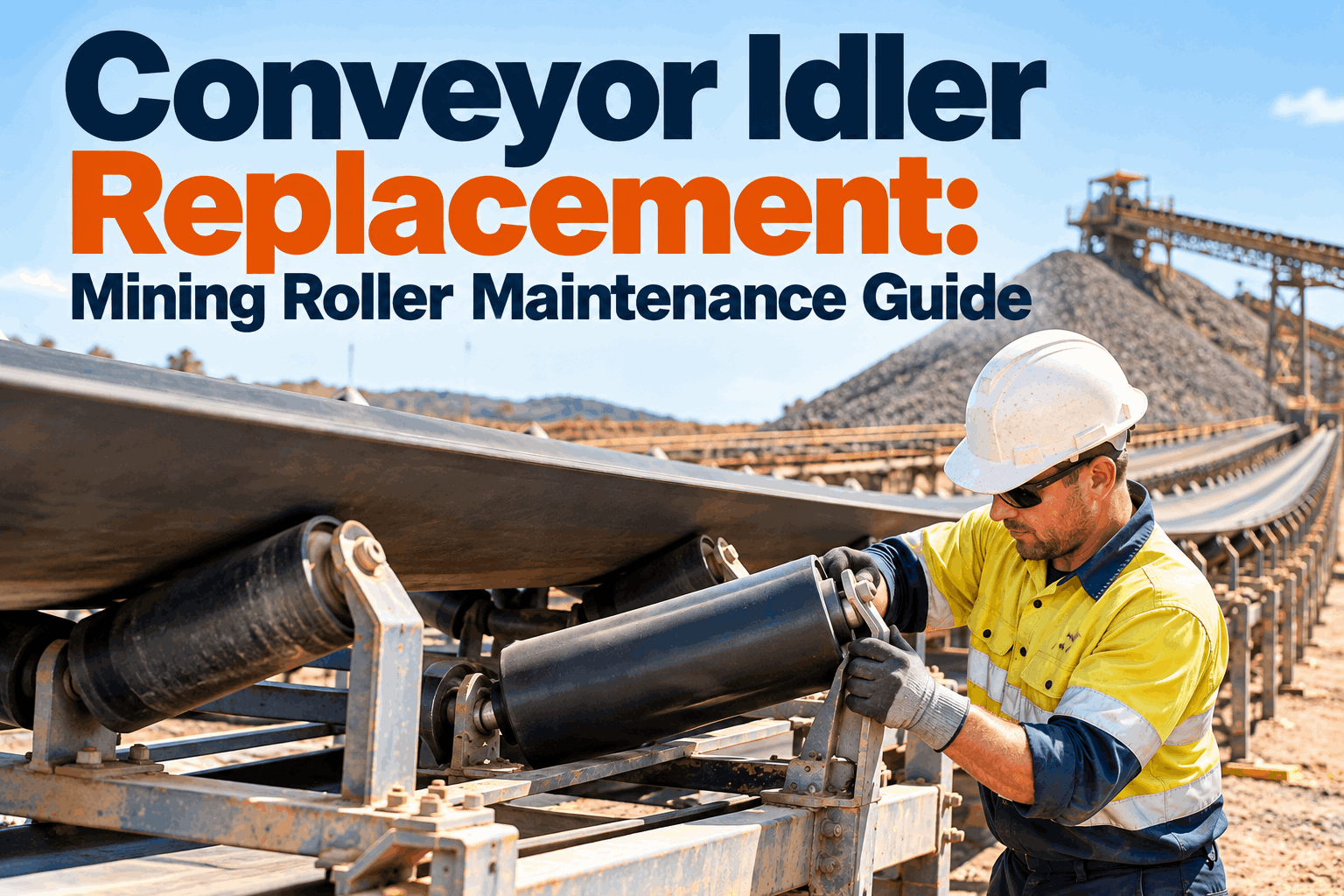
Conveyor idler replacement is easier to control when failing rollers are found during inspection—not after a seized idler starts creating heat, belt contact problems or unplanned conveyor work. Mining conveyors can contain hundreds of rollers working in dust, moisture, abrasive material and heavy loading, so maintenance teams need a consistent way to identify the exact idler, assess its condition, prioritize replacement and preserve the repair history.
Find the failing roller before it becomes a conveyor problem
Build conveyor idler replacement around repeatable inspections, clear condition criteria, exact roller locations and planned corrective work.
Abnormal rotation / bearing condition
A small roller can create a much larger maintenance problem
Idlers support the conveyor belt and conveyed load along the conveyor structure. In mining service, contamination, bearing deterioration, shell damage, buildup and mechanical problems can change how an individual roller turns or supports the belt. The maintenance goal is to find that change early enough to plan the response.
Bearing, shell, mounting or contamination problems begin affecting rotation.
The roller may turn poorly, seize, wear unevenly or stop supporting the belt correctly.
Friction, tracking, vibration or abnormal belt contact may become visible.
A minor roller defect can become a belt, structure or downtime problem.
Reliability principle: do not wait for every idler to fail completely. Record deterioration while there is still time to coordinate access, labor, spares and an appropriate maintenance window.
Not every conveyor roller is doing the same job
The idler location should be part of every inspection finding. Carrying, impact and return positions experience different loading and operating conditions, so a useful maintenance record identifies where the defective roller sits rather than recording only “bad idler.”
Troughing idlers
Support the loaded belt and help maintain its trough profile.
Inspect for: rotation, bearing condition, shell wear, alignment and belt support.Impact idlers
Help support the belt where material impact is concentrated.
Inspect for: damaged impact elements, rotation, mounting and abnormal loading damage.Return idlers
Support the unloaded belt as it travels back toward the tail.
Inspect for: buildup, shell wear, seized rollers, brackets and belt contact.Disc / specialty returns
Specialized return configurations may help with carryback or belt tracking.
Inspect for: disc condition, buildup, free rotation, alignment and mounting.What should trigger a closer idler inspection?
Conveyor inspections become more useful when technicians know what change they are looking for. A single symptom may not identify the root cause, but it can tell the maintenance team where closer investigation is needed.
Check for seized or restricted rotation, contamination and bearing condition.
A change in sound can justify closer inspection of the roller and surrounding set.
Look for worn surfaces, deformation, holes or damage affecting belt support.
Buildup around the roller or brackets may restrict movement or alter belt contact.
Inspect the roller, mounting and adjacent structure for the source of the change.
Look for damaged frames, displaced rollers or idlers no longer supporting the intended profile.
Monitor, plan or address promptly?
Replacement decisions should follow manufacturer requirements, site procedures and the actual condition of the conveyor. A simple condition framework helps technicians communicate what they found without pretending every defect carries the same urgency.
Condition has changed, but the idler remains functional and does not currently meet the site's replacement criteria.
- Record exact position
- Document observed condition
- Reinspect at defined interval
Deterioration indicates replacement is needed and the work can be coordinated under the site's maintenance plan.
- Confirm correct spare
- Create maintenance work
- Coordinate shutdown access
A failed or seriously defective idler requires action according to site procedures because continued operation may increase equipment risk.
- Escalate the finding
- Follow operating procedures
- Repair before unsafe deterioration
Do not turn an idler check into exposure to a moving conveyor
Hands-on inspection, clearing buildup or replacing an idler can place personnel near belts, rollers and stored or hazardous motion. Follow the mine's approved isolation, lockout/tagout and blocking procedures together with manufacturer instructions before maintenance work begins.
Give every technician the same condition checks
A useful conveyor idler replacement program starts with repeatable observations. The inspection record should identify both the defect and its exact physical location so another technician can find the same roller later.
Free and expected roller movement for the operating condition.
Seized, slow, restricted or otherwise abnormal rotation.Noise, vibration or other signs requiring closer bearing inspection.
Changed sound, roughness or suspected bearing deterioration.Surface wear, deformation, holes, corrosion or physical damage.
Damage affects belt support or reaches site/OEM limits.Idler position relative to the belt, frame and adjacent sets.
Displacement or alignment problems affect belt support.Frames, brackets, fasteners and supports for damage or looseness.
Mounting condition allows unwanted movement or poor support.Material around rollers, brackets and nearby conveyor structure.
Buildup interferes with rotation, belt contact or inspection.How the belt is being supported across the idler set.
Abnormal contact, sag or interaction is visible.Nearby conveyor steel and supports affecting idler position.
Damage or movement contributes to recurring roller problems.Make a failed idler easy to find again
On a long conveyor, a maintenance note such as “replace noisy roller” can waste valuable shutdown time. A consistent location convention gives inspectors, planners and technicians the same reference.
This level of identification also improves maintenance history. HVI's maintenance management workflow can connect inspection findings and corrective work instead of leaving roller locations scattered across paper notes.
The repair starts before the conveyor stops
Finding a deteriorating idler early creates planning time. Before the maintenance window, confirm the correct replacement, required tools and access, then coordinate the work with the shutdown plan and applicable safety controls.
Conveyor ID, carry or return side, idler set and individual roller position.
Match the required idler or roller specification using approved parts information.
Verify that the required component is available before the planned work window.
Coordinate labor, tools, access and the site's isolation requirements.
Complete the approved repair and inspect the surrounding set for related problems.
Record what was replaced, the condition found and relevant maintenance details.
A replacement record should answer more than “when?”
When the same conveyor zone repeatedly consumes idlers, replacement history can point maintenance teams toward a broader problem. Preserve enough context to compare failures by location, position and observed condition.
Carry set A-18 · restricted rotation
Replacement recorded against CV-07
Same conveyor zone flagged for review
Why is this area consuming idlers?
Material buildup?
Loading or impact?
Alignment or structure?
Contamination?
Incorrect component?
Recurring mounting damage?
HVI preventive maintenance and asset history can give reliability teams a repeatable record of inspections, failed locations and completed replacements. See how HVI can support fixed-plant maintenance.
Move from individual roller changes to a repeatable idler strategy
Create consistent conveyor and idler-location references.
Standardize rotation, bearing, shell, mounting and buildup checks.
Apply site and OEM criteria to decide the maintenance response.
Coordinate the correct spare and planned maintenance window.
Review repeat failures by conveyor, zone and roller position.
The result is not simply a longer list of replaced rollers. It is a maintenance history that helps teams identify deteriorating areas earlier, prepare the correct work and learn where idler problems repeatedly occur.
Conveyor idler replacement FAQs
When should a conveyor idler be replaced?
Replace an idler when its condition reaches the applicable manufacturer or site replacement criteria. Indicators requiring assessment can include seized or restricted rotation, bearing deterioration, shell damage, excessive wear, mounting damage or a condition that prevents the idler from supporting the belt correctly. The urgency should reflect the actual defect, operating risk and site procedures rather than a universal replacement rule.
What are common signs of conveyor idler failure?
Common inspection findings include a roller that is not turning normally, unusual bearing noise or vibration, worn or damaged shells, material buildup, damaged mounting hardware, displaced idler sets and abnormal belt support. The finding should be investigated according to site procedures because similar symptoms can have different causes.
What should a conveyor idler inspection checklist include?
A conveyor idler inspection checklist should cover roller rotation, bearing condition, shell wear or damage, alignment, mounting brackets and fasteners, material buildup, belt contact and nearby conveyor structure. It should also capture the conveyor ID, idler set and individual roller position so corrective work can find the defect efficiently.
What is the difference between carrying and return idlers?
Carrying idlers support the loaded side of the conveyor belt and often use a troughing configuration. Return idlers support the unloaded belt on its return path. Conveyors may also use impact idlers around loading zones and specialized return or training configurations depending on the application.
How can HVI support a conveyor idler replacement program?
HVI can help mining maintenance teams standardize digital conveyor inspections, schedule preventive maintenance, record exact failed-idler locations, create work orders and preserve asset maintenance history. This creates a traceable record of findings and replacements that can also support recurring-failure review.
Know which roller failed, where it failed and what happened next
Give mining maintenance teams one workflow for conveyor inspections, preventive maintenance, idler replacement work and asset-level maintenance history.