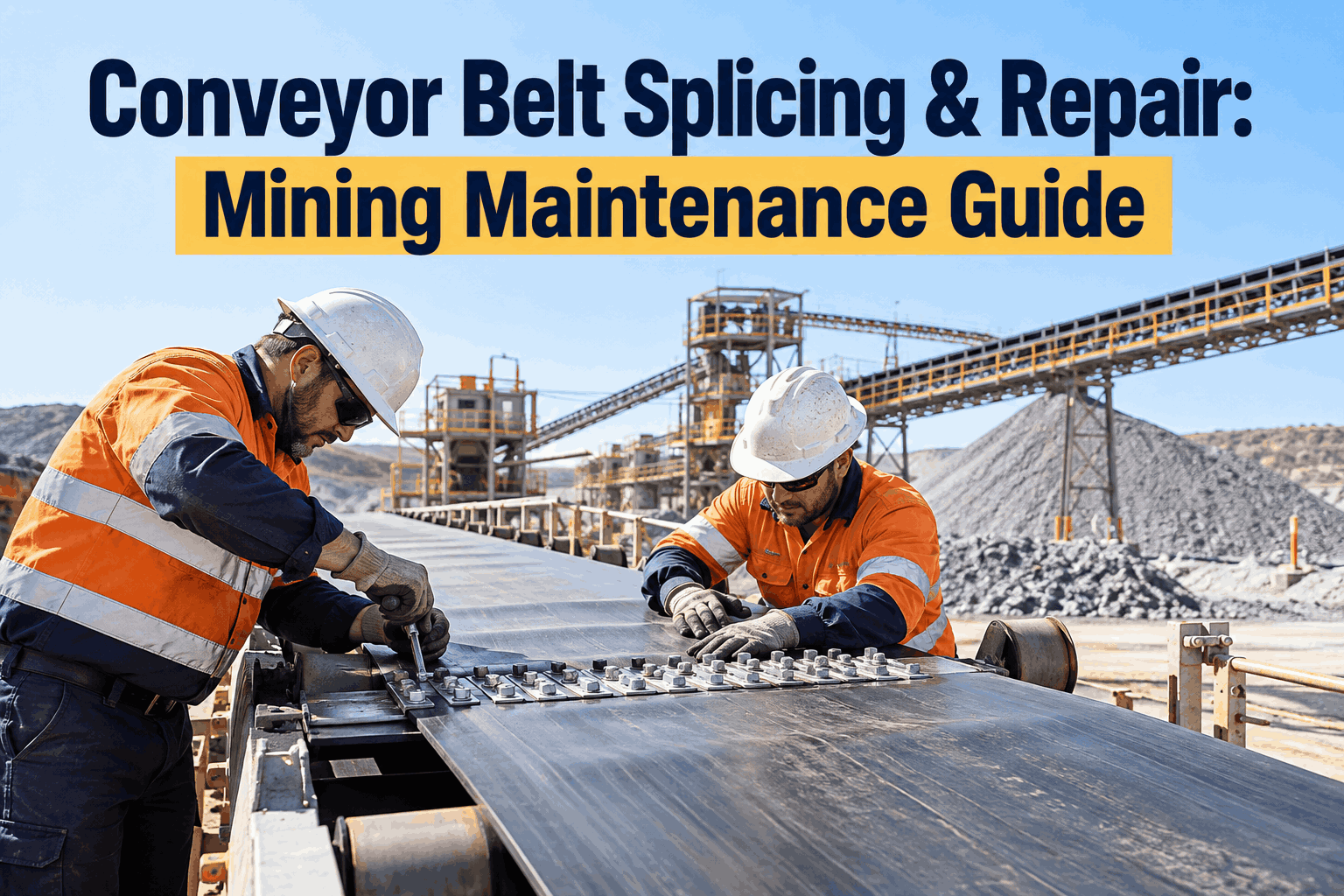
Conveyor belt splicing is more than joining two belt ends. In mining and mineral processing, the splice repeatedly passes pulleys, carries loaded material and operates under belt tension, contamination and demanding plant conditions. A reliable maintenance program therefore tracks how each splice was made, where it is located, how its condition changes and what repairs have already been performed—so deterioration can be addressed before the joint becomes an unplanned stoppage.
Manage the splice as part of the belt—not as a one-time repair
Build conveyor belt splicing and repair around the right method, repeatable inspections, visible condition records and planned intervention.
Mechanical or vulcanized? The application decides
There is no single splice method that fits every mining conveyor. Belt construction, tension, pulley arrangement, material handled, operating environment, available shutdown time and manufacturer requirements all influence the appropriate joining method. Maintenance teams should document the selected method instead of treating every belt joint as interchangeable.
Mechanical splicing
Mechanical splices use an approved fastening system to join prepared belt ends. They can be practical where installation access, service requirements and the specific belt system make mechanical fastening appropriate.
Vulcanized splicing
Vulcanized splicing creates a bonded joint using an approved splice design and process. Hot and cold methods differ in materials and application, and the correct procedure depends on the belt system and manufacturer requirements.
Method selection is application-specific. Follow the belt manufacturer's splice design, approved materials, site procedures and competent splicing guidance rather than choosing a method from a generic rule.
Two bonding approaches, different maintenance requirements
“Vulcanized splice” is not one universal process. Hot and cold systems use different materials and procedures, so the maintenance record should identify which process was actually used and preserve the relevant installation or repair information.
Controlled heat and pressure
Hot splicing uses the specified splice materials together with controlled heat and pressure. Preparation, dimensions, cure conditions and workmanship must follow the approved procedure for the belt.
Chemical bonding system
Cold systems use approved bonding materials without the same heated press process. Surface preparation, compatible materials, environmental conditions and curing requirements remain important.
Inspect the joint as a zone, not just a line across the belt
A useful belt splice inspection looks at the entire joint area: the splice itself, both edges, the belt cover around it and how the joint behaves as it travels through the conveyor. Changes should be photographed and compared with previous inspections whenever possible.
Separation or lifting — visible change at the splice edge or bonded area.
Fastener deterioration — damaged, loose or abnormal mechanical splice components where applicable.
Edge deterioration — fraying, tearing or progressive damage near the splice.
Cover damage — cuts, gouges or wear affecting the belt around the joint.
Abnormal movement — a change in how the splice passes through the conveyor.
Tracking interaction — splice-area damage occurring together with mistracking or structural contact.
Observe, plan or escalate the splice finding
Not every mark on a belt requires the same response. The inspection should describe the actual condition, then apply the site's approved limits, belt manufacturer guidance and operating requirements to determine what happens next.
Observe & trend
A visible condition is documented but has not reached the site's repair criteria.
Plan repair
Deterioration requires corrective work, but the intervention can be prepared and coordinated.
Escalate promptly
Significant deterioration or an unsafe condition requires action under the site's operating and maintenance procedures.
Splice inspection and repair require controlled isolation
Belt splicing and hands-on repair can expose personnel to conveyor movement, stored belt tension, take-up systems and other hazardous energy. Before work begins, follow the mine's approved isolation, lockout/tagout, stored-energy and blocking procedures together with manufacturer requirements.
Give every inspection the same core checkpoints
Standardizing the inspection makes condition changes easier to compare. The checklist should be adapted to the belt construction, splice type and manufacturer requirements used at your operation.
Overall splice integrity and visible change since the previous inspection.
Separation, lifting, opening or other deterioration.Condition of both edges through and around the splice area.
Fraying, tearing, progressive wear or structural contact.Where mechanical fastening is used, inspect the approved fastening system.
Damage, abnormal movement, missing or deteriorated components.Top and bottom cover around the joint for damage or abnormal wear.
Cuts, gouges, wear or exposed belt construction.How the joint behaves as it passes through the conveyor system.
Unexpected movement, distortion or visible change.Tracking condition before, through and after the splice zone.
Mistracking or contact contributing to splice deterioration.Inspect beyond the splice for tears, cuts and related belt damage.
Damage indicates a wider repair scope than the joint alone.Material or environmental conditions affecting the splice area.
Conditions requiring cleaning, investigation or repair review.Temporary repair and permanent repair are different decisions
A temporary repair should not quietly become the permanent maintenance strategy. Where a temporary measure is permitted by the belt manufacturer and site procedures, document what was done, why it was used, any operating restrictions and when the permanent corrective work is due.
Define the affected area before selecting the response.
Approved interim repair
Used only where the applicable procedure permits it and the condition can be safely managed until permanent work is completed.
Permanent repair / re-splice
Plan the approved permanent repair when damage or splice condition requires restoration of the belt joint.
The quality of the repair depends on what happens before the belt stops
Planned splicing work is easier to control when the scope, materials, people and belt information are prepared before the maintenance window. Use the inspection finding to start planning rather than waiting until the shutdown begins.
Define the damage
Confirm splice location, belt condition and expected repair scope.
Confirm the belt
Verify belt construction, specifications and approved splice procedure.
Prepare resources
Arrange competent personnel, approved materials, equipment and access.
Coordinate isolation
Plan shutdown, hazardous-energy control and belt-tension requirements.
Complete the repair
Follow the approved procedure and required quality controls.
Update the record
Store repair date, method, findings, evidence and follow-up requirements.
HVI's maintenance management workflow can help connect inspection findings, work orders and completed repair records instead of leaving the splice history across separate forms.
Give every important splice a traceable maintenance history
The value of a digital record grows with every inspection. Instead of seeing only today's defect, the maintenance team can see when the splice was installed, how its condition changed and whether the same area has already been repaired.
Method and location added to belt history.
Edge deterioration photographed and compared.
Corrective work becomes part of the asset record.
Better question: not just “Has this splice failed?” but “How has this splice changed since installation, and what have we already done to it?”
Five records that make splice maintenance easier to manage
Splice identity
Conveyor, belt and exact splice location.
Splice method
Mechanical, hot vulcanized, cold system or other approved method.
Condition evidence
Inspection findings, measurements where applicable and photos.
Repair history
What work was completed, when and under which work order.
Next action
Reinspection, planned repair or other site-approved follow-up.
That information turns conveyor belt repair from a series of disconnected jobs into a maintenance history that planners and reliability teams can actually use. If your plant is still keeping splice records on paper or across spreadsheets, see how HVI can organize fixed-plant inspection and repair history.
Conveyor belt splicing FAQs
What are the main conveyor belt splicing methods?
Common approaches include mechanical splicing and vulcanized splicing. Vulcanized systems may use hot or cold processes depending on the belt, approved materials and application. The correct method should be selected using belt construction, operating conditions, conveyor requirements and manufacturer guidance rather than a universal rule.
What should be checked during a conveyor belt splice inspection?
Inspect the overall joint, belt edges, splice-area cover, mechanical fasteners where applicable, abnormal movement, belt tracking and surrounding belt condition. Record any separation, deterioration, cuts, wear or changes from the previous inspection together with the exact splice location.
What causes a conveyor belt splice to deteriorate?
Splice condition can be influenced by belt loading and tension, repeated flexing, tracking problems, material contamination, impact, surrounding belt damage, installation quality and operating conditions. A recurring problem should be investigated rather than repeatedly repaired without reviewing the wider conveyor condition.
Can a damaged conveyor belt splice be temporarily repaired?
Whether an interim repair is acceptable depends on the belt manufacturer, splice system, actual damage, site procedures and operating requirements. Where an approved temporary repair is used, document the repair, any restrictions and the required permanent follow-up so the temporary measure does not become an unmanaged long-term condition.
How can HVI support conveyor belt splice maintenance?
HVI can help mining maintenance teams schedule digital belt inspections, record splice condition and location, attach supporting evidence, create corrective work orders and retain completed repair history against the conveyor asset. This gives teams a traceable record of how important belt joints change over time.
Keep the splice inspection, repair and history connected
Build a repeatable conveyor maintenance workflow with digital inspections, planned work orders, preventive maintenance and asset-level repair records.