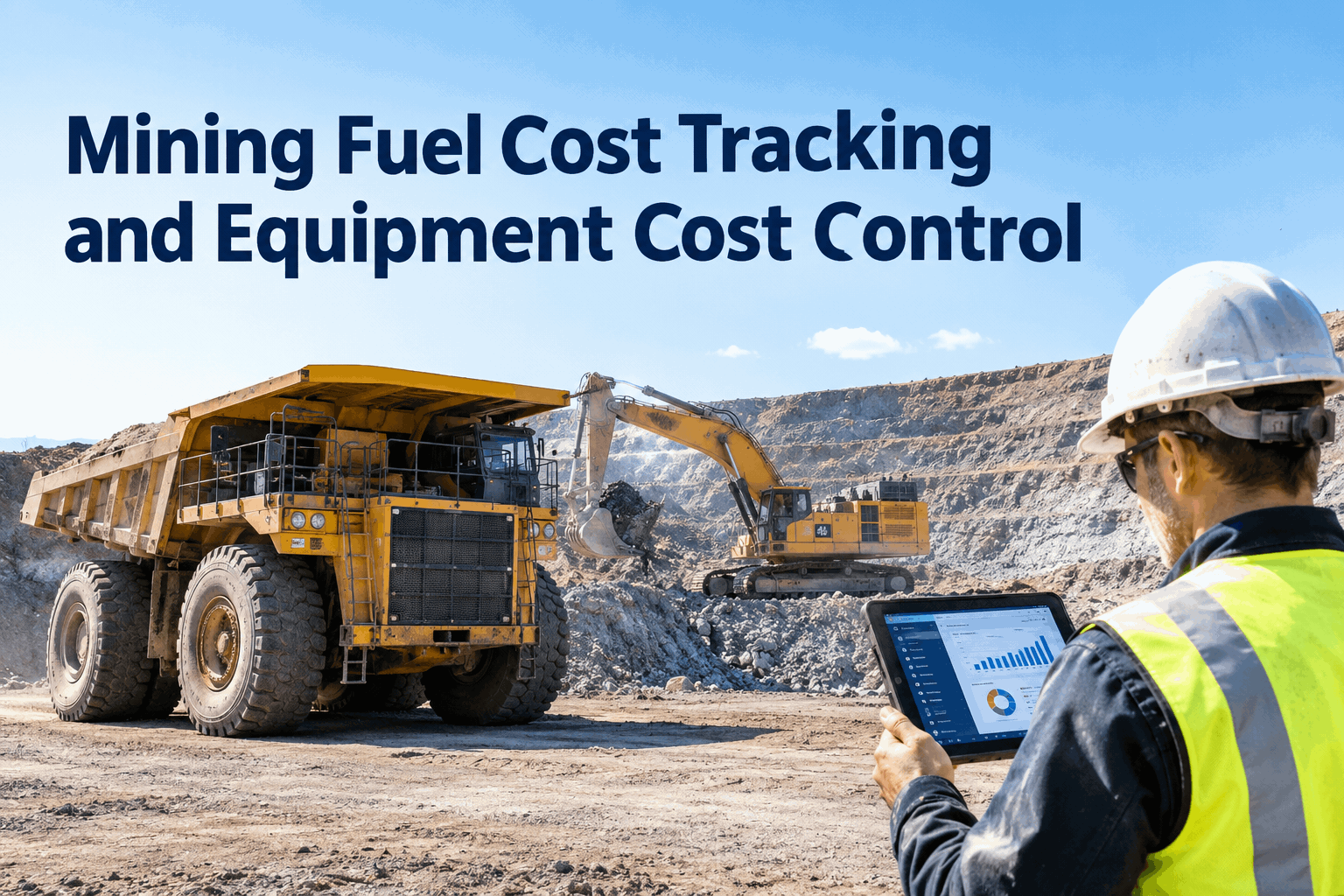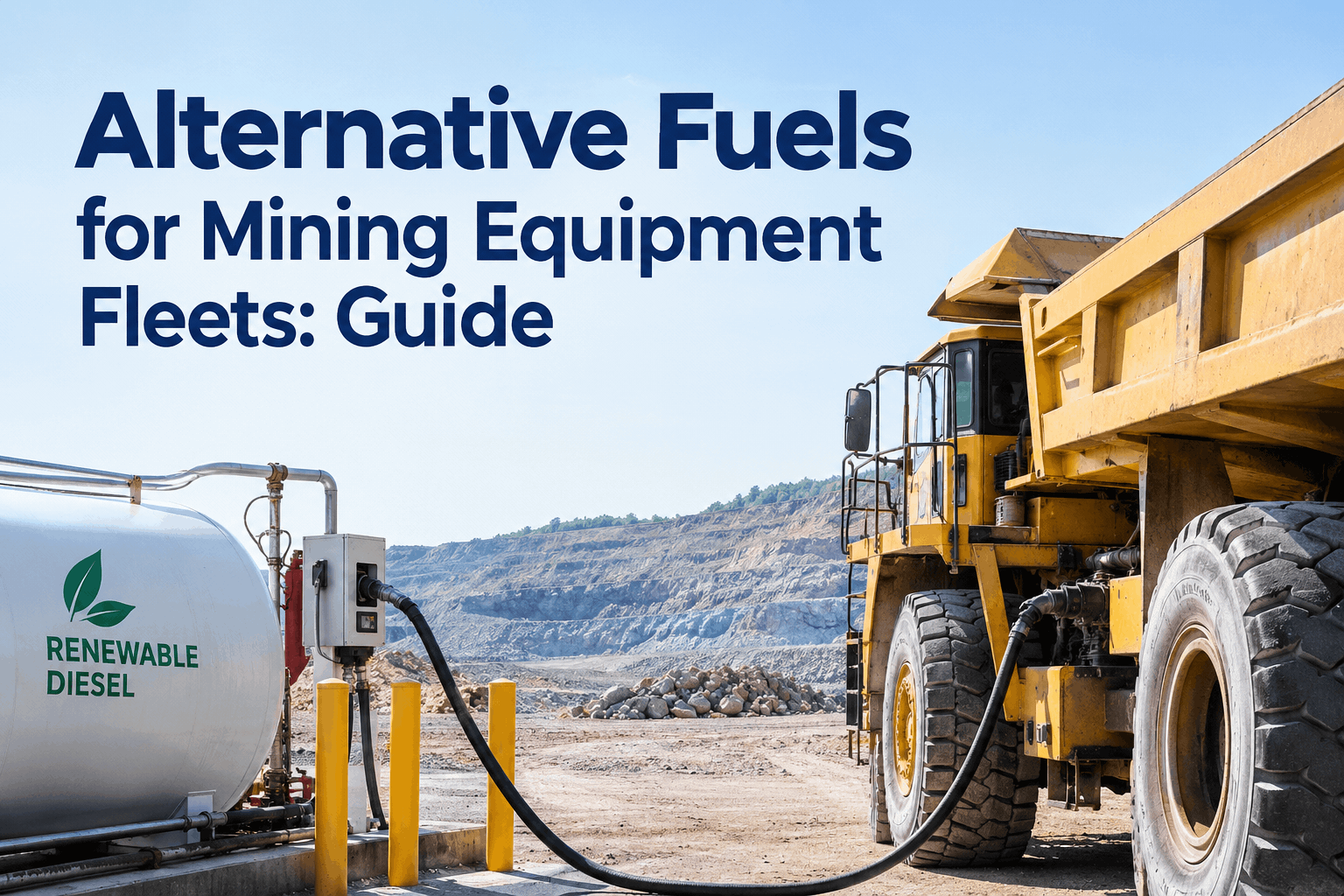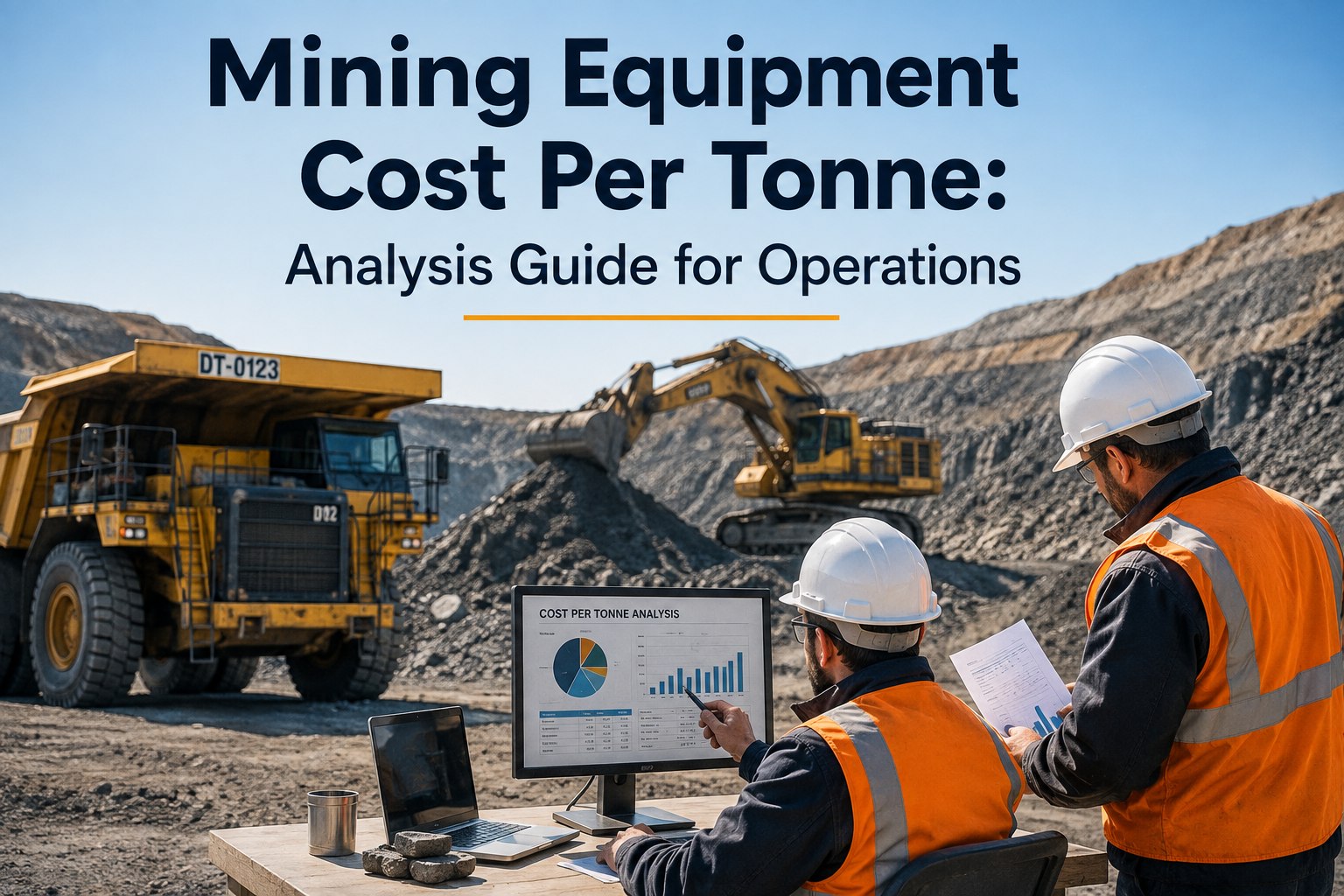
On a haul fleet, fuel is often the largest line after labour — and most of the waste hides across idling trucks, heavy-footed shifts and under-filled trays nobody adds up. Two identical trucks on the same road can burn very different amounts, and the gap is pure cost. A real mining fuel efficiency program finds that gap and closes it, truck by truck and operator by operator. Book a demo to see where your haul fleet burns fuel.
Two trucks, one road, very different burn.
Fuel per tonne is the number that exposes it — idling, technique, payload and condition all show up there. Measure it per truck and per operator, and the worst offenders stop hiding in a bulk fuel bill.
A mining fuel efficiency program comes down to four things: knowing where haul-truck fuel actually goes, pulling the levers that cut it, running a measure-act-sustain loop so gains stick, and benchmarking trucks and operators so the worst stand out. Below is each — plus the fuel logging that turns the whole program into numbers you can act on.
Where haul-truck fuel actually goesthe drivers behind mining fuel consumption per tonne
Before you can cut fuel, you have to see where it's lost. On a haul truck the burn splits across a handful of drivers — and the biggest ones are behaviour and condition, not the engine spec. Knowing the split tells you which lever pays back first. Book a demo to find your fleet's biggest fuel drain.
Most of this is avoidable and most of it is behavioural, which is good news — it means the savings don't need new trucks, just visibility. Book a demo to break down your fuel waste by driver.
The levers that cut haul-fleet fuelwhere a mining fuel efficiency program finds real savings
Each driver of waste is a lever you can pull, and none of them require capital. Pull two or three consistently across the fleet and the per-tonne number moves — fuel-analysis programs have cut fleet consumption by a few percent, which is real money at haul-fleet scale.
The common thread is measurement: you can't coach an operator or flag a truck you aren't tracking. That's where a fuel log per machine turns a good intention into a program. Sign up free and start tracking fuel per truck.
How a fuel-efficiency program runsthe measure, act and sustain loop that holds the gain
A fuel-efficiency drive that's a one-off memo fades in a month. The programs that stick run a simple loop — measure the baseline, act on the biggest lever, then keep measuring so the gain holds and the next target appears. Here's the cycle.
- 1Measure the baselineFuel per tonne per truck and operator, so you know today's number before changing anything.
- 2Act on the biggest leverTarget the worst burner or the idling outlier first — the fix with the clearest payback.
- 3Sustain & repeatKeep tracking so the gain holds, then point the loop at the next-worst truck or shift.
Run that loop monthly and small per-truck wins compound into a fleet-wide cut you can take to finance and to your sustainability report. Book a demo to run the efficiency loop on your own fleet.
Benchmark trucks and operatorsthe ranking that turns fuel data into action
The moment fuel data becomes useful is when you rank it. A simple league table of fuel per tonne — truck by truck, operator by operator — turns a flat number into a target, because the gap between best and worst is exactly the savings on the table.
Close the gap between row 1 and row 8 across the fleet and the per-tonne average drops — that spread is the whole opportunity.
A league table makes the conversation easy: nobody argues with their own number next to the fleet best. Sign up free and rank your haul fleet by fuel.
Mining fuel management softwarehow HVI fuel logs power an efficiency program
A fuel-efficiency program needs clean, per-machine fuel data tied to work. HVI's fuel logs record every litre against the asset, trend consumption per tonne, and rank the fleet — so the program has a baseline, a target and a way to prove the gain.
Fuel efficiency isn't a campaign — it's a number you watch and nudge down every month. Read our mine fuel management and bunker tracking guide for the supply side, and see our alternative fuels for mining guide for the emissions angle.
What a mining fleet manager actually watches
For years fuel was just a big number on the monthly report — I couldn't do anything with it because I couldn't see inside it. Once we logged fuel per truck and ranked them, the spread was embarrassing: our worst trucks were burning nearly a fifth more than our best on the same haul. We coached the operators and chased the idlers, and the fleet average came down enough to notice on the next fuel bill.
Frequently asked questions
What is a mining fuel efficiency program?
It's a structured effort to cut fuel per tonne across a haul fleet by measuring consumption per truck and operator, acting on the biggest waste, and sustaining the gain. It targets idling, operator technique, payload and condition — no new machines required.
What wastes the most fuel on a haul truck?
Mostly behaviour and condition, not engine spec — excessive idling, heavy-footed operator technique, inconsistent payload, and poor condition like low tyre pressure or a rough haul road. The good news is these are avoidable once you can see them per truck.
How much fuel can a program realistically save?
Industry fuel-analysis programs have cut fleet consumption by a few percent, which is significant money at haul-fleet scale. The exact figure depends on how wide the gap is between your best and worst trucks — that spread is your opportunity.
How do I measure haul-truck fuel efficiency?
Track fuel per tonne — fuel consumed divided by material moved — per truck and operator. That normalises for workload, so a busy truck and a quiet one compare fairly, and the real efficiency differences between machines and operators show up clearly.
How does fuel-logging software help cut consumption?
It records fuel per machine, trends it per tonne, and ranks the fleet so the worst burners are obvious. That turns a bulk fuel bill into a per-truck scorecard you can coach and manage against, and proves the savings over time.
Run a fuel-efficiency program on real haul data
HVI logs fuel per machine, trends consumption per tonne, and ranks trucks and operators so the worst burners stand out and the savings are measurable. Turn a bulk fuel bill into a per-truck scorecard — live across your haul fleet in under two weeks.
Fuel logs per machine · Fuel-per-tonne analytics · Truck & operator benchmarking