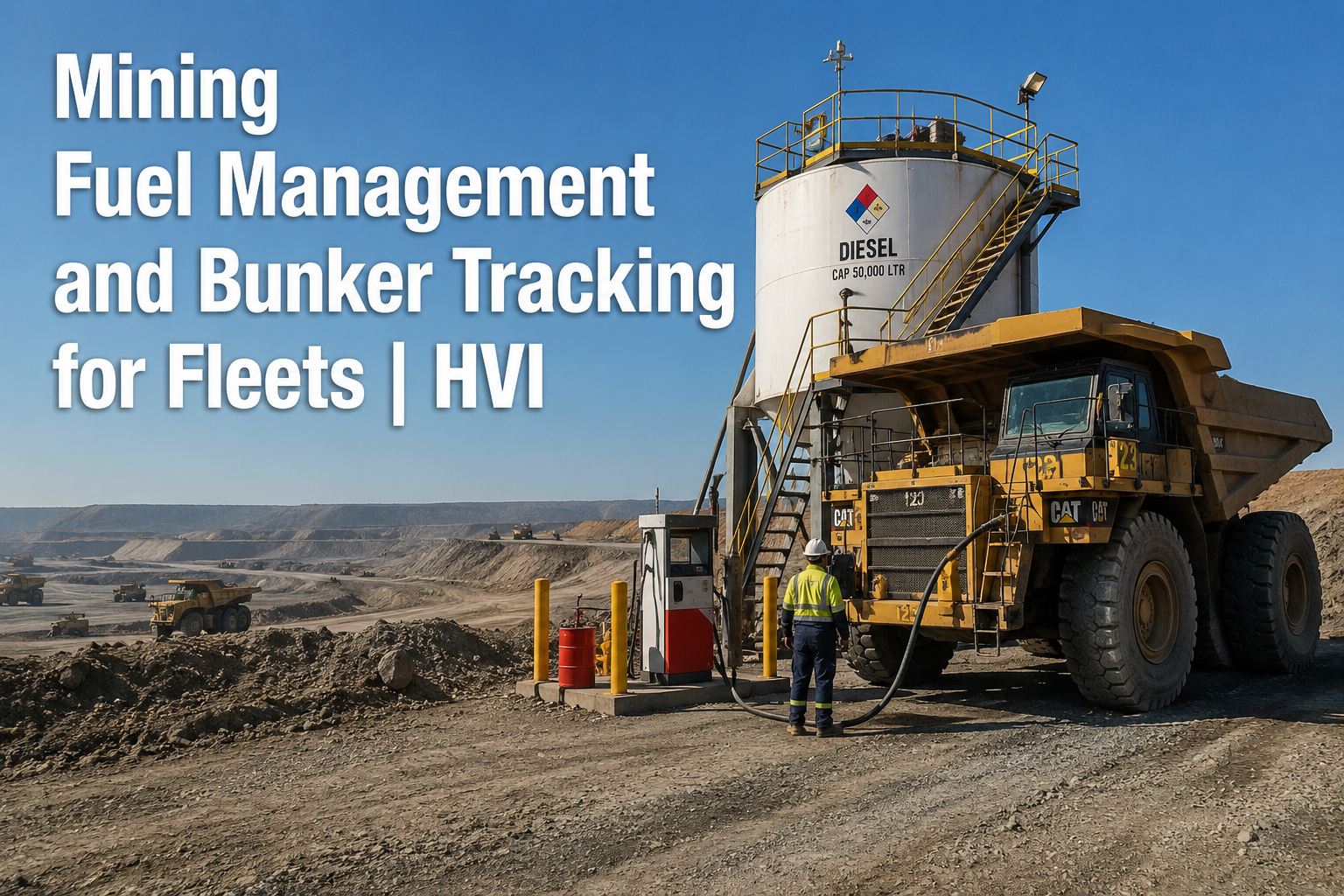
A bulk diesel delivery ticket tells you how much fuel arrived on site. It doesn't tell you which haul truck burned it, how much idled away in a queue, or whether that litre-to-tonne conversion survives an auditor's questions. That gap is exactly where mining emissions reporting breaks down — not in the framework you choose, but in the fuel and activity data feeding it. Here is what actually gets reported, where the data usually falls apart and how to build a record that holds up.
Estimate Your Fleet's Scope 1 Diesel Footprint
Pick your fleet's approximate annual diesel use. See the Scope 1 CO2e that fuel converts to — before it shows up as a question in your next assurance review.
What Actually Gets Reported for Scope 1 Mobile Combustion
For most surface mines, Scope 1 mobile combustion emissions come down to one calculation repeated across every diesel-powered machine: fuel consumed, multiplied by an applicable emissions factor, converted to CO2 equivalent. The GHG Protocol Corporate Standard is the common foundation underneath nearly every framework a mine reports against, and the mobile fleet is rarely a small line item within it — mobile equipment can account for up to 30% of a surface mine's on-site GHG emissions, and up to 80% at sites without co-located smelting or refining, with haul trucks alone often representing more than half of that mobile-fleet total.
The calculation itself is simple. The reliability of the number behind it is not. A litre of diesel converts to roughly the same amount of CO2e regardless of which truck burned it — the emissions factor isn't the hard part. What breaks down is knowing, with confidence, how many litres each machine actually burned, over what hours, doing what work.
The Data Gap Nobody Budgets For
Most sites have excellent records of what comes off the fuel truck or out of the bulk tank. Far fewer have equally good records of what happens after that fuel leaves the bowser — which machine got it, how many hours it ran, and how much of that time was productive work versus idle.
- Total litres delivered to site or drawn from the bulk tank
- Fuel allocated across the fleet by rough estimate or average
- Equipment hours pulled from inconsistent or manual logs
- Idle time folded into "operating hours" with no separation
- A single site-wide emissions number, hard to defend by asset
- Per-machine fuel consumption tied to bunker and dispensing records
- Telematics-sourced hours and idle time, not an estimate
- A documented, consistent emissions factor and calculation method
- Activity data that supports an emissions-intensity metric, not just a total
- An exportable, traceable record an assurance provider can follow
The gap between those two columns is where a reasonable-looking Scope 1 figure turns into a number nobody on site can fully defend under questioning — and it's almost always a data-capture problem, not a calculation problem. Book a demo to see per-machine fuel and hours captured automatically, tied to the same asset record used for maintenance and dispatch.
Emissions Intensity: Why Tonnes Alone Don't Tell the Story
A raw Scope 1 total tells an investor or regulator how much CO2e a site produced, but not whether the site is getting more efficient over time — production volume swings year to year, and a bigger number in a bigger production year can look like a regression that isn't real. That's why most frameworks expect an intensity metric alongside the absolute figure, most commonly emissions per tonne of ore or product moved: total Scope 1 CO2e divided by tonnes produced or hauled. A site that grew production 20% while holding its intensity metric flat actually improved its fleet efficiency, even though its absolute emissions total went up — a distinction that matters enormously to an investor comparing two reporting years, and one that's impossible to make without reliable tonnage data sitting next to the fuel data.
Five Levers That Actually Move the Number
Idle Reduction
Idle time burns fuel without moving tonnes, which means it's pure downside on both the cost line and the emissions line. Cutting idle percentage is usually the fastest, cheapest reduction available on an existing fleet.
Fleet Right-Sizing
An oversized truck running under a partial load burns more fuel per tonne moved than a correctly matched unit. Matching haul truck size to actual pit and haul-route conditions is a structural fix, not a behavioral one.
Maintenance Condition
Underinflated tires, dragging brakes, worn engine components and poor alignment all raise fuel burn per tonne-kilometre. A component slowly drifting out of spec is a slow, invisible emissions increase long before it's a breakdown.
Alternative Fuels
Renewable diesel and other drop-in fuels can lower the lifecycle emissions factor of the fuel burned without a fleet retrofit — a near-term lever while electrified equipment matures for heavy-haul duty cycles.
Electrification
Trolley-assist, battery-electric and hybrid haul trucks are advancing, but most mining operators still expect diesel to power the majority of haul truck operations well into the next decade — a longer-horizon lever layered on top of the other four.
None of these levers work without a fuel and hours baseline accurate enough to show whether they're actually moving the number, which is the same data problem underneath the reporting question in the first place. Sign up free to baseline idle percentage and fuel-per-hour by asset before committing budget to a reduction initiative.
Mandatory vs Voluntary: Know Which Framework You're Actually Answering To
Not every emissions disclosure a site produces is legally required, and conflating mandatory reporting with voluntary ESG storytelling is a common way fleets over- or under-invest in the wrong parts of the data pipeline. Confirm the applicable framework, jurisdiction, and any customer or investor-specific requirement before deciding how much rigor the underlying data needs.
| Framework | Nature |
|---|---|
| GRI 14: Mining Sector | Global sector standard, effective for reports published from 1 January 2026; voluntary but widely expected by investors and ICMM members |
| US EPA GHGRP (40 CFR Part 98) | Mandatory for facilities emitting above the applicable reporting threshold in the U.S. |
| Australia NGER Act | Mandatory corporate and facility-level GHG and energy reporting above set thresholds |
| EU CSRD | Mandatory, phased in for large and listed companies, including non-EU companies with qualifying EU operations |
| CDP / TCFD-aligned disclosure | Voluntary, but increasingly expected by lenders and institutional investors as a condition of financing terms |
A site can be fully compliant with a mandatory scheme and still fail an investor's expectations under a voluntary framework layered on top — confirming which applies avoids building a reporting process sized for the wrong requirement.
The Assurance Problem: Your Number Is Only as Good as What's Behind It
Third-party assurance, whether required by regulation or requested by an investor, doesn't just check whether the final Scope 1 figure looks reasonable — it traces the number back to source records. That means fuel delivery documentation, per-machine consumption data, the emissions factor and methodology applied, and equipment activity hours all need to be retrievable and consistent, not reconstructed from memory when the assurance request lands. The same standard applies to any reduction claim: a stated idle-reduction or efficiency improvement needs the before-and-after data to back it up, or it's a statement, not a disclosure. Fleets that treat fuel and hours data as an operational byproduct rather than a reporting asset are the ones scrambling every reporting cycle. Book a demo to see a full, exportable fuel and activity trail per asset, ready before an assurance provider asks for it.
What a Fleet Manager Actually Has to Defend Internally
Sustainability asked for our Scope 1 number, and I gave them what we had — a site-wide diesel total divided across the fleet by rough proportion. It held up fine until an investor's assurance team asked for it by asset class, and we simply didn't have that. Now every litre gets tied to a specific machine through telematics, and when someone asks where the number came from, I can actually show them instead of explaining why we can't.
The Takeaway
Mining emissions reporting rarely fails because a site picked the wrong framework or got the emissions factor wrong — it fails because the fuel and activity data underneath the calculation can't survive a question about where it came from. Per-machine fuel tracking, telematics-sourced hours and idle data, a consistent calculation method, and an intensity metric alongside the raw total are what separate a defensible Scope 1 figure from a rough estimate that happens to look plausible. With GRI 14 now effective and investor scrutiny only increasing, the fleets that get ahead of this are the ones treating fuel data as a reporting asset today, not a scramble next audit cycle. Sign up free and start building that per-machine record now.
Frequently Asked Questions
What is Scope 1 mobile combustion emissions in mining?
Scope 1 mobile combustion emissions are direct greenhouse gas emissions from diesel and other fuels burned by equipment a mine owns or controls — haul trucks, loaders, dozers, graders, drills and light vehicles. They're calculated by multiplying fuel consumption by an applicable emissions factor (commonly around 2.68 kg CO2e per litre of diesel) to produce a CO2-equivalent figure, following methodology set out in the GHG Protocol Corporate Standard.
Why is mobile fleet fuel data often unreliable for emissions reporting?
Most sites accurately track total diesel delivered to a bulk tank but not how that fuel is actually distributed across individual machines, leading to estimated rather than measured per-asset consumption. Equipment hours are often logged manually or inconsistently, and idle time frequently isn't separated from productive operating hours — both of which undermine the accuracy of any per-machine or intensity-based emissions figure built on top of that data.
What is emissions intensity and why does it matter alongside a total figure?
Emissions intensity is typically calculated as total Scope 1 CO2e divided by tonnes of ore or product produced or hauled. It matters because a raw emissions total rises and falls with production volume, which can make an efficiency improvement look like a regression, or vice versa, in a high or low production year. Reporting intensity alongside the absolute total lets investors and regulators see whether a site is genuinely getting more efficient, not just producing more or less.
Is mining emissions reporting mandatory or voluntary?
It depends on the framework and jurisdiction. Some schemes, such as the US EPA's Greenhouse Gas Reporting Program and Australia's National Greenhouse and Energy Reporting Act, are mandatory above defined emissions thresholds. Others, including the GRI 14 Mining Sector standard (effective for reports from 1 January 2026) and CDP or TCFD-aligned disclosures, are voluntary but increasingly expected by investors, lenders and industry bodies. Fleets should confirm which applicable framework, jurisdiction and customer or investor requirement they're actually answering to before building a reporting process.
What records does emissions assurance actually require?
Third-party assurance traces a reported Scope 1 figure back to its source records — fuel delivery and dispensing documentation, per-machine consumption data, the emissions factor and calculation methodology used, and equipment activity hours. Any stated reduction claim, such as an idle-reduction or efficiency improvement, needs before-and-after data to support it. Records that can't be retrieved or that were reconstructed after the fact typically don't satisfy an assurance review.
Build a Fuel and Activity Record That Survives an Assurance Review
HVI tracks bunker fuel and per-machine consumption, integrates telematics for hours and idle data, rolls it into exportable Analytics reporting, and keeps a full traceable record per asset — ready whenever a regulator, investor or assurance provider asks.
No credit card · No hardware required · Live before your next reporting cycle