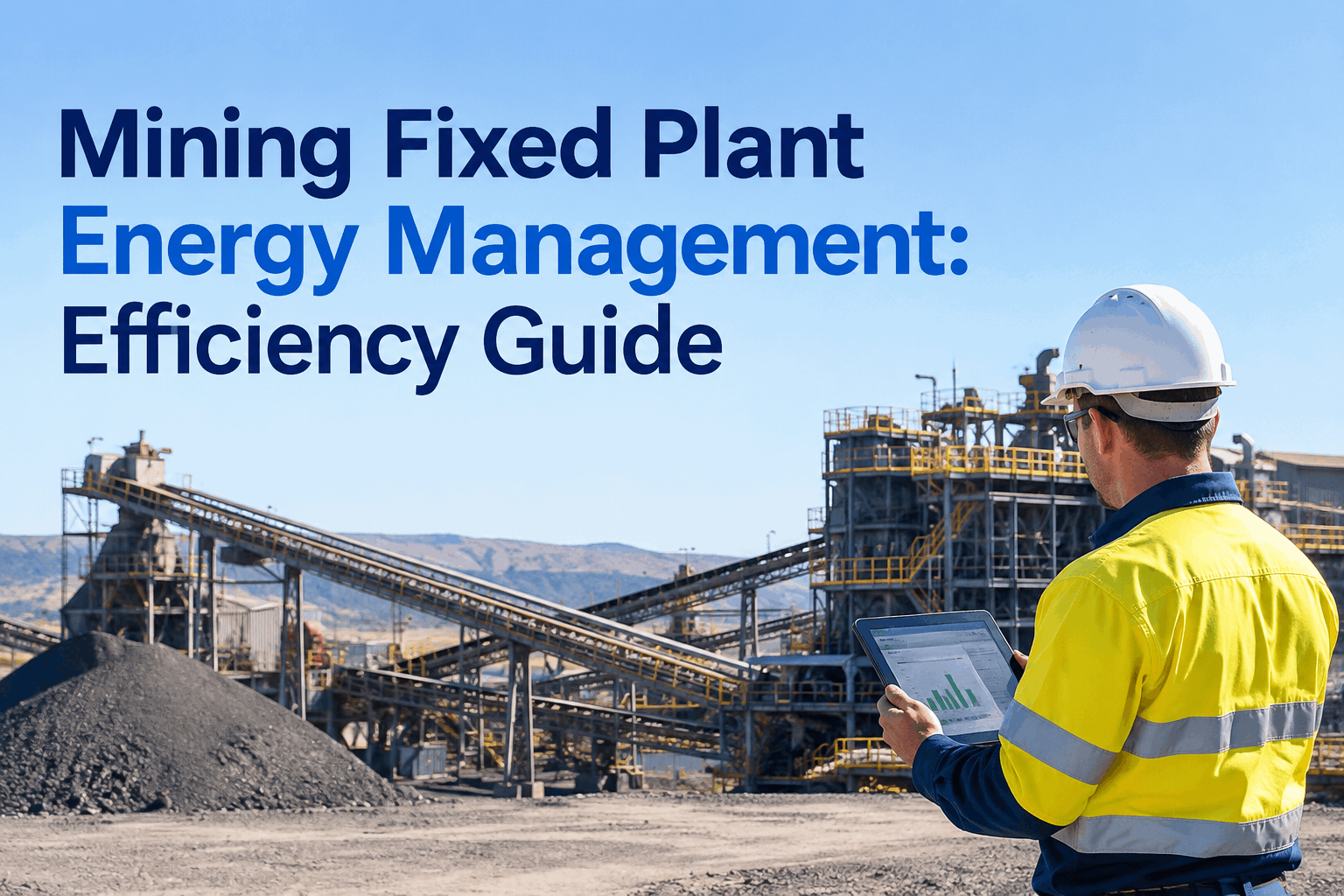
The crushers, mills and conveyors in your plant are the hungriest things on the mine — fixed plant burns the lion's share of a site's energy, and comminution alone can dominate the power bill. What most teams miss is that the number isn't fixed: a worn liner, a dragging conveyor or a fouled motor pushes consumption up tonne after tonne. That makes mining fixed plant energy management a maintenance problem as much as an electrical one, so book a demo to see which assets are costing you energy.
Worn equipment doesn't just fail. It wastes power.
Every crusher, mill and conveyor draws more energy as its condition drifts — and the drift is invisible until the bill or the breakdown arrives. Tie energy performance to maintenance records and the waste becomes a number you can find, fix and report.
Mining fixed plant energy management comes down to four things: knowing where the plant burns energy, understanding how equipment condition drives that draw, closing the gap between a worn asset and a work order, and reporting the result for cost and sustainability. Below is each — plus the analytics that turn energy from a monthly surprise into a managed number.
Where fixed plant burns its energythe assets that dominate mining plant energy consumption
You can't manage what you haven't mapped. On most sites the energy picture is lopsided — comminution swallows the largest share, and a handful of big assets set the whole plant's bill. Knowing the split tells you where a maintenance dollar buys the most energy back.
Grinding and crushing dominate, so a worn liner or a mis-set gap there moves the energy bill more than anything else on site. That's exactly where condition tracking pays back fastest. Book a demo to map your plant's energy draw to the assets that set it.
How worn equipment wastes energythe condition problems that quietly raise power per tonne
Energy waste rarely announces itself. It creeps in as condition drifts — the machine still runs, still makes tonnes, just at a higher power cost per tonne than it should. These are the usual culprits, and every one shows up in maintenance data before it shows up on the bill.
None of these trip an alarm — they just raise the energy line a little, every shift, until someone connects condition to consumption. That connection is the whole opportunity. Sign up free and flag the condition issues that waste energy.
The maintenance-to-energy linkwhy performance-based maintenance is an energy-efficiency strategy
The clearest way to see the link is a single asset before and after a condition fix. The maintenance action isn't new — it's the standard liner change or idler swap. What changes is that you measure the energy result, so the fix pays back twice: reliability and power.
- Liners / idlersWorn, past optimum
- Energy per tonneCreeping up
- Failure riskRising unseen
- ReportingBill is the first clue
- Liners / idlersServiced on wear
- Energy per tonneBack to baseline
- Failure riskCaught early
- ReportingMeasured, disclosable
Run that loop across the plant and the small per-asset savings add up to a real cut in energy cost and emissions. Book a demo to measure a condition fix's energy payback on your own assets.
Fixed plant energy-efficiency checklistthe maintenance checks that keep power per tonne low
Energy efficiency isn't a one-off audit — it's a set of condition checks kept current across the plant. Run these as part of routine maintenance, logged per asset, and the energy-wasting drift gets caught while it's still cheap to fix. Book a demo to run these efficiency checks on schedule.
Logged against each asset, this checklist becomes a living efficiency record — and the base for the performance reporting an energy or sustainability lead actually needs. Sign up free and build this efficiency checklist into your plant.
Mining maintenance analytics softwarehow HVI reporting turns condition into energy savings
Managing plant energy needs the condition data and the consumption data in one view. HVI's analytics and reporting trend performance per asset, tie energy-wasting condition to work orders, and produce the reports a maintenance, energy or sustainability lead can act on and disclose.
Treating energy as an outcome of maintenance — not a separate project — is what makes the savings stick. Explore mining maintenance management, and for the machines that drive this bill, Read our crusher and conveyor inspection guide.
What a plant maintenance manager actually watches
We always treated energy as the utility's problem and maintenance as ours — two separate worlds. Once we trended power per tonne against liner and idler condition, the overlap was obvious: our worst-maintained assets were also our thirstiest. Catching a mill liner before it dragged efficiency down cut our energy per tonne noticeably, and for the first time I could put a power number on a maintenance job.
Frequently asked questions
What is mining fixed plant energy management?
It's managing the energy that stationary plant — crushers, mills, conveyors, pumps and compressors — consumes, largely by keeping equipment in its efficient condition. Since worn gear draws more power per tonne, it's as much a maintenance discipline as an electrical one.
Which fixed plant equipment uses the most energy?
Comminution dominates — grinding mills are usually the single largest consumer, followed by crushing. Conveyors, pumps and compressed air make up the rest. Because the big draws are so concentrated, maintenance on those assets moves the energy bill the most.
How does maintenance reduce plant energy use?
Worn liners, dragging idlers and fouled motors all raise power per tonne. Keeping them serviced on condition holds equipment in its efficient window, so the same tonnes cost less energy. Performance-based maintenance is effectively an energy-efficiency strategy.
How do I track energy efficiency across the plant?
Trend energy per tonne against each asset's condition and maintenance history. When consumption drifts up, the linked condition data shows which asset is responsible — so you fix the cause instead of just absorbing a higher bill.
Can this support sustainability and emissions reporting?
Yes. Energy-per-tonne and maintenance data export into cost reviews and emissions disclosures, tying efficiency gains to reported numbers. It turns everyday maintenance into evidence for the sustainability targets mines increasingly report against.
Manage fixed plant energy where it's really decided — in maintenance
HVI trends performance per asset, ties energy-wasting condition to work orders, and reports the savings for cost and sustainability — so efficiency is a number you manage, not a surprise on the bill. Live across your fixed plant in under two weeks, no hardware.
Performance analytics · Condition-to-work-order · Cost & sustainability reporting